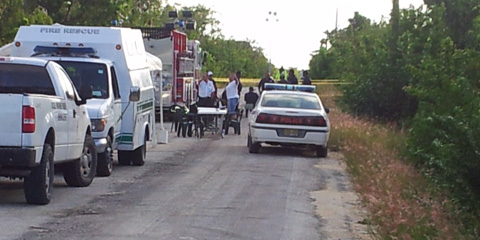
The two men piloting the small plane, one from Mexico and the other from Colombia, died when the craft collided with two light poles in a heavily wooded and largely undeveloped area about nine miles northeast of Charles Kirkconnell International Airport
“The aircraft probably suffered an electrical failure which prevented use of the modified fuel system intended to provide additional [traveling] range,” investigators from the Air Accident Investigation Branch concluded. “The aircraft then deviated from its original flight path, possibly because the crew intended to divert to Cuba, and its track passed over Cayman Brac.
“Evidence indicates that the pilot attempted to land on a road. The aircraft was destroyed when it encountered obstacles, including poles, beside the road.
“The manner of operation of this aircraft, including extended flights over water and the modified fuel system, introduced risks to the flight of which the crew must have been aware.”
The UK accident report, released Wednesday evening Cayman time, did not speculate on what the two men intended in their flight that included two landings in Mexico and one in Belize prior to the crash on the Brac. However, the accident investigators did note that the Cessna’s registration could not be determined between the years 2003 and 2009 and that it was carrying 10 60-litre containers of fuel.
The plane was registered again sometime during 2009 in Mexico and had a current registration, investigators found.
“There was insufficient evidence to determine the purpose of the flight, but there were indications that it was intended to be clandestine, including the modified fuel system, the intended route and the unidentified flight plan destination,” accident investigators surmised in their report.
“The recovered documents and GPS data indicated that the aircraft had previously departed Guadalajara for a flight to Chetumal, Mexico; a great circle distance of approximately 858 nm [nautical miles]. This was within the theoretical range of a standard Cessna 210 and appears to have occurred without incident.
“The crew filed a flight plan for an unidentified destination then departed, initially to the north before turning south and crossing the border into Belize. The aircraft landed briefly at an improvised airstrip, then departed and flew east for some 490 nm, at which point the GPS track ended.”
The report mentioned nothing about any evidence of illegal drugs aboard the plane. However, it does reveal that one of the pilots, referred to as ‘Pilot A’ tested positive during a post-mortem for the presence of cocaine metabolites with associated compounds. ‘Pilot B’ was clean, according to the report. Both men died from injuries suffered during the crash.
The Royal Cayman Islands Police Service released the following statement on the crash Thursday: “It was clear early on in the investigation that the flight this aircraft was embarked on was not in accordance with the international rules of aviation or the subject of any official flight planning.
“Police analysis of the GPS tracks of the aircraft from data supplied by the AAIB recovery of GPS units found on the aircraft showed that the planned route was from Mexico into Venezuela. There was evidence pilots using these GPS Units in the weeks prior had made long distance flights from Central America into Venezuela, returning into unrecognized landing sites in Guatemala, Belize and Mexico.
“At no time was there any evidence that previous or intended routes included the Cayman Islands, or passing close to the Islands.”
Please see Friday’s editions of the Caymanian Compass for more on this story…..
Editor’s note: This story has been updated from its original posting to include the RCIPS statement.

Related Videos