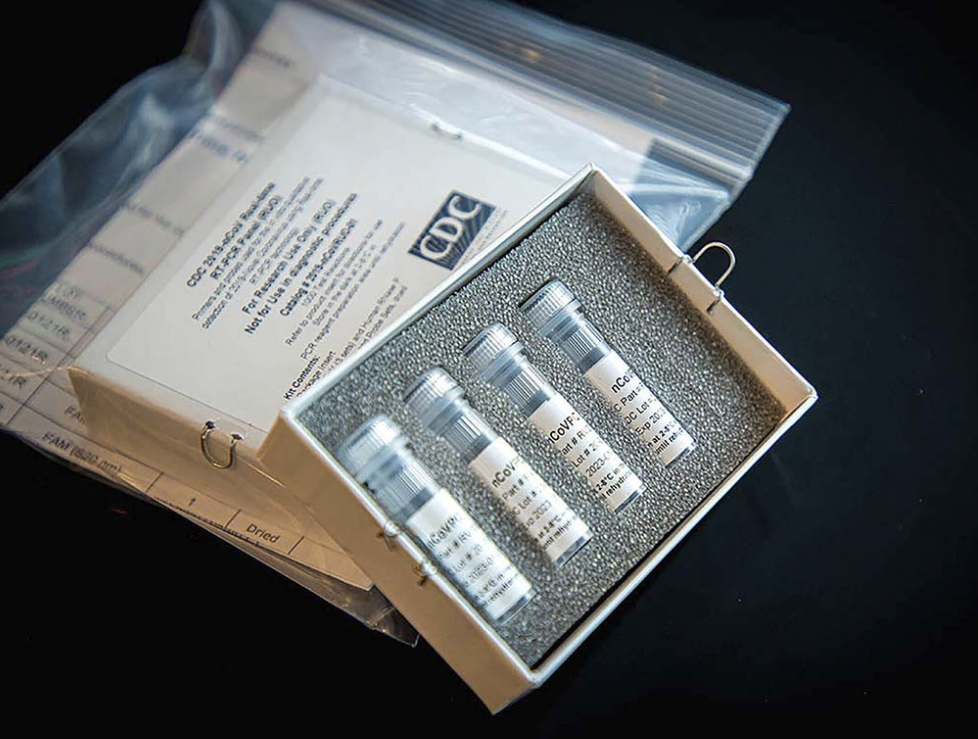
Testing kits that can be used to confirm coronavirus cases within 24 hours are en route to the Cayman Islands, according to the Health Services Authority.
Cayman currently sends samples from any suspected cases to the Caribbean Public Health Agency in Trinidad and Tobago, and must wait five to 10 days for results.
“Once we start testing here in the Cayman Islands, the results will be available in 24 hours,” Medical Officer of Health Samuel Williams-Rodriguez told the Cayman Compass in an email.
He said public health officials in Cayman were working with Public Health England and the Pan American Health Organization to get the Real-Time Reverse Transcription Polymerase Chain Reaction (RT-PCR) diagnostic technology on island.
“We have ordered from a private partner as well,” Williams-Rodriguez added.
Until the new test kits arrive, Cayman will continue to check for COVID-19 by using nasopharyngeal swabs to take samples to send off island.
The RT-PCR testing is intended for use on upper and lower respiratory specimens collected from a person who meets the US Centers for Disease Control and Prevention criteria for COVID-19 testing, according to the CDC website.
“These have been ordered and are en route to the Cayman Islands. We are in communication with WHO/PAHO and PH England to work out the logistics to start testing in the Cayman Islands as soon as possible,” Williams-Rodriguez said.
Although Cayman has no confirmed or suspected cases of coronavirus, Williams-Rodriguez said one person is currently under isolation and public health workers are monitoring three others.
He said the HSA has three scenarios planned if patients contract the COVID-19 virus and need to be isolated.
“If the person has mild or moderate symptoms not needing hospitalisation, then these patients will be treated and isolated at their residence,” he said. “Should these individuals need to be isolated from family members or are visitors themselves, then we have agreed to use an identified suitable location for this purpose.”
He said patients with moderate or severe symptoms will require hospitalisation but not ICU care.
“We have identified isolation rooms at the CIHSA and also private institutions,” Williams-Rodriguez said.
He added that in severe cases, where patients require ventilation and ICU care, they will be placed in isolation rooms and at private institutions so doctors can manage the cases.
Related Videos