

A full scale outbreak of the coronavirus would have left almost no one in the Cayman Islands untouched, according to an analysis by public health officials.
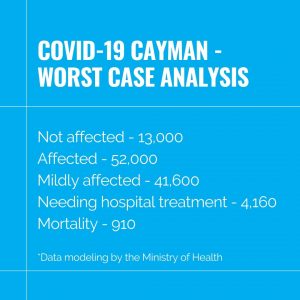
As many as 52,000 people – 80% of the islands’ population – could have contracted the virus in the ‘worst case scenario’, according to Chief Medical Officer Dr. John Lee.
Had that happened, an estimated 4,160 people would have needed hospital treatment over a 60-day period, and up to 910 patients could have died.
Lee said those figures, based on modelling done by the Ministry of Health in February, were fuelling some of government’s aggressive policies to contain the spread of the virus.
He said the idea of more than 4,000 people potentially being hospitalised in the space of two months was extremely worrying and would have completely overwhelmed Cayman’s hospitals.
Those statistics, derived from analysis of a World Health Organization epidemiological study out of China, represent what could have happened if Cayman had not introduced suppression measures, he said.
Lee suggested the restrictions put in place, including closing the islands’ borders and imposing strict curfews, had already helped avert the worst possible outcome.
But he warned that while Cayman has been successful in containing the virus so far, there are fears of a ‘bounce-back’ later in the year.
He said the coronavirus was one of the most ‘successful’ in the history of the planet and further outbreaks are possible once curfew measures begin to be lifted.
He believes government and health officials will have to be vigilant and continue widespread testing and other suppression measures through the end of the year at least.
“It is possible that lockdowns will need to be introduced again and again and again in order to try and keep people out of hospitals,” he added.
The curve begins to dip
To some extent, the virus is under control in Cayman.
Although new cases are announced on a regular basis and there have now been 61 people confirmed as positive for COVID-19, recent trends are positive.
Lee has produced a graph which charts every new case in the Cayman Islands since the first positive sample taken on 7 March.
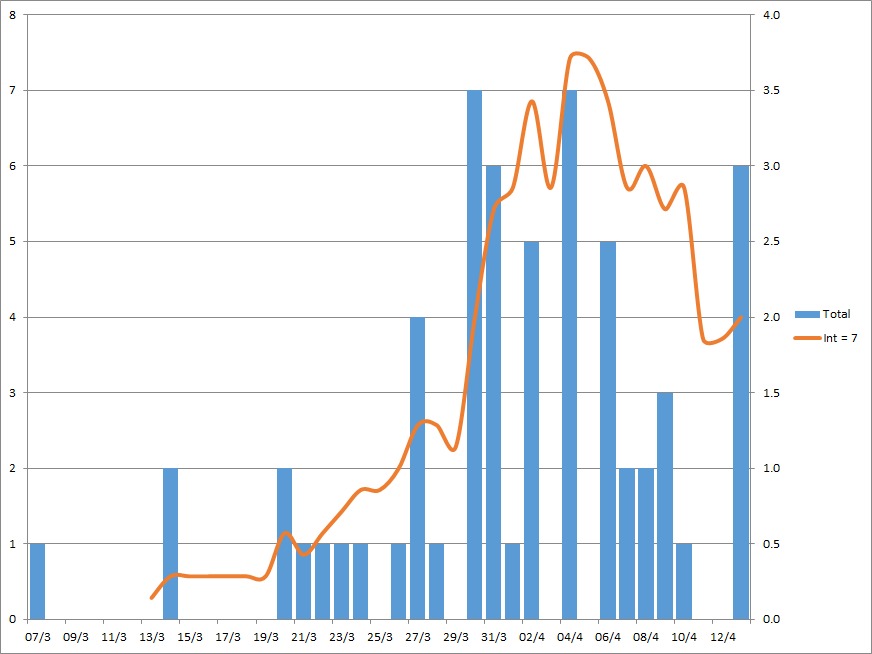
He has also charted a daily statistic of the average number of new positive cases for the previous week. Complex as that may sound, it simply provides an at-a-glance glimpse of how Cayman is faring in terms of the infiltration of the virus throughout the islands.
“At the moment, the line is not continuing to rise. It is actually falling a little bit, which means the suppression we have been employing very hard for the last three to four weeks has been working,” Lee said.
How suppression preserves hospital space
Citing international data, the chief medical officer said that, without suppression measures, the number of intensive-care beds required could have hit 280 per 100,000 people. That works out at a requirement of 182 ICU beds for Cayman’s 65,000 population.
Cayman has approximately 33 ICU beds – a ratio of 50 per 100,000 people.
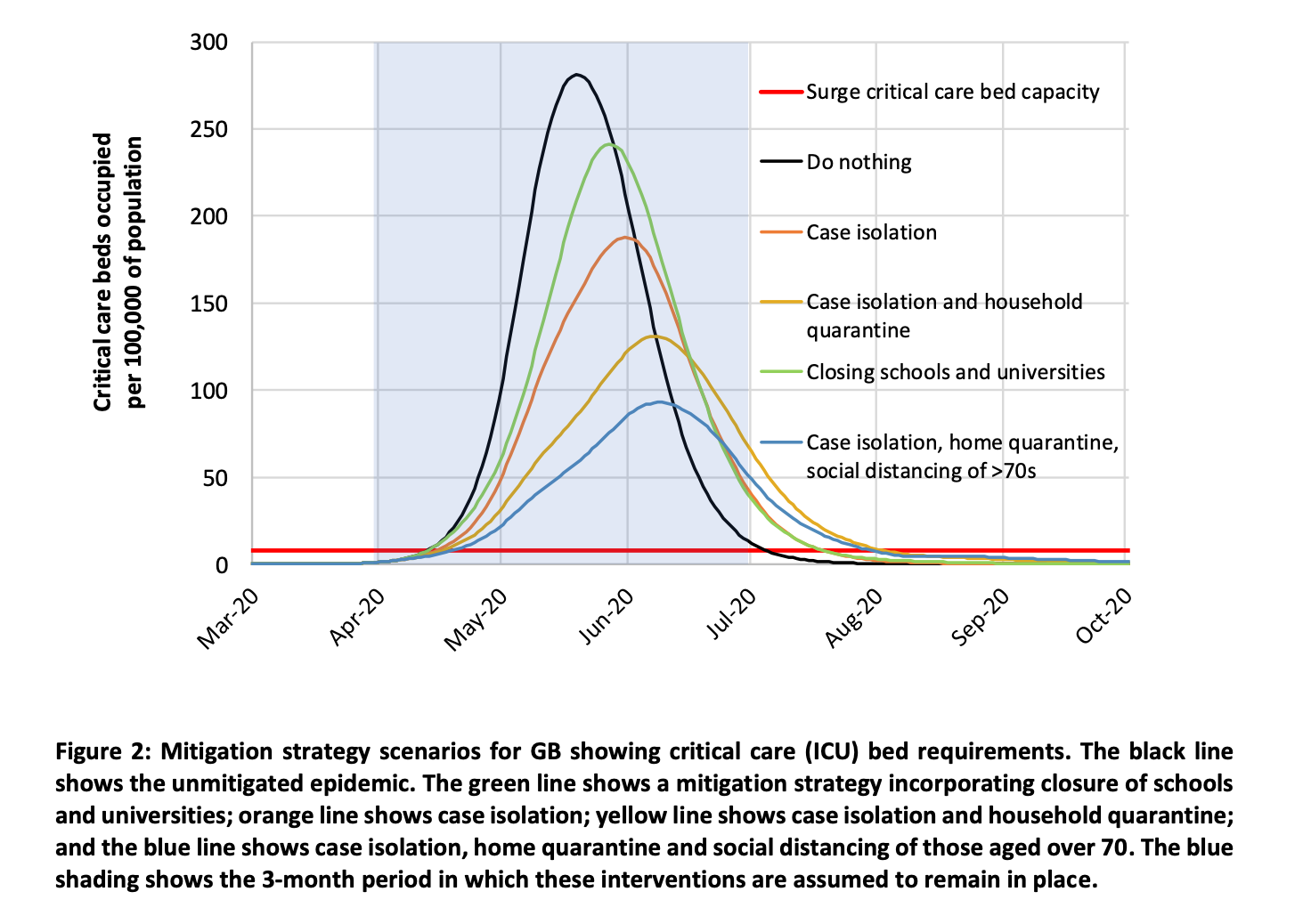
With suppression measures, the same data showed that requirement could be reduced to just five ICU beds per 100,000 people.
“With maximum suppression, our hospitals will be able to cope,” Lee said. “That’s what we have hoped for and that is what we have been able to achieve so far.
“Our hospitals are not flooded with patients, we have managed to keep people out of the hospitals largely and those that are there have received good care and are making it through.”
The only exception to that was Cayman’s first COVID-19 patient, the Italian cruise ship visitor who was treated at Health City after suffering a double heart attack and who later died from complications associated with the virus.
Fears of a COVID bounce-back
The same data – from a study by Imperial College, London – shows the virus could make a comeback later in the year if suppression measures are relaxed too soon or without sufficient care.
“We will get a resurgence because this is an exceedingly successful virus,” Lee said.
“It is good at infecting people, it is good at being transmitted from person to person, and it is good at hiding away.”

He said every government in the world was grappling with the question of how to lift lockdown measures without endangering large numbers of people. Any plan to lift restrictions will have to be handled carefully to prevent a ‘bounce-back’ and large numbers of hospitalisations, he said.
“The best answer is going to be a vaccine, which would protect everybody,” Lee said, “but that is not here yet, and it could well be a year or more until that arrives, if we are able to get it.
“There is always an if with vaccines; it is never a surety.”
Mass testing is likely to be a quicker route out of lockdown for Cayman, but even that will involve the risk of the virus resurfacing.
Lee said public health officials would need to be continuously monitoring and testing people, as well as tracing and isolating their contacts. Further curfews may also be necessary if there is a new outbreak, he warned.
“It is possible that lockdowns will need to be introduced again and again and again in order to try and keep people out of hospitals,” Lee said.
PCR vs. Antibody tests
There are two types of tests commonly used to detect the coronavirus.
The first, and most reliable, is called a Polymerase Chain Reaction test. That is what the Cayman Islands Hospital and the new CTMH Doctors Hospital lab use.
These tests detect RNA – the viral material. Medics take a nasal swab from a patient and use hi-tech equipment to identify if the genetic material of COVID-19 is present in the sample.
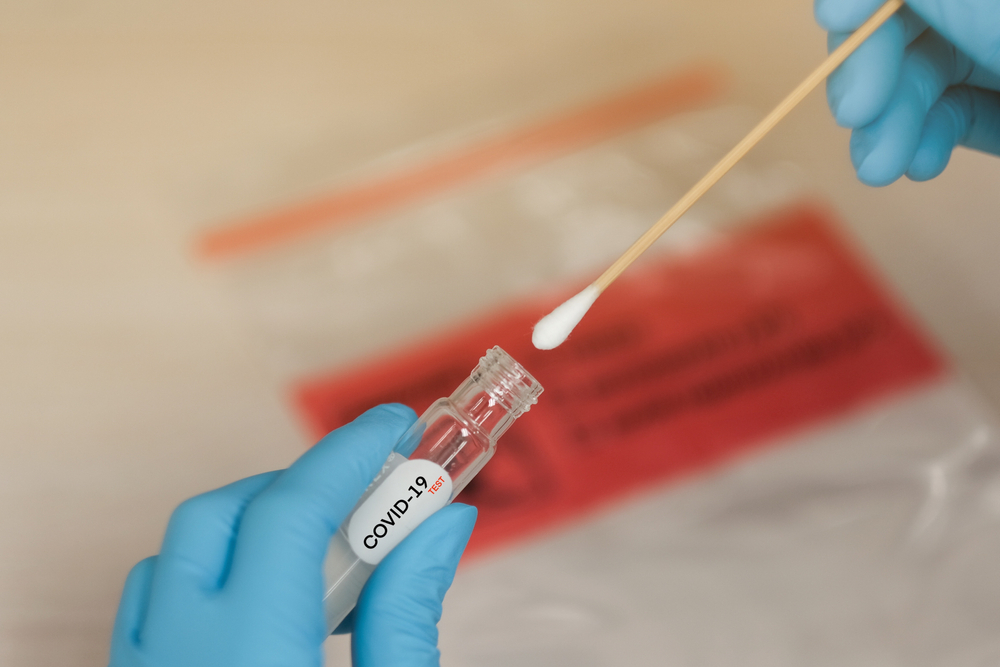
Those tests are considered to be extremely reliable and can pick up traces of the virus within days of infection.
Another genre of test, which has yet to prove as reliable, but is becoming more effective as research and development accelerates, seeks to detect antibodies to the virus in the blood stream.
Around 90% of people who contract COVID-19 will show an increase in antibodies in the blood, known as immunoglobulins, which are made by white blood cells.
Identifying COVID-specific antibodies in a test would help demonstrate if a particular person had previously been infected and has developed a degree of immunity.
Those tests have been touted as one possible method of screening visitors to allow a partial reopening of the borders at some point in the near future.
But, for now, they are not considered foolproof.
Their effectiveness for domestic use is likely to be limited in any case because of the relatively small number of people who have contracted the virus at this point.
“These tests may enable us to say this person has had the infection and is probably going to be okay, and this person is probably not,” said Lee.
“That still leaves us with a problem in Cayman because a lot of the population won’t have had it.”
He said the concept of ‘herd immunity’ was only really viable in communities where large numbers of people had been infected, which is something Cayman is trying to avoid.
Related Videos









There is no proven cure for the virus, although plasma transplant from people who have recovered from it appears hopeful. Also an anti-viral developed for Ebola.
In distressing news it appears that ventilators have not been terribly effective. Ventilators are not a cure of course but only take over one’s breathing in the hope it gives the body time to fight the infection itself.
In a report released by a New York hospital, out of almost 500 patients put on a ventilator only about 1/4 got better. The remainder either died or are still on it.
Let’s hope we can prevent further infections here then soon open the local economy.