The Department of Environment urged Cabinet against granting permission for an overwater bungalow development in the shallow waters of South Hole Sound in Little Cayman.
In a Coastal Works Review document dated 20 Aug., the DoE wrote that it “strongly recommends [the] application be refused on the principle of prohibiting the construction and establishment of habitable structures in a Marine Protected Area”.
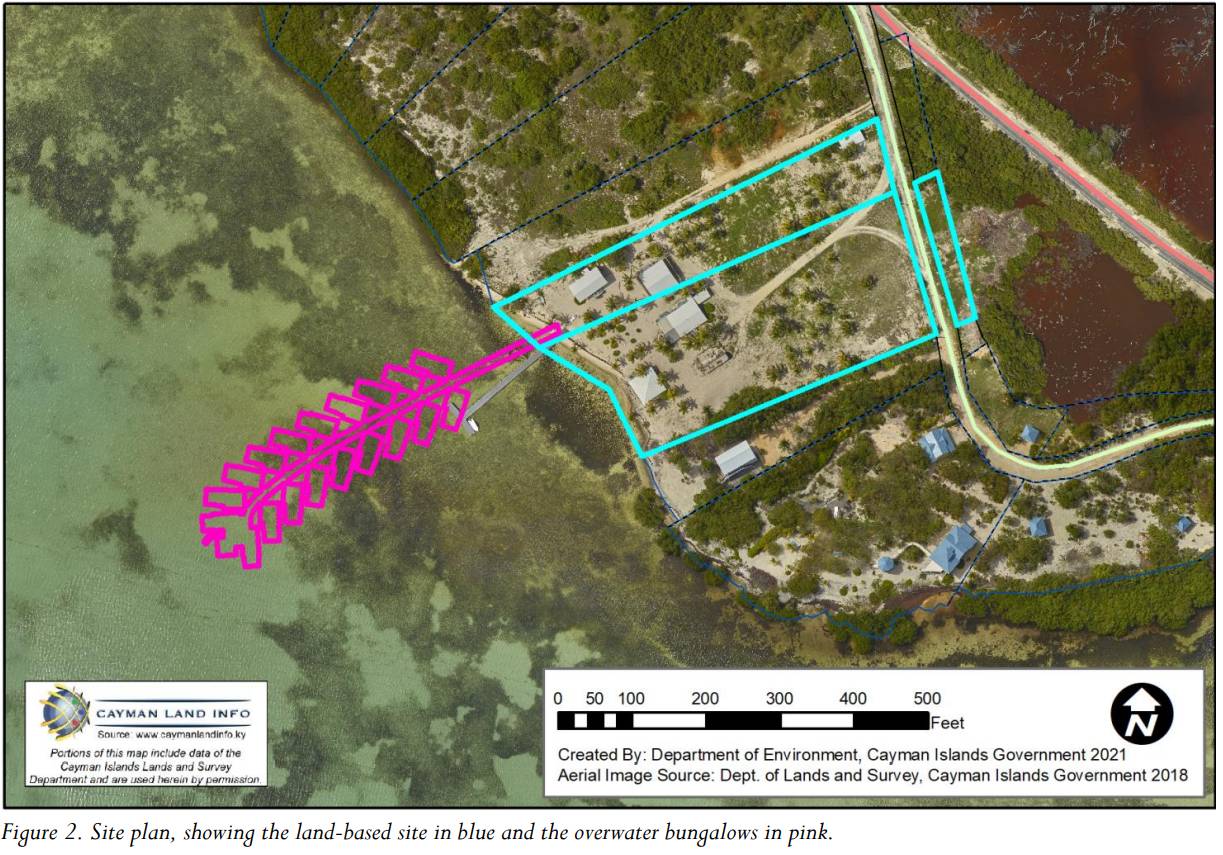
The development in question is a 61-bedroom beach resort that is split between on-land and overwater units.
Plans for the resort reveal that the land-based elements would consist of six cluster buildings, each of which would include two single-storey, two-bedroom units, and one two-storey three-bedroom unit – for a total of 42 bedrooms within 18 units.
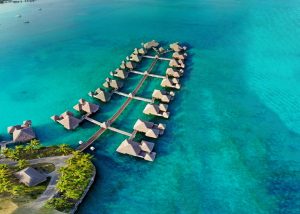
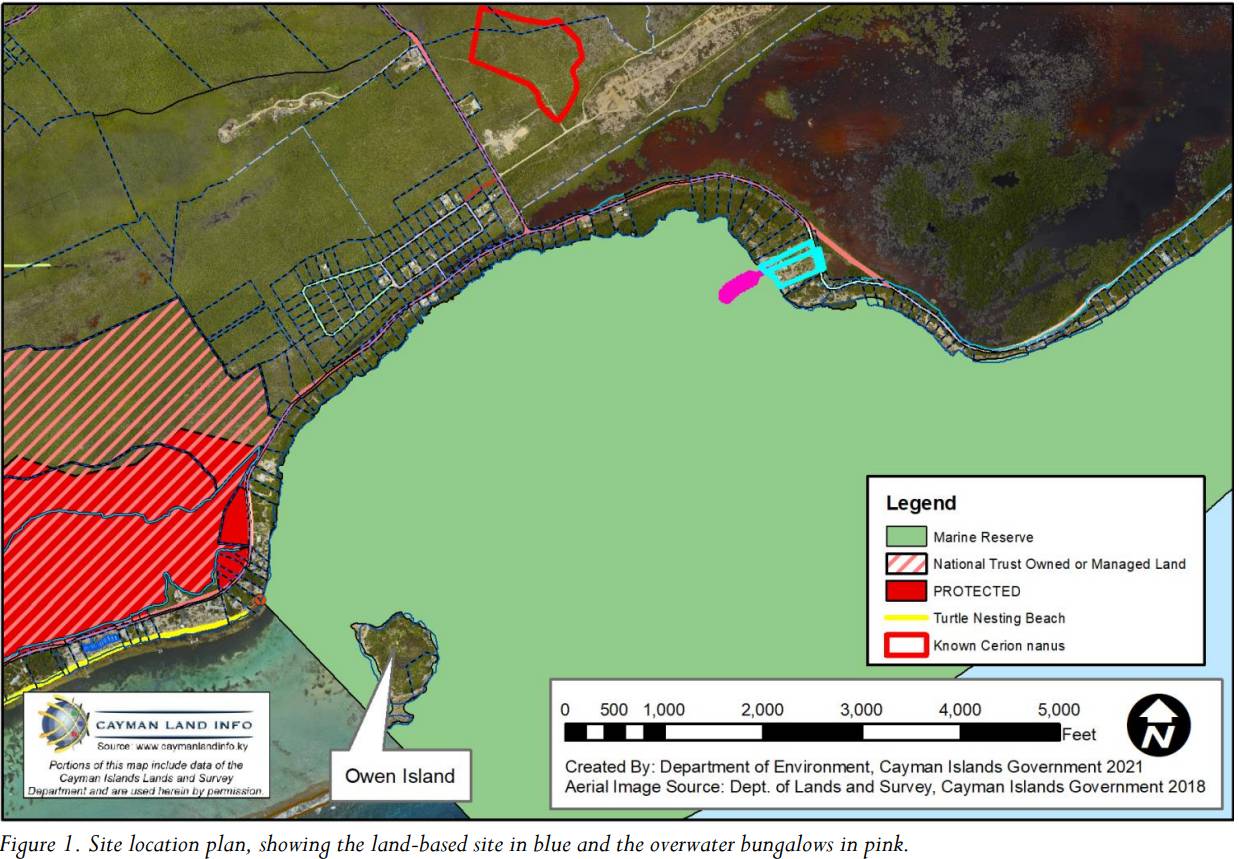
The overwater elements would include 19-single bedroom units, which run along a 450ft dock into the South Hole Sound.
“A project such as this would ordinarily trigger the requirement for screening to determine the need for an [Environmental Impact Assessment],” wrote the DoE in its coastal works review.
The document also stated that “it is the DoE’s strong view that it would not be beneficial or logical for the Applicant to do an EIA for a project which is fundamentally unacceptable due to its location and would be unacceptable regardless of the results of the EIA. Therefore, the Department is urging Cabinet to refuse permission for this coastal works application”.
The proposed development has been met by public opposition.
In August, the Central Caribbean Marine Institute, which is based in Little Cayman, voiced objections, stating it believed the development, “has the potential to impact the entire local marine ecosystem”.
The National Trust of the Cayman Islands also submitted a petition against the project, which garnered between 400 and 500 signatures.
Potential environmental harm
The DoE also warned that construction and subsequent operation of the beach resort could pose a threat to the marine environment.
In order to construct the overwater bungalows, the development would require 549 round coated steel piles between 12″ and 14″ that would be filled with galvanized steel, which would be mechanically drilled into below ground 16 to 18 feet, passing the sand and into the bedrock.
The DoE warned that the installation of the piles could result in the suspension of sediment, which could smother marine organisms while burying or coating others.
“This vast number of piles will result in direct impacts from the piles into the seabed and indirect impacts from the turbidity generated and the noise and vibration from the piling and operation of the equipment,” wrote the DoE.
Statutory protection
In the coastal works review document, the DoE noted the South Hole Sound is designated as a Marine Reserve, which is the second-highest level of marine protection afforded by the National Conservation Act. The highest level of protection is an Environmental Zone, such as the Central Mangrove Wetland.
The DoE states that a marine reserve is a “public, natural resource” that is needed to keep fish, conch and lobster populations at good levels.
“A marine Protected Area is a public natural resource for all the people of Cayman and should fundamentally not be degraded via habitable structures over the water,” wrote the DoE.
Lack of mitigations
The DoE flagged what it believes is a lack of meaningful mitigation measures presented by the developers in a Technical Report on the construction and maintenance of the proposed resort.
“Unfortunately, it appears to have been directly copied from a document entitled ‘Technical Report for the Construction and Maintenance of Overwater Structure at Whitehouse, Westmoreland dated April 2017,'” wrote the DoE, which also highlighted numerous errors in the document. For instance, it referred to Jamaican regulatory bodies, instead of Cayman departments, the DoE noted.
The DoE added, “it is difficult to accept these mitigation measures as commitments from the developer. Given the lack of proof-reading and that so many tables are simple screenshots of another project’s technical document; it is questionable whether these proposed measures would actually be implemented in the Proposed Development.”
Related Videos