

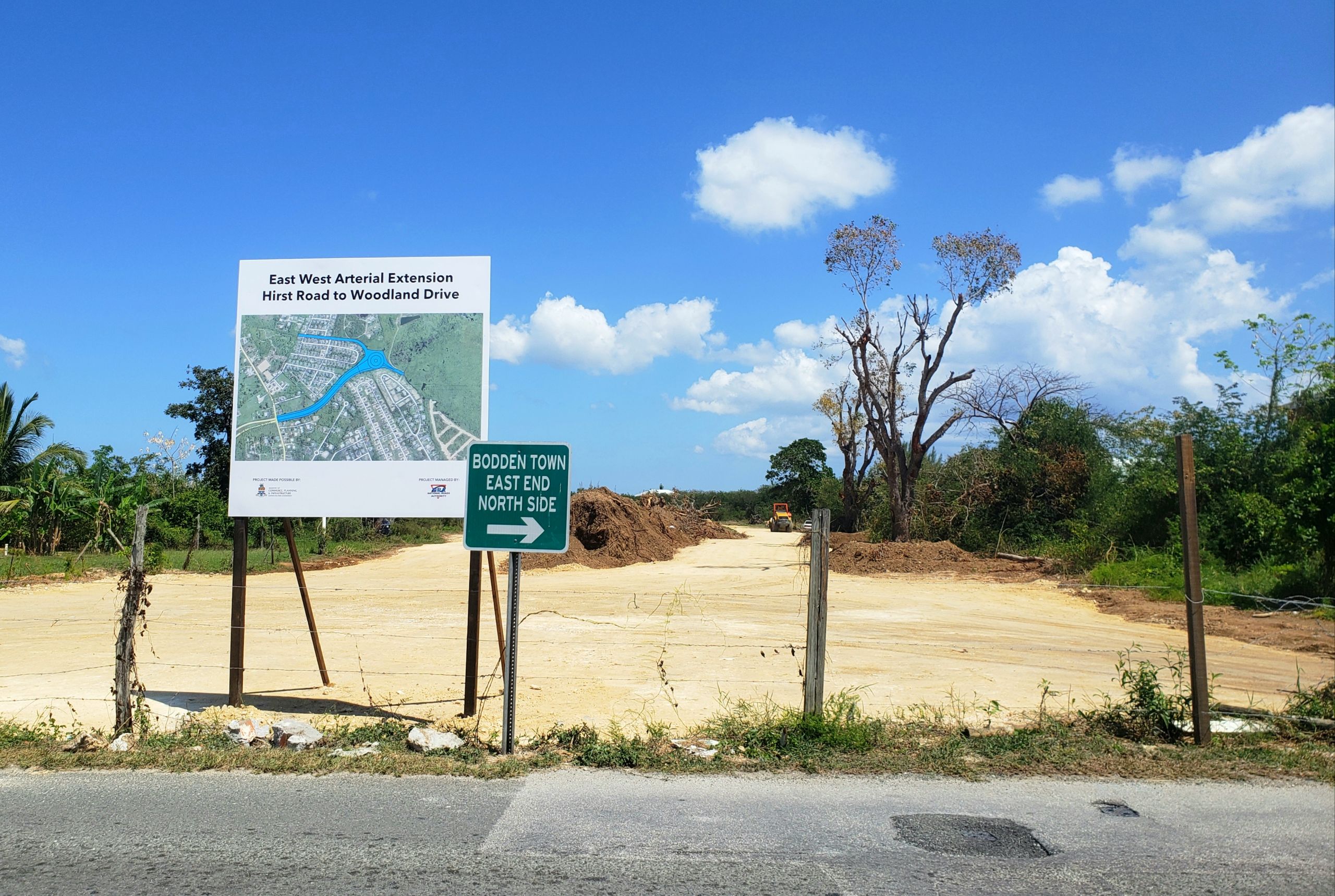
An environmental impact assessment on the final stages of the East-West Arterial highway is expected to begin ‘soon’, according to National Roads Authority managing director Edward Howard.
The 10-mile extension of the highway has been touted as one of the critically needed thoroughfares to ease rush-hour traffic woes faced by residents in the eastern districts.
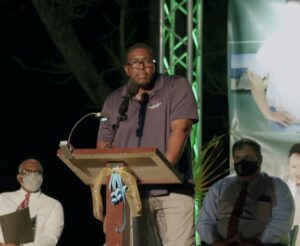
“We’re just at the procurement stage right now… We will be uploading all procurement documents very soon and selecting a consultant to do the EIA soon after that, so that is good news on that front,” Howard announced as he addressed a Prospect constituency meeting Thursday night organised by Prospect MP and Health Minister Sabrina Turner.
Government committed to East-West project
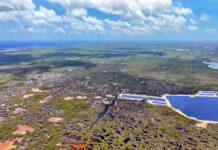
Under the previous Progressives administration, plans were undertaken to get the extension project off the ground, but environmental concerns over its encroachment of the mangroves and hefty price tag led to a longer-than-envisioned process.
However, Howard said that the PACT government “has made a strong commitment to get that road to Frank Sound as soon as possible”.
“[O]ur team is working very diligently, to get it to a stage where the environmental impact assessment will begin,” Howard told the audience gathered at Spotts Dock Thursday night.
Initially, the Progressives were locked in negotiations with the developers of Ironwood, a planned Arnold Palmer golf resort near Frank Sound, which was previously discussed for the road project. But those talks stalled without any substantive announcements on the project since.
Last year Infrastructure Minister Jay Ebanks, in a Cayman Compass interview, said once the EIA report is completed, “you will see that this government is 100% behind getting the road completed”.
The arterial is a five-phase project 20 years in the making. Phases four and five which run, respectively, from Hirst Road to Woodland Drive, and from Woodland Drive to Frank Sound, are yet to be completed.
The land has been cleared for phase four; however, an environmental impact assessment has to be completed before work can commence.
Howard, in his address at the meeting, said more roadways are in train to bring relief to the “constrained” Prospect community.
He said the widening of lanes near the BarCam petrol station and the Chrissie Tomlinson Roundabout should be completed in a couple of weeks and then the NRA will focus on extending the lanes going east at the Lions Centre.
This, he said, would probably last until 2023 after which the NRA will look to widen the section by First Baptist Church.
The planned works, he said, is a “very sort of systematic approach” to expand the road to six lanes.
He noted that while expanded lanes will be welcomed they also bring an added safety concern of speeding, which he said will be addressed.
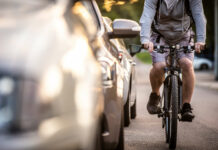
“One of the things that we are definitely going to look at is actually reducing the speed limit down from 40 [miles per hour] to 30 because we will have the carrying capacity but we also want to reduce the speed,” he said, adding that this was important because there are more people using bicycles as well as walking along the road.
Work on widening lanes from Agnes roundabout at Mangrove Point to Bobby Thompson will also begin shortly, he said, adding there will also be six lanes there as well.
“You will start to see project boards going up in the next two weeks or so giving the public an idea of what that scheme is gonna look like,” he added.
Speeding remains a concern
Prospect MP Turner pleaded for more police presence along Marina Drive to control the excessive speeding that continues to plague residents in that community.
She said speed bumps, though useful, are not the solution to address the concern.
“I need stronger presence… I need more vigilance,” she said.
Police Commissioner Derek Byrne, who attended the meeting along members of the RCIPS Traffic and Roads Policing Unit, acknowledged that speeding is a dominant issue.
“We know it’s a problem and we have to address collaboratively,” he said, pointing out that even though 50 miles (per hour) may be the maximum limit that does not mean motorists have to drive at that speed.
“There is going to be a targeted enforcement effort and we are going to increase resources through traffic,” Byrne said.
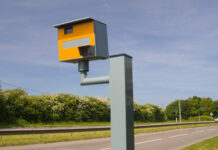
Responding to a question on the introduction of speed cameras, Byrne said, the Royal Cayman Islands Police Service is working towards that, but it is a major undertaking.
“We are developing a national road safety strategy and part of that will include discussion around cameras, but I caution to say a speed camera project is a very, very major project… it’s not just a case of putting up cameras. It requires a whole infrastructure,” he said.
At this time, he said, police still require the intercept, which is an officer holding a handheld radar gun to track vehicle speed.
The public, he said, can also help through tips sent into 911.
Turner added that work is continuing on green spaces in the Prospect community.
She also said that one of two lots between Buttonwood Avenue and Almond Avenue will be developed into a green space with a water feature, walking path and a gazebo.
This, she said, is being done in partnership with the Dart Group.
Related Videos







The problem starts with the A L Thompson roundabout then the Hurley’s roundabout is a major nightmare.
How to fix it?
Here’s an interesting article:
https://engineering.stackexchange.com/questions/63/what-are-the-pros-and-cons-of-a-traffic-circle-versus-a-traffic-light-intersecti
In brief the fastest intersection has different levels. That is a flyover/ overpass.
But next is a roundabout with traffic lights.
This could be easily done at both these roundabouts.
Incidentally the slowest, least efficient intersection is a 4 way stop sign as at the Hospital on Smith Road.
An excerpt from the article:
“The highest-capacity junctions are grade-separated. The next highest are signalised roundabouts, then unsignalised roundabouts, then signalised cross-roads, then unsignalised cross-roads have the lowest capacity.”
I think we should raise speed limits not lower them and find a way to keep traffic moving safely while segregating bikes and pedestrians… Cars are engineered to go and stop faster than 50 miles an hour in 2022 on Major thoroughfares where it is safe to do so. That said I support lower speed limits where there are children and pedestrians. My concern is that the knee-jerk reaction is always to lower speed limits and increase enforcement but pretty soon we all live in a place that has become an undesirable nanny state where everybody is petrified to drive (good citizens are made criminals) and that is bad for everyone because people begin to resent police and hate the land in which they live. I’ve seen this in Australia and Canada firsthand – nobody likes cameras or the heavy hand of slow speed enforcement once it’s been fully implemented. Don’t ruin this country like the UK and Australia have been ruined By criminalizing youngsters who go a bit too fast. It is the poor who suffer most under slow speed limits and heavy enforcement regimes.