The 2021 census put Cayman’s population at just below 70,000 people, about 26% more than during the last official count only 11 years earlier.
But a preliminary report acknowledged that the true population may be as high as 72,000, if all uncounted households are included.
Add to that about 2,500 property owners who do not reside in Cayman for more than six months per year and Cayman’s population may be higher still.
Rapid population growth, through immigration, is at times viewed with scepticism, not only due the cultural ramifications, but also because of the perceived increase in competition for jobs and housing.
It is also often blamed for increasing the cost of living, mainly because it reduces the available stock of rental accommodation. And the diminishing number of available properties available for purchase in the right price range leaves many first-time Caymanian buyers unable to get onto the bottom rung of the property ladder.
Given that the growing number of residents leads to more pressure on traffic, infrastructure, affordable living accommodation, schools and healthcare, demographic change can spark a debate about who the islands are growing and developing for?
At the same time, a declining population can have serious social and economic repercussions and Cayman’s growing numbers are often viewed as an indicator of its economic success.
How much economic growth does Cayman need?

Economist Marla Dukharan says the issue of economic and population growth needs to be framed through social development objectives.
To determine how much Cayman’s economy needs to grow each year, Dukharan says first one must ask what are the consensus-driven medium- to long-term development goals?
Is it free universal elementary, secondary and tertiary education or free primary healthcare coverage for all Caymanians? Is it adequate pension coverage or affordable housing for all Caymanians? Or does Cayman want a net-zero economy with climate-resistant infrastructure and housing for all?
And should the islands save and invest into the future with a reserve fund to draw on in times of crisis, for example to rebuild after a hurricane?
Whatever the answers to these questions are, they will help create a road map for the next decade and beyond, and define how much economic growth will be needed to achieve these goals.
Dukharan noted that the policy focus of governments on economic growth is justified because it generally leads to a higher GDP per capita, and is often associated with higher fiscal revenue, lower unemployment, lower poverty, and better socio-economic wellbeing.
“But the problem is that growth alone does not create better social outcomes,” she said.
“If the gains of economic growth are not spread evenly, and inequality is sustained or even exacerbated, as has been the case globally since 2008, then the social outcomes we expected from economic growth will be largely absent or even negative.”
Inequality marginalises and disenfranchises a segment of the population.
“Once we determine that we actually need GDP growth in order to achieve the medium-long term socio-economic goals we desire, our policy agenda must deliberately create that growth and concurrently distribute the gains more evenly, alongside correcting existing inequalities,” Dukharan said.
The economist added, “It is entirely possible, but unknown at this point, that perhaps we do not actually need to worry much about growth, but about addressing existing inequalities and distributing the gains of Cayman’s economic prosperity more evenly.”
Does Cayman need population growth?
Demographics are important for the success of an economy, because two groups – people under 15 and those over 65 – are generally regarded as being outside the workforce.
A sustainable economy should have enough people in the workforce to generate the levels of economic activity and fiscal revenue, including pension and national healthcare contributions, to sustainably provide the necessary social services to support these two non-working groups, Dukharan explains.
A comparison of the 2010 census data and the preliminary census 2021 shows that over the past 11 years, the number of Caymanians over age 65 has grown by 76%.
During that time, more than one-third, 36%, of Caymanian population growth occurred in the senior age group of over 65 years, while only 8% growth was recorded in the under-15 age group.
Caymanians make up the overwhelming majority of seniors, 84%, in the islands.
When looking at the population as a whole, Caymanians contributed only 27% to the growth in the population under 15, or less than 450 people, but more than 2,000 people to the population over 65.
“This means that the Caymanian population is ageing, and that the Caymanian population does not have a high-enough birth rate to replace those who are leaving the workforce,” Dukharan said.
“Without the non-Caymanian population therefore, we would soon end up in an unsustainable situation as it relates to the amount of economic activity, fiscal revenue, pension contributions, etc.”
Attracting people in the demographic groups that are needed to maintain a sustainable active workforce is important to the socio-economy of the Cayman Islands, she concluded.
As far as unwanted side effects from immigration are concerned, Dukharan said, risks, such as rising housing prices and cost of living, must be managed and mitigated via appropriate policies.
They also cannot be viewed in isolation as there is substantial evidence of positive side effects of inward migration such as knowledge transfer and social gains, particularly when the immigrants are of a high skill level, she added.
“But the bottom line is that the data tells us that the Cayman Islands must address its rapidly ageing population for a sustainable future.”
Cayman society is only at the beginning of its ageing process. The population share of over 65 year olds has increased from 5.4% in 2010 to 7.8% in 2021, which is comparatively low due to the large working age expat population. The share of Caymanian seniors among the Caymanian population has grown from 8.6% to 12.8% during the period.
Bermuda’s population decline
The negative impact of a declining and ageing population can be witnessed in Bermuda.
Bermuda’s population has been decreasing since 2008, as a result of continuously falling birth rates and net emigration. The number of work permits issued dropped from 14,129 in 2012 to 6,140 in 2020.
According to government projections, a quarter of the population will be senior citizens by 2026.
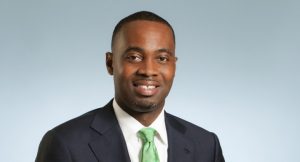
Presenting his government’s annual budget, Bermuda’s Premier David Burt argued that Bermuda faced a demographic challenge, with an increasingly ageing society and following four consecutive years of deaths exceeding births and the departure of foreign tourism workers who left the jurisdiction in the wake of the COVID-19 pandemic.
Burt said population growth was a necessity for Bermuda’s survival and not reversing these trends would spell economic disaster.
“It is not possible for Bermuda’s economy to grow while our population declines and ages. A declining population in a small island state increases the cost of living. An ageing population increases the cost of healthcare. A shrinking workforce puts future pensions at risk,” he said.
To reverse the trends, Bermuda would need to attract domestic and foreign investment.
Burt said the discussion had to shift from the “false choice” of whether population growth is good or bad to a mindset recognising that growth is essential. The issue then becomes how to ensure that the growth benefits Bermudians and does not leave them “as spectators to success”.
This is almost word-for-word the concern expressed in Cayman’s political environment during the election campaign.
“Immigration policy may be controversial, but economic and demographic realities should not be,” Burt added. “In a modern and globalised economy, where people do not need to live in Bermuda to work for Bermudian companies, and with an ageing populace and infrastructure, we will not fix the burning issues of high taxes, high cost of living and weak business demand without increasing the number of people that live and work in Bermuda.”
Other arguments in favour of population growth expressed by Bermuda’s premier included the need for small businesses to have more customers to survive.
“If our economic pie does not expand, and our local entrepreneurs are fighting over the same 60,000 customers, there will be little collective growth. More jobs and a growing population leads to more opportunity for entrepreneurship, more opportunity for growth, and more opportunity for wealth creation.”
Bermuda’s opposition leader Cole Simons said in response that his party, the One Bermuda Alliance, had long argued for a change in immigration policies. “We need a minimum of 10,000 new residents to bolster our economy. There is no if ands or buts about it. We need bodies on this island.”
Related Videos