

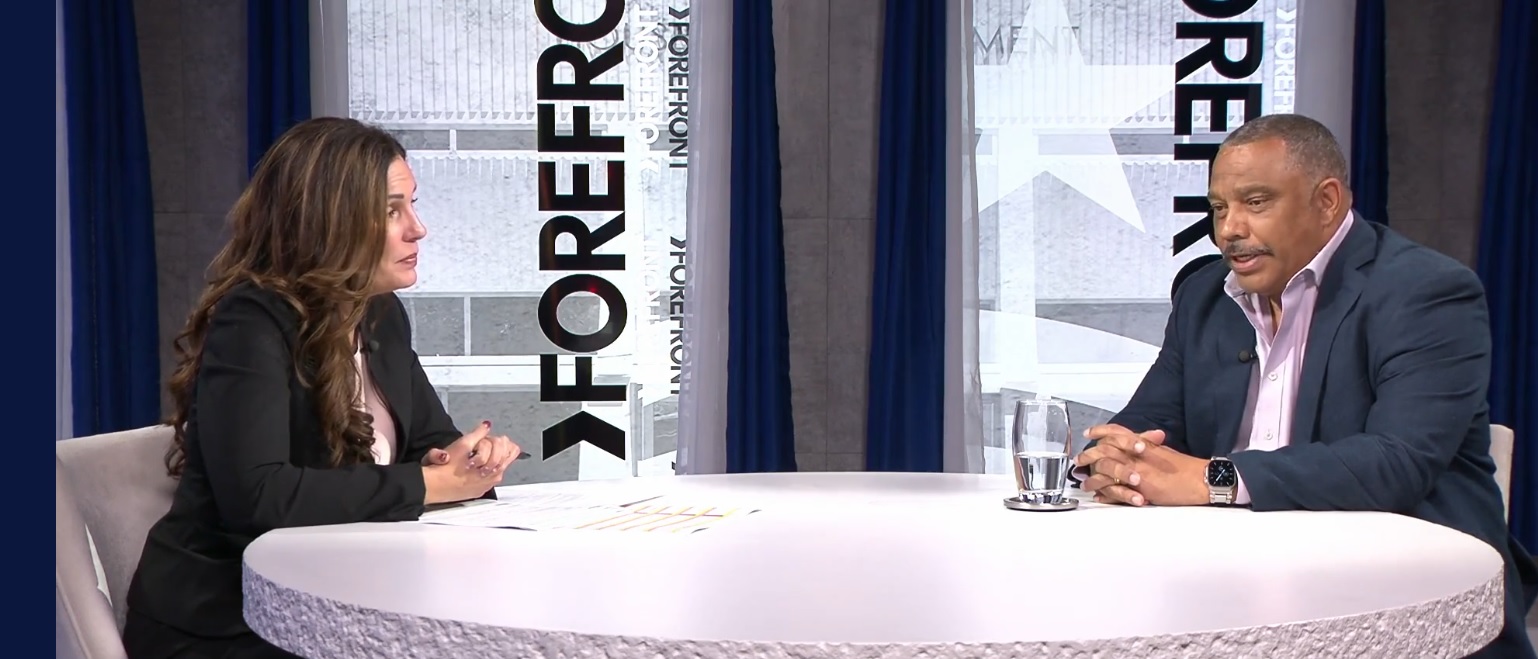
Cayman’s ever-growing population makes changes to the islands’ immigration laws a major priority, lawyer and former tourism minister Cline Glidden has said.
Speaking on Compass TV’s Forefront show on 17 July, Glidden said Cayman is overdue for an overhaul of its immigration legislation, but cautioned that a careful balance must be maintained to ensure the economy is not impacted.
Acknowledging that the particulars of what the government plans to do about immigration reform in the private sector have not been released yet, he noted there had been various proposals aired on the election campaign trail, such as changes to the rollover policy and moratoriums on work permits and Caymanian status grants.
“The devil is in the details, and I don’t think we’ve had a lot of information we can access and analyse,” he told Forefront host Tammi Sulliman.
He added, “It’s important to recognise that it’s critical for us to get that balance right because we do have a consumer-based economy. Cayman works because of those people coming here consuming and making a contribution to the domestic economy.”
Population at highest level ever
Cayman’s population has increased to its highest in history, according to the latest estimates by the Economics and Statistics Office, which show 88,833 people living in Cayman at the end of 2024, with about half of those being added in the past 15 years.
In addition to looking at Cayman’s immigration laws to help respond to the growing number of residents, Glidden says government also needs to explore changing legislation relating to business ownership, such as the Local Companies Control Act, which mandates that a business must be 60% owned by a Caymanian partner.
“We not only want Caymanians to have opportunities in employment,” he said, “we also want them to have opportunities to own a business as well.”
Regarding proposed changes to immigration laws, Glidden also suggests it’s time that amendments were made to residency rules based on investment in real estate, that allows individuals who have invested either $1 million or $2 million (depending on the residency status) to live in Cayman, but not work or gain citizenship.
At the time those were drawn up, in 2003, he said, a $2 million property was considered a very considerable real estate investment, but now “the landscape has changed”.
“The legislation has not been amended to reflect current property prices. When you have properties along the beach going for $30 million, I think it’s fair to say, at $2 million, we’ve outgrown that for quite a while, and legislation should be changed to reflect that,” he said.
He noted, however, that there is a cap on 250 people per year being granted that particular form of residency, which has never been reached.
Cayman’s “liberal” tourism policy that allows individuals to stay in the islands for up to six months as visitors, he said, makes it an attractive place already for high-net-worth individuals who likely own other properties overseas and who would have no need to try to obtain residency.
The issue was highlighted during the COVID-19 pandemic when property owners, often retired ‘snowbirds’ who typically spend their winters in Cayman, wanted more residency rights to enable them to remain here longer, when the islands were considered a safe haven during the pandemic.
“If you remember, when the borders closed, we said we were closed to visitors and those folks were saying ‘I’ve been here for 30 years, and now my clothes are here and Cayman is my home. I don’t see myself as a visitor because I’ve owned property here for 30 years, and, all of a sudden, they realised they had no legal right to come and use their asset, ” he said.
Changes ahead
Earlier this month, Members of Parliament unanimously passed legislation amending immigration rules for civil servants, bringing them more in line with the private sector by introducing term limits that restricts how long non-Caymanian employees can remain employed in the civil service.
Immigration minister Michael Myles, appearing on Forefront in June, previewed some of the amendments the government also plans to make in the private sector, which include expat workers potentially waiting up to 22 years for Caymanian status eligibility, and reforms to the permanent residency points system and residency by investment system.
Glidden said he was excited to hear what the National Coalition For Caymanians government and Myles have in store regarding population growth and opportunities for Caymanians.
“The time has come for adjustments to be made,” he said. “Fifty years ago, having the need for capital and the need for experience, our trade and business law, our immigration law worked to the benefit [of Caymanians], but our country has developed.”
Asked if there may be any potential legal implications to changing legislation, Glidden, a lawyer at Ogier, noted that there could possibly be challenges by individuals who are already on the path to Caymanian status and citizenship that could lead to the courts “saying those people will have reasonable expectations to be treated based on the system that was here when they came”.
Related Videos













Marriages of convenience, when Caymanians are paid to marry an expat should correctly be investigated and prosecuted.
However the proposal I read that a person would have to be married to a Caymanian for 22 YEARS before they could themselves become Caymanian (as against the current 7 years) is probably illegal and certainly unreasonable.
Has the government ever considered doing more to attract well-off retirees and business people, especially from the UK?
Due to changes in UK taxation some 10,000 millionaires left the UK last year, mostly to Dubai, Singapore and the USA. Why not here?
Why not offer people residence for, say, a flat fee of $20,000 per year? Plus, say, $10,000 per dependent. With no absolute guarantee of renewal except that it would usually be renewable if the person didn’t break any laws. No requirement (perhaps) to buy a home but that they would have to have sufficient income to never be a drain on the state and no right ever to become Caymanian.
Why not develop retirement communities?
In Dubai foreigners can only buy in certain areas. Would that work in Cayman?
There will be a real estate crash and exodus of workers upon these changes. There will not be enough people to do the jobs.
Wait and see. How many Caymanians does Fosters employ stocking the shelves? Not enough, they don’t want these jobs, only high paying jobs over 200k.
Even these young kids out of high school think they deserve 100k due to social media.
22 years to status is one of the longest in the world. Finance and law employers will move and Cayman will become a sleepy Caribbean country like they want and have an economy similar to Jamaica with more bad men. People will lose money on real estate soon.
That’s my take as a Caymanian. We can’t hire enough Caymanian. Caymanians only want certain jobs and usually don’t have the skills. Expats will clean a toilet, wash a car, be a nurse or a teacher. That’s what makes the economy run.
Smart observation that the threshold of $2m may be outdated (too low), while even at that low level we don’t fill 250 spots a year! Let’s see what else is like that. That doesn’t do what we want.
I think we need to decide what we want. The island can easily support 150,000 people or more, and we will likely get there over time as the economy expands. What will people do when they get there?
We have and always had great food. That won’t change, so it will be a great culinary island. Gene Thompson’s work steering the changes in our Health Care Laws left us an incredible health care system. It’s a model for the world. We should keep encouraging that.
Targeting luxury is good because it means even less luxurious properties will become more luxurious over time. Luxury = more money for the same thing you’re selling anyway, with less negative impact on people so that’s why it’s good.
I think we need taller buildings to stack vertical parking inside of. We need a path to citizenship for those most committed. We need the ability to bring in lower cost workers from all corners of the World to help fuel our growth.
The biggest risk is that we don’t upset the growth machine and we get government out of the way of business. We are too small a country and one BIG risk is overregulation stifling business.
“Moratorium on work permits”, this raises a massive red flag, if it is likely to go ahead employers need to know in advance exactly what it entails, without delay.