

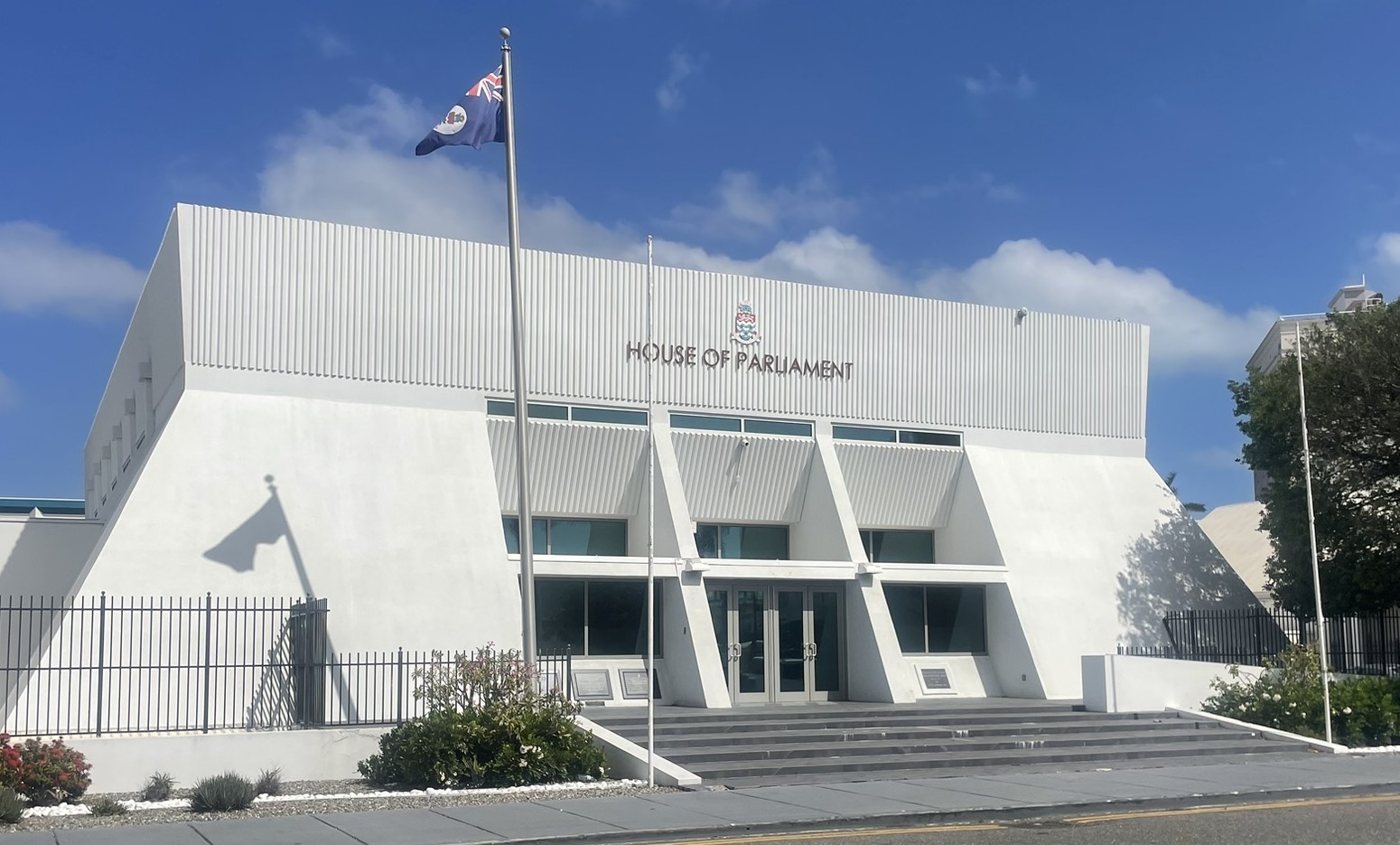
Government and opposition members both clashed and cooperated in a fiery final day in Parliament on Friday before breaking for the summer recess.
There were cross-party agreements on changes to the laws governing employment in the civil service for non-Caymanians, as well as testy exchanges across the chamber regarding government plans to put back its Strategic Policy Statement.
Bills regarding the non-profit status of churches and legislation on digitised assets were also discussed.
Term limits in the civil service
Term limits for non-Caymanians working in the civil service were passed unanimously, making the public sector more in line with the private sector.
Introducing the Public Service Management (Amendment) Bill, 2025, Acting Deputy Governor Gloria McField-Nixon told the House, “This bill comes following a clear call to action for the civil service to introduce measures to limit the duration of time that non-Caymanian employees can remain employed in our civil service.
“It was understood that the call for term limits within the civil service was underpinned by a desire to achieve greater parity with the private sector, a need to address perceived irregularities arising from the current law and a desire to create more employment opportunities for Caymanians.”
She added that employment and immigration were “not trivial matters and these matters can be quite emotive, especially to those who are directly impacted” and said government had worked hard to reduce any unintended consequences which “could be severe and highly disruptive”.
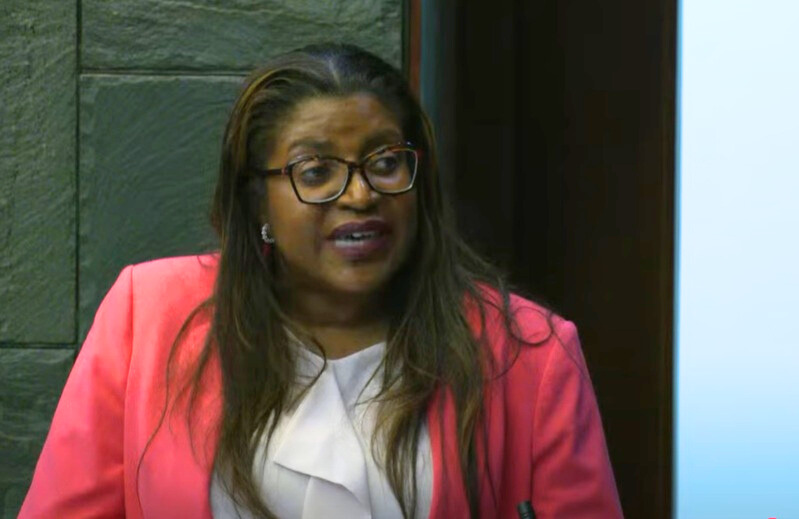
Non-Caymanian civil servants currently make up 4% of the workforce, with only 173 non-Caymanian civil servants being permanent residents and half of those having acquired that status through marriage.
“It is worth noting that the average tenure of a non-Caymanian civil servant is 5.8 years,” added the acting deputy governor, “which indicates that the majority of non-Caymanians within the civil service exit the organisation long before they meet the current nine-year requirement to be eligible for consideration to receive permanent residency.”
Retroactive policy
If the policy were to be applied retroactively, she said, some units such as the Royal Cayman Islands Police Service and the Department of Education Services would suffer “catastrophic organisational failures” with the entire RCIPS teams for the Bureau of Financial Investigation, Digital Forensics, Scenes of Crime, Ballistics, Major Crime Investigations, and the Analyst and Cold Case Unit being lost.
Instead, government proposed that existing non-Caymanian civil servants would be subject to term limits from the day that the legislation is implemented, most likely at the start of next year.
The bill means that non-Caymanian civil servants will be subject to the same nine-year period as private sector staff, but with a rollover period of two years instead of one as is currently the case in the private sector.
Continuity
McField-Nixon added that there remained “a residual risk to the continuity of public services that these measures will negatively impact morale within the civil service or give rise to early departure of highly skilled non-Caymanian civil servants” and said that the situation would be monitored.
“It is known that term limits in isolation will not increase job opportunities for Caymanians,” she said. “Term limits have not achieved this in the private sector and will not in and of itself achieve this in the civil service. In the 20 years since term limits were introduced, the representation of Caymanians in the national workforce has significantly decreased [and] more is needed to achieve the full objectives of our government.”
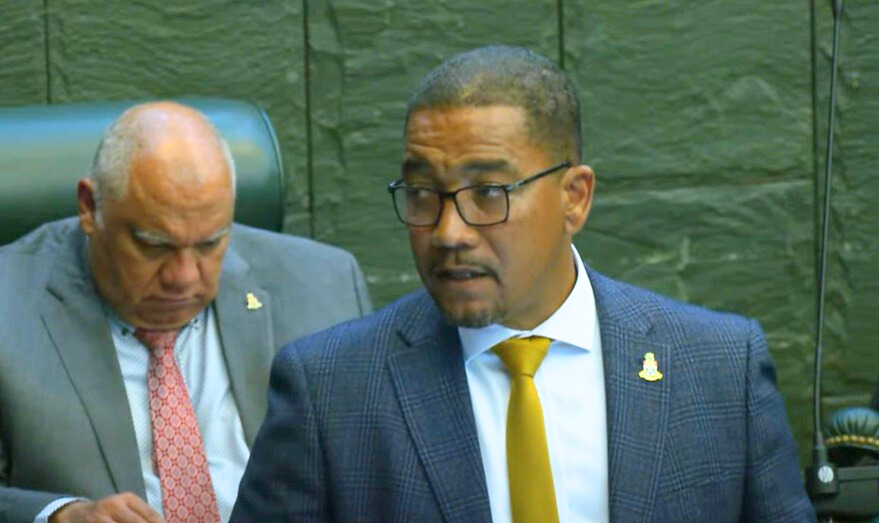
Replying from the opposition benches, MP Kenneth Bryan said he was “truly honoured to be in this honourable Parliament, that we have now finally started to take this topic of immigration seriously”, and congratulated the current government for being “strong and bold” in dealing with the topic, adding that he hoped one day that there would be a civil service entirely composed of Caymanian men and women.
Speaking from the government benches, Immigration Minister Michael Myles said, “Today marks a historic and defining moment for our country … landmark legislation that represents a fundamental shift in how we manage our public sector workforce.”
The bill was passed unanimously.
Clash over SPS timetable
There was a less harmonious atmosphere for the debate over the Public Management and Finance (Amendment) Bill, 2025, which proposed allowing government six months instead of three to present its Strategic Policy Statement.
Presenting the bill, Finance Minister Rolston Anglin said, “The SPS is a key component of the budgeting process”, which “lays the foundation for sound fiscal planning and governance”, as well as setting out government’s financial priorities.
He said that there was insufficient time between the election and when Parliament broke for summer recess on 30 June “to prepare an SPS that is meaningful and robust” and that he was currently working on combining the information in the SPS with the budget in future.
“It is becoming increasingly evident that a separate SPS document and its required preparation time and processes are no longer fit for purpose,” he said. “Combining the SPS information with the budget eliminates the need for separate processes, preserves resources and improves the efficiency and effectiveness of a budget preparation process.”
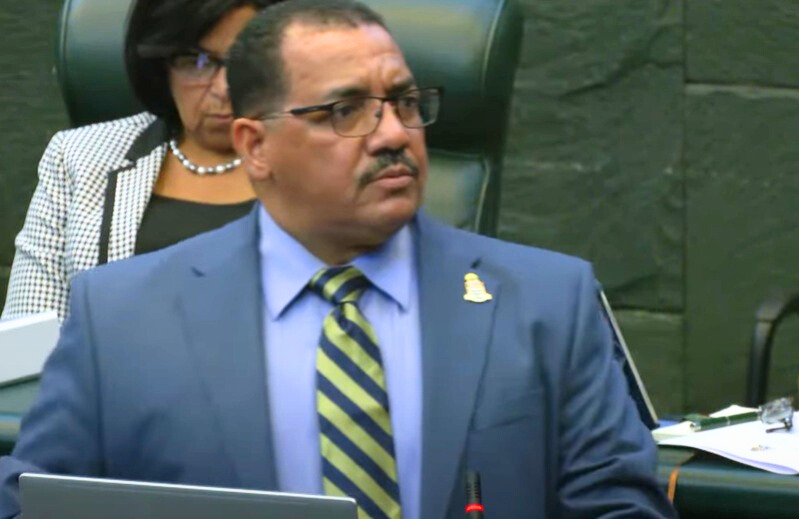
Anglin said that in the past, there have been “significant variances between the financial forecasts contained in the SPS and those contained in the budget”, noting that “when the 2024 to 2026 SPS was presented to Parliament in May of 2023, the operating surplus for 2024 financial year was projected to be $77.4 million.
“By the time the then government finalised and presented the 2024 to 2025 budget to Parliament in November 2023, some six months after the presentation of the SPS, the projected operating surplus for 2024 was 45% lower. This misalignment raises concerns about the effectiveness of the SPS process and its utility in informed fiscal planning.”
He added to his point by comparing the SPS to the budgets over the last decade, showing that there was often a difference of millions of dollars between the SPS forecast and the budget forecast.
“What we have consistently seen is that due to the fact that we’re presenting an SPS so early in the fiscal year that by the time you get nine or 10 months in when the real results start to pile in and you actually get down to all the policy decisions kicking in, you then see this large variance, so that by the time you present the budget around November, you’re seeing these types of differences.”
Urgent repair
Anglin added, “It is time for us to stop just doing the same thing over and over and over and expecting a different outcome … I think the evidence is clear that the way in which we conduct the SPS process versus the final budget is one that is broken and one that needs deep repair and repair urgently.”
Opposition leader Joey Hew responded by saying that the SPS is “the first real indication of where a new government wants to take the country”.
He added that with the current coalition government consisting of two parties and three independents, “we don’t know what the policy platform looks like [as] there’s no single manifesto, so the SPS becomes the first and only real opportunity for the public, the private sector, the civil servants and the rest of us here in Parliament to get a clear sense of the government’s direction. Just this week alone we have heard major policy changes in this House, so clarity is important. … If we don’t see the SPS early enough, everyone is simply left guessing.”
He suggested that the SPS should instead be delivered in four months, which “would still give the government until the end of August to produce the SPS [and] it creates space for early planning without leaving it too late. … The SPS is not just a bureaucratic requirement, it’s a window into the government’s priorities.”
‘Fishy’
In a heated contribution, his opposition colleague Bryan said that government had come into Parliament “unprepared”, saying, “The arguments that have been put forward seem to be a little bit fishy” and that they “should be ashamed of themselves”.
Anglin responded by saying, “There’s nothing fishy going on here. We have a broken system and we have to admit it. We have got to put in the work now to fix the system.”
The bill was passed.
Also passed on Friday was the Churches Incorporation (Amendment) Bill 2025, which amended the Churches Incorporation Act 2007 to ensure that income and assets of churches that are registered as non-profit organisations are exclusively used for non-profit activities.
Premier André Ebanks said that the bill sought to address a gap in the constitutions of churches established under this act, adding that many churches contributed to the social development and progress in these islands in many areas, including education and community services. The bill was supported by the opposition.
Virtual assets
Also passed was the Virtual Asset Service Providers (Amendment) Bill 2025, which the premier said would clear up any confusion over whether a tokenised fund should be regulated under the mutual funds or private funds legislation alone or under the VASP Act as well.
“The Cayman Islands is second only to the US in the number of registered alternative investment funds,” Ebanks said.
“This is why it is imperative that we continue to stay on top of developing trends in this space in order to ensure sustained future growth, because if, and this is already starting to happen, a number of comparable jurisdictions who compete in the space of investment funds have already changed their legislation, it is only a matter of time in which our investment funds say, ‘Well, I can do it easier there so I will then continue to migrate there.'”
Parliament is now on its summer recess.
Related Videos













Make no mistake, this will harm Cayman in the long run. This is electioneering and populism plane and simple and will only benefit those who proposed and this bill.
Term limits should also be implemented for politicians as well. We have seen what career politicians can do. 2 x 4 year limits should be the max.
lol no politician term limit but just for expats. You’re a fool if you work for our government. They will take from you and banish you at the same time.