

Recruitment challenges are impacting the recovery of the tourism industry as Cayman’s businesses attempt to bounce back from COVID-19.
Optimism has surged with restrictions lifted and airlines and cruise ships beginning to return. But, staffing up to meet those visitors with high quality service is the next big challenge hampering the industry.
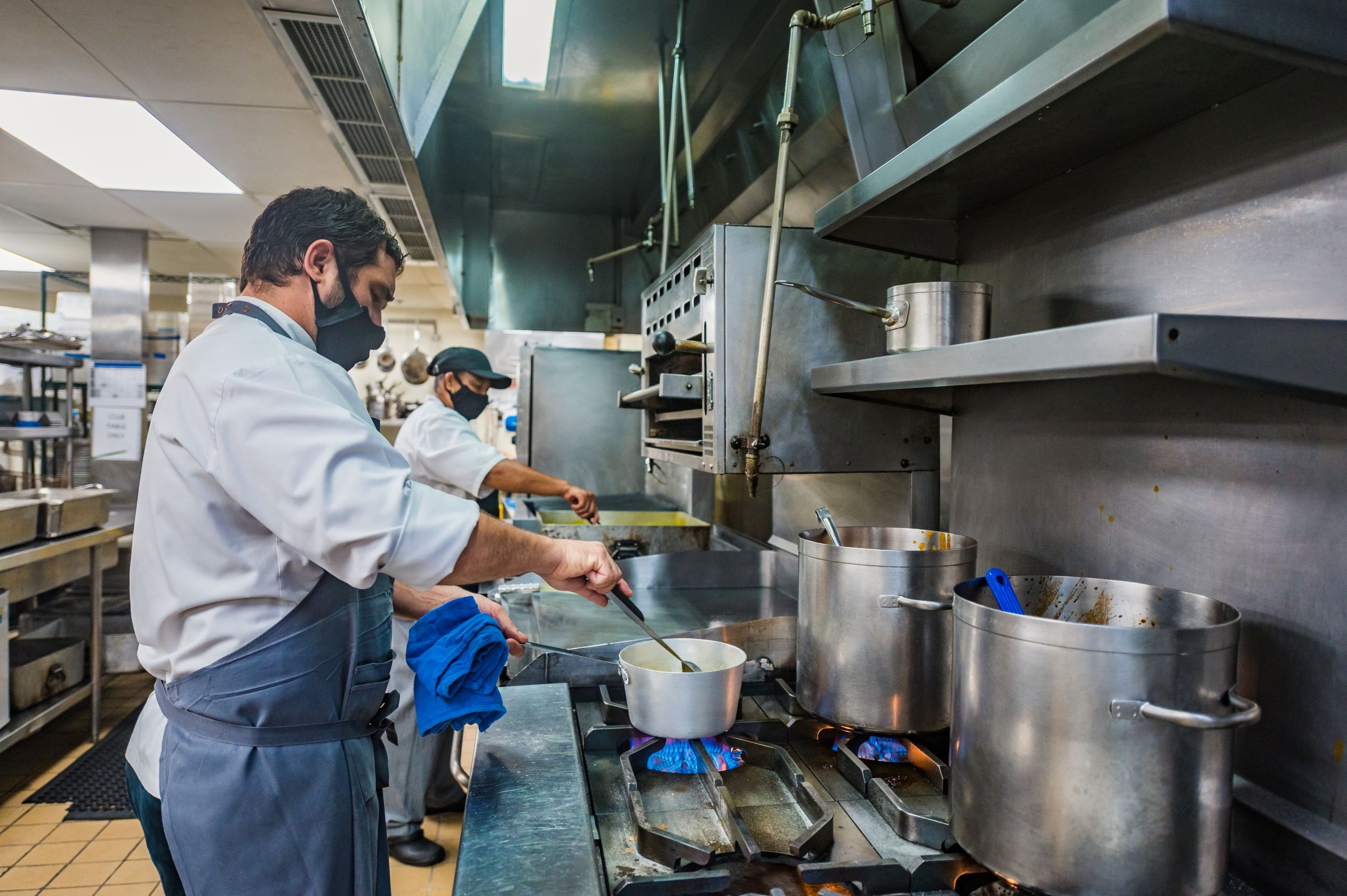
For the big hotels, in particular, recruiting enough chefs, cooks and wait staff to run 24/7 food and beverage service is proving a significant challenge. Many hotels, including The Ritz-Carlton, are unable to run at full occupancy, partly because they can’t staff their restaurants adequately.
Some industry leaders have highlighted concerns over the slow processing of work permits, claiming it is hindering the ability of hotels to fully reopen and hampering their attempts to put Caymanians back to work.
Premier Wayne Panton said his government was keen to ensure Caymanians were given first priority as jobs open up in tourism.
But he acknowledged that government may not have got the balance right in ensuring work permits were processed and granted where they were genuinely needed.
Michael Tibbetts, secretary of the Cayman Islands Tourism Association, said it was a myth that allowing work permit holders to return would stifle Caymanian employment. In many cases, he believes the opposite is true.
Right now, Tibbetts said, the islands’ major hotels are unable to open up all their rooms because they can’t get the staff to service the guests. The biggest challenge is sourcing food and beverage staff locally.
“There are a relatively large number of permits needed for those positions, but by having those posts filled you create front-office jobs, you create housekeeping jobs, you create business for water sports and tour operators. There are downstream impacts throughout the industry.”
Work permit delays
He said processing permit applications for those jobs in a timely manner would allow hoteliers to open up more of their resorts and create more jobs in positions where there are more Caymanian applicants, like concierge services.
“We’ve had cases where work permit applications went in last September and were approved in the last month. Obviously by that time the applicant has taken another job.”
Tibbetts, who runs Clearly Cayman resorts, which has dive resorts on all three islands, said every other businesses in the industry is impacted when hotel beds aren’t filled.
Marc Langevin, president of CITA and general manager of The Ritz-Carlton resort, said several of the hotel’s restaurants remain closed and capacity is being restricted to around 50%.
“We can’t put people in the rooms if we can’t service them when they come out,” he said.
Langevin acknowledged it was a ‘good problem’ compared to the issues of the past two years, but said it was a problem nonetheless.

Numerous recruitment fairs and events have failed to identify sufficient numbers of applicants for food and beverage positions, he said.
“Every job fair, every recruitment drive that we have done, identified clearly that there are not enough local applicants in those job categories,” he said.
“That is something we can hopefully change in future. Perhaps we need to do something fundamentally different as a country to attract more people into those jobs but that doesn’t help with the present situation.”
Water sports and buses impacted
Bill Edwards, of Red Sail Sports, said there were also challenges in recruiting for the water sports industry. He said there was a shortage of qualified applicants for dive instructors and catamaran crew among others.
“There is a global worker shortage that is impacting everybody. We are in the same boat as everybody else.”
Nigel Mitten, of Majestic Tours, said transport operators were feeling the impact.
He said he was unsure how many buses he would be able to put into service at any one time because of recruitment issues across the industry.
There are specific concerns about the level of bureaucracy required to hire drivers for public transport and the time it is taking to get new recruits registered. The Compass is investigating these issues for a separate story.
But Mitten also highlighted knock on impacts of the recruitment challenges facing hotels.
“If the hotels aren’t able to open up all their rooms, then there is a trickle-down effect. There is not enough demand for buses, taxis, spaces in restaurants. It all filters through.
“There is no point us hiring 20 bus drivers if the hotels are at 40% occupancy.”
Panton seeks balance
Premier Panton, speaking at a press briefing Friday, said there could still be as many as 1,700 Caymanians unemployed, based on census data. He said his administration was doing everything it could to ensure they had opportunities to get back to work.
But he acknowledged, “We have to recognise as a government and as a country, that the private sector needs the staff… in order to provide the products and provide the services that they’re known for. Otherwise, it’s cutting off our nose to spite our face.”
He said it was in Cayman’s best interests to ensure that businesses were in a position to provide the level of service the Islands are famous for.
He said government would “make adjustments” and try to ensure the balance was right in future.
Related Videos










I Applaud making Caymanians a priority to fill a job! It used to be a priority and then somehow got lost. You cannot expect to recover from a worldwide deadly health issue overnight. Better off not to overpromise and under-deliver service to guests. So be a boutique-type setting business until the dust settles, and you will win. Here in the U.S., restaurants and bars are very understaffed. People are still getting paid while staying home, so why work. The result is that many eateries are short-handed and hurriedly try and train new staff; negative reviews and complaints are on the rise from impatient, oblivious diners. Instead of supporting the hospitality business that has taken an enormous hit and needs the business, people in today’s world are impatient, rude, and are taking it out on the very people who HAVE come to work and are taking up a significant slack. One restaurant closed for a “Day of Kindness” after angry customers drove servers to tears.
You are not alone in this situation; it has affected all the industries worldwide.
This situation is frustrating:
1. is CIG FORCING Caymanians to take ANY job, whether they want it or are suitable for it? This creates discontentment from the individual and the employer has an unhappy disgruntled team member.
2. There is clearly demand well beyond available labour here. Can CIG not see that?
It’s time for a Non Confidence vote and recall of this government.
It’s a joke. Tourism is ramped up but hotels can’t hire staff because locals won’t do the job and work permits are denied. A whole laughable mess….. and don’t get me started not he double standards regarding cruise ship passengers (no LFT and no Travel Cayman approval to arrive and minimal spend on Island) and stay over tourists (LFT, Travel Cayman approval required and big spend on island). If we don’t give stay over tourists a good experience they will look elsewhere for next year.
Obviously those 1700 unemployed locals do not want to work, Maybe if the government stopped paying them not to work they would look for jobs. All of these businesses can’t find workers. Why is the government doing? Not giving work permits to people who want to work.