With the Easter holidays around the corner, many divers, snorkellers and boaters will be heading to Cayman Brac and Little Cayman for a break, prompting the Department of Environment to advise travellers to help prevent the deadly Stony Coral Tissue Loss Disease from spreading to the Sister Islands.
While the disease, which can quickly kill the hard corals that form the foundation of many reefs, has not yet reached the Sister Islands, it can now be found all around Grand Cayman, having first been spotted there in June 2020.
The DoE is urging those travelling from Grand Cayman to ensure that, if they are bringing their own watersport or fishing equipment with them, they disinfect their gear before landing in the Sister Islands. Alternatively, they can hire equipment locally once they arrive.
The department is also advising boat operators taking their vessels to Little Cayman or Cayman Brac to disinfect their boat bilges.
In a press release issued on Tuesday, the DoE said, “SCTLD is an extremely contagious coral disease that has spread completely around Grand Cayman’s reefs in just over a year, leaving millions of dead corals in its wake throughout the Caribbean. But thankfully, it has not yet reached either of the Sister Islands so we still have time to protect them.
“Anyone travelling from Grand Cayman to the Sister Islands should disinfect all dive and snorkel gear, fishing gear, or anything making contact with the waters of Grand Cayman before travel. Gear may also be disinfected at any dive shop in Little Cayman or Cayman Brac.”
The department advised boaters, “Once offshore, pour a good splash of bleach into the bilge and leave it for 10 minutes before pumping it out completely. You can do this about a ½ mile off the wall,” the DoE said.
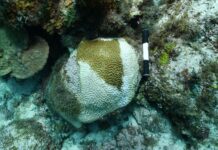
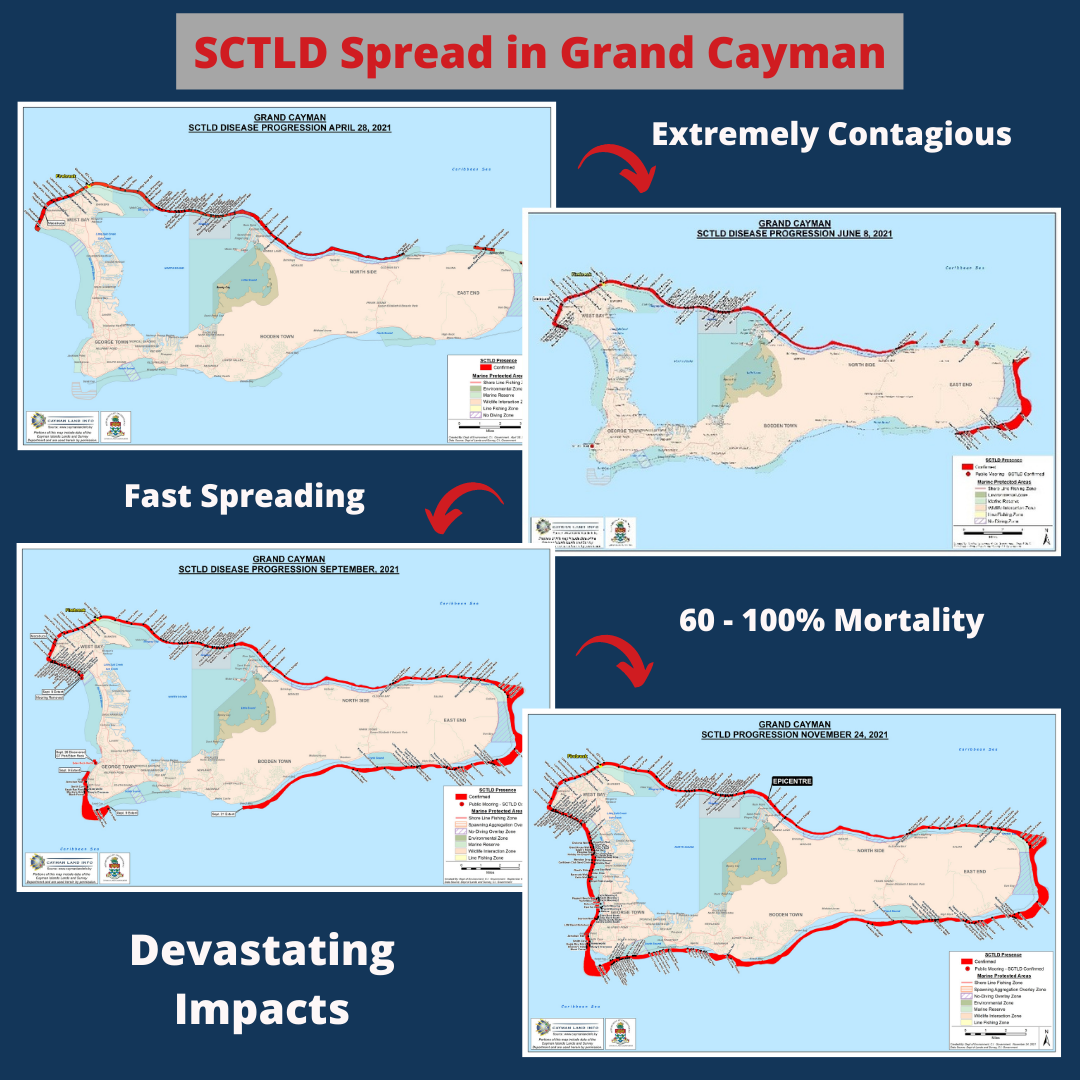
The disease was first found in Cayman at Penny’s Arch, a site off Rum Point in North Side in June 2020. By April the following year, the telltale white lesions on corals had been spotted recorded at sites all along the north coast of Grand Cayman. Seven months later, the disease could be found at dive sites around the entire island.
Stony coral tissue loss disease, which was first identified in Florida in 2014, can infect at least 25 hard coral species, such as brain, mountain and star coral.
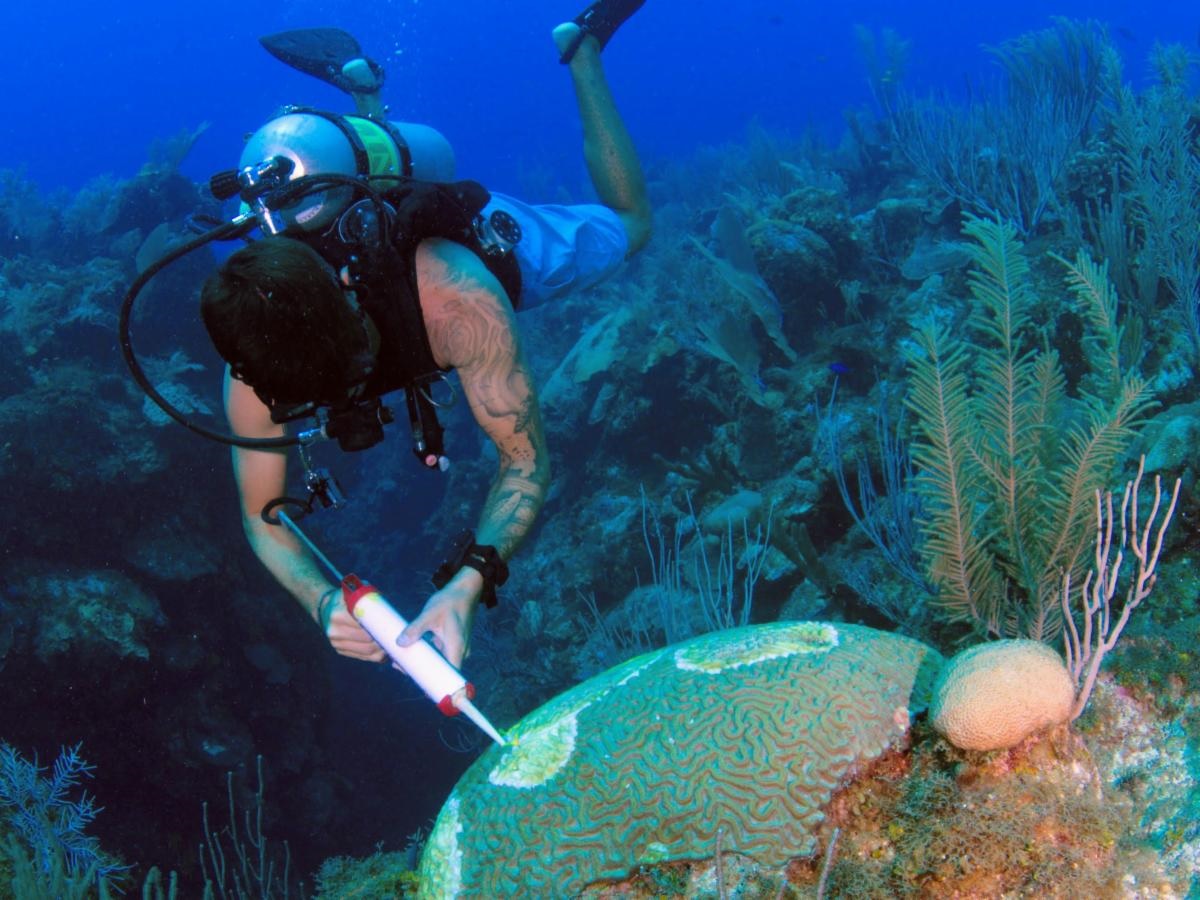
So far, the only method that has been found to be effective against the disease is the administration of an amoxicillin antibiotic paste that can stop the pathogen from spreading to unaffected parts of the coral. The DoE has been deploying teams across Grand Cayman to place the antibiotic paste on infected corals.
How to disinfect gear after a dive
Non-sensitive equipment: Soak equipment (weight belts, tools, etc.) for 10 minutes in a 1% bleach solution (½ cup bleach per 2 gallons water). Rinse with fresh water; air dry.
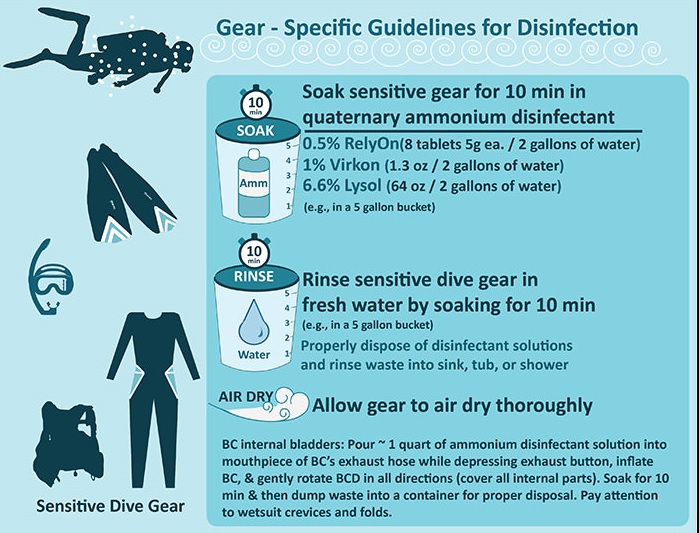
Wetsuits, BCDs, mask and fins: After each dive, soak for 10 minutes in one of the following: 0.5% RelyOn (four 5 gram tablets/gallon water), 1% Virkon S (1.3 oz./2 gal. water), 6.6% Lysol (1 qt./gal. water), or an equal concentration of another quaternary ammonium disinfectant. Soak in fresh water for 10 minutes; air dry.
BCD internal bladders: Pour approximately ½ litre of disinfecting solution into the mouthpiece of the exhaust hose while depressing the exhaust button, inflate BCD, and gently rotate in all directions. Allow to sit for 10 minutes. Flush twice with fresh water.
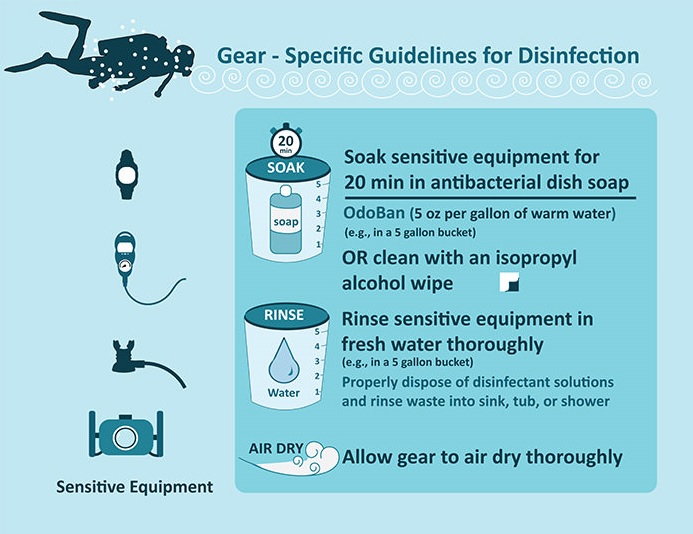
Regulators, computers, gauges, underwater cameras and other sensitive scientific equipment: Soak for 20 minutes in a solution of warm water and antibacterial dish soap or OdoBan (5 oz./gal.). Rinse in fresh water; air dry. Additionally or alternately, thoroughly wipe with isopropyl alcohol.
Dispose of disinfectant solutions and rinse water in a sink, tub or shower. Never pour them into the ocean or a storm drain.
Related Videos