

The property industry has seen unprecedented growth over the past two years. Driven by both local and international factors, prices across the islands have jumped and started to catch up with the previous explosion of property values around Seven Mile Beach.
Development has responded to the surge in demand, prompting a debate about the sustainability of the real estate sector’s success, its impact on natural resources, infrastructure and future generations.
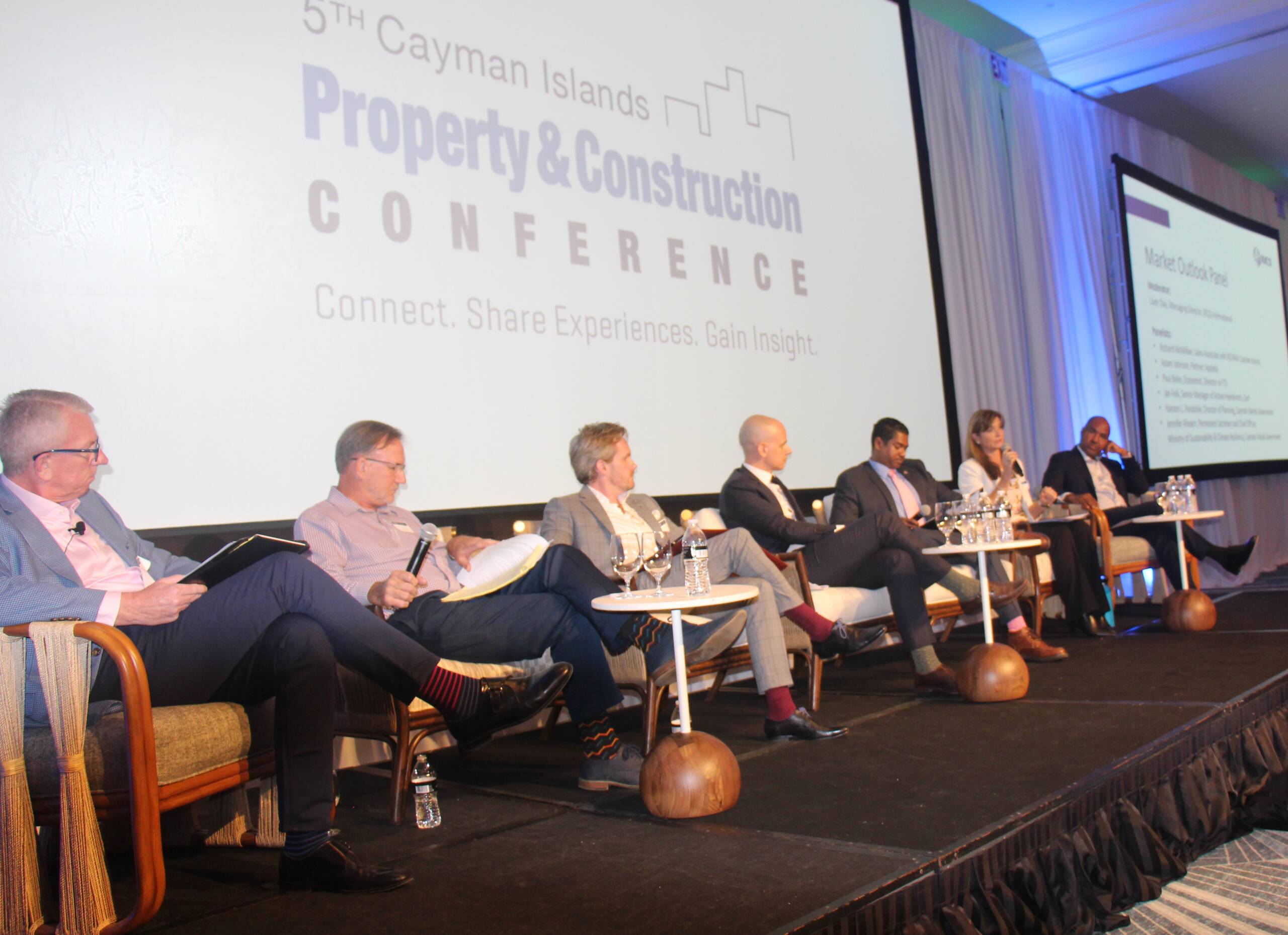
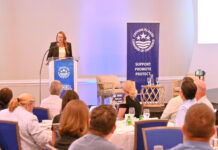
A panel at the RICS Property and Construction Conference on 29 April discussed some of the implications and potential solutions for the industry.
Spike in foreign investment
During the pandemic, Cayman’s COVID-free environment combined with the islands’ unique lifestyle helped attract not only overseas investors, but also higher earning executives and the self-employed who can work remotely from anywhere in the world.
Cayman’s Global Citizen Concierge programme attracted around 200 digital nomads and their dependents. Other foreign purchasers even bought properties, sight unseen, to have the option to spend some time on an island without COVID and many of the restrictions imposed elsewhere.
For investors during that time, Cayman property, particularly in the Seven Mile Beach corridor, remained a safe-haven, given the volatility of other asset classes.
All this was underpinned by an ultra-low interest rate environment and advantageous loan terms for those who needed to borrow.
Many investors, believing that the first signs of inflation would not be short-lived, last year bought in anticipation of the almost double-digit consumer price growth the world is witnessing today.
Locally, the ability to cash out pension funds added fuel to the fire.
Witnessing this rise in property prices, older Caymanians with access to cash used the opportunity to buy land and real estate out of concern that their children will not be able to afford it two or three decades from now.
Economy and interest rates
Sustaining property development going forward, however, will be much more challenging according to the panelists.
“I think if we are honest with ourselves, the macro factors that we see coming in the next 12 to 24 months are probably not as good and supportive for growth, as we saw in the last 24,” said Jan Feik, senior manager of active investments at Dart Enterprises.
Interest rates are rising and are expected to be at least 2% to 3% higher by 2023. The significant cost of living increases in recent months will continue at pace. This has an impact on the ability and willingness to borrow for property purchases, Feik suggested.

There is concern that inflation can pull the wider economy into a recession, “and that’s definitely something that needs to be monitored closely,” he said.
Supply and supply chain issues
For economist Paul Byles, the huge demand for properties especially in the mid- to high-price range has caused a supply issue. These properties simply don’t exist, he said.
In addition to that, supply chain issues, such as the high cost of shipping and the lack of availability of certain goods, will play a big part in the ability to price and deliver projects going forward. Falling inventory, levels of construction materials and longer delivery times indicate that prices are not going to be falling anytime soon.
Add to that China’s zero-COVID lockdown policy and the resulting backlogs at the port of Shanghai, or Russia’s invasion of Ukraine, and supply chain issues are likely to persist.
Feik said, “All of these things will normalise one day, but I’m not very optimistic that that’s going to happen in the next three, four or five months.”
Sustainability
In the longer term, Cayman’s population growth has bolstered real estate investment and development over the years. That is set to continue.
Jennifer Ahearn, chief officer in the Ministry of Sustainability and Climate Resiliency, said the question of sustainability that is on everybody’s mind comes down to a “finite amount of resources that we’re dealing with in terms of the land that’s available for development”. Finding the right balance in using available resources efficiently will be a key factor, she said.

Government is currently also undertaking a climate change risk assessment, which will inform policies with solid data on the steps that need to be taken to mitigate some of the impact, for example in terms of sea level rise.
Developers should be mindful of these issues already when planning their projects, Ahearn suggested.
The ministry for sustainability has put forward a request for cabinet to consider duty waivers for certain energy efficient devices and materials used in construction.
Ahearn encouraged businesses to notify government of areas where duty-breaks or collective sourcing of certain materials would be beneficial.
“We don’t always know what you need. So sometimes you just need to ask that question and put it forward to us,” she said.
Incentivise but verify
One way of supporting the transition to more sustainable development would be to offer incentives packages to offset some of the additional costs associated with making a project more sustainable.
Byles believes this would be “a great idea, as long as there’s some kind of system to monitor the extent to which the project is actually more sustainable.”
In the past, all too often the promised economic impact had not manifested itself and subsidies only served to make a development more profitable.
This is not necessarily the result of bad intentions, as projects often have to be adapted along the way, Byles said.
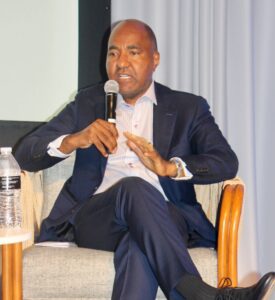
To make sure that subsidies pay for sustainable construction techniques or building materials, for instance, would require an effective audit.
Feik cautioned that it is easy for developers to ask for all kinds of subsidies. Citing Germany as an example where subsidies and tax breaks have led to a great deal of sustainability investment, he noted that there is also a danger of freeriding by taking advantage of sustainability funding for measures that would be implemented without it.
Planning framework for sustainability
The National Planning Framework, which is currently being updated, is another area that could drive sustainability measures in construction from an economic, environmental and social perspective.
Director of Planning Haroon Pandohie said the building code needs to keep up with the necessary standards so that it does not become a barrier to innovation and new innovative techniques can be incorporated without risk.
“It’s not for us to give you a checkbox and say do these 10 things,” he said, explaining it is about creating a planning framework that enables the private sector to innovate and does not prescribe how the necessary standards are reached.
While increasing the building size to ten stories has been controversial, it is one measure that could reduce the environmental impact of developments, suggested Appleby partner Adam Johnson.
“I think having taller buildings, certainly in the Seven Mile Beach corridor, is going to be a game changer in terms of freeing up some green space and stopping green space from being developed.”
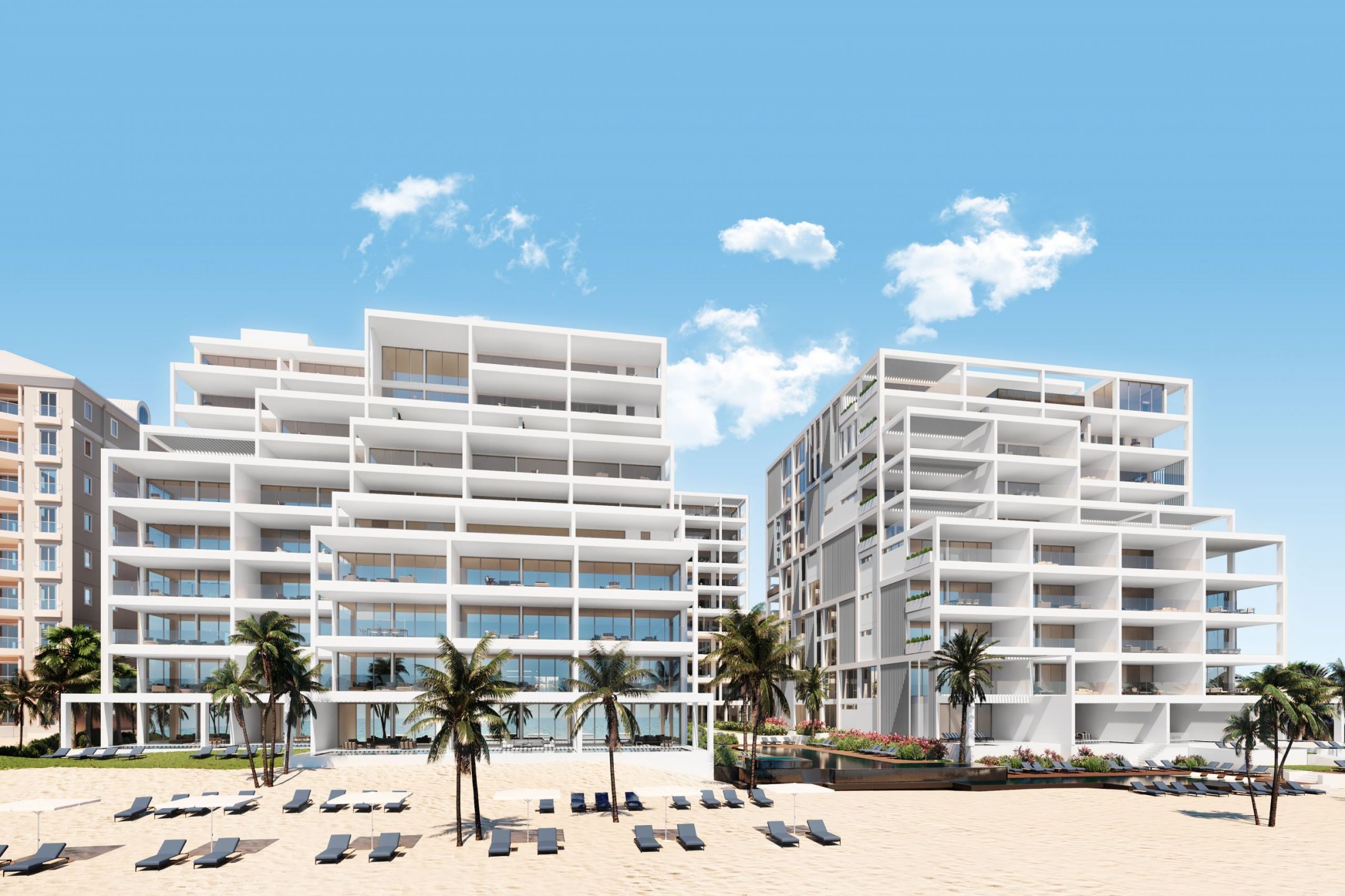
The ability to build taller would lead to more interesting multi-use buildings which could help the green agenda with more amenity space at the ground levels.
Others like, RE/MAX sales associate Richard McMillan point to available land in the eastern districts to alleviate some of the burden generated by the development activity on the western side of Grand Cayman, both in terms of affordability and traffic congestion.
Strategies to support Caymanian homeownership
Affordable housing has become a major talking point over the years. The situation is more dire now, Byles said, because of the rise in property prices and how expensive it has become to build.
The economist said the cost of the land, as one of the factors that determines development costs, could be limited by government buying and reserving land exclusively for building affordable residential homes.
That way the land would technically no longer be on the market and prices would not rise to such an extent that affordable housing is no longer a viable option.
To impact the cost of construction, government could give subsidies for construction materials, if they are used in affordable home projects.
The same concessions could be employed in projects that ensure access to housing by the elderly, to enable life in a community that has all amenities only a short distance aways and all the accessibility features needed by that age group.
Johnson argued that strategies to support Caymanian homeownership should not just be limited to first-time Caymanian buyers, because it might lock people into the “worst home they can afford in their lifetime”.
He said more could be done to foster greater activity in affordable housing by local developers.
Concessions on land acquisitions and financing for developers, as well as subsidies for developers who offer a lower purchase price to Caymanian buyers, could be some of the solutions, Johnson said.
But also taking more money from high-end developers should be considered.
Johnson cited the UK’s section 106 agreements, which are private agreements between local authorities and developers that attach certain obligations to a planning permission.
Because new developments can place added pressure on the existing social, physical and economic infrastructure, such obligations would seek to balance this effect with positive contributions to the local area and community.
This may include reserving a certain percentage of the development for affordable housing, building a park or a road, Johnson said. Or contributing financially to a dedicated government fund that aims to make homes more affordable for Caymanian buyers.
Traffic and infrastructure strain
The burden that additional development can place on existing infrastructure is nowhere more visible than in Grand Cayman’s commuter traffic.
The lopsided nature of development activity and the segregation of residential neighbourhoods from commercial centres has overwhelmed the island’s road system at peak hours.
Building more roads, however, is not the answer.
Byles said it can be helpful, but it is the last part of the solution. The more important issues that must be solved first are cultural.
The general unwillingness of people to use public buses is not just owed to the lack of an effective public transport system, he said.
“If we create a public transportation system that is efficient, we then have to organise that cultural change, that shift for people to take the bus, which is going to be something very difficult to do.”
Flexible working hours that do not require everyone to commute at the same time could be another part of the solution.
In addition, building communities in such a way that homes, schools, workplaces and shops are not many miles apart has to be considered.
Pandohie agreed that this is an area where area plans have a role to play.
He said, the planning framework will need to facilitate a cultural shift that makes it acceptable to be part of a high-density, multi-use community that does not separate commercial and work areas from residential zones.
Related Videos











“I think having taller buildings … freeing up some green space and stopping green space from being developed.” – Thoughtless comment showing a lack of knowledge. Do not invest with this greenwashing company. No city has tall buildings next to ‘cheap’ land, i.e., land ‘freed up’ to remain undeveloped. You only get green spaces in cities, i.e., among tall buildings if you plan/require/want them.
UK’s section 106 agreements – Now we are getting somewhere. Proper assessment of the social infrastructure needs/impacts of developments and proper ‘infrastructure fees’ so each development pays their fair share of the ‘cost’ they are contributing to. Be it a road, school, affordable housing, tertiary sewage treatment, or whatever.