

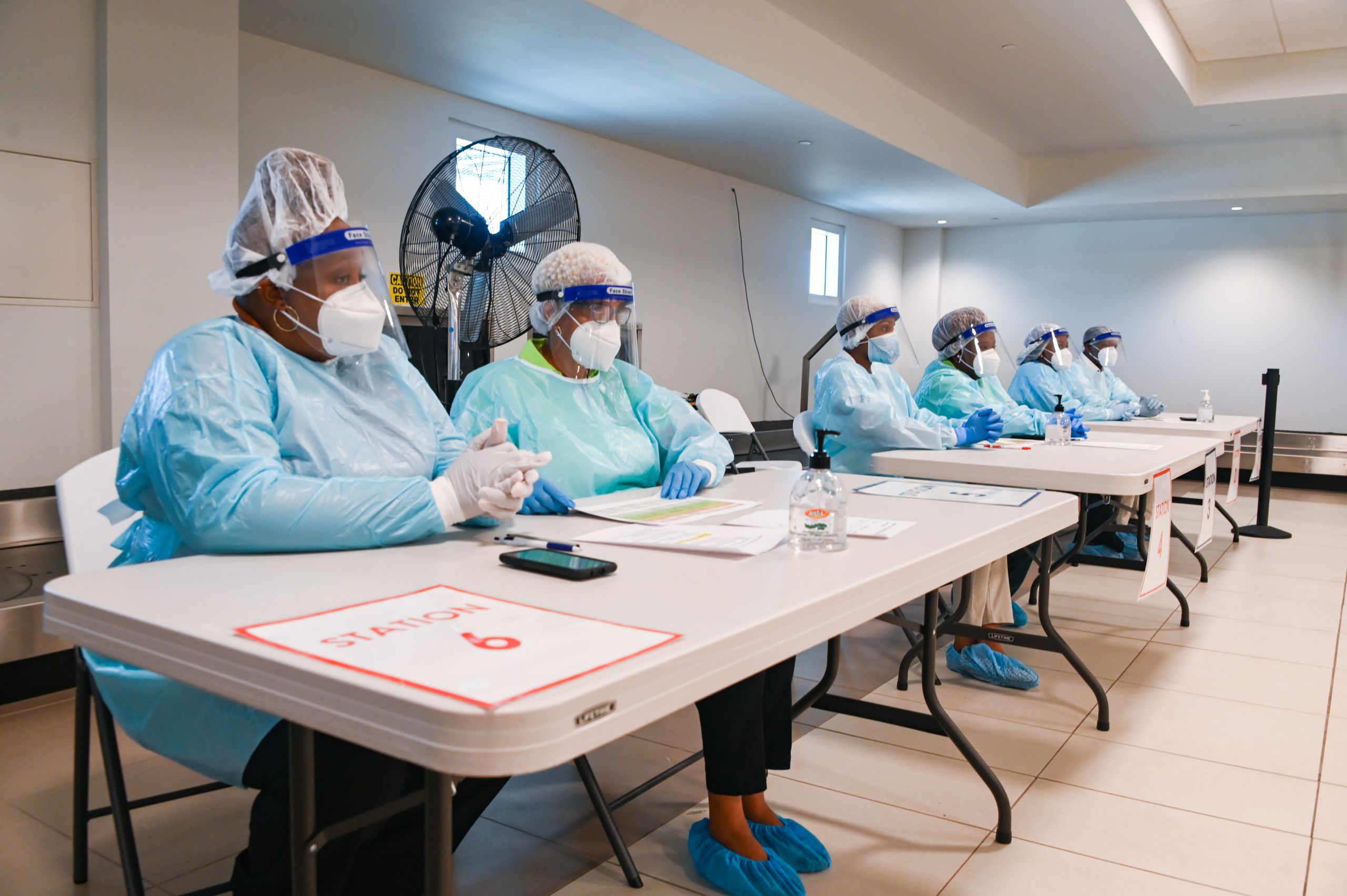
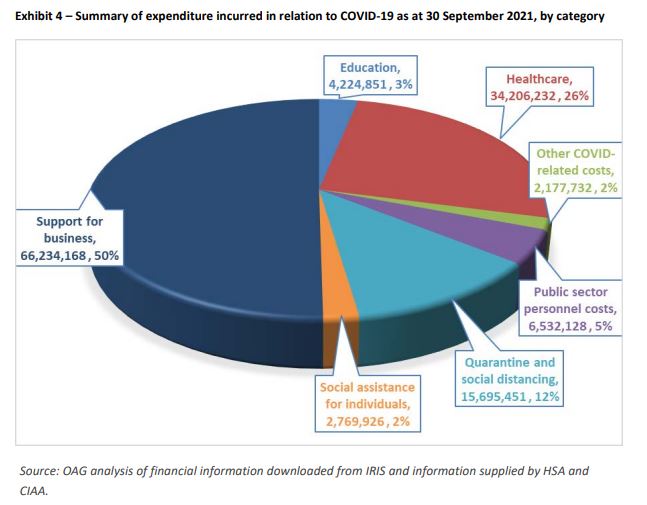
Over the last two years, the Cayman Islands government has spent $15.7 million in operational costs for Travel Cayman and local quarantine facilities, an auditor general report has revealed.
By the end of September 2021, the government spent $1.7 million operating Travel Cayman and its predecessor Travel Time, according to the report on government’s COVID-related finances.
The report revealed that over the last two years, the COVID-19 pandemic has cost the Cayman Islands government at least $333 million, with almost $202 million spent on the COVID response and nearly $131 million in revenue lost mainly due to border closures.
The report, a public interest audit carried out by the Office of the Auditor General and released on Thursday, 12 May, found that the highest costs at Travel Cayman, initially formed in 2020 as Travel Time, were related to staff costs.
Travel Time was created to manage travel and quarantining in the Cayman Islands when borders closed in March 2020 and was later renamed to Travel Cayman when restrictions began to change.
At present those functions are still being carried out by Travel Cayman and government has said the entity will continue to operate for the “foreseeable future.”
However, there have been calls from the private sector to do away with the need for travel approval to enter Cayman, which some within the tourism industry have said presents a hindrance to tourists.
The report stated that between March and September 2021, the cost of operating Travel Cayman was $706,000. It estimated a similar expenditure for the six-month period ending March 2022.
“We therefore estimate the additional costs for quarantine and social distancing as $6.8 million,” the report said.
Quarantine costs
At the start of the pandemic, government mandated quarantine for everyone returning on repatriation flights and also offered essential workers accommodation at government quarantine facilities to limit the spread of COVID in the community, the report noted.
Quarantine accommodations for Caymanians and permanent residents were paid for, while employers of work-permit holders were required to foot the bill for their stay.
The cost to operate isolation facilities topped off at $13.2 million at the end of September 2021, which included, among other expenses, transportation, security and meals at local hotels that were used as government-mandated quarantine locations.
A total of $8.4 million was spent on accommodation costs, $1.9 million on security, $1.5 million on meals and $780,000 for cleaning, as at the end of September.
Transportation costs came in at $492,000.
Some quarantine facilities still continue to operate for those required to isolate by government order.
Between July and September 2021 government paid $2.3 million for quarantine facilities, around $767,000 a month.
“Based on this, the estimated cost of providing quarantine facilities between 1 October 2021 and the end of May 2022 is $6.1 million,” the report stated.
When the quarantine programme shifted to monitored home isolation for some travellers, electronic tags were used. By September 2021, around $667,000 was spent on the tags and assigned cellphones, and operating the electronic tagging system.
When borders closed, the auditor general noted that many people on work permits within the tourism industry had left and employers in other sectors were unable to bring in new recruits, which led, by the end of September 2021, the loss of around $8.7 million in work-permit fees. The majority, the report said, related to the 2020 financial year.
Work-permit and immigration fees usually generate around 13% of government’s coercive revenues, the report noted.
Money made on repatriation flights
As the pandemic touched local shores in 2020, government, as part of its response, organised repatriation flights for citizens to return home and help those affected by border closures to go back to their home countries.
The first British Airways airbridge flight between Grand Cayman and the UK was funded by the Foreign and Commonwealth Office at a cost of GBP$280,000.
“The government paid for the other repatriation flights and received income from ticket sales, the intention was that the flights should be cost neutral wherever possible. Some funding from the National Disaster Fund was intended to pay for repatriation flights. However, as at 30 September 2021, the government had recovered around (CI)$40,000 more than it had incurred to operate the flights,” the report stated.
Cayman Airways operated a number of other repatriation flights, but the auditor general said the office was unable to obtain information on the costs of those flights.
At the end of 2020, the report said, Parliament had approved $16.3 million in operational support for the national flag carrier which was impacted by the border closure and unable to operate as normal.
Related Videos









I won’t come back as long as the portal is in operation. What’s the real purpose of it still being in existence, outside of being a jobs program?
In hindsight this may have been a huge waste of money.
We visited for 28 days arriving on January 29 and jumped through all the paperwork to get my TRAVEL Cayman approval. Upon arrival the airlines and entry authorities never asked to see any of it, only wanting to see my vaccination status. When I asked why did I have to go to the trouble of submitting the Travel Cayman paperwork, then waiting on approval to visit, the agent simply said there had been so many internal issues they now only wanted to see the vaccination white card.
Interesting. The government reported that it made a PROFIT of $40,000 operating repatriation flights.
What wasn’t reported was how much, if any, profit was made by the government forcing stay-over tourists to pay for 3 additional Covid tests during the first week after they arrived. I’m not counting the test just before they left to return to the US and Canada because those tests were required by those governments.
It’s time to end this outdated procedure. If I can get off a cruise ship with out prior approval why do I need it come by air