

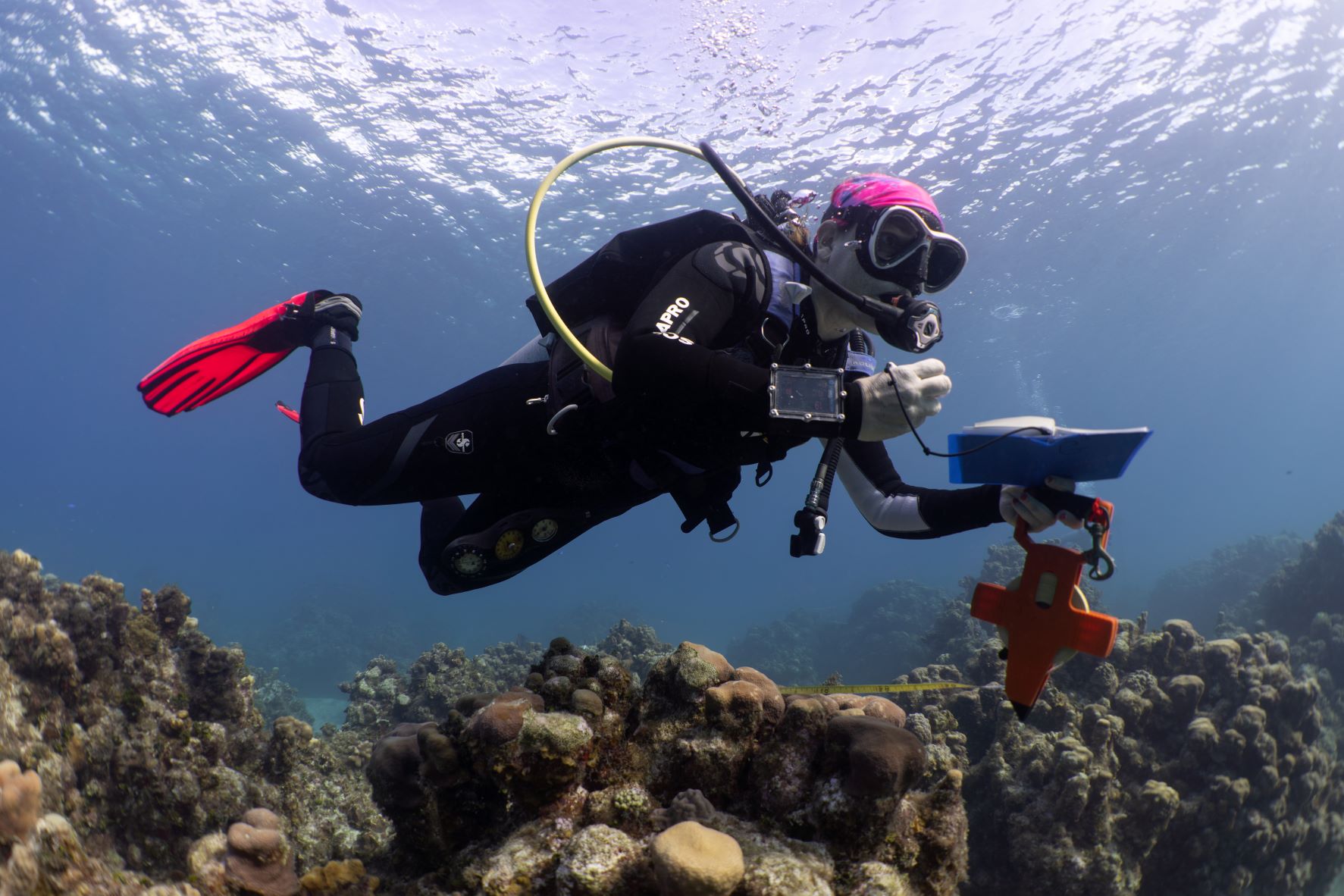
A study of the reefs and the fish populations in Little Cayman carried out over 22 years is showing that the island’s marine eco-system is continuing to stave off many of the major stressors impacting other reefs around the world.
According to surveys carried out by staff and volunteers at the Central Caribbean Marine Institute, it appears that corals inside marine protected areas on the islands are proving to be resilient against the threats they are facing, including from climate change, human development and diseases such as stony coral tissue loss disease.
“While Little Cayman’s reefs are subject to the same global pressures that reefs elsewhere face, CCMI’s latest surveys indicate that local protections buffer the impact of those threats, and Little Cayman’s fish populations have shown significant signs of recovery,” a press release outlining the findings of the surveys stated.
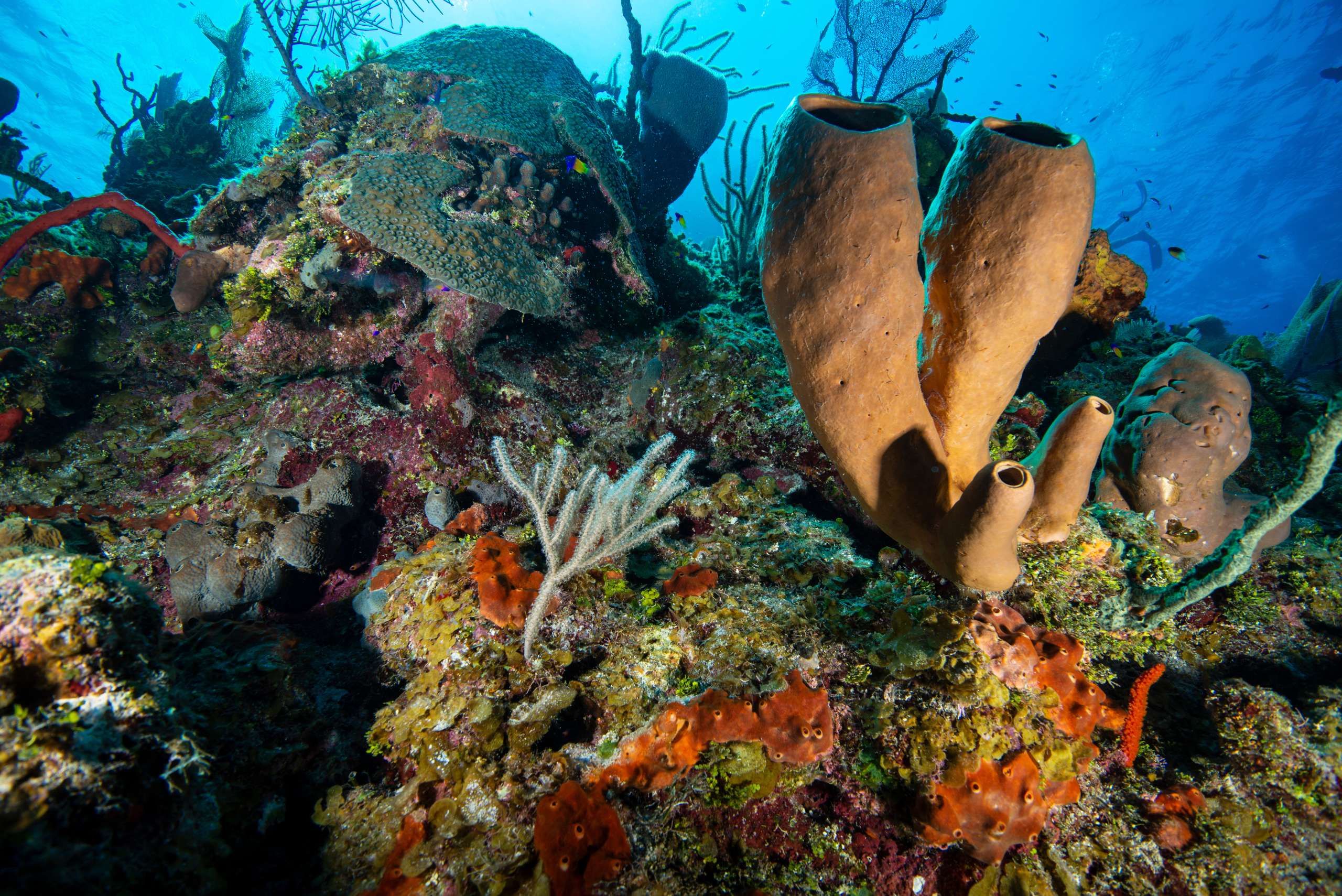
CCMI said the findings highlight the importance of local marine protection laws.
However, they also showed that coral reefs remain vulnerable, as evidenced by decreasing coral recruitment and reduction in coral size.
CCMI has just published the results from its 2021 Atlantic and Gulf Rapid Reef Assessment (AGRRA) surveys, which the research team at CCMI have conducted annually since 1999.
Among the findings was the news that strict protections put in place to combat the decimation of the Nassau grouper population in 2016 have had a knock-on positive effect on the overall fish density, biomass, and species richness on the island’s reefs.
“This means that we are seeing more fish, larger fish, and a greater diversity of species than in previous years,” CCMI said in its report.
The researchers also noted major increases in 2020 and 2021, which they said could have been “further influenced by COVID-19 and reduced overall activity on the reef”.
CCMI’s survey data also shows that while fish biomass – the total weight of the fish population – fluctuates from year to year, there is significantly higher biomass inside marine protected areas (MPA) throughout those fluctuations.
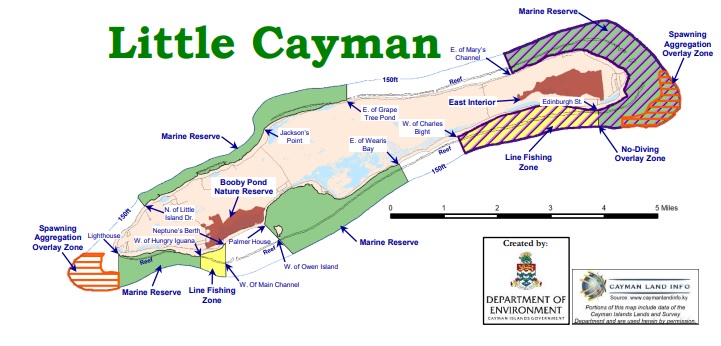
“This suggests that while areas inside and outside the MPAs are impacted by environmental change, this impact is buffered inside the MPAs, allowing more fish and larger fish to thrive. In 2021, fish biomass was 40% higher inside of the MPAs than outside,” the researchers said.
They added that, for many years, CCMI researchers had observed a decline in the number of Nassau grouper, despite no-take zones at grouper spawning aggregation sites in season from 2003, until the Cayman Islands enacted greater protections in 2016 aimed at recovery of the population.
Those protections include a seasonal blanket closure on Nassau grouper fishing, bag limits, gear restrictions, and size limits. “The effects of these protections have been reflected in the 2021 CCMI surveys, as the grouper population density (all grouper species) continues to rebound,” CCMI noted.
The size of the parrotfish population has also increased by 47% from 1999 to 2021, “which is also a positive indicator for reef health as they are key herbivores that feed on algae, which competes for space on the reef with coral”, the report stated.
“The effects are reflected in the overall health state of the reefs as 90% of surveyed reefs were classified as in a ‘good’ (40%), ‘good+’ (40%), or ‘very good'(10%) state based upon coral cover. This is an encouraging indicator, as fewer sites were classed as ‘fair’ than in recent years, and no sites were classed as ‘poor’, researchers said.
Increasing threats
However, CCMI found that while coral cover remains relatively high, aided by recovering fish populations, its survey data showed there had been a shift in the species of coral that dominate the reefs of Little Cayman from larger, boulder coral species to smaller, faster-growing species – a trend seen across the Caribbean.
The 2021 surveys recorded a 60% decrease in the size of corals.
“The shift from larger species to smaller species has an impact on the overall function of the coral reefs as the larger boulder species build up the massive reef structure that is so necessary and which provides the critical wave break that protects coastlines in Little Cayman from storms, which are becoming increasingly powerful as an effect of climate change,” the researchers stated.
They added, “The vulnerability of coral species on the reefs is compounded by the 2021 survey data that shows new coral recruits, or baby corals, have declined by 83% from 2006 to 2021.”
They found that, of the species of baby corals surveyed, almost no mountain or great star corals were found after 2017. Both of these species of coral are considered important “boulder corals”.
“If the local adult population experiences a mortality event, such as bleaching or disease, low recruitment means that the coral reefs are unlikely to recover quickly,” CCMI noted.
The institute said its surveys of Little Cayman’s reefs indicated that with appropriate management policies, coral reefs may be able to recover and display resilience to compounding pressures from regional and global threats.
“Investigating mechanisms of coral resiliency is crucial to understanding how corals may survive in the changing climate and future threats,” it added.
For more information about CCMI, upcoming events, and how to help protect our reefs, visit www.reefresearch.org.
Related Videos








Sounds great WHY ISN’T THE GOVERNMENT PROTECTING GRAND CAYMAN CORALS AND FISH