 By Patrick Brendel, Cayman Current
On the first anniversary of the release of the PACT government’s key priorities in office, the Ministry of Education can mark as ‘Complete’ the rollout of the free school meals programme, provision of free devices to students, implementation of adequate Reception classes in public primary schools, and having no maximum age limit for post-graduate scholarships.
The remaining 29 education-related goals detailed in the 2022-2024 Strategic Policy Statement (SPS) remain on the ‘To-Do’ list, and are either ‘in progress’ or still in the ‘planning stages’, according to information provided to the Cayman Current by the ministry on 14 July – precisely one year after the PACT’s publication of the SPS following the coalition’s victory in the April 2021 elections.
“The Ministry of Education aims to provide a world-class education for learners of all ages. In so doing, we have undertaken several initiatives consistent with the Broad Outcome for education: Improving Education to Promote Lifelong Learning and Greater Economic Mobility,” Education Minister Juliana O’Connor-Connolly said in a statement provided to the Current.
“These include the introduction of the Public School Meals Programme and the 1-1 Laptop Programme in all our Government schools, ensuring that every student has access to key technological resources and proper nutrition, giving each student an equal opportunity to realise their full academic potential,” she said.
SPS is a 3-year plan
Technically, the SPS released by the PACT in July 2021 covers this government’s first three financial years: from Jan. 1, 2022 to Dec. 31, 2024.On 14 July 2021, Premier Wayne Panton highlighted in Parliament the free school meals initiative (now ‘Complete’), as well as the reintroduction of ‘A’ Levels in public secondary schools (now in ‘Planning Stages’).
“This government has one of its goals to continue to improve education, beginning with a basic step to ensure that all of our children are fed, giving them the foundation to earn a great education,” he said.
At the time, Panton noted that Education Minister O’Connor-Connolly had crossed over from the previous Progressives-led government to head up the ministry for a second term.“I believe this provides continuity and an opportunity to seek better outcomes from an improved policy approach,” Panton said.
Opposition: PACT should have ‘achieved more’
In response to a request from the Current, key members of the Progressives Opposition provided comments regarding the PACT’s record on education during the government’s first year in office.
“The Opposition has supported the PACT government’s stated objective to continue with the programme of reforms which we started in the last two Progressives-led administrations. There is good evidence that the reforms we started have worked and are working,” Opposition Leader Roy McTaggart said.
“The Office of Education Standards has found improvements in our public schools, and students’ examination results are on an upward trajectory. However, these reforms are in danger of falling behind if more is not done to move the programme forward, including continuing the implementation of the new curriculum and modernising the governance model,” he said.
Shadow Minister for Education Barbara Conolly said, “What we need to see is more effective delivery from the government. The Education Minister began her term with an advantage. The Minister had a plan in place from the last administration and a number of initiatives that we had developed and were ready to be implemented. Secondly, she was the Minister last term and so was not learning on the job.
She said, “COVID has been a challenge, but this has been known for some time. There is no reason why the government could not have achieved more than has been done over their first year,” she said.
McTaggart commended Conolly for holding the PACT and Minister O’Connor-Connolly accountable on education issues.
Conolly said, “The Opposition will continue to push the Minister to accelerate delivery and to provide updates to the public on the progress made. That is why I asked questions in the last session of Parliament about the rollout of the national curriculum and implementation of improvements in early years education.
”She said, “I also pressed for more action from the Minister to address the learning gaps identified due to disruption to students’ learning during the pandemic. The government has been far too slow in responding to learning gap concerns, and more needs to be done to support students and prevent them from falling behind. The Country needs the Minister to be more focused and to act.”
‘Complete’
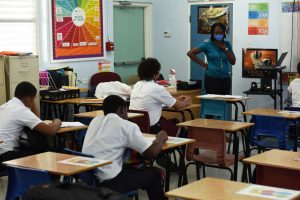 In response to a request from the Current, the ministry provided brief status updates on the 33 education-related initiatives contained in the July 2021 SPS.
It is important to note that not all of the initiatives are ‘created equal’: Some carry significant costs (i.e., free school meals). Some are multi-year projects already in progress (i.e., finishing the new John Gray High School). Some involve policy changes (i.e., legislation to increase accountability for schools and teachers). And others constitute increases in budget allocations (i.e., increase funding and support for after-school programmes).
The ministry marked as ‘Complete’ two of the most ambitious goals contained in the SPS – the provision of free school meals and increasing access to technology through the provision of free devices to students.
According to Purchase Agreements accompanying the 2022/23 Budget Documents, the government anticipated spending more than $25 million on the meals programme from September 2021 to December 2023.
However, because of the novel nature of the programme, which relies on contractors, those estimated costs were always presented as being a bit ‘squishy’.
For example, the Purchase Agreements do not appear to contain funds for secondary school meals until January 2023. Meanwhile, the government did expand the meals programme to include secondary schools toward the end of March.
Only a relative handful of public school students do not yet get free meals – students in the CIFEC dual enrolment programme at University College of the Cayman Islands.
The free laptop initiative started well before the PACT took office, springing from the closure of Cayman’s schools in spring 2020 due to the COVID-19 pandemic. The bulk of the free laptops (and modems and internet connectivity devices) arrived on island by late May 2021 – after the election but before the release of the SPS. Of course, O’Connor-Connolly was also the minister of education during that entire time.
According to the ministry, the implementation of ‘adequate’ Reception classes is ‘Complete’ in all schools – except for Red Bay Primary School. Work for Red Bay is ‘ongoing’.
Also ‘Complete’ is expanding the upper age limit for students seeking government scholarships for post-graduate degrees. The ministry noted there is “no existing age limit” for those scholarships.
‘In progress’
Of the 33 objectives, about a dozen were described as being ‘in progress’ or ‘ongoing process’.
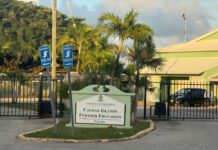
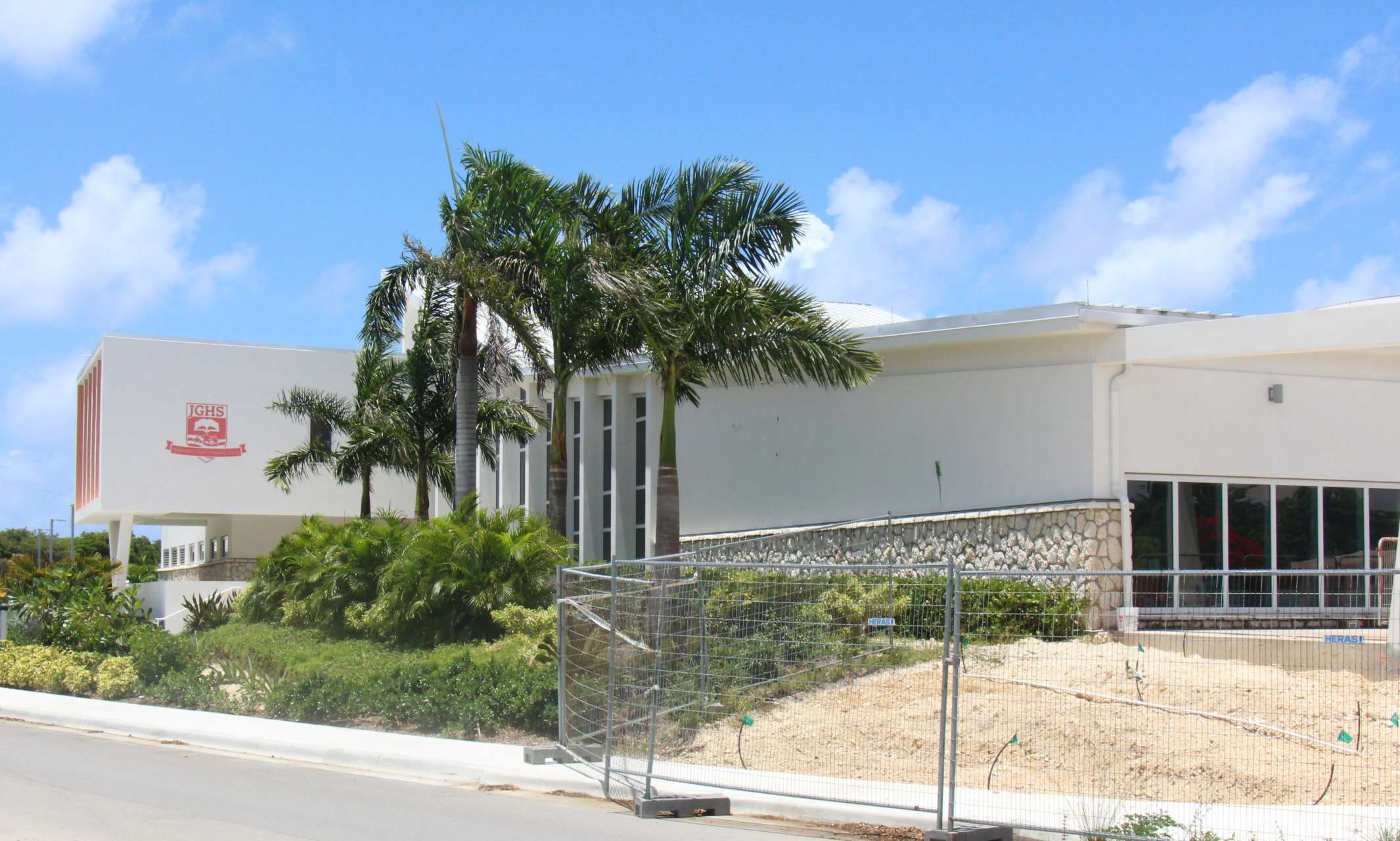
That includes strengthening early education, ensuring free tertiary education at the University College of the Cayman Islands and the International College of the Cayman Islands, finishing the new John Gray campus, and expanding the Lighthouse School.
Also ‘in progress’ are plans to dedicate a teacher’s assistant to each class up to Year 9, to increase STEAM training (Science, Technology, Engineering, Arts and Mathematics), to create a mental health education programme, and to increase investment in TVET programmes (Technical and Vocational Education and Training).
According to the ministry, improving IT infrastructure in schools to support increased usage is an ‘ongoing process’.
Two items were described as being between ‘in process’ and ‘planning stages’ – legislation/framework to increase accountability for schools and teachers, and expanding all public schools to create nursery classes (planning stages) and learning support centres (ongoing).
‘Planning stages’
Not counting the two items in ‘process’/‘planning’ limbo, there are 13 SPS goals still in the ‘planning stages’.
That includes several major talking points from the 2021 campaign, such as integrating Caymanians and non-Caymanians into the school system, improving graduation criteria to end social promotion, reintroducing ‘A’ Levels into public secondary schools, creating a centralised TVET curriculum beginning in primary school, establishing a Board of Governors to oversee public schools, and incentivising parents to get involved in school improvement.
O’Connor-Connolly said, “My team continues to work assiduously to ensure the implementation of other critical projects and initiatives aimed at creating the best educational opportunities for the people of the Cayman Islands.”
Current Education Connection:
The Cayman Compass is partnering with the Cayman Current, a non-profit media organisation that covers education on the islands, for a monthly feature looking at what is happening in the islands’ schools and beyond.
More from the Cayman Current at www.caymancurrent.org
Related Videos