

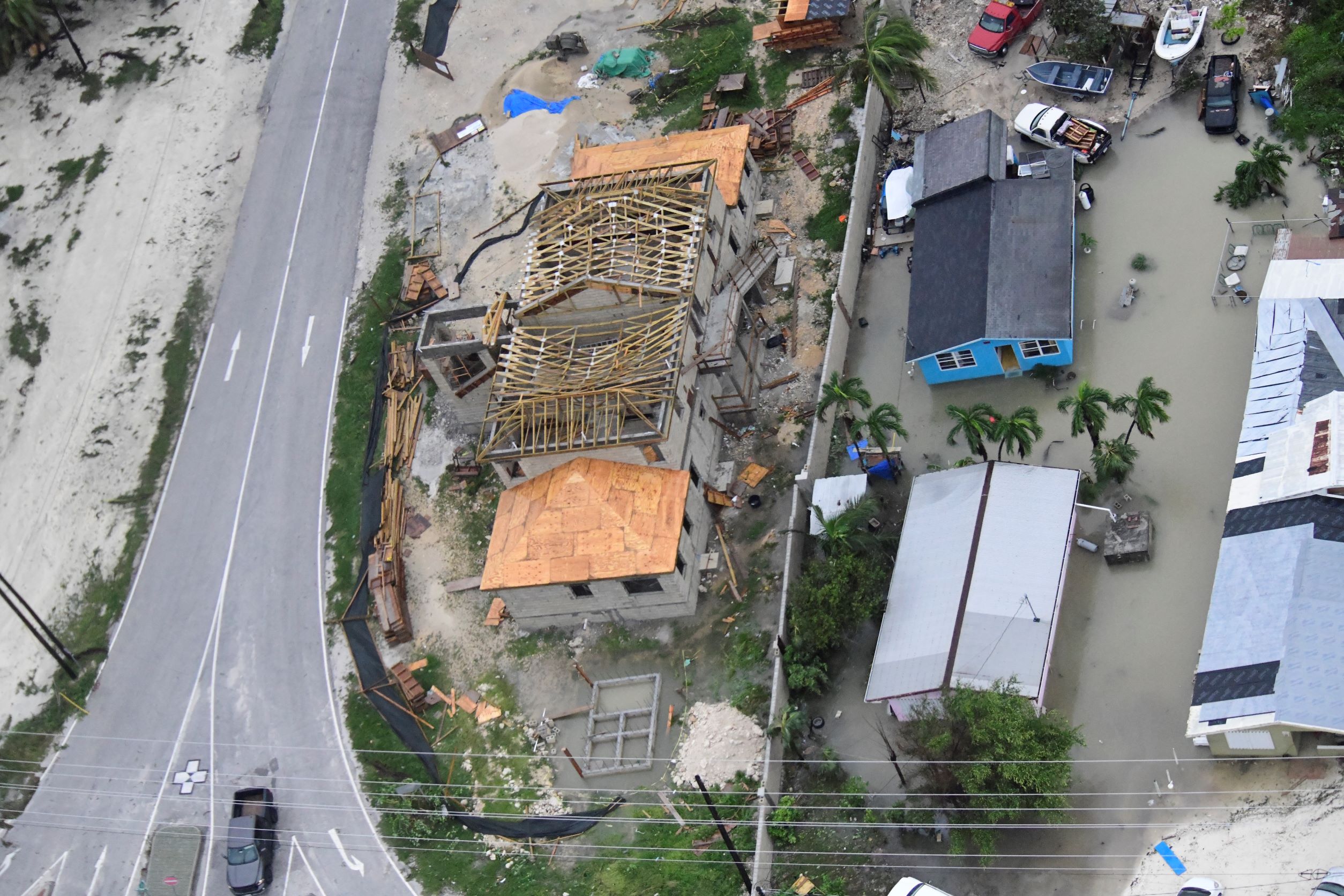
Government spent more than $1.74 million on housing repair assistance during a three-month period last year, with the bulk going to residents in the PACT-controlled West Bay districts.
However, Social Development Minister André Ebanks, who is the MP for West Bay South, insists there’s no cherry picking when it comes to doling out assistance as the sheer number of applications from West Bay is driving government support.
This, he said, is just the tip of the iceberg when it comes to the demand for house repair assistance in the community, as the suspension of the programme in 2020 and most of 2021 added to the existing backlog.
“It still meant that there were cases of persons who were on the list prior to 2020, or cases that came in during 2020 and the start of 2021 that were not assessed and even added to the wait list to move forward. So immediately on taking office, there would have been a wait list and a backlog. 2021 would’ve been compounded by the fact that [Tropical] Storm Grace hit, which increased demand,” Ebanks said in a recent Cayman Compass interview.
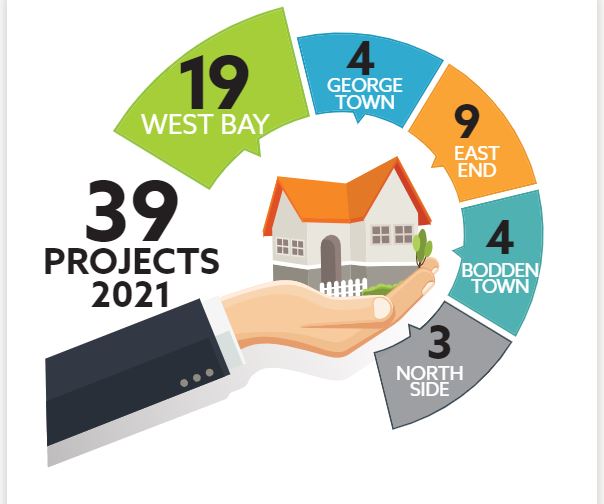
According to documents obtained by the Compass through an open records request, 39 home-repair projects in 2021 were funded under the programme, which now falls under Ebanks’ ministry.
Of the 39 projects, 19 were in West Bay – seven in West Bay North, six in West Bay West, three in West Bay Central, two in West Bay South and one project – the most expensive at $88,971 – was simply listed as West Bay.
According to the data provided, the 20 remaining projects were spread across the island, with four homes being repaired in George Town, nine in East End, four in Bodden Town and three in North Side.
Ebanks agreed that anyone looking at the statistics could draw the conclusion that applications from his constituency and those of his colleagues had an undue advantage.
However, he said, West Bay is an economically depressed community, and the programme’s statistics have historically shown that the majority of cases or applications come from West Bay.
“It’s part of the data points that the ministry sees of where the heavy poverty areas are in the community and the country,” he said.
Ebanks added, “Even under the prior minister, before me, who is not a West Bay MP, [we] would’ve seen the same amount of split of cases because demand [was] heavy from West Bay.”
However, based on available data for 2019, of the 27 projects conducted under the housing repair programme between August to November of that year, six were in West Bay, while seven were undertaken in the George Town constituencies, six in East End, four in North Side, and two in Bodden Town.
Ebanks said even though he was not involved in approving individual cases, “I do check in and ask for the stats and to see how things are going on track.”
Earlier this year, the R3 Foundation teamed up with the ministry on the housing repair assistance programme which is now being managed by Resilience Cayman. Ebanks said he had asked that the charity “be very sensitive” to the distribution of the projects.
He said though he advised that they don’t do anything outside of their parameters, he told them “be sure that there’s a focus on the Eastern districts” in the current iteration of the programme.
He said when he took office there were 80 outstanding cases as the programme didn’t run in 2020 and the first half of 2021, due to COVID-19 restrictions.
Projects by the numbers
The housing repair assistance programme, which was started in 2015, is open to those deemed financially indigent by a Needs Assessment Unit means test.
According to the 2021 numbers, all of the projects were undertaken between October and December and, though details of the work were not outlined, most were listed as exterior/interior/electrical/plumbing/roof.
The names and addresses of the recipients were redacted from the documents, but the constituencies where they lived were shared.
Most of the projects cost more than $10,000 – only five of the 39 projects were under $10,000.
Though there is a cap of $25,000 for repairs under the programme, 31 of the projects cost more than that.
The data for 2019 shows that 27 projects were conducted under the housing repair programme from August to November of that year, and 25 of those projects cost $1.65 million.
Last September, Finance Committee approved $3 million in further funding for the programme.
At the time, Ebanks, in making the case for the increased supplementary funding, said it would be used to assist residents, some of whom have been waiting more than 18 months for help with home repairs.
Speaking with the Compass, he said additional funding will again be required as the problem of those in need of home repairs remains dire and, with hurricane season back again, getting the help is even more pressing.
“[Tropical Storm Grace] impacted on the programme itself by making cases that were waiting and pending for a couple of years worse than they already were. But then it also brought in fresh cases, new cases by persons… who may not be deemed indigent by NAU, which is why then we had to think about an additional partner [R3 Cayman Foundation] in this,” he said.
This, he said, was needed since there were individuals outside of the NAU criteria in need of assistance who had to be assessed outside of existing resources.
“If you’re now dealing with a population that’s largely or partially outside of NAU, then how does government justify the need of who goes first? So that’s where we had to partner with R3 and have a private-sector element come into the fold, to not only increase the resource, but to have parameters wider than the government’s usual programme,” he said.
Earlier this year, Resilience Cayman partnered with R3 to begin work on a new housing repair programme, supported by a $1.5 million grant from the Ministry of Investment, Innovation and Social Development.
Resilience Cayman manages and operates the programme to inspect and repair Caymanian-owned homes previously damaged by storms or otherwise unable to withstand future natural disasters.
Given the number of homes requiring assistance, Ebanks said some enhancements to the programme are being considered, including dedicating 10-15% of the budget to minor repairs to nip problems in the bud before they become large projects.
He said the ministry is also looking to large contractors to step up and help with these repairs, such as donating services, materials or labour.
“The contractors that assist the programme are typically the micro to small contractors because the profit margin on these cases is very, very slim. A lot of them are doing it because they care about the community. These aren’t really jobs to make a fortune out of,” he said, adding if the programme partners with larger firms, it can assess more applications and complete more repairs.
The Needs Assessment Unit, he said, has also streamlined the application process and, through its automated form, applicants can sign up for the housing repair programme.
Additionally, he said, the programme will work more in coordination with local service clubs, like the Lions Club of Grand Cayman, for very minor cases where a simple patch can be done.
“Or they may be able to offer assistance with temporary measures to help ‘dry in’ [weather-proof] a home while it remains on the pending list. With these steps we will greatly enhance the programme and keep focused on ‘drying in’ and securing as many homes as possible, to resolve this issue as much as we can,” Ebanks added.
Related Videos












Who are the principals behind Resilience Cayman and R3 and who selects the contractors. As all these repairs are taxpayer funded we need more transparency in the process, otherwise it is open to abuse.
I agree with Trusty2man D, above. We are now getting our tourist back and our economy should improve and everyone who is not too young or too old should be able to get a job, so please look closely into their finances. Some people like free handouts. I’m sure that some of them do need the repairs and if so, I trust that Government, Resilience Cayman and R3 will be able to help them, thereby also helping our Cayman contractors.