

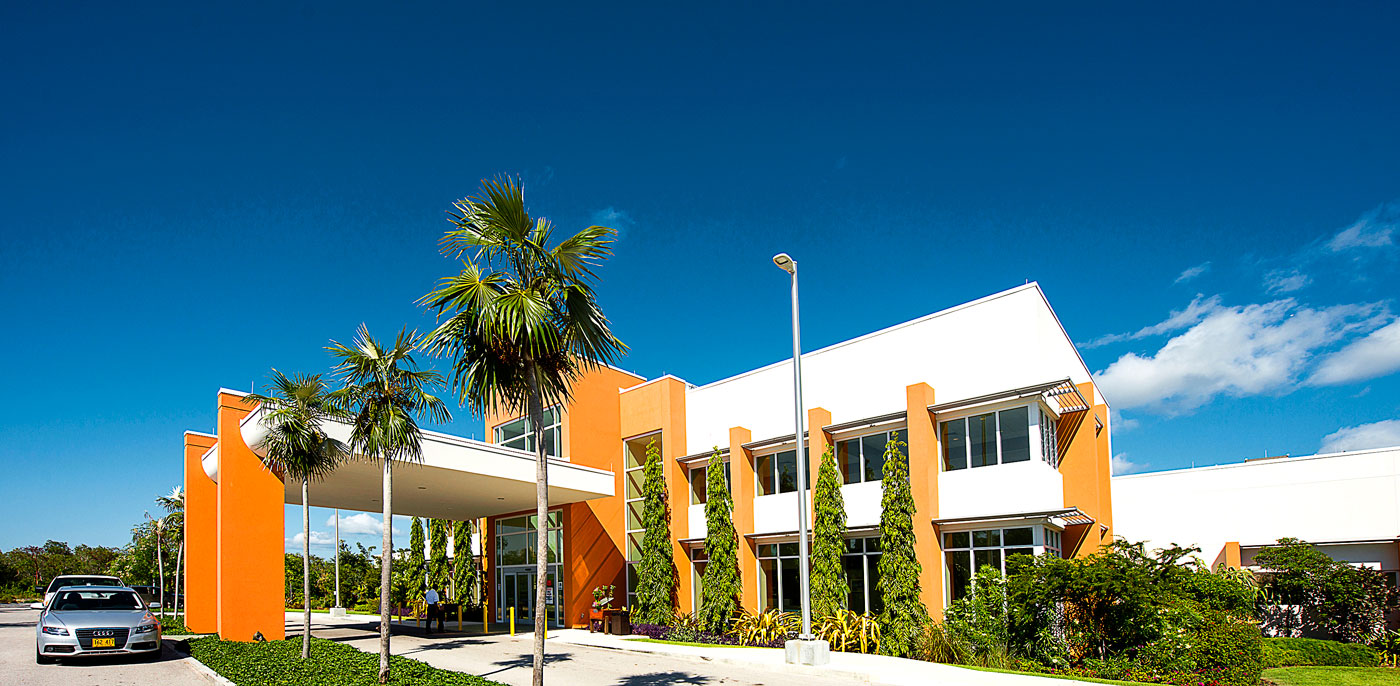
Health City Cayman Islands says it has availed of a total of US$15 million in concessions on import duty and work-permit fee waivers since its opening in 2014.
In a statement issued on Monday in response to a recent judgment on a judicial review hearing that challenged the hospital’s concessions that extend over decades, Health City says the amount of duty and work-permit fee waivers it has taken advantage of to date is a “fraction” of the total concessions granted.
Asked if Health City had so far taken up all the concessions available to it so far, Shomari Scott, the hospital’s chief business officer, confirmed to the Compass that it had, but stated, “When the general public hears $800 million worth of concessions, the impression is that Health City as an entity has used the majority of these concessions to date. However, we wanted to clarify that Health City, based on our first analysis over the first 5 years, availed ourselves of $5 million in concessions, with an economic impact of $79 million as a factor thereof.
“Health City simply wanted to clarify that our concessions are closer to single digits and, at the most, $15 million vs hundreds of millions due to efficiencies realized in the operations and delivery of services to date.”
The hospital stated that it has invested US$250 million in medical infrastructure in Cayman, and that, according to its analysis, in the five-year period following its opening, the facility attracted $79.9 million into the local economy.
The statement noted, “As would any investor, Health City Cayman Islands sought concessions from the Government of the Cayman Islands, which were approved by Cabinet and maintained since the initial granting of the waiver in 2014. However, to date, Health City has availed itself of less than US$15 million, a fraction of the overall value of concessions that we could have benefited from.”
Under the contract signed in 2010 between Health City and the UDP government, the hospital is entitled to import duty waivers on the first $800 million it spends on importing medical equipment, and once that was exhausted it would receive reduced waivers over the following 30 years.
Barrister Chris Buttler, representing Doctors Hospital in the judicial review, calculated that, if regular import duty of 22% was levied on $800 million worth of imported equipment and supplies, it would mean taxes of $176 million for the government.
Doctors Hospital had challenged the longevity of the concessions granted to Health City. Buttler argued that Doctors Hospital, as a medical facility, should be entitled to similar tax waivers, and that subsequent governments following the UDP administration were not bound to continue providing those waivers.
Tax waivers ‘inappropriate’
Judge Richard Williams ruled on 19 Aug. that the granting of decades-long tax waivers to Health City Cayman Islands was “inappropriate”, and that a government’s statutory power to refuse to waive duty was “unfettered” and therefore subsequent governments are not bound indefinitely by an agreement made by a previous administration.
Government grants of import duty concessions have come under the scrutiny of the Office of the Auditor General which criticised the lack of transparency in how such waivers are approved and tracked. Successive governments have given assurances that a policy on concessions would be drawn up, but none has yet been published.
Health City, in its statement Monday, said the Cayman Islands has received value for money in the concessions deal because it has, among other benefits, negated the need for air ambulances to fly patients off island for emergency cardiac or stroke care and has put the islands on the medical tourism map internationally. The hospital said it provides a centre of excellence for health care and medical tourism, which has earned a Gold Seal of Approval by accreditation organisation Joint Commission International, and that its specialists have “saved and improved the quality of life of countless lives in our community”.
Health City said its analysis shows that US$24 million in air-ambulance costs were saved in the hospital’s first five years of operation.
It also noted that the contract was signed against the backdrop of the 2008 recession, when the government at the time needed economic injections and inward investment into the country.
Staff qualifications
In its statement, the hospital also disputed an assertion made during the judicial review that medical staff hired by the hospital were not required to have the same educational standards and qualifications as those working at other medical institutions.
Cayman has two lists for medical professionals – ‘institutional’ and ‘principal’. The designation of ‘institutional’ facility was created so that Health City could bring in doctors and other medical staff from India, a country that was not on Cayman’s original or ‘principal’ list of seven jurisdictions from which healthcare professionals were accepted.
The hospital said an affidavit from the registrar of the Health Practice Commission had confirmed to the court that “practitioners registered on the Institutional Registration list are required to meet the same criteria as practitioners registered in the Principal List”.
It also noted that the Medical and Dental Council requires institutionally registered practitioners who are practising as specialists, like those working at Health City, to have the same experience and educational requirements for their specialties as those on the Principal Registration List.
Williams, in his ruling on the judicial review, noted that the current health practice regulations appear to have some ambiguity as to whether there is a requirement that educational qualifications to be the same for both lists. Counsel for both sides in the case agreed that the regulations should be interpreted that such a requirement exists.
The judge said there would be “great merit” in legislators considering the wording of the regulations, “to remove any potential uncertainty in this important area of patient safety”.
Related Videos










Are they still getting waivers on work permit fees, and if so, what is the basis for this?.