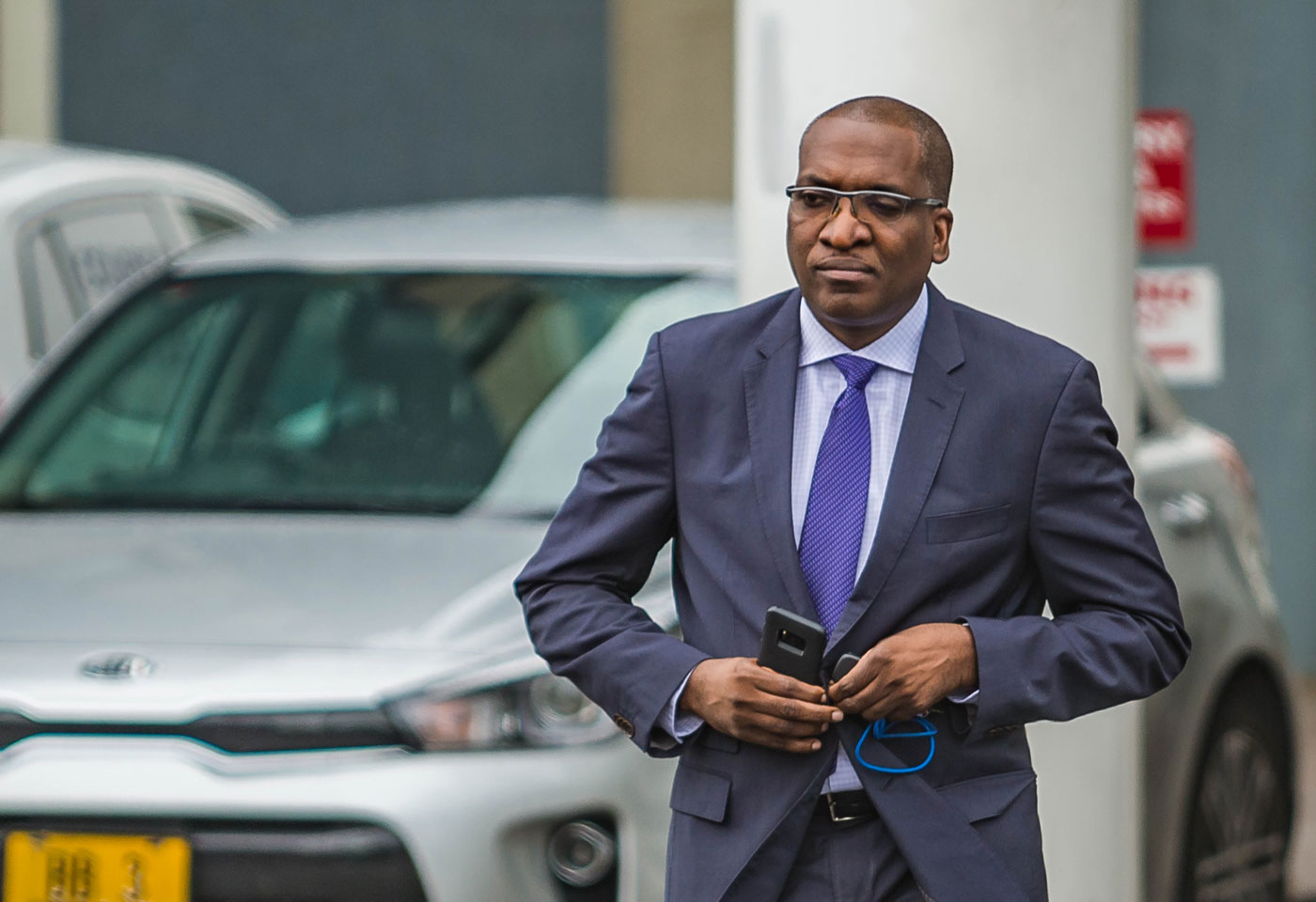
Former Cayman football administrator Canover Watson took to the stand over the past two weeks to deny any wrongdoing in his ongoing fraud trial.
Prosecutors allege Watson was the architect of a complex scheme to scam more than $1 million from the sports regional governing body CONCACAF.
He is accused of sending false invoices for sporting equipment that was never delivered and diverting the funds to a company he alone controlled.
During his seven-day testimony, Watson went through the chronology of invoices and email correspondence presented as evidence in the case to demonstrate to the court that two Panama companies he established were, in fact, legitimate businesses.
The companies used the same name as Pakistan-based Forward Sports, with Watson purporting they were the vendor companies for the football manufacturer.
The former football executive said the genuine businesses ventures were carried out with the Pakistani company’s marketing and sales manager Shakeel Khawaja.
Khawaja had testified earlier in the trial that he had no knowledge of US$1.54 million dollars-worth of invoices filed in the company’s name.
Khawaja acknowledged that he set up a distribution company with Watson for the Forward Sports brand in Panama under the name Forward Sports Inc., believing he was the 51% shareholder.
However, he denied knowing at the time the purpose of a second Panama company, Forward Sports International Management Inc, controlled solely by Watson, which sent the alleged fake invoices and received the funds related to all Forward Sports Panama’s business dealings.
The prosecution alleges this company was used to drain CONCACAF of funds with false or inflated invoices.
Complex business structure
Giving testimony, Watson explained that he initially supported Khawaja’s sales endeavours in his role as football executive of the Cayman Islands Football Association, the Caribbean Football Union and regional confederation CONCACAF, after they were introduced in May 2012.
A few months later, this turned into a business partnership with Khawaja, when Watson first set up a Cayman company and then Panama companies under the Forward Sports name.
Watson claimed they had the right to use the Forward Sports brand name based on a personal agreement between Khawaja and the equipment manufacturer as global sales and marketing manager.
Despite almost 2,000 pages of documents and email correspondence, there is no evidence explaining the exact business arrangement between Watson and Khawaja, who earned a commission from Forward Sports on all the sales he generated.
Watson said Khawaja had allowed him to function as Khawaja’s proxy. Khawaja testified that he did not even know what a proxy is.
Watson explained the two Panama companies of almost the same name – Forward Sports Inc and Forward Sports International Management Inc – were needed to separate the business’s wholesale and retail activities.
Watson said Forward Sports Panama had incurred large expenses by sponsoring national and regional football associations with both equipment and cash. He considered this “wholesale” part of the business an investment to generate interest in the brand.
The plan was this expenditure would be recouped by selling national team football shirts and other branded apparel and equipment through retail outlets which were to be set up later.
‘Business partner’ oblivious
Khawaja had testified that certain orders of soccer equipment between CONCACAF and Forward Sports worth $625,000 were fulfilled and paid for, but that he had never seen three separate invoices for $750,000, $148,500 and $642,400, totalling $1.54 million, that form the basis of the charges against Watson.
Khawaja further said he was not aware of Forward Sports having received the money. This was confirmed by the evidence in the case.
A balance sheet for the period of 1 June 2013 to 31 Oct. 2014 of Forward Sports International Management Inc, which was later renamed Gol Sports International Management Inc., given to Khawaja by Watson did not reflect receipt of the three invoices.
Watson told the court that was because the financial statements had been prepared on a percentage of completion accounting basis. This accounting method reflects revenues and expenses in terms of work completed to date and is typically used for long-term construction projects.
A separate ledger showing several items totalling $205,000 as “due to shareholders” followed by the name Shakheel Khawaja, Watson claimed, was wrongly attributed, and not owed to his supposed business partner as a shareholder but to the manufacturing company in Pakistan for goods produced.
Email correspondence between Watson and company formation agents in Panama, as well as organisational charts, show that only Watson’s company, controlled through an anonymous foundation named Green Day, had a bank account, that Watson alone controlled.
Based on email correspondence, documentation and Watson’s testimony, the alleged false or inflated Forward Sports invoices were frequently amended and split into separate shipments following discussions with CONCACAF General Secretary Enrique Sanz and CONCACAF President Jeffrey Webb, a close friend of Watson.
Watson admitted that, in one invoice, he had changed the number of footballs and soccer uniform sets and their unit prices previously contained in a quote Khawaja had sent to CONCACAF.
He said “things had changed” since that quote was sent and, after discussions with Sanz at CONCACAF, he claimed it was agreed Watson’s business would sell the same, but fewer, items at a higher price than originally proposed.
Watson told the jury that in this business arrangement, Khawaja represented the manufacturer and his quoted prices reflected lower costs and margins than what he, Watson, invoiced as a vendor.
Watson admitted that Khawaja had not seen the three invoices but stated he did not need to, given that Khawaja had never invested “a dime” into the business.
Asked by Crown counsel Eloise Marshall what Khawaja was to get out of the set-up involving Forward Sports International Management Inc, Watson said, “nothing”.
Watson denies conflict of interest
Watson denied that, as a member of the CONCACAF finance committee since December 2012 charged with overseeing the organisation’s financial affairs, he should have disclosed to the committee that his own personal business benefitted from a large share of CONCACAF’s equipment expenditures.
Instead, he said, he had acted within the statutes for committee members and informed Sanz, as the organisation’s chief executive, of his beneficial interest in Forward Sports.
CONCACAF officials testified in the trial that it was Sanz who instructed the payments for three invoices to be made but there was no evidence that any of the goods ordered were ever delivered.
Even if they had been delivered, the quality would have been poor and the goods would have been overpriced, based on previous experience with company, CONCACAF witnesses said.
Watson, in turn, blamed Khawaja and the manufacturer Forward Sports in Pakistan for poor quality, shipping delays and non-deliveries.
While the prosecution alleges the invoices were just a vehicle to syphon money from CONCACAF into Watson’s Panama bank account, Watson maintains that email correspondence showed that some equipment contained in the alleged false invoices was ordered and partially shipped.
According to Watson, some of the changes in unit pricing and the number of goods ordered were simply due to senior management changing the orders.
Certain inconsistencies in the paperwork, Watson claimed, were the result of documents titled ‘invoice’ being, in fact, shipping documents, while others were just pro forma invoices that were paid upfront but subject to change later.
Other documents with the heading ‘production order’ were not orders at all, but required confirmation for export clearance, he maintained.
The court heard earlier in the trial that one fully paid order was only half delivered.
The other half of the order, that was changed to deliver fewer footballs and soccer uniforms at a higher price, was dropped and changed to include more expensive football equipment instead.
All three allegedly false or inflated invoices were then paid, together with two other invoices, to Watson’s Forward Sports International Management in October 2013.
By that time, CONCACAF had already placed orders amounting to almost $2 million for sporting equipment with the Forward Sports companies, despite testimony that this more than exhausted the organisation’s budget of $1.5 million a year for its grassroots programmes.
Gold Cup ushers’ vests
The invoices included one order for 15,000 ushers’ vests for the Gold Cup football tournament, which the prosecution claims was bogus.
Other than Watson’s testimony, there is no record of the vests having ever been ordered, produced, shipped, received or used.
Watson said he had paid for the manufacturing of the vests at a cost of $25,000 and they had been delivered to Sanz in May 2013 at CONCACAF for $148,500.
Khawaja testified he had never seen the order, nor commissioned production of the vests. CONCACAF officials testified that there was no evidence the vests were ever delivered and they were not used at the Gold Cup.
In any event, they would have been delivered too late for the tournament, given that they were invoiced for pre-payment on 15 July, when the tournament had already started.
Watson told the court the manufacturer Forward Sports in Pakistan had never invoiced his company Forward Sports in Panama for manufacturing the goods.
Sanz had asked to be invoiced later and for the payment to be included in another cashflow cycle for the organisation, Watson claimed.
Related Videos