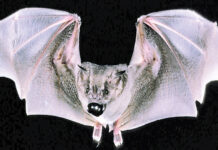
In a survey the Department of Environment conducted through a group of citizen scientists, it was found that the bat population in Grand Cayman has decreased by more than 2,000 since 2020.
The latest survey counted 4,586 bats, from 45 publicly accessible bat houses on Grand Cayman.

The Department of Environment said on Wednesday in its report on the bat count, there were fewer bat houses this time around.
“In 2020 there were 6603 bats counted in 75 bat houses and 5154 bats counted from 20 bat houses in 2019. Our highest count was in 2010, which was over 11,000 bats in bat boxes,” the DoE explained, adding that the apparent decline is “concerning”.
The DoE report in the latest edition of the department’s Flicker magazine noted the importance of bats to Cayman.
“Bats are the only living native land mammals to the Cayman Islands and fulfill essential roles in seed dispersal, pollination and insect control,” the DoE said. “In fact, a single insectivorous bat can consume more than 1,000 insects per hour, thus performing a very effective and natural pest control, keeping down crop and garden pests as well as mosquitoes. Their ecosystem services have been estimated at more than $3.7 billion/year for agriculture in North America alone.”
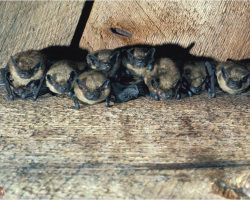
The DoE’s Terrestrial Resource Unit will continue to analyse the data that has been collected and monitor the bat populations to determine the factors associated with these results, the department said.
Technology lends a hand
A total of 18 citizen scientists participated in the count, which was organised by DoE interns Ciara Powery and Joshua Weaver.
The team “trekked along nature trails, parks, sidewalks, parking lots, condo complexes and plazas to stare up at the wooden houses attached to telephone poles throughout Grand Cayman,” the report added.
This year’s survey was the first time a specifically designed bat-reporting app, through the DoE Epicollect5 app, was introduced to volunteers to assist in tallying the local bat population. “Bat Count Cayman”
It was used to note the time of first emergence.
Volunteers also utilised another technological asset, Google Maps, as they tracked the location of the bat houses.
A dark dash, speeds out from the bottom of the wooden box, which sparks a cascade of bats dropping out in a flurry, that alight themselves on the wing into the air, as they begin the evening hunt. The citizen scientists have waited for this moment as the count is on, their fingers busily ticking and clicking to count the number of bats until they are no longer visible in the dark of the night, the DoE report said as it dramatically described the bat count experience.
That proved useful since the number of houses was reduced for the 2022 survey, the DoE said, to provide all citizens a chance to participate at public sites “easily accessible and navigable” by using Google Map.
“This change proved advantageous as all but 1 (98%) of bat houses were visited once, 84% were visited a second time, 70% were visited a third time and 11% were visited a fourth time. Google Maps allowed for removal of sites thus directing citizen scientists to the bat houses still in need of counting,” it said.
This method, the DoE said, allowed for a “robust data set, enabling comparisons to be made of the houses over the years”.
“Monitoring the bat populations in Grand Cayman is important as they are a biodiversity indicator species, meaning the changes in their populations aid in accessing the health of the ecosystems they frequent,” the DoE explained.
A healthy bat population is important
It pointed out that with limited natural cavities in urban areas, bat houses, or boxes, are a favourable substitute for shelter and allow this species to thrive.
“This is beneficial to us for natural pest control as mentioned, but bats also inspire and intrigue people to be aware of the natural world,” the DoE said.
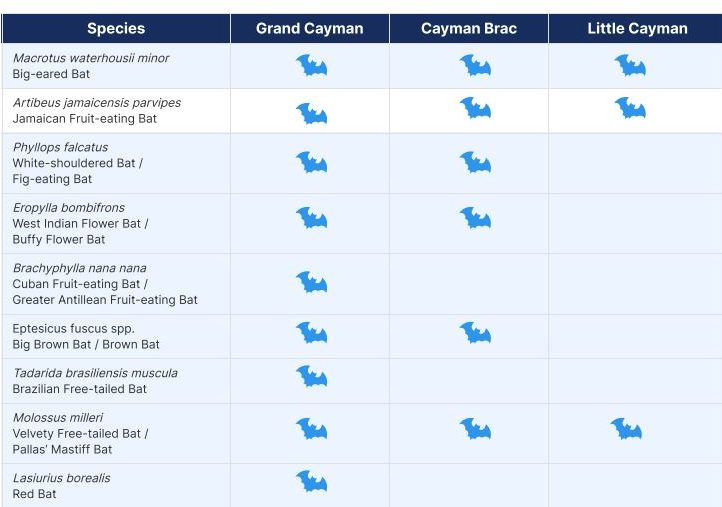
It stressed the importance of the Bat Count Cayman survey as it is a citizen science project.
The project has allowed the National Trust and the Department of Environment to give citizens hands-on experience in conserving bats, the DoE said, “while simultaneously spreading awareness on the importance of bat conservation and altering many misconceptions towards these mammals instilled through media, literature and mythology”.

The DoE added that the survey proved to be an “amazing turnout with individuals, teachers, students, parents and kids gathering to witness one of Caymans’ evening wonders and being a part of science”.
The DoE appealed to the public to always seek to humanely exclude bats from buildings.
“Never separate mothers from their pups during pupping season (June – mid November). Ensuring that no crevices or openings in your roofs are available should deter bats from moving in,” it added.
The National Trust for the Cayman Islands presented a 3’x4’ Bat Poster Prize to all registered citizen scientists while Phoenix Singh and Letitia Eyles both won the survey grand prize.
Related Videos