

Illegal lotteries, known as ‘numbers’, are being run on island by international crime syndicates and are generating between $30 million and $50 million a year, legislators were told during a debate on amending Cayman’s gambling laws.
Police have linked a number of armed robberies, and one murder, to the illegal lotteries, prompting Premier Wayne Panton and his government to move forward with a motion to amend the 59-year-old Gambling Act, which currently has fines as low as $10 for involvement in illicit gambling.
Panton presented the bill to Parliament on Wednesday, 7 Dec., after MPs approved a plan to bring a referendum in which the public can decide if a legal national lottery should be introduced.
However, no final vote was taken on the Gambling (Amendment) Bill following the two-day debate which resumed on Monday. Panton stated that the debate had shown that while members agreed that something needed to be done to combat the illegal numbers game and the violence associated with it, there was no clear consensus on the way forward.
Instead, the bill was referred to a select committee of the whole House and will be dealt with a future date.
Organised crime
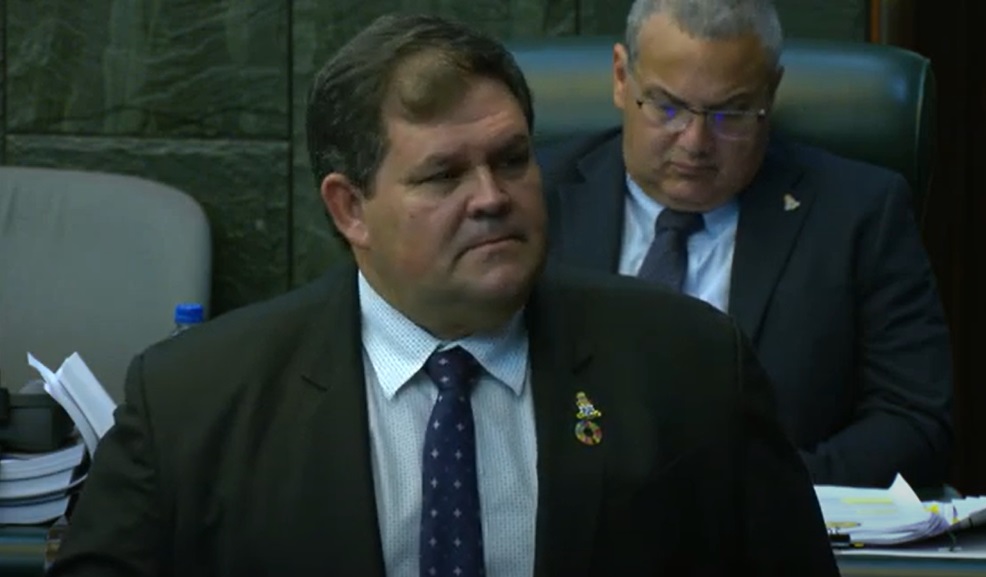
Describing the annual turnover of numbers in Cayman as “staggering”, Deputy Governor Franz Manderson told the House during the debate that a conservative estimate of the monies generated was between $30 million and $50 million a year, depending on the number of syndicates operating at the time.
Manderson noted that illegal gambling is “managed and controlled by organised crime syndicates who accumulate significant criminal assets, funding a criminal lifestyle, feeding an illicit underground black-market economy in an uncontrolled environment, and significantly and adversely affecting our most vulnerable persons in our society”.
Following discussions with Governor Martyn Roper and Commissioner of Police Derek Byrne, as well as his own research, Panton said, “I am convinced we are not dealing with a small, unsophisticated, friendly neighbourhood game of bingo. This is about participants in illegal gambling being directly facilitated by and supported by organised crime, which benefits international syndicates.”
He said these syndicates and their local illegal gambling operations were also connected with cross-border money laundering, tax evasion and other financial crimes.
Panton added that small businesses that appeared to be legitimate, but were in fact selling numbers or acting as money laundering outfits for the money generated by gambling, were securing work permits for individuals whose sole job was to sell illegal lottery tickets.
Gambling in any form, other than raffle tickets for charitable organisations, is not legal in Cayman. The numbers game enables people here to illegally buy tickets for lotteries being held in Jamaica, Honduras, the British Virgin Islands and Belize, among others, with some being held several times a day.
Panton noted that it’s not just overseas lotteries that people are gambling on. They are also putting their money on international horse racing, as well as local cock fighting and dog fighting.
He told the House that the inadequacy of the existing penalties under the Gambling Act for illegal gambling and related crimes had fuelled an “unsettling amount of serious, violent offences in the Cayman Islands”.
“We must address this cross-border threat, we must address the serious crimes, and we must address the open violation of the law. We certainly cannot allow criminals from overseas to deal with gambling-related conflicts in our beautiful country, nor turn a blind eye to the movement of illicit cash out of the country,” he said.
This movement of money could damage Cayman’s reputation as a regulated financial services centre, he said, adding, “We know that the proceeds of this illicit [activity], a lot of it cannot be banked here, a lot of it is leaving the country in a variety of ways, and it is creating a risk for us.”
McLaughlin: Robbery link is ‘hyperbole’
The popularity of numbers in Cayman makes this legislation to increase penalties for partaking in gambling an unpopular one – something several politicians on both sides of the aisle acknowledged.
While those in favour of the bill insisted that the increased penalties would act as a deterrent, those opposed to it said it would simply lead to more people being put behind bars in Northward or Fairbanks prisons.
Red Bay MP, and former premier, Alden McLaughlin said this bill had been “foisted” on him in 2018 when his Progressives-led government was in power, and he had instructed the attorney general to defer it indefinitely because of the detrimental impact he believed it would have on local residents who partake in the lotteries.
He accused the PACT government of using “hyperbole” about armed robberies to push through the legislation, saying increasing penalties for buying numbers would disproportionally affect ordinary Caymanians, Jamaicans and Latinos on island.
He added that armed robbers were targeting many different types of businesses, including restaurants and shops, not just premises where illegal gambling is being carried out.
Both he and the deputy Opposition leader Joey Hew questioned why a government that is bringing a referendum that would potentially decriminalise small amounts of marijuana so that ganja users don’t get a criminal record or wind up in prison, would support legislation that could see someone who buys a lottery ticket receiving a $20,000 fine or being jailed for four years.
“The government has really got to stop being so schizophrenic about these things, you have to decide where you stand on these issues, you can’t have it both ways,” McLaughlin said.
He also suggested that it was the buyers – whom he said were often senior citizens – rather than the sellers or the syndicates that would be ones who were ultimately penalised as it would be easier to catch and prosecute them.
He added that he would support a national lottery, but, echoing comments from West Bay West MP McKeeva Bush, said it was unlikely that such a lottery would mean an end to the illegal numbers game.
Accusing McLaughlin of “mischief”, Panton pointed out, in response, that the legislation was not designed to prosecute those buying lottery tickets and said it was inaccurate to suggest that a buyer would ever be fined $20,000 or imprisoned for four years.
However, he noted that the existing law already makes it an offence to partake in illegal gambling, therefore if a person is convicted of it, they would get a criminal record under the current legislation.
Bush: Legalise numbers
Bush, in his submission, said creating a legal national lottery in Cayman would not stop people partaking in illegal numbers, and he called for the bill to be amended in such a way as to legalise the existing numbers game rather than create an entirely new lottery.
Money generated by legalising the numbers game could then be used for education, housing, and stipend payments for the elderly, he said.
“If this House is serious about stopping criminality, the way to stop the illegal numbers game is to make it legal,” Bush said.
He said other island jurisdictions that had created legal national lotteries had not led to the disappearance of illegal lotteries in those places.
Panton responded that there was not a mandate from the people of Cayman to legalise numbers, as the referendum had not yet been held.
Hierarchal structure
Deputy Governor Manderson told the House that the existing penalties in the law were no deterrent for those who sell and organise the illegal numbers. For example, he said, the penalty for keeping a gaming house currently was $400, or 12 months in prison, or committing an act of illegal gambling is $10 or two months in prison.
“The increased sanctions and fines for a range of gambling offences contained in the new bill will act as a strong deterrent to decentivise those persons who engage in illegal gambling across the Cayman Islands,” he said.
Manderson said police intelligence had indicated that an organised, hierarchal structure exists in the numbers game enterprises, consisting of teams of salespersons and senior salespersons who work on behalf of small group of coordinators.
“It is believed that a number of syndicates or organised crime groups, headed by a principal subject, operate within the Cayman Islands. There are defined roles within the organised crime group, with the principal subject coordinating subordinates to sell numbers, collect debts, pay out winnings and transfer money,” Manderson said.
He added that the senior members of the group use their contacts to launder the takings from the illegal gambling through local legitimate businesses.
Local businesses, usually licensed premises mostly based in George Town, are used as locations where numbers are sold.
“These criminal activities run alongside legitimate small-business enterprises and the majority of those involved are supplementing income received from legal employment with additional funds generated from the sale of numbers from foreign lotteries,” Manderson said.
Numbers sellers and premises are in turn being targetted by robbers who know that there are large amounts of cash available. Often, these robberies go unreported, he said.
Since 2018, he said, according to police analysis, there have been 21 violent criminal offences believed to be linked to illegal gambling, though it was likely that number was far higher due to underreporting of such crimes.
In 2021, there had been eight robberies of premises where numbers are sold, and 10 this year. In most of those, firearms were used.
A retired prison officer, Harry Elliott, 62, was shot dead during what police believe was an attempted robbery at a premises linked to illegal gambling.
Manderson said rather than sending people to prison for buying illegal lottery tickets, the intention of the amending the bill to increase penalties was to discourage individuals from taking part in illegal gambling, and ensuring more security and safety for the people of Cayman.
Related Videos










If you know who and were these tickets are being sold why doesn’t the police do something about it. Increasing the fines will do nothing. Legalize a lottery and let people who want to buy tickets do so. It is legal almost every where else in the world