Over the next year we expect some perennial issues to continue to be debated at length, while a handful of new ones will take centre stage.
The cost-of-living crisis is not going away and could be a compounding problem given that households have likely already made whatever cuts they deem possible. Challenges around population growth, transport and development – touchstone issues for the last decade – will no doubt remain front and centre.
And while COVID-19 may recede from public view, its impact and its legacy lingers for public health.
The Compass will also be putting renewed focus on core issues of importance to us as a newspaper, including accountability of public officials, the threat posed by rising crime and the challenge and opportunity posed by the decline of the cruise industry.
We welcome your input on the issues we should be focussing on in the year ahead and invite your ideas below the line.
With the help of some of our key contributors and our editorial board, we have complied an initial list of 10 things that are firmly on our radar in the year ahead.
1. Cost-of-living crisis escalates
Rising food and fuel prices, soaring rents and frightening mortgage increases meant that Cayman’s usual cost-of-living complaints had spiralled into a full-on crisis by year end.
Scanning the horizon for signs of respite is a fool’s errand. The war in Ukraine churns on, impacting the world’s food and oil markets. The post-COVID shipping crises and material shortages that have impacted construction continue and the impact of central banks’ action on interest rates remains to be seen.
While that’s a global problem that every country must contend with, Cayman Islands residents may feel the impact more sharply than most – particularly at the grocery store, where every day items like butter, eggs and lettuce are becoming unaffordable for some.
If this sounds like a 2022 problem, the unfortunate reality is that all signs point to it continuing, if not getting worse, in 2023.

Jerome Powell, the US Federal Reserve chairman, said in a recent speech that the policy of steadily raising interest rates – bringing with it increased costs for mortgages and car loans – would inevitably bring pain to households and businesses.
But he insisted it was the only way to get prices under control and urged people to brace for a long haul.
“A failure to restore price stability would mean far greater pain,” he said, adding, “We will keep at it until we are confident the job is done.”
2. Wages a likely source of conflict
If a lettuce costs $9, a tray of eggs costs $4.99 and a full tank of gas up to $70, how can a person live on $6-an-hour?
When you factor in rent, utilities and insurance, the basic household maths doesn’t add up. The truth is, it never did.
When that mark was introduced in 2016, it was considered a starting point that would be consistently reviewed until it measured up. The US federal minimum wage is comparable, at US$7.25 (CI$5.95) an hour, though some states mandate up to $15 an hour. The Canadian mark is CA$15.50 (CI$9.37). In the UK, the rate is reviewed every year and will go up to £10.42 (CI$10.28) in April of this year.
Around a third of Cayman workers – mostly security guards, hospitality staff, nannies, gardeners and some retail and clerical staff – are believed to earn around the current minimum wage. One worker told us they need to work a minimum of 60 hours per week to pay their bills.
Deputy Premier Chris Saunders acknowledged last year that the current minimum wage was too low, citing the $9-an-hour government paid to unemployed workers during the pandemic, as a more realistic mark.
That was before inflation forced a de facto pay cut by dramatically reducing the spending power of those wages. In the UK, public sector workers are striking in response to similar pressures.
In the US, pay has increased for lower skilled jobs, because of a shortage of people willing to do them. Cayman has typically used immigration to circumvent that challenge, but how long will people wish to travel from Jamaica or Nepal simply to eke out a subsistence living on the fringes of Cayman society?
With businesses feeling the strain of the pandemic and their own cost issues, there is arguably no worse time to raise wages, suggesting tough choices for business owners and government, and the possibility of conflict over wages in the new year.
3. Life after cruise
The hypothetical arguments of the ‘for’ and ‘against’ camps of the cruise pier debate are about to play out, for real.
The Progressives government argued that Cayman needed a pier if it wanted to stay in the cruise business in a serious way.
Projections from current Minister of Tourism Kenneth Bryan, via the cruise industry, that arrivals will plummet to under 750,000 over the next two years suggest that in this aspect, at least, they were right.
The riposte from the anti-cruise camp, may well be, “so what?”.

Those who opposed the piers always argued that the sacrifices were not worth the pay-offs and that Cayman would be better off focusing on retraining the cadre of workers who earn their crust in that sector and targeting more lucrative stayover guests.
The practicalities of doing that proved difficult during the pandemic, when time and opportunity were on our side. The challenge for tourism and political leaders on either side of the debate in 2023 is to come together and ask, “what next?”. The withering of the cruise product has implications for jobs and businesses, for the future of George Town and for the tourism industry as a whole.
It’s an opportunity as much as a challenge, but it is something that can’t be ignored.
4. Transport emergency
Anyone looking for a list of issues that might impact Cayman in a calendar year, could pick the same themes every time.
Transport has been a neglected issue for decades. But the revival of the economy post-COVID and the continued growth of Cayman’s population – without any masterplanning on design or development – has put the traffic quagmire back at the top of everyone’s list of pet peeves.
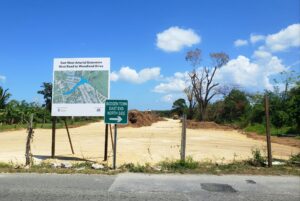
Work could start on the East-West Arterial, pending an environmental impact assessment in 2023, and Deloitte is expected to report on possible upgrades to the public bus system.
But calls are ringing out for a more holistic approach to transport management.
Mass transit, cycle routes, ride sharing, congestion charging, and high occupancy lanes all have to be considered alongside road and footpath upgrades that can make travelling through Cayman manageable.
Like many of the issues on this list, it is a perennial problem, but one that only gets worse with each passing year.
5. The right to solar
Out of the COP27 summit in Egypt last year, a new concept has begun to build around the ‘right to clean energy’.
Cayman’s administrative inertia, despite almost universal consensus on the goal of transitioning from fossil fuels, has set the stage for a power struggle in the years to come.
Consumers are demanding green energy and, right now, businesses can’t give it to them. The efforts of renewable businesses to provide household solar have been thwarted by capacity constraints, both technical and bureaucratic.
Efforts to bring more large-scale renewable projects online are in motion, though OfReg faces accusations of moving too slowly to implement its auction scheme while government has mooted a new framework, allowing it to retain control of energy assets, without providing details or a blueprint for how that will work.
There is much work to be done to accelerate Cayman’s long-awaited transition to solar power. But, globally, the war in Ukraine and the fuel cost crisis creates an even greater imperative to get on with it.
6. Tough on crime, tough on the causes of crime
The high-pitched squeal of emergency sirens and the illuminating search beams of the police helicopter provided an unusual accompaniment to the sights and sounds of Christmas this year.
Amid near-record numbers of robberies, armed police were out in force over the festive season.

And while Cayman remains one of the safest places in the Caribbean, the creeping menace of rising crime is something that needs to be kept in check. The mayhem in Turks and Caicos over the past months is a chilling vision of Christmas future for anyone who thinks our islands can afford to relax in the face of blatant criminality.
There will always be a cadre of incorrigible criminals, who are beyond reform, and for that reason it is right that we are ‘tough on crime’. But the focus of public policy, and of Compass reporting this year, will be about getting tough on the ’causes of crime’.
When these mini crime waves occur, the finger of blame frequently points in the same direction – prisoners recently released from long sentences.
This year, we will take a closer look at some of the causes of crime – from the children growing up without parental guidance, to families passing on a legacy of poverty and crime, to mental health, rehabilitation and employment opportunities for people in the criminal system. The best and cheapest way to get tough on crime could be to follow the guidance of the many reports – already produced – that call for an ounce of prevention over a pound of cure.
7. The end of COVID?
Is COVID over then? Almost certainly not.
Does it matter? Maybe not.
China is expected to face the largest and fastest surge of the pandemic in the coming months, with the most extreme predictions anticipating that 800 million people – a tenth of the world’s population – could be infected.
The US is considering imposing restrictions on travel from China as cases rise.
Despite the frightening numbers, the death toll is not expected to be as high in China as it has been elsewhere, largely because of the significant vaccination rates.
And while COVID remains a serious concern for health authorities in the US, UK and Cayman, it is now just one factor amid a seasonal influx of viral threats, albeit the most severe in terms of its threat to life.
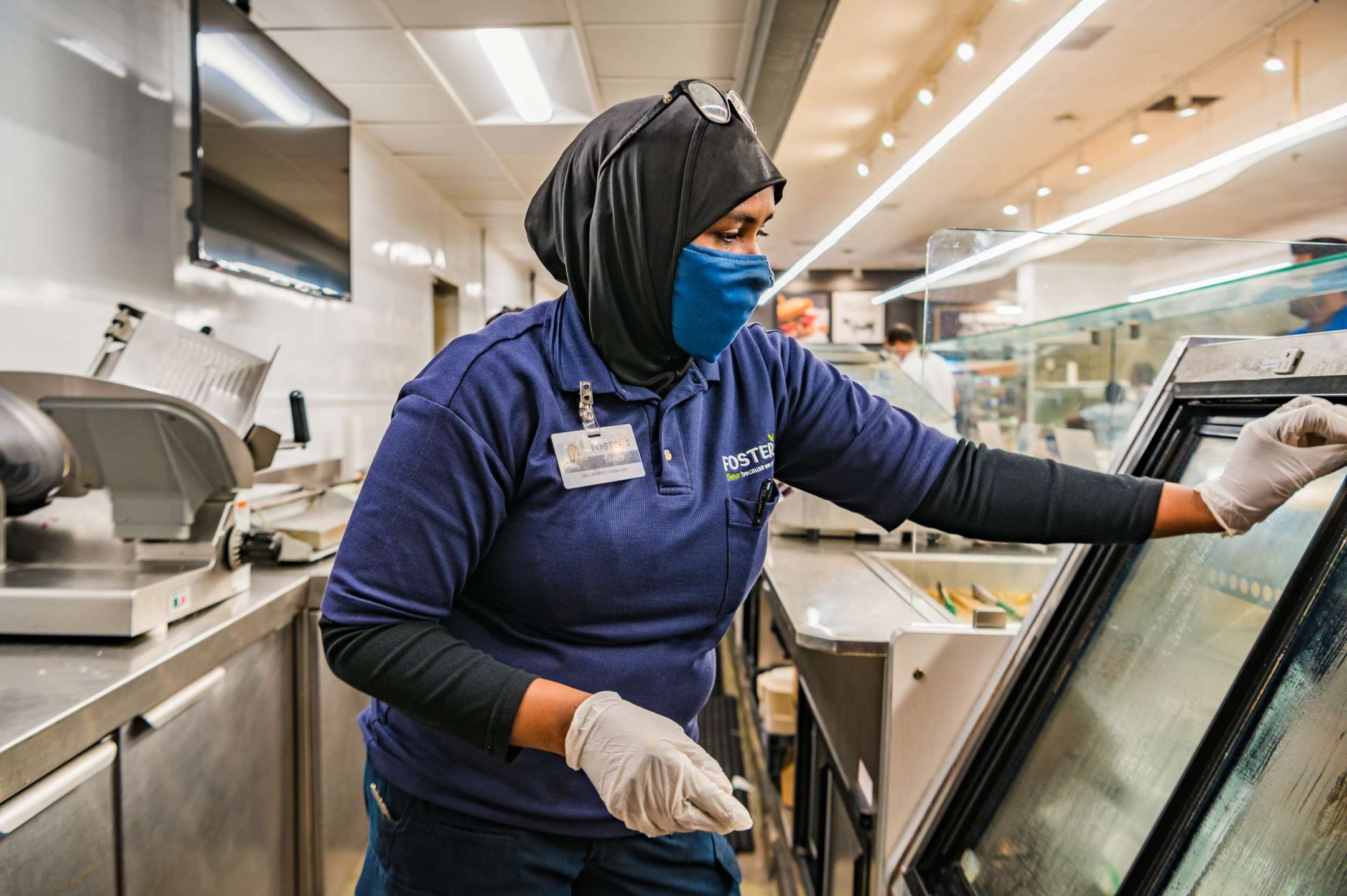
The new reality appears to be that COVID-19 is something we live with. Ensuring availability of vaccines and allowing people to make sensible choices is likely to remain the public health policy reality, even amid new surges. Broader questions could still be considered around what, if anything, we have learned form the pandemic.
A greater consciousness of how viruses spread opens the door to public policies on ventilation in offices and classrooms, stricter rules around staying home when sick, and a balanced approach to masks and hand hygiene amid surges.
COVID-19 may not be the menace it once was but its legacy will linger in 2023 and beyond.
8. Quest for accountability in public life
As Caymanians tighten their belts amid a cost-of-living crisis, it becomes even more imperative that government spends our money wisely.
The Cayman Compass will be putting an increased focus on public accountability in the coming year, not just for the behaviour of ministers and civil servants, but their performance as well. How is our money spent and are we getting value for those dollars?
We want to take a deeper look at the how and why of the decision-making process concerning public expenditure, and bring to light any questionable choices.
We are also campaigning for greater access to information. The Compass, and other interested parties, should not have to go through lengthy freedom of information requests to get basic details on public spending or the minutes of meetings of public boards.
Transparency and accountability should be the norm.
9. A downturn in house prices?
With interest rate hikes, so conventional wisdom goes, comes a decline in house prices.
The cost of borrowing is rising and the amount of new homes coming on the market is increasing, suggesting that Cayman’s continuous year-on-year growth in house prices may, at the very least, be about to plateau.
That’s a double-edged sword for residents. While concern abounds about the unaffordability of starter homes, many Caymanians have their life savings tied up in property investments. The renter/owner split is about 50-50 according to the latest census.
So when house prices decline, many could suffer. Even without a drop in prices, the significant jump in interest rates could make mortgages unaffordable for some, contributing to a rise in foreclosures. Realtors remain bullish about the capacity of Cayman’s housing market to withstand the global downward trend. Time will tell.
10. Caymanians going for gold
This past year, the Compass featured the successes of golfer Aaron Jarvis, playing at the US Masters at age 19; swimmer Jordan Crooks, winning gold at the FINA World Championships at 20; and writer Jazz Pitcairn, working for an award-winning HBO show at 23.
We also featured stories on Tonie Chisholm, making it in the movie business; model Kayla Watler, appearing in major international magazine shoots; and novelist Sara Collins adapting her own award-winning work for television.

It might be too early to talk about an artistic and athletic flourishing in Cayman, but there is certainly something going on. A generation of talented young people are emerging with a determination to make their mark on the world.
A flip-side to the excitement that comes with this energy is the cautionary note offered by Watler, who warned in her interview that she was made to feel different in Cayman because of her quirky personality and individual looks. If you didn’t want to be an accountant, she said, you were looked down on.
We think and hope that may be changing. The work of the Cayman Islands Film Commission has helped create the foundation for a movie industry in Cayman; careers in the arts and even in sports are no longer viewed as pipe dreams.
A generation of talented young people promises to push the envelope on what Caymanians can achieve on the world stage. Jordan Crooks’ gold medal could be just the start.
Related Videos