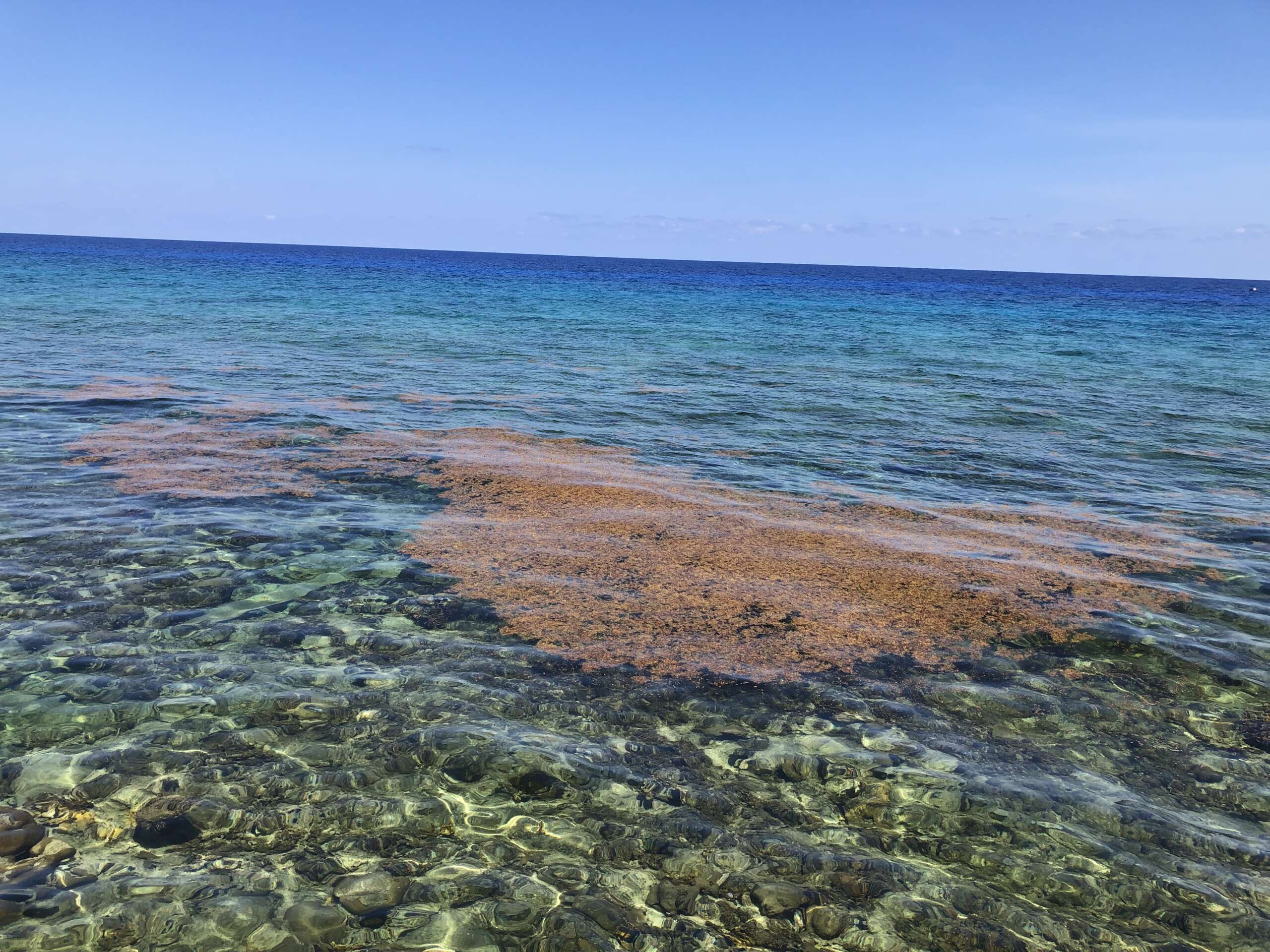
A further influx of sargassum is expected this week along the Cayman Brac coastline, which has already been invaded by the stinky seaweed.
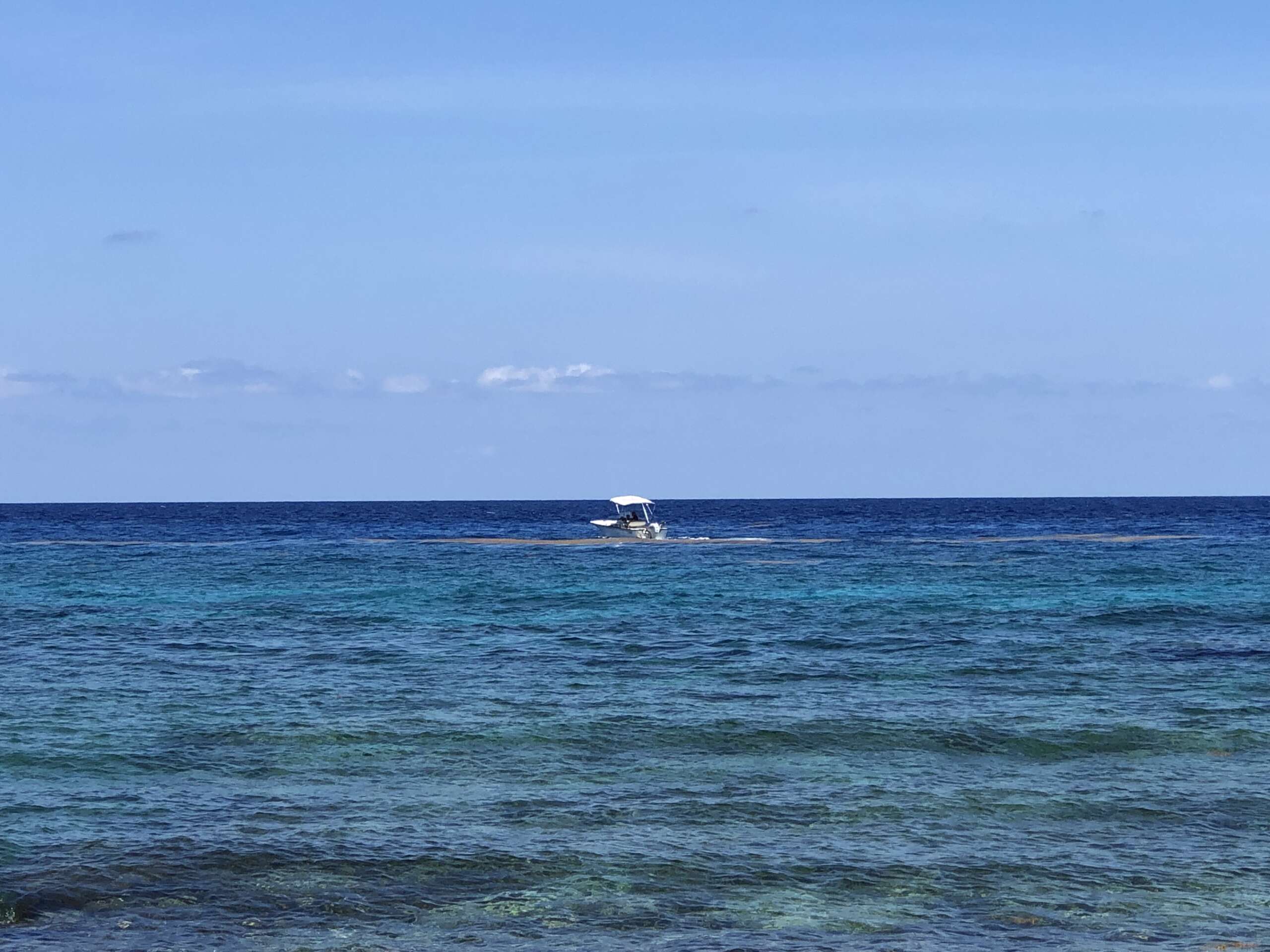
The sight of large mats of the brown seaweed bobbing on the waters off the western coast of the Brac on Sunday was a worrisome sign for Brac fishermen like Shawn, who asked not to use his full name.
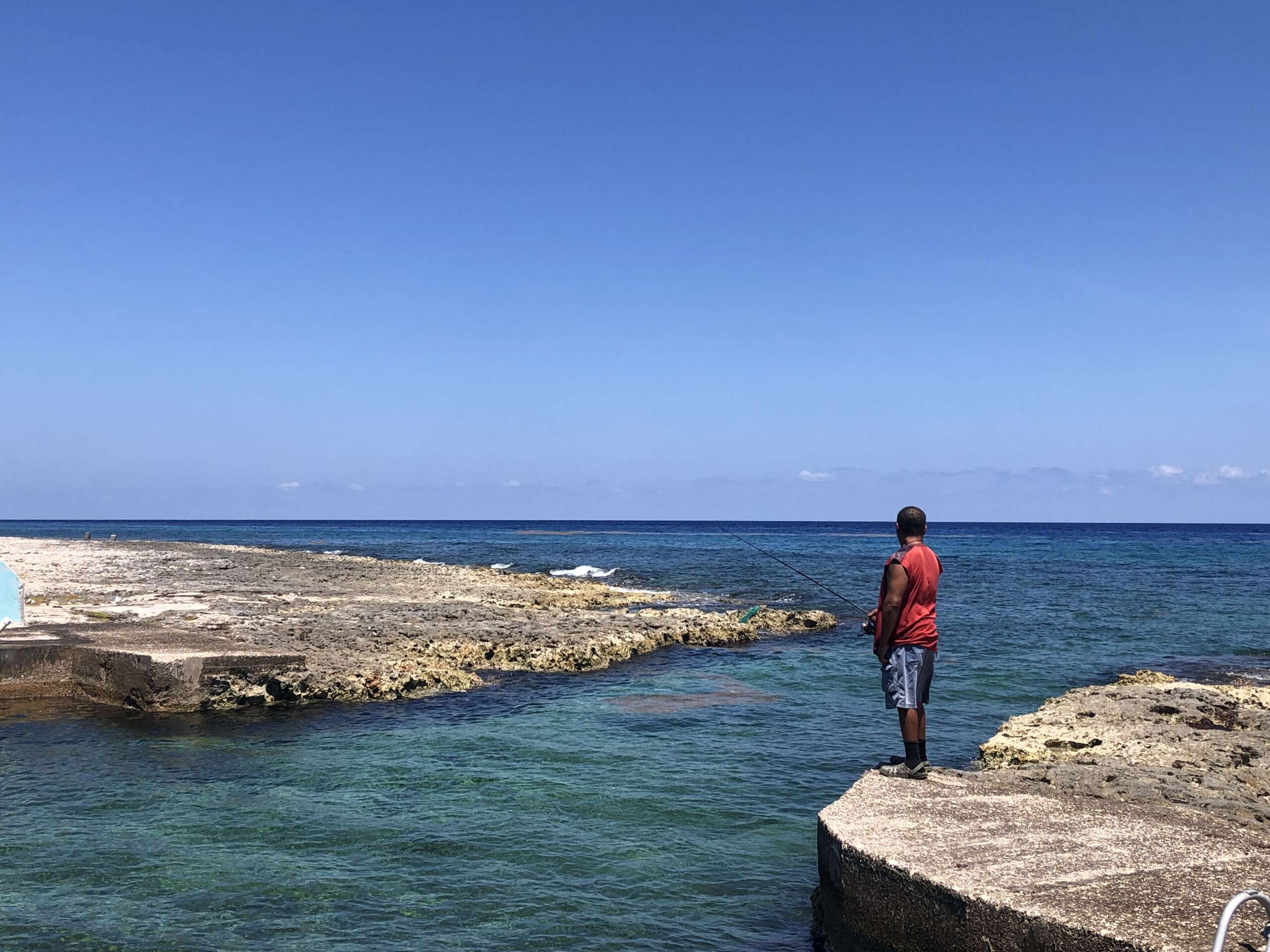
“It is chasing away the fish,” Shawn said on Sunday morning, as he waited patiently for a catch on the line he cast off Spot Bay dock.
He said while the seaweed offers cover for some of the smaller fish, it is has been driving away the bigger fish that he looks out for to get a meal and possibly sell.
He said, coupled with the “nasty weeds and garbage” that come along with the sargassum, this could also be making the fish change course, limiting local catch off Spot Bay, which has been hardest hit thus far with the seaweed.
“It kind of smothers them too and then the scent is rather bad,” he added.
The University of South Florida Optical Oceanography Lab, in its 31 March bulletin, noted the “overall increasing trend” of sargassum, which is “again setting a record abundance of 13 million tonnes for this time of year”.
It reports that the total sargassum amount will continue to increase, and “sargassum in the east Caribbean will continue to accumulate and migrate westward, some of which will be transported to the Gulf of Mexico to impact Florida”.
Clean-ups begin on Brac
While there has already been influx of the seaweed on the coastline on the Brac, District Commissioner Mark Tibbetts said, “It definitely hasn’t reached the magnitude yet that it was last year.”
So far sargassum is more on the north coast of the Brac, he said, “where, as in the past, it was the south coast that was most impacted”.
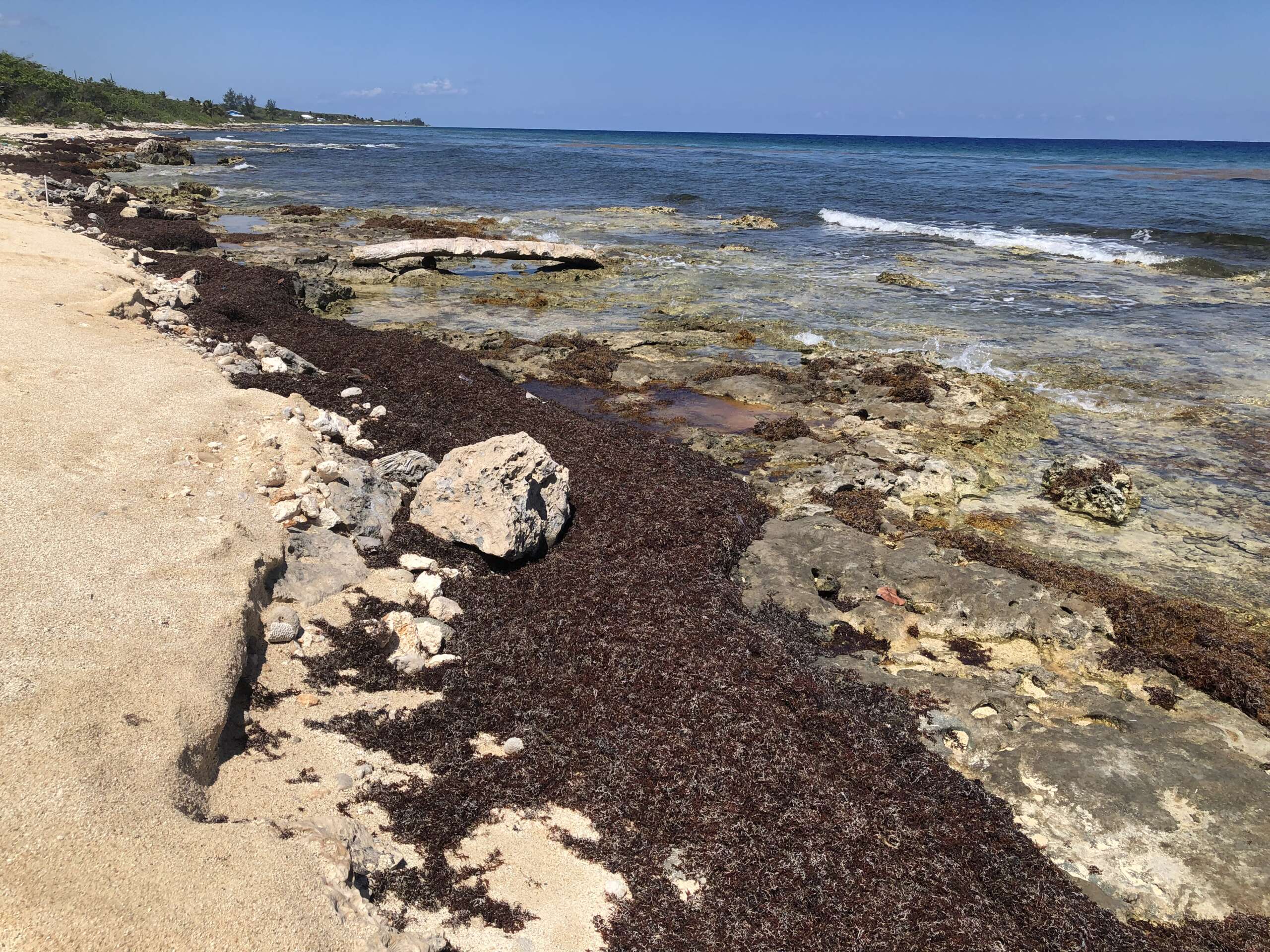
“Based on reports, we anticipate impacts on both sides of the Sister Islands,” he added.
Over the weekend, as part of World Earth Day celebrations, volunteers on the Brac initiated beach clean-ups on the coastline, getting rid of the unsightly weed.
Tibbetts said District Administration has its teams out as well to deal with the arrival of the seaweed.
“We did have our teams ready for manual labour as much as possible and if the level does escalate to the [same] level as last year, we will definitely have to appeal for use of equipment where possible,” he said.
Shawn said he was disturbed to see the garbage that was also washing up along the coastline together with the seaweed, though added it was better than if it remained in the ocean.
“The thing is, you just got to work to clean it up, the cleaning process will be the hardest part,” he said.
Tibbetts said garbage always washes in, but there has not been a lot so far on the coastline.
The Department of Environment has issued special guidelines related to cleaning sargassum from the coastline.
Removal of sargassum by mechanical means is not allowed without consulting with the DoE and receiving a letter of approval from the department, which will outline any conditions to be followed.
“In some instances it may be necessary for a member of DoE staff to be present to check for wildlife e.g. turtle nests, prior to any clearing. Least intrusive practices are preferred – hand raking is preferable to machinery. Permission is not required from DoE for raking but permission is required for clearing by mechanical means,” according to the guidelines.
With nesting season almost here, the DoE said, “extreme care should be taken during turtle nesting and hatching season, with peak activity spanning from May to November”.
Sargassum on Seven Mile
Last week, the DoE advised the community about an influx of sargassum along Seven Mile Beach and urged against swimming.
It said a call from a concerned member of the public alerted the department to an abundance of floating sargassum and jellyfish at Governors Beach.
There were extensive mats of sargassum along several sections of Seven Mile Beach, the DoE said, but no jellyfish were found washed up on the beach.
“While it is uncommon for sargassum to accumulate on the west coast of the island (due to winds predominantly blowing from the east), it is not unheard of. We believe the calm weather and light westerly winds allowed currents to momentarily push the normally ocean bound sargassum on shore. As the winds shift around over the next few days, we should should start to see conditions return to normal and the sargassum carried back offshore,” the Doe said in a post on Tuesday, 18 April.
It added that as the offshore waters warm this time of year, it isn’t unusual to encounter increasing numbers of jellyfish.
“We encourage swimmers to exercise caution in the water and keep some vinegar handy for rinsing down and neutralizing jellyfish stings,” it added.
Related Videos