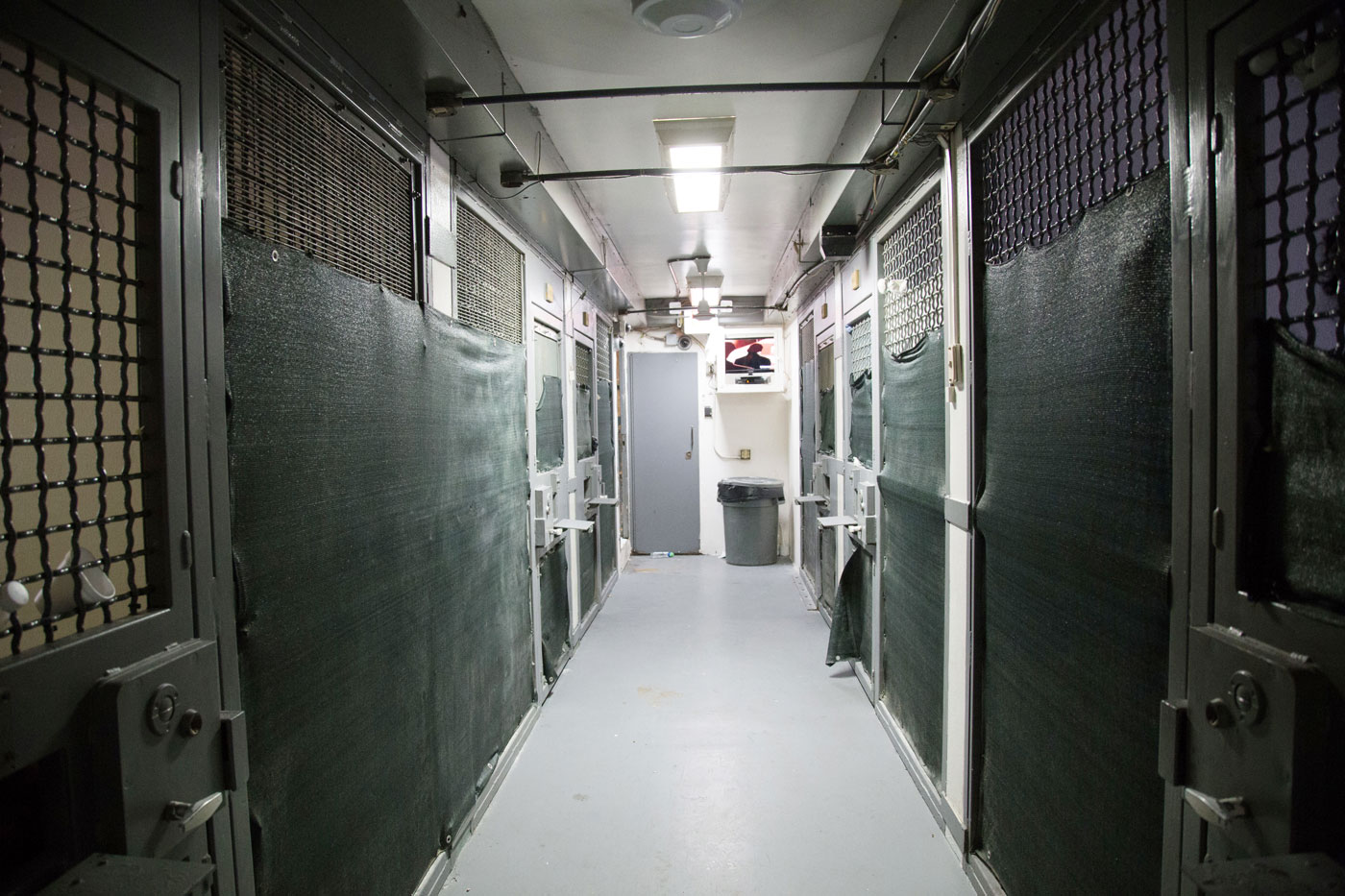
Mentally ill prisoners – accused but not convicted of any crime – face the possibility of being locked up at Northward Prison indefinitely under current Cayman Islands law, a leading local attorney has warned.
Oliver Grimwood, who mounted what is believed to be the first successful insanity defence in Cayman Islands history on behalf of Travis Webb, believes legislation in the territory needs to be reformed to create a fairer system.
Grimwood has highlighted numerous challenges with current legislation that tie the hands of the courts in cases where defendants are either mentally unfit to enter a plea or are deemed to be ‘not guilty by reason of insanity’.
In the high-profile case of Webb – a former athlete incarcerated on a hospital ward after being cleared of responsibility in the attempted murder of a child – the facts of the incident and Webb’s involvement in the ‘physical act’ were not in dispute.
The challenge for the courts and the Governor’s Office has been how and where to safely treat him for his condition and how to handle the timing, the terms and the conditions of his eventual release.
But for other prisoners, the case does not get that far.
Those whose mental state is so severely impaired that they are not considered able to engage with the judicial process, face potentially graver challenges.
Compass Investigation: Travis Webb
The choice for the courts, as per the law, in those circumstances is binary – either bail in the community or incarceration at a ‘mental hospital’ or anywhere so designated. In the Cayman Islands, that usually means Northward Prison – or in some cases, the acute mental health ward at Cayman Islands Hospital.
Grimwood warned, “You could be accused of a very serious crime, the court would not be able to give you bail, there has been no finding of fact that you actually did anything, and yet you would be transferred to Northward and there you would remain until someone has deemed that you are well enough.”
In those circumstances, he said, it was “theoretically possible” for someone to remain in prison indefinitely without any proof, beyond an initial charge, that they did anything.
Grimwood said there are several people who have found themselves in that position over the past few years.
Even getting a psychiatric report to determine if a person is fit to plea can take many months, during which the accused is in a jail cell without access to proper support for potentially serious conditions, he added.
Potential legislative changes
The law in England and Wales allows more flexibility, including for a form of trial to take place where the defendant is present but does not participate – to determine if the ‘physical act’ is proven.
That at least gives the court the opportunity to examine the facts and either dismiss the charges and free the accused or to issue a finding of fact in relation to the incident, after which the prisoner would be treated as if they were ‘not guilty by reason of insanity’.
Tweaking the law in this fashion would have limited benefit though, unless something is done to alter the logistic and legal challenges encountered in the Webb case.

Grimwood said the Governor’s Office, the Mental Health Commission, prison leaders, prosecutors and others had made the best effort possible to deal with a difficult situation in the aftermath of Webb’s trial.
He said the acute mental health ward at the Cayman Islands Hospital was deemed the best of a bad set of options for housing his client at the time.
But in the absence of a secure mental health facility, that option – of placement on a busy inpatient ward – may not be considered viable for prisoners that are considered more dangerous to the public. Similarly, the new long-term mental health facility in East End – which is not designed as a secure unit – may not be appropriate either.
Equally, the concept of ‘governor’s pleasure’ embedded in the law, means that sentences for people in Webb’s position are open-ended. They can’t be released until the governor agrees to it.
Grimwood suggests a more flexible and transparent approach – again following the lead of England and Wales – would involve a much wider range of options for a judge in dealing with such cases.
While Cayman Islands law dictates that the individual is ‘conveyed to a mental hospital’, the courts in England and Wales have a range of options, including community supervision orders or even an absolute discharge, Grimwood said.
“I think serious consideration can be given to the legislation to give the court more options. When you have something as nuanced as mental ill health, the broadest range of options available for the court can only be a good thing.”
‘Courts should handle release’
When the issue of eventual release is considered, again he believes this should be in the hands of the court.
Currently, the governor of the Cayman Islands, on advice from key officials in the prison, health and judicial system among others, is tasked with deciding if and when a person can be discharged following a court order that they are not guilty by reason of insanity.
Grimwood believes this would be better left to a judge, hearing testimony in a court or a specialist tribunal, where the opportunity is there for the evidence to be challenged and tested.
Crucially, he said, this would allow a clear, transparent process, open to appeal or challenge, that provides at least the prospect of consideration for release, for anyone facing indefinite detention as a result of mental illness.
In extreme cases, where doctors still advised that a person could not be discharged, it would be possible for the court to mandate that they remain in a secure facility.
“Even in the long-term incarceration cases,” Grimwood said, “there would always still that pressure valve where it’s considered by others and can be reviewed as to whether it is still required.”
He added that tweaks to the law to put the mental health court on more of an officially statutory footing would also be beneficial in detecting mental illness and dealing with it before it escalated.
Related Videos