

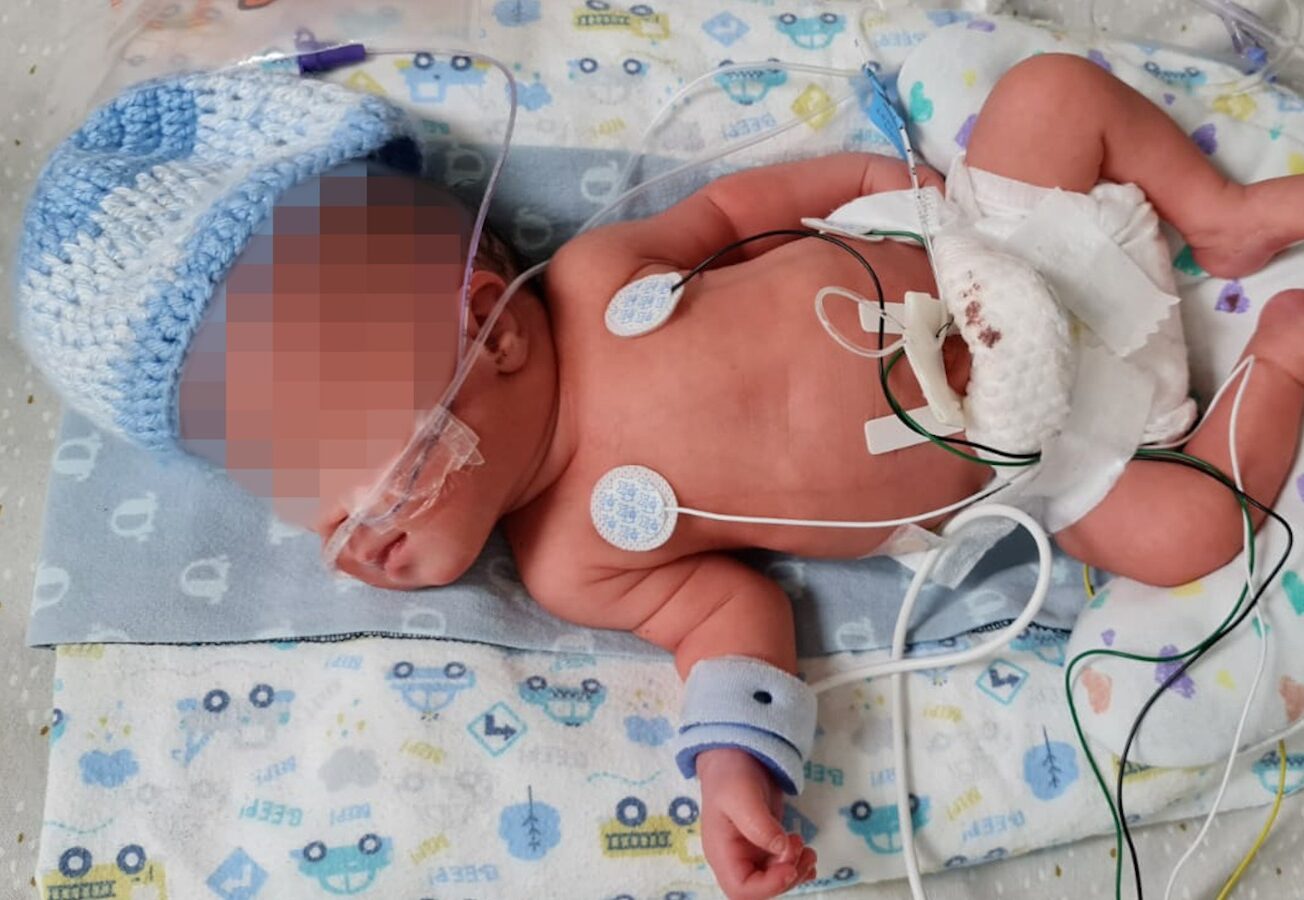
A cancer-stricken mother, who is fighting to save her life and that of her two-week-old premature son who has a hole in his heart, has been left contemplating insurmountable expenses in a desperate race against the clock.
The 39-year-old mother of four, who asked for her identity not to be disclosed for fear of being overwhelmed by enquiries, told the Compass her story of how a blissful pregnancy took a tragic turn seven months in.
“I began feeling this really bad pain on the left side of my stomach when I was about 28 weeks pregnant,” she said. “I went to the hospital for a check-up, just to be safe, and that’s when the doctors told me that I was having pre-term labour pains.
“During the checkup, they also noticed a mass, but because it was an ultrasound they couldn’t really tell what it was.”
Four weeks, one MRI exam and a biopsy later, the doctors were able to confirm that the mass was pancreatic cancer.
“I didn’t even know what the pancreas was, but when I went home and Googled it, well, I can’t even put those feelings into words,” she said, before pausing and looking off into the distance while fighting back tears.
According to Johns Hopkins Medicine, the Baltimore-based biomedical research arm of The Johns Hopkins Hospital and Health System, 90% of patients with an early diagnosis of pancreatic cancer have on average a five-year survival rate at each of the four stages.
“Although pancreatic cancer is relatively rare, it is very aggressive as there is no routine screening process,” said Cayman Islands Cancer Society operations manager Dave O’Driscoll.
O’Driscoll told the Compass that of the 400 patients that they have provided financial aid to over the past decade, seven were diagnosed with pancreatic cancer, whereas breast cancer remains the most commonly diagnosed cancer, at about 40% of the total.
A heart-breaking blessing in disguise
“In some ways, I’m lucky because if it wasn’t for this pregnancy I would not have known about the cancer until it was probably too late,” she said. “But no hospital would take a chance to treat me while I was still pregnant and the only one that said they could said I needed to pay down $1 million for myself and another million dollars for the baby, outside of any insurance coverage.”
But for a simple cashier who makes a modest living, the $2 million price tag for lifesaving intervention for her and her child was far out of reach, for her and her self-employed husband.
“Because no one would take a chance on me, I ended up having to give birth prematurely, because the larger I got, the more pressure it was placing on the pancreas and the more pain I was feeling,” she said.
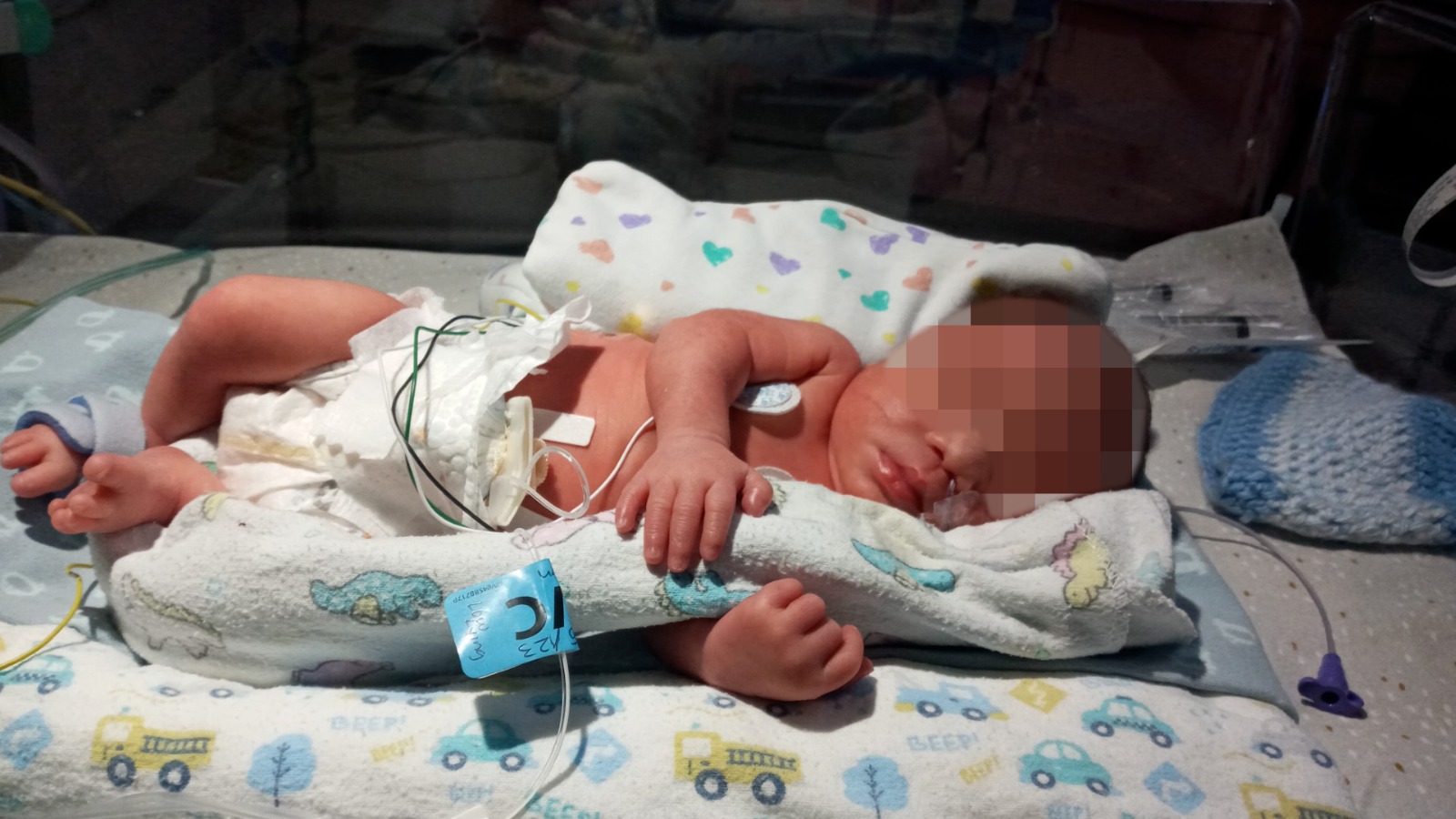
Hours after her delivery, the doctors discovered her son had a hole in his heart, in addition to what appeared to be signs of Down syndrome.
According to the US-based Children’s Heart Foundation, one of every 110 children born in the United States has some form of congenital heart defect – making it the most common birth defect in that country.
Comparable statistics are unavailable for Cayman.
The race against time
“The doctors say they can’t operate on my son until he is at least two months old, and in my case, well, I’m due to get treatment at the Baptist Health in Florida, but I am almost out of time and I need to start treatment immediately,” she said.
The Compass understands that Cayman Heart Fund will be assisting with the infant’s expenses thanks in part to the organisation’s Team Nolan division which helps to focus on childhood cardiovascular issues, while the Cancer Society will assist the mother with her treatment.
“We have a financial aid system set in place, where we can help qualified applicants pay for treatment, medication, consults, airfare, accommodation, and almost anything related to cancer diagnosis and treatment,” said O’Driscoll. “Patients qualify for this assistance through an analysis of their insurance coverage and financial situation.”
The family’s insurance provider is being bolstered by CINICO.
But even with insurance in place and assistance from the Cancer Society and the Heart Fund, the ancillary expenses for family members to accompany and support the mother and her son for treatment remain far outside their reach.
“We don’t know how long this will last and we have to think about tickets for travelling for the family members who are going to have to fly back and forth to support her while she is getting treatment,” said the woman’s sister, whose identity is also being withheld. “We also have to think about other expenses such as accommodation, transportation, food and even unforeseen emergencies.”
A mother’s dilemma
The woman’s fight has been made all the worse because she must also think about her infant son’s condition.
Health City Cayman Islands has organised many lifesaving surgeries for children with congenital defects from around the Caribbean, the mother noted, adding she believes her son’s heart could be mended locally.
However, she said, there aren’t any post-operative facilities on Grand Cayman to assist with the recovery of an infant, which means if the surgery is performed in Cayman, the family will most likely need to transfer the baby to the US in the coming months.
“I understand that I have to leave him and go get treatment so that I can live and be there for him,” she said. “But leaving him behind in this fragile state isn’t easy. Plus, what happens if he gets sent to a hospital far away from where I am being treated?”
Assistance needed
An initial revolving roster of people close to the woman has been drawn up within the family. Together, they hope to share the responsibility of being by both the mother’s and the infant’s side during these difficult times. However, to make this happen, they say they will need the assistance of the community.
“At this stage, we need any assistance that we can get, financial or otherwise, because we just absolutely can’t do it without help,” said the woman’s sister.
She added, “Our prayers are working so far, but without the community’s help we most likely won’t be able to make it.”
For information on how to help, the family has set up a dedicated email – [email protected].
Related Videos










Please advise how we can donate to support the extended family, and new mom and her child, through what is an absolute nightmare scenario. My heartfelt prayers and thoughts are with them all.
The family has now set up a dedicated email address to which people can send queries about how to help. It’s [email protected]