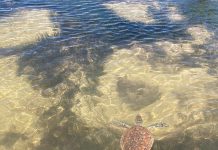
Two hand-reared green sea turtles named Salt and Pepper were released into the sea on Friday, 16 June, in celebration of World Sea Turtle Day.
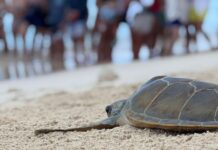
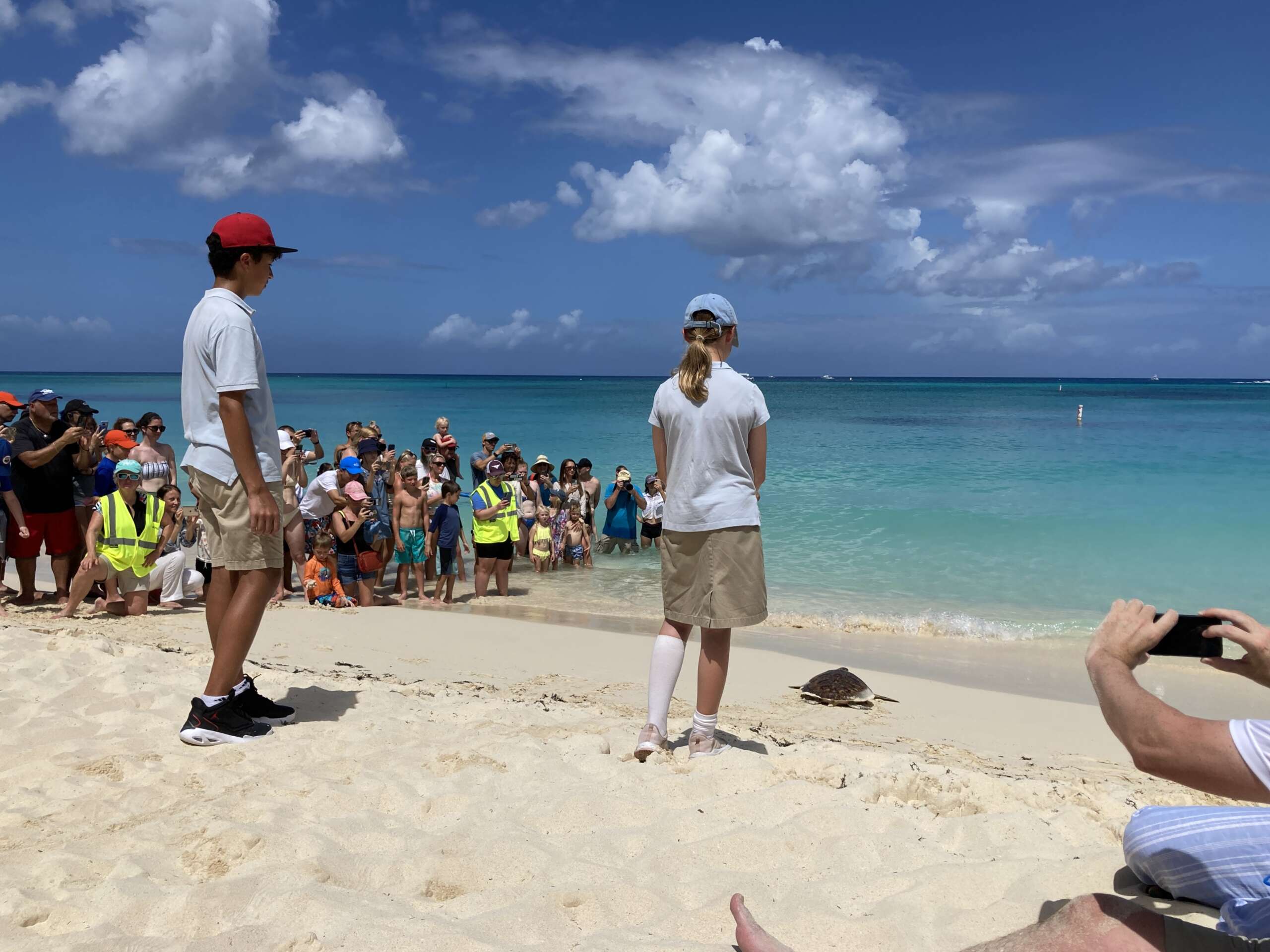
Crowds of onlookers gathered on Governors Beach to witness the event and learn more about the turtles from conservation and education staff of the Cayman Turtle Centre.
Pepper – named during a crowd vote – was the first to be released onto the beach, closely followed by Salt, which was given its name by a competition-winning school student.
Both made their way quickly down to the water before swimming away.
They each have microchips in their shoulders which will remain throughout their lifetimes so can be identified in the future.
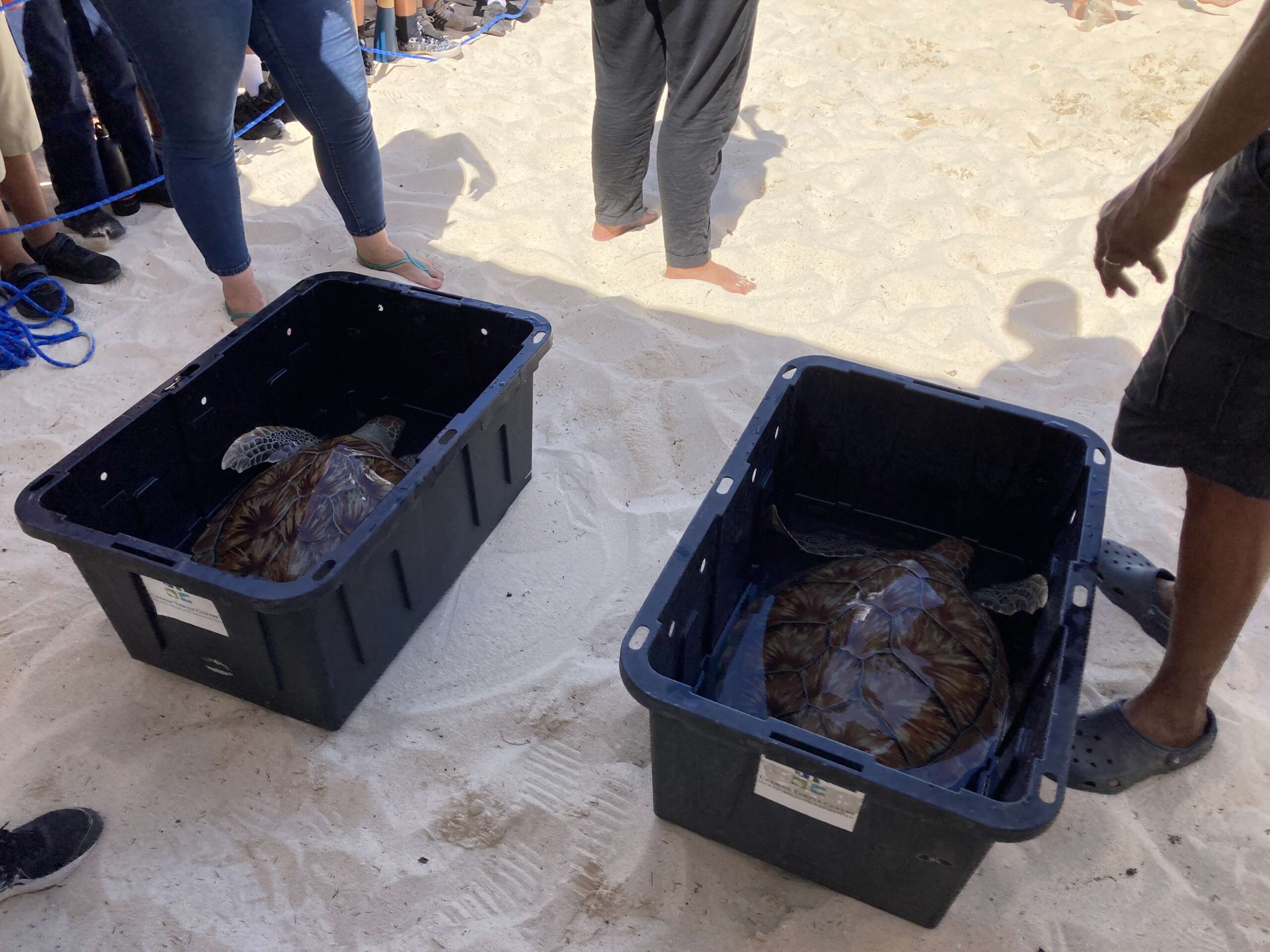
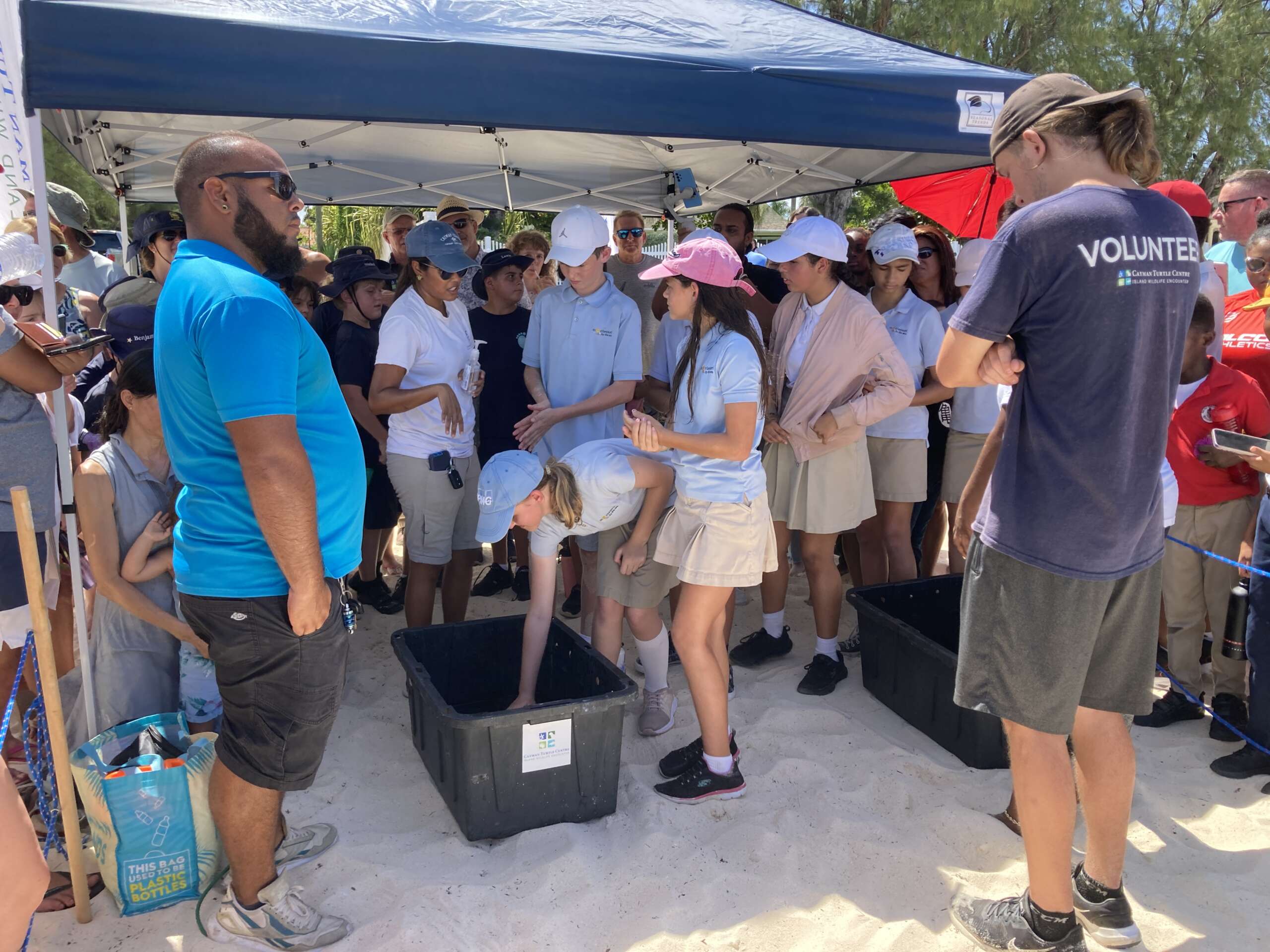
Education officer Shona McGill, who gave a presentation before the release, said the two turtles were born and raised at the centre.
“They started off in an egg a little bit larger than the size of ping pong ball, and they hatched out and we’ve taken care of them since then,” she said.
The centre named the initiative a ‘head-started’ turtle release, “and as the name implies we give the turtles a little bit of a head-start”.
“We raise them until they’re between one to two years old and release them into the marine environment,” McGill told the attendees.
“At this point their shell has fully hardened and they can protect themselves from larger predators in the ocean like sharks.”
But the odds are forever against the sea turtle.
“From hatching they have a one in 1,000 survival rate,” McGill said, “and we think that might be even lower with things like plastics in our environment.
“Sea turtles accidentally ingest plastics whether grazing on seagrass beds, grazing on algae, or even just confusing it for one of their favourite foods – the jellyfish.”
The turtle expert said sea turtles play an “incredible role” in Cayman’s marine environment and are referred to as a ‘key stone species’.
That means that “without them an environment would collapse or cease to exist all together”, she said.
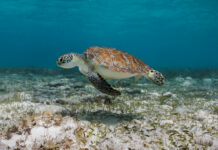
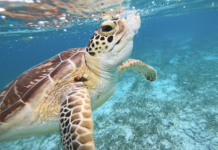
Green sea turtles, some of the largest marine herbivores, are “lawnmowers of the ocean, keeping sea beds healthy”.
They also eat algae on coral reefs which keep them thriving for the rest of the marine environment, McGill added.
The Cayman Turtle Conservation and Education Centre began its release programme in 1980 and has released more than 36,000 green sea turtles.
Studies have shown that nine out of ten nesting female green turtles are descended from released turtles.
Related Videos