Government has allocated an additional $550,000 to fund home repairs for dozens of families still living in unsafe homes scarred by the passage of Tropical Storm Grace some two years ago.
The pledge comes amid rising concerns that home owners cannot afford to make necessary repairs ahead of what is now expected to be an active hurricane season.
Dozens of Cayman families are still living in properties that were damaged in Grace in 2021, leaving them vulnerable as the storm season enters its most active phase.
The additional funds have been earmarked for the National Housing Development Trust, the government agency which deals with low-income housing.
“Keeping Caymanian families safe, secure and comfortable in their homes is a priority of our administration,” Acting Premier Juliana O’Connor-Connolly said in a statement issued after the special caucus meeting on Tuesday, 22 Aug., in which the PACT administration approved the funds.
The Compass reached out to the National Housing Development Trust seeking information on how the funds would be allocated but had received no response by press time.
Meanwhile Jan Gupta and her team at Resilience Cayman are fighting through the backlog of damaged homes that are in dire need of repair.
According to Gupta, of the 339 Caymanian families whose homes were damaged, during the 2021 passage of Grace, 125 are still awaiting repairs.
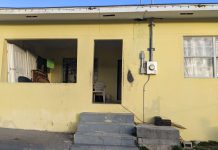
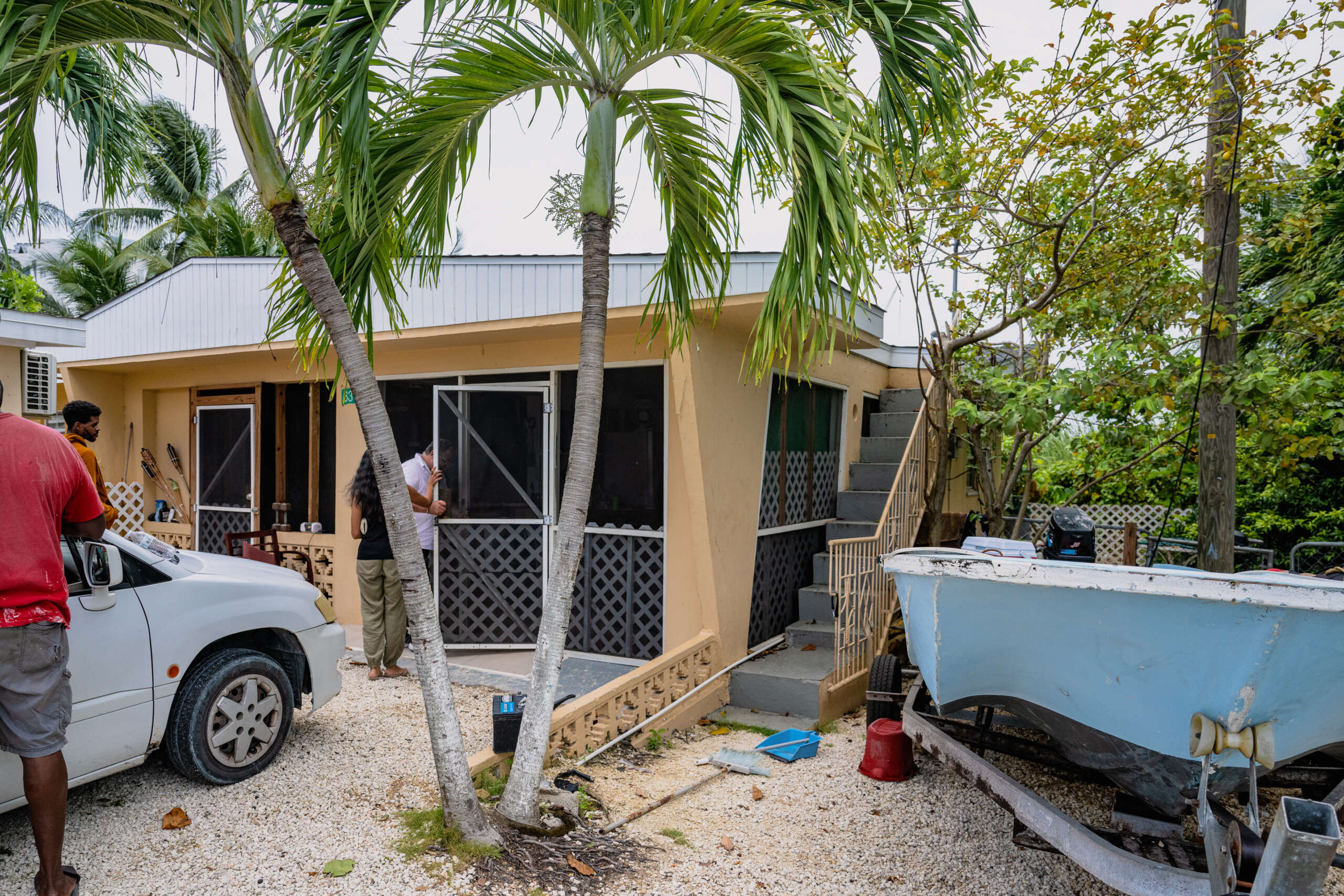
One homeowner who is getting help is Velma Faulknor, an 83-year-old George Town resident who has, for the past two years, set basins and pans throughout her home whenever storm clouds gathered on the horizon.
“When the rainfall real heavy, sometimes the roof would leak,” explained Faulknor, who has lived in her home for nearly 60 years.
The leaks, though relatively recent and numerous, were a small part of a larger problem that has slowly developed over several decades.
Faulknor’s seven children have long since moved out and started families of their own. Her husband died four years ago, leaving her with the task of maintaining her home.
She explained that her children help when and where possible, but the scale of the problem was too big for their combined efforts to solve.
“At this particular project we had to replace the entire roof,” explained Thomas Ebanks, also of Resilience Cayman. “It was a roof that was over 50 years old, so the shingles had all passed their useful life, they are blowing away and there was some termite infestation in the roof.”
The entire roof took two weeks to be removed and rebuilt. In the end, the final cost was $40,000 – which was simply out of Faulknor’s reach.
Fortunately for her, and hundreds of other residents who find themselves in a similar position, the government is footing the bill with a $1.6 million housing repair grant for Caymanians, which went directly to Resilience Cayman.
In total, government is spending $2.6 million on what was supposed to be minor damages that arose from the passage of Tropical Storm Grace. However, the problem, as Gupta explains, is that many of the homes which have been recommended for repairs have damage that predates Grace.
In most cases, such as Faulknor’s, ignoring the legacy damage would mean patching a termite-infested roof to stem a leak, only for it collapse during a hurricane. Gupta says this simply isn’t an option.
“The average cost of these home repairs is between $30,000 and $40,000, and that is even when we procure our supplies so we can get the most out of each dollar,” Gupta said.
With 125 homes to go, at the low end of $30,000 each, Gupta would need an additional $3.75 million to complete the project, but without more funding some homes will have to go without getting repaired, as houses with the elderly and children are priorities.
The recent publication of a Compass feature on the financial hurdles of making one’s home structurally ready for the hurricane season, led to questions on whether those affected had insurance coverage for their homes.
“Of the initial 339 homes [damaged by Grace], probably about 50 of those had some level of insurance,” Gupta said in response to a Compass query.
But insurance cannot protect everyone, she added, as people cannot afford the deductible or find themselves under-insured.
“That deductible can sometimes be $5,000 or $10,000,” Gupta said. “So, until they are able to afford the deductible the insurance may not be able to approve the claim. So, they could be sitting there waiting, and some have the means to borrow the deductible, and others are no different than those who do not have insurance.”
In cases where homes were under-insured, Gupta said the money paid out in claims fell short of the amount needed to fix the property.
Although the additional funds are going to the National Housing Development Trust, Gupta noted that she was happy more families would have access to the repairs they needed; however, she continues to ask for the community’s help.
“We are determined to assist Caymanian families who would not otherwise be able to afford the necessary repairs to maintain a dry, healthy, safe and liveable environment for them and their families,” André Ebanks, the Minister for Investment, Innovation and Social Development, said after the 22 Aug. caucus meeting.
Related Videos