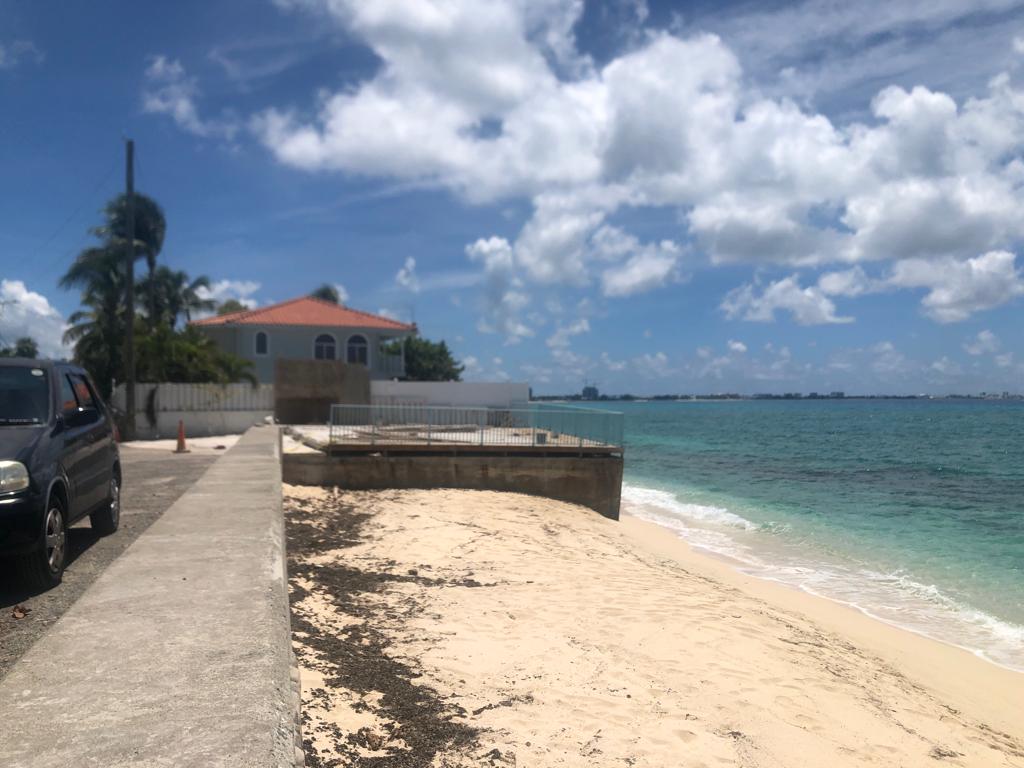
The crumbling oceanside cabana at the centre of a fractious legal dispute between the National Conservation Council and the Central Planning Authority was torn down over the weekend.
Water lapped against the foundations of the building, on a deeply eroded stretch of beach fronting Boggy Sand Road, on Monday.
But the structure itself had been demolished.
The timing of the work, which began barely 24 hours after the Court of Appeal quashed planning permission for the structure and a linked seawall to be replaced, took environmental enforcement officers by surprise.
However, the Cayman Compass understands that specific planning permission is not needed to simply remove the building, so long as the work does not impact the marine park. The foundations and the seawall are a larger concern.
Department of Environment officials attended the site over the weekend and said they were content that neither the National Conservation Act nor the appeals court ruling had been breached at this point.
The Compass understands a demolition permit would have been required to take down the building, but has received no response from the Department of Planning on whether one had been issued.
Lauren Dombowsky, DoE environmental assessment officer, said the cabana itself could have been torn down at any time, with the right permits from planning.
The concern of both the Department of Environment and National Conservation Council is with the wider plan to remove and rebuild the structures that are almost in the water and the possible impacts on the marine park.
Dombowsky said officials would be monitoring the site in case of any impacts. She suggested that any interference with the foundations may require permission from the NCC if the marine protected area were to be affected or a coastal works permit from Cabinet if the works were in or over Cayman waters.
“Any work taking place in the water would be a concern. Anything that impacts the marine park would be a concern. We are monitoring it very closely and what they have done so far has been out of the water and so has not affected the protected area,” she said.
The National Conservation Council has advised that any wider effort to remove and replace the cabana and seawall would have inevitable impacts on the adjacent marine park that would be impossible to mitigate.
The Central Planning Authority had initially approved a plan from Cayman Property Investments to replace the structures – ignoring advice from the council. That decision was overturned on judicial review to the Grand Court, which quashed the permission.
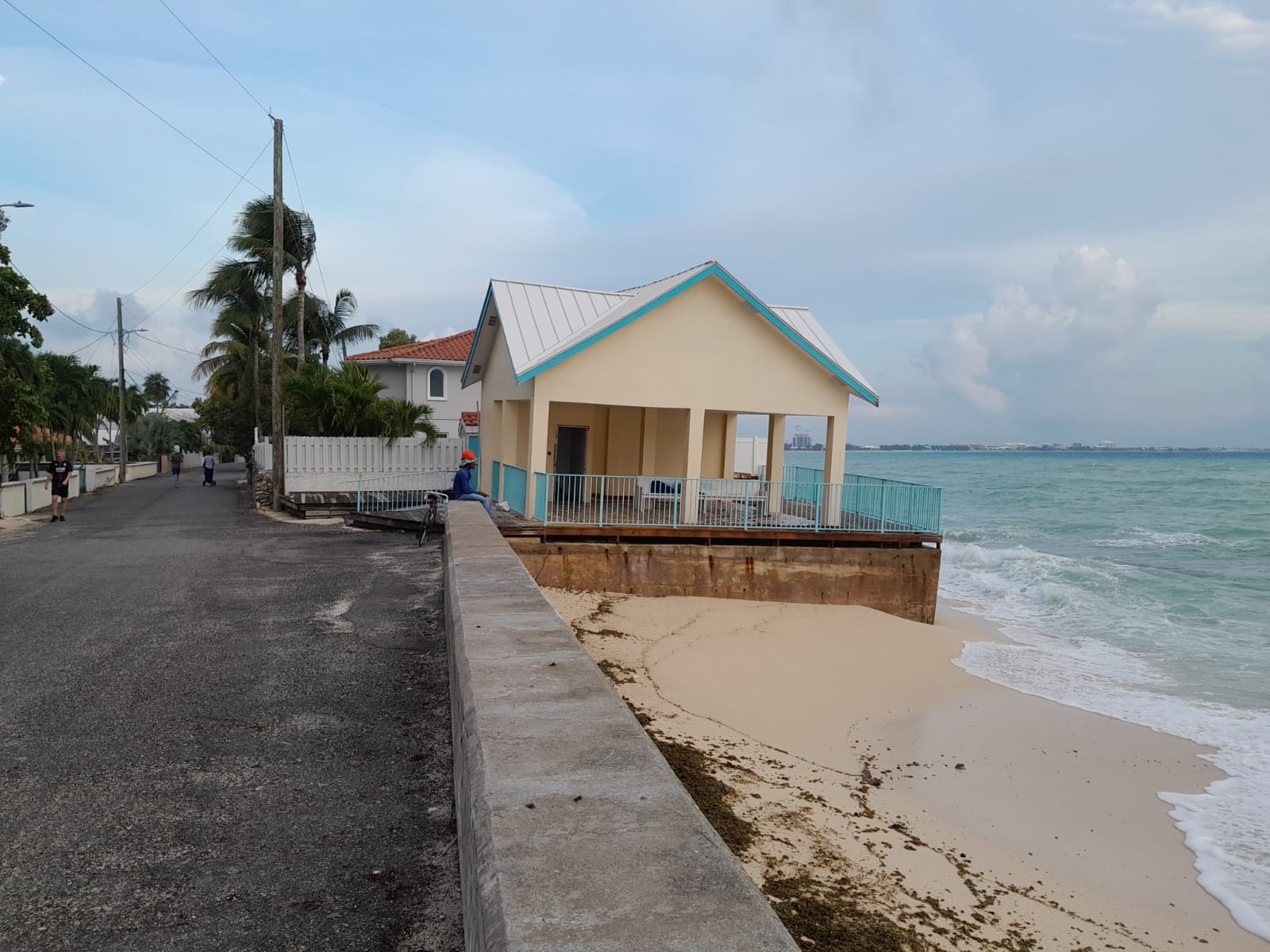
The Court of Appeal upheld that decision Friday, clarifying the National Conservation Act and indicating that the conservation council – and not the planning authority – has the ‘final word’ on planning applications that are likely to have adverse effects on marine parks, environmentally protected areas or species.
The court battle concerns wider issues about the process for assessing the impact of government projects on environmentally sensitive areas.
Premier Wayne Panton, who is also Minister for Sustainability and Climate Resiliency, hailed the ruling as a victory both for the environment and Cayman.
In a press release issued Friday, he said: “Our Government agencies and boards must move forward according to the law, working collaboratively to advance the country’s vision for sustainable development that balances our built and natural environment.
“Not only have the Courts spoken, but the people of the Cayman Islands are making their voices heard loud and clear – they understand the links between a healthy environment, a prosperous economy and a vibrant society and culture, and they want to see the Government actively taking steps to prioritise sustainable development that benefits all people of the Cayman Islands now and in future.”
Related Videos