

A potential panacea to the islands’ social and cost-of-living challenges that could cushion the impact of jobs lost amid technological advancements in the coming years. Or a crushingly expensive and unworkable welfare programme that would remove the incentive to work?
The concept of Universal Basic Income – periodic no-strings-attached payment to all citizens regardless of need – is becoming part of the global conversation as societies grapple with growing wealth inequality and shrinking employment opportunities.
In Cayman, the discussion is just beginning.
When the government provided a monthly stipend to all displaced tourism workers during COVID-19, it was effectively contributing to a global experiment in a Universal Basic Income, albeit in a limited capacity, for a single industry.

The tourism stipend was paid between May 2020 and April 2022 to around 3,600 displaced workers. At the end of this period, the government’s finances remained in surplus.
But what would happen if Cayman extended the concept to the entire country?
Following the pandemic, the government’s Strategic Policy Statement 2022-2024, released in July 2021, suggested that Universal Basic Income would be considered by the PACT government.
In the document, UBI was suggested as a method to achieve the broad outcome goal of “providing solutions to improve the well-being of our people so they can achieve their full potential”.
There has been no further mention of the concept, however, and it was left out of the follow-up policy statement this year.
Here, we take a closer look, at the possible social and economic impacts of Universal Basic Income in Cayman.
What is the purpose of UBI?
Caribbean economist Marla Dukharan describes UBI as “a mechanism whereby the Government seeks to address poverty by ensuring that everyone has a particular level of income to afford a decent standard of living”. It extended to everyone equally.
How is the tourism stipend connected to UBI?
Due to the closed borders, arrival traffic fell 93% between March 2019 and March 2022, according to the Cayman Islands First Quarter Economic Report 2022.
The stipend programme provided, at first, $1,000, and then $1,500 per month to ultimately 3,673 displaced tourism workers.
It cost the government more than $60 million a year, according to former finance minister Chris Saunders.
Despite this expense, and the decrease in revenue and taxes from the tourism industry, the Cayman Islands First Quarter Economic Report 2022 indicated a central government fiscal surplus of $215.9 million.
Why would the payment be made to the entire population under UBI?
Universal Basic Income differs from the tourism stipend in that it is not means tested or targeted and is given ‘universally’ to everyone. The idea behind this concept – a radical departure from most social welfare programmes – is that it removes the stigma of such payments and increases efficiency.
Dukharan added, “It is deemed more efficient to distribute a UBI than the complex and costly operations of the social welfare department.”
Unlike means-tested assistance social benefit programmes, like those used by Cayman’s Needs Assessment Unit, which requires significant manpower and record keeping, UBI is simple, in that it provides a regular, uniform payment to every citizen.
UBI has the potential to replace or at least supplement Needs Assessment Unit payments, to the extent that the cost for the recipients’ needs is within the stated income.
It is worth noting that not every recipient of the welfare system will have needs that are equal to or below the UBI, and some may still require further financial assistance. Issues of that nature should be rare since the premise of UBI is to distribute a payment amount that alleviates the burden of poverty so that everyone has access to a liveable wage.
Lemuel Hurlston, head of the minimum wage advisory committee, told the Compass there are many positives of a UBI-style approach that could help provide a fairer distribution of wealth in Cayman.
He added that, in its simplicity, it could remove “a lot of idiosyncrasies” from the current social benefits system.
How much would it cost?
If the Cayman Islands were to make the $1,500 stipend programme universal, extending it to all 38,047 Caymanian citizens, the monthly cost to the government would reach $57 million monthly or $685 million annually. For context, this is 15% of the total government GDP or 48% of GDP generated from the financial and insurance services sector.
In 2021, the government spent $140 million on social benefits, including the tourism stipend. That spend also included sports and cultural tourism assistance programmes, support for business initiatives, and scholarships.
Extending the stipend programme to the entire population would require a 50% increase in the 2021 total government expenditure of $979.2 million.
Economist Dukharan warns that UBI “should only be considered if the government can easily afford to pay a UBI if they shut down the social welfare division and channel those funds to the UBI recipients instead”.
Nevertheless, she also asserts, “Once this policy intervention is relevant, well designed and targeted [in its use to alleviate poverty], the net effect will be positive and result in a higher standard of living and lower levels of poverty and inequality.”
What are the challenges with UBI?
One counter-argument is that many of the recipients don’t need government support.
Investment manager and Compass columnist Simon Cawdery says it could be perceived as “a subsidy for rich people”.
He added, “Rich people don’t need the funds, and not means testing the programme will simply cause the cost to be larger than it needs to be or the payment per person to be less than it could be.”
UBI is not intended to replace salaries; it is complementary income paid in addition to, or regardless of, salary.
Does it reward laziness?
Some critics cite concerns that the subsidy would lead the population to stop working, thus decreasing economic output.
Cayman-based economist Julian Morris said, “The problem with any kind of automatic welfare is that it creates perverse incentive effects, so if you know you’re going to get income, you might not go out and acquire the skills that will allow you to gain income and fulfillment in your life”.
Dukharan also highlighted “that a UBI can raise the overall reservation wage, which is the wage necessary to convince someone to take a job”.
Cawdery added that it could create tensions between those who choose to work, feeling they are subsidising those who choose not to.
What have experiments shown?
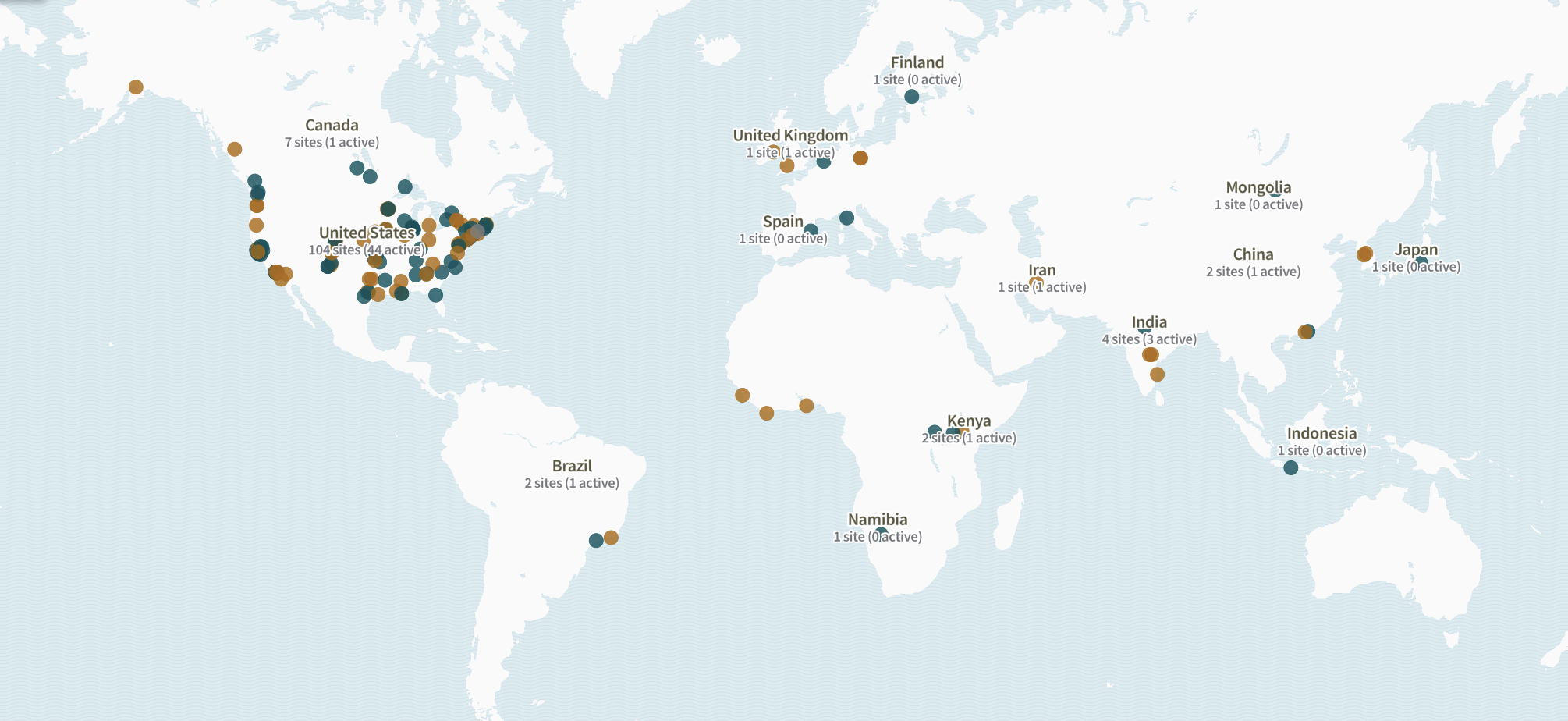
Despite the concerns expressed by critics of UBI around decreased labour market participation, across the several UBI experiments that have taken place globally, this has not been the case.
UBI experiments have been conducted in Alaska, North Carolina, California, Canada, Spain, Kenya, Iran, the Netherlands, Germany, Namibia, Japan, China and Brazil.
No single UBI experiment has proven to decrease labour participation.
Morris pointed out that, in Alaska specifically, where the programme has been long-running, it doesn’t create the same perverse incentive as it is “more of a reverse tax system”; that is, the payments are made as a percentage based on the output of the economy. The Alaska Permanent Fund invests some of the state’s mineral royalties and pays an annual dividend to every citizen based on its performance. Last year, every Alaskan got a check for $3,284 – more in the realm of an annual bonus than a living wage.
Hurlston cautions that the UBI concept may not go down well in Cayman where the principle of an honest day’s work for an honest day’s pay is entrenched.
He added, “There will be those that argue, ‘I fought hard for what I have got, don’t take it from me and give it to someone who didn’t fight so hard.’”
Nevertheless, as previously noted, the trials – though mostly small scale in nature – have not indicated any correlation between UBI and unemployment.
Conversely, several outlets, including Pulitzer Prize-nominated Vox Media, have reported that these experiments show increases in happiness, health and well-being, in addition to school attendance, crime, trust in social institutions, and rates of entrepreneurship. It is arguable that a healthier society is one more capable of participating in the labour market than an unhealthy one.
Regarding, one experiment in North Carolina, Vox reported that “Economists found that it doesn’t make them work less. It does lead to improved education and mental health, and decreased addiction and crime.”
On a different experiment in California, Vox noted, “recipients are mostly spending the money on food, clothes, and utility bills”. Research from Stanford University’s Basic income lab, which exists in part to “convene stakeholders around the politics, philosophy, economics and implementation of basic income and related cash policies”, supports those usage claims.
Why are other countries experimenting with UBI?
Giant leaps forward in tech and artificial intelligence are expected to impact employment across the western world in the coming decades. Once considered a fringe idea, UBI is now entering the mainstream of political conversation in the UK and the US.
Two small-scale UBI trials are currently under way in the UK – one in Wales and one in England. In England, 30 individuals are being paid £1,600 per month for two years, versus a control group that will not receive the stipend.
Will Stronge, director of research of the company running the trial, Autonomy, said to The Guardian, “All the evidence shows that it would directly alleviate poverty and boost millions of people’s wellbeing: the potential benefits are just too large to ignore.”
Of the trial, he also noted, “we want to see what effect this unconditional lump sum has on people’s mental and physical health, whether they choose to work or not”.
He added, “Our society is going to require some form of basic income in the coming years, given the tumult of climate change, tech disruption, and industrial transition that lies ahead.”
Economist Morris warns that embracing the UBI concept must also consider negative impacts such as a lack of incentive for people to train or seek employment.
“In the moments prior to widespread use of robots taking over jobs, [UBI] could have adverse effects for people who will participate in it, and the economy. It creates perverse effects and needs to be considered in those contexts.”
Could UBI increase productivity?
There is a counter-argument that UBI would actually help increase productivity and career satisfaction.
At least for millennials, a 2017 survey commissioned by Microsoft found “that 93% of its Gen Y respondents believe productivity is the key to happiness”.
Yet, at the same time, millennials in traditional work arrangements have admitted to being the least engaged generation. In 2021, Gallup reported that only 37% of the millennials working in traditional arrangements are engaged, versus the 75% of millennials who feel engaged when they are adequately resourced to work from home and have a supervisor who keeps them well informed.
When reporting on the results of a UBI experiment in Germany, FastCo, which was founded by two former Harvard Business Review editors, noted that “35% [of UBI recipients] say they’ve since become more “motivated” at work”.
UBI has the potential to unlock increased productivity, particularly among individuals who can focus on endeavours they are passionate about, such as entrepreneurship, the arts, or the caring professions, which are financially more risky than other roles.
The Deloitte study additionally highlighted that the cost of living has consistently been a top concern for Gen Z and millennials, who have taken to finding side jobs and job hopping, with their pay-cheque as their top priority. One of the German recipients surveyed by FastCo noted that UBI allowed him to enjoy his work again since he no longer feels pressured “to jump on every single call just to make ends meet” in order to “keep my family alive”.
How would it be implemented?
The concept of Universal Basic Income may seem preposterous to some, the cost, staggering; however, the prospective cost needs to be considered in relation to the country’s overall economic output.
In the United States, for example, Vox Media cites an academic research paper from University of Michigan’s Jessica Wiederspan, Elizabeth Rhodes and Luke Shaefer, who found that the $219 billion UBI cost could be derived from existing income sources that are already being used for social benefit. They found that the US “could swap those programs out, put a guaranteed income in their place, and wipe out poverty entirely”.
The implementation for such a programme may seem overwhelmingly complicated to others.
Dukharan says “collecting the data to inform the targeted policy intervention – who is affected, what are their conditions, what kind of support do they need – could be a major challenge but, luckily, Cayman is relatively small and well-resourced”. One such question around targeting could involve qualification for the programme as it relates to nationality or residency status.
Nevertheless, she added that there must be “full transparency and accountability in the system so that political interference is impossible”. This, she noted, “is another major concern with such interventions”. A truly “universal” basic income programme is meant to be simple. No exceptions for politicians; equal stipends on a set cadence for all, with accountability therefore built in.
Stanford University’s Basic Income Lab asserts that “A UBI could reduce income inequality in at least four ways”, and cites, among others, example in Mexico that “may explain a large part of the dramatic reduction in the Mexican Gini index over the eight-year period between”.
The risks also remain. Dukharan notes that, “A UBI, like almost everything in life, has risks and possible downsides. Often, allowances/subsidies/incentives/grants given by the Government create expectations and entitlements, causing resentment if/when removed.”
Meanwhile, Hurlston, who also chairs Cayman’s Minimum Wage Advisory Committee, highlighted the government expenditure on healthcare and stipends for the elderly, among others, noting that the government ends up covering expenses for people “one way or the other”.
Nevertheless, Morris, who is also senior scholar at the International Center for Law and Economics, cautions that, for the experiments done so far on UBI, it “hasn’t been seen to be the massive change agent that some people assumed that it would be”.
The Basic Income Lab at Stanford shared the story of a 23-year-old college graduate and father of one. The young man was quoted as saying, “I had just finished college and I didn’t like how things were going for me financially and I needed a change. The funds have helped me pay for things that my daughter needs, like diapers and wipes, and some household needs. Due to receiving these payments, I was able to pay for my test to get my Commercial Driver’s License, which is how I provide for my family. These payments have helped me set the foundation for my family”.
For many like him, the change was major.
Related Videos













I have suggested and recommended that a program where CIG subsidizes wages would enable full employment of all Caymanians. It would top up minimum wage positions making them more appealing. It would still not reduce the need for foreign workers, but perhaps it would end the speculation that Caymanians are not being employed over foreign workers.
“Cayman-based economist Julian Morris said, “The problem with any kind of automatic welfare is that it creates perverse incentive effects, so if you know you’re going to get income, you might not go out and acquire the skills that will allow you to gain income and fulfillment in your life.” “Cawdery added that it could create tensions between those who choose to work, feeling they are subsidising those who choose not to.”
“Hurlston cautions that the UBI concept may not go down well in Cayman, where the principle of an honest day’s work for an honest day’s pay is entrenched.”
(I have already heard this being mentioned from some friends.)
So, what you are saying sounds like a dole to me. That being the case, I present another avenue to consider. First, the minimum wage. People must earn a decent wage for a day’s work to live and pay bills, which should be the essential issue addressed instead of an experiment. And don’t compare Cayman with the other countries mentioned. Some jobs also were meant to be something other than a breadwinner.
Let’s say we are talking about hospitality, where your money comes in from tourism; you raise the minimum wage to $10-$12 an hour by degrees over time. Why should the government pay for all the hotels, restaurants, etc., that are not paying a decent wage. If, in that evening, a bartender, let’s say, makes what equates to $8.00 an hour at the end of the night, the hotel or restaurant or whatever establishment it may be has to make up the difference, thus also keeping the individual’s pride in working. There is no way the government should have to give people a dole unless they are disabled and cannot work. “Just my opinion.”
All socialist experiments have always failed because it simply does not work, no matter how pleasantly its declared ideas may sound. Everything always comes back to the same state, where some people outperform others. Raising lowest wages would cause price rises, which would give you the same picture, but at a slightly higher level. And taking from performers to support under-performers should not be a state business, it’s a family and charity thing, done on exceptional basis, not as a rule.
One major point was overlooked concerning the Alaska Permanent Fund…Ten years after Alaska achieved statehood, oil was discovered on the North Slope, which led to Alaskans voting to create a Permanent Fund to invest oil proceeds for future generations. The first deposit was $734,000. After 40 years of wise management, APFC has grown the Permanent Fund to more than $75.7 billion…The government of the State of Alaska does not subsidise this other then administration of the program…Capitalism at work!!!
Dr. Joseph Finley
Universal guaranteed jobs is far FAR better than giving away free money. There are so many industries Cayman could develop to EMPLOY people: solar power, EV tech and manufacturing, Agriculture Technology including controlled environment growing.
People gain self-esteem and skills by working for their living. Let’s put all Cayman to work in living wage jobs.