Cayman’s Finance Committee has given the rubber stamp to government to spend an additional $68 million before the end of the year.
The money will go towards primary and secondary education, school management, scholarships, fire services, regiment services, medical care, building repairs and more.
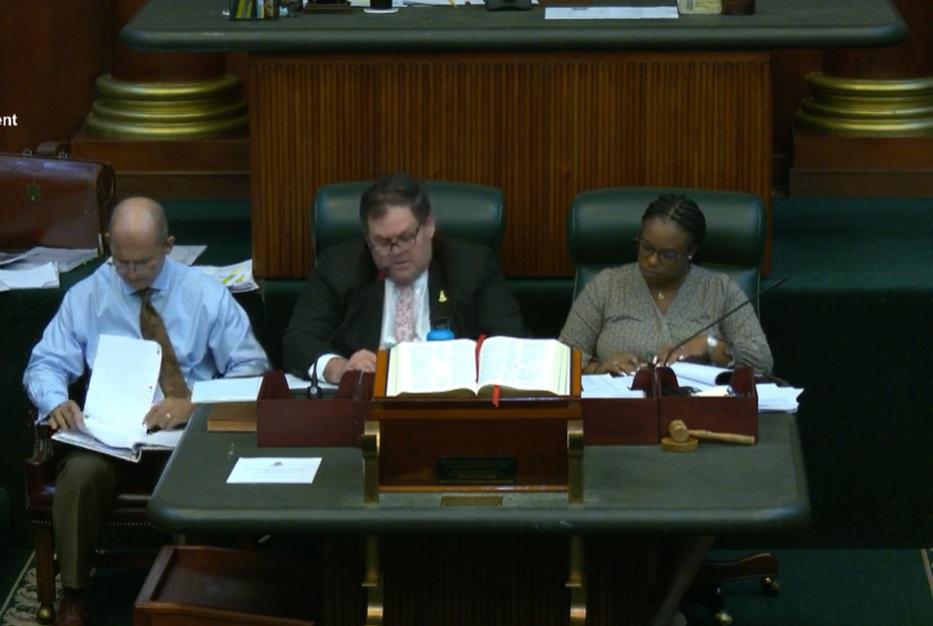
Members met in Parliament on Tuesday, 26 Sept., to vote on 11 spending increases – known as supplementary appropriations. All were passed.
The move came because initial estimates for the 2022 and 2023 financial years in several ministries were found to be too low to cover all of the government’s expenses.
Of the 17 members of the committee, all 10 non-Opposition members voted in favour of each supplementary appropriation. The remainder either abstained or were absent.
The largest approvals included $21.8 million for tertiary medical care, $9.3 million for indigents’ medical care and $8.8 million for health insurance for civil service pensioners.
The additional spending will be included in a Supplementary Appropriation Bill which will be presented in Parliament not later than three months after the end of 2023.
More maths teachers
The first supplementary appropriation was for $2,247,831 for primary education services for children between the ages of four and 11, bringing the total for the two years up to $39,774,900.
The additional money will go to hire 14 mathematics teachers, to cover higher-than-projected personnel costs, and for outsourced student services support, utility charges, and depreciation charges on school buildings and computer hardware.
During discussion, Minister of Education Juliana O’Connor-Connolly said hiring the new teachers was an “important strategic move”.
She added: “Every minute that we’re here and not voting on this particular vote is a minute more that we can’t sign the contracts with those 14 teachers.”
The minister said the money for ‘outsourced student services support’ will go to pay for an occupational therapist and a speech therapist.
It received 10 votes for, seven abstentions and one absentee. The supplementary appropriation was moved.
The second supplementary appropriation was for $6,804,000 for secondary education, bringing the total for the two years up to $40,720,073.
It passed with 10 votes for, six abstentions and two absentees.
School support services
The third supplementary appropriation was for $3.6 million for facilities maintenance and operational school support services, bringing the total for the two years to $16,364,507.
The additional money will go to cover higher-than-budgeted transportation, janitorial services, and software costs during academic years 2021-2022 and 2022-2023, and increased school maintenance costs.
Opposition MP Alden McLaughlin, rose to ask why this was not included in the original budget and drove up the cost.
Lyneth Monteith, chief officer in the Ministry of Education, responded that there were several additional transport routes put on for schools that could not have been predicted.
She added that many buildings were “quite old”, so there are increasing costs in maintaining those.
The supplementary appropriation passed with 10 votes for, six abstentions and two absentees.
Scholarships and bursaries
The fourth supplementary appropriation was for $6,924,153 for local and overseas scholarships and bursaries, bringing the total for the two years up to $19,947,178.
The additional money will go to increase overseas undergraduate scholarships from $20,000 to $30,000 and to increase overseas postgraduate scholarships from $25,000 to $35,000.
In will also enable the government to increase scholarships for International College of the Cayman Islands students to cover 100% of tuition and books.
Scholarships for A level students will include full tuition at local providers, meals (up to $18/day), examination fees, books and school trips.
Fund will be available to offer Cayman Islands Government High School Scholar Awards to two qualified Caymanian students of up to $100,000 annually.
The government will use some of the money to grant one-time awards of stipends of $1,500 for the costs of obtaining visas to study in the US, Canada, and the UK.
Monteith told Parliament during discussions that 822 students are benefiting from scholarships this year, up 102 from last year.
The supplementary appropriation passed with 10 votes for, six abstentions and two absentees.
Asset depreciation
The fifth supplementary appropriation was for $6,569,000 for asset depreciation in the Ministry of District Administration and Lands, bringing the total for the two years up to $7,254,000.
The extra cash will go to fund the depreciation of executive assets in Cayman Brac and Little Cayman that were a part of the 2021 post-election transfer of assets from the past ministry.
McLaughlin asked why the depreciation was not accounted for in the original estimates.
Financial Secretary Kenneth Jefferson said in late 2021 there was a wholesale exercise to revalue fixed assets throughout the whole government.
Asset values increased as well as the depreciation value, he said. But this came after the estimates had already been made.
The earliest the next exercise will be done is 2025, Premier Wayne Panton added.
The supplementary appropriation passed with 10 votes for, six abstentions and two absentees.
Fire service and regiment
The sixth supplementary appropriation was for $1.5 million for domestic and aerodrome fire services, bringing the total for the two years up to $18,136,829.
The additional money will go to meet overtime personnel costs for the Cayman Islands Fire Service during 2023.
During discussions, Opposition Leader Roy McTaggart asked how the figure was arrived at and whether there are staffing problems at the airport.
Michael Ebanks, acting chief officer in the Ministry of Home Affairs, said the fire service has been operating with a deficit of about 30 fire officers.
“The Cayman Islands Fire Service has been evolving in terms of their response, capability and capacity,” he said.
“So we are having to respond and prepare for aviation, domestic, structural, brush fire calls.”
He added that the service supports emergency medical service response and maritime inshore response.
“It’s the combination of those response services that oftentimes runs an unpredictable response mechanism in terms of overtime – having to put safe systems at work,” Ebanks said.
He added that Cabinet has approved the recruitment of an additional 22 fire officers.
The supplementary appropriation was moved with 10 votes for, six abstentions and two absentees.
The seventh supplementary appropriation was for $135,186 for regiment services, bringing the total for the two years up to $2,445,032.
The additional money will go to convert the role of the commanding officer of the Cayman Islands Regiment to a full-time position.
It passed with 10 votes for, five abstentions and three absentees.
Drivers licences
The eighth supplementary appropriation was for $1 million for licensing drivers and vehicles, bringing the total for the two years up to $2,143,881.
The additional money will go to cover the significant increase in vehicle registration and licensing.
McTaggart asked for details of the increase, to which David Dixon, director of the Department of Vehicle and Drivers’ Licensing, said there are 59,522 drivers and 60,369 vehicles registered.
He said on average there are from 5,000-6,000 new cars registered every year, and from 400-500 new drivers every month.
There has been a reduction in the age of vehicle registered, he added, which is likely due to the government ban on importation of vehicles over eight years old in May.
The supplementary appropriation was passed with 10 votes for, six abstentions and two absentees.
Medical care
The ninth supplementary appropriation was for $9,368,000 for medical care for indigents, bringing the total for the two years up to $22,568,000.
The additional money will go to provide indigent patients with primary and secondary healthcare services, as well as dental and mental healthcare services.
McLaughlin asked if about $3 million would be spent per month on medical care for indigents for the remainder of the year.
Nellie Pouchie, chief officer in the Ministry of Health, said that was correct, and Panton added that it is typically difficult to forecast such expenditures.
The supplementary appropriation passed with 10 votes for, five abstentions and three absentees.
The 10th supplementary appropriation was for $21,826,000 for tertiary medical care at various local and overseas institutions, bringing the total for the two years up to $52,419,371.
The additional money will go to provide indigents, seafarers and veterans with local and tertiary medical care.
McLaughlin said this equals a “burn rate” of $7 million per month, and asked the premier if that gave him any concerns about having a surplus.
Panton responded that it was already included in current financial projections.
The supplementary appropriation passed with 10 votes for, five abstentions and three absentees.
Health insurance
The 11th and final supplementary appropriation was for $8.8 million for health insurance for civil service pensioners, bringing the total for the two years up to $45,364,714.
The additional money will go to cover health insurance premiums for 2,477 civil servant pensioners and their dependents for the remaining three months of 2023.
McLaughlin asked what caused the need for the huge increase in spending, to which Acting Deputy Governor Gloria McField-Nixon said there has been an increase in premium rates.
“The impact of that along with the forecasted increase in the number of persons who are insured under the programme required that we would need to have this higher sum,” she said.
The supplementary appropriation passed with 10 votes for, five abstentions and three absentees.
Dwayne Seymour, who resigned as Minister of Border Control and Labour last week, abstained for the first supplementary appropriation and was absent from the remaining 10.
Read the full document, Requests to Finance Committee for Appropriation Changes, here.
Related Videos