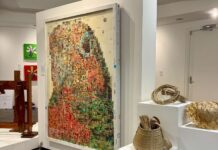
Works of art valued at almost £5 million were imported to the Cayman Islands from the UK in the 12 months up to the end of March this year.
The spike in imports is a significant escalation and one that financial regulators believe could be worth monitoring if it becomes a longer term trend.
Data from the UK Trade and Investment department indicates that art work was the second largest commodity goods export from the UK to Cayman, second only to pharmaceuticals.
The figure represents a significant jump from previous years, where imports of art from the UK have been far less significant.
It is possible, however, that the seven-figure sum could simply represent a one-off purchase of a high value piece of work by a single wealthy resident.
While authorities in Cayman have clamped down on numerous potential avenues of money laundering, including dealing in real estate and precious metals, the art market remains unregulated.
While most art is traded legitimately, the Financial Action Task Force, which is the global standard setter for money laundering and terror financing, has highlighted risks within that sector.
But as yet there has not been significant enough art import transactions through Cayman to raise red flags. And the imports of works of art to Cayman likely involve movement of private collections or pieces purchased elsewhere.
The Works of Art category was listed as the second largest commodity goods export from the UK to Cayman, valued at £4.9 million (US$6 million) for the 12-month period reviewed in a Trade and Investment Factsheet from the UK Department of Business and Trade.
The category came second in value to Medicinal and Pharmaceutical Products, which were valued at £12.7 million (US$15.63 million). That is more typical, with many pharmacies sourcing medicines from the UK.
Art imports ‘very rare’ for Cayman properties
Design Studio senior designer Bianca Hammonds says “it is very rare” for art of such high value to be purchased for Cayman Islands properties.
She noted that generally interior design companies neither distribute nor mediate such sales.
Elisabeth Lees, financial services regulatory lawyer and former national coordinator to Cayman’s Anti-Money Laundering Steering Group, said it was an issue that FATF was interested in, but had not yet impacted Cayman directly.
Lees referenced the task force’s Report on Money Laundering and Terrorist Financing in the Art and Antiquities Market which notes that “the market of art, antiquities and other cultural objects has attracted criminals, organised crime groups and terrorists to launder proceeds of crime and fund their activities”.
The report referenced a recent article by the International Consortium of Investigative Journalists, that notes that “more than 1,600 works of art appeared to have been traded using shell companies and trusts in offshore financial centres, in part to avoid or evade taxes”.
Lees clarified that while “art dealers are not required to be regulated by the FATF standards, there is a FATF requirement that countries should understand the risk of [money laundering] in the jurisdiction”. She further noted that “in the Cayman Islands art dealers are not required to be regulated”.
Globally, for some time art has been recognised as a tool to conceal illicit funds.
An article from the International Monetary Fund September Finance and Development elibrary issue cites the 2014 case of US vs. Ronald Belciano et al, in which police seized “33 paintings worth more than $619,000 from a storage warehouse”.
A case was made that “drug dealers had accepted the artworks in lieu of cash after being promised that they could sell them back for laundered money once the art dealers had buried the transactions in their books”.
The Cayman market remains small.
The recent £4.9 million valuation has resulted in a 1,355% increase in the value of works of art exported from the UK to Cayman in the last five years, according to the UK Office for National Statistics. It is a clear outlier among prior years.
The FATF report details ways of exploiting the market through the use of “large one-off transactions, obscurity of the ultimate seller or buyer, and the use of shell companies to make purchases”
While art may be used as a means to store illegal gains or proceeds of criminal activity, The FAFT report also highlights that it can also be used to “provide the criminal with enjoyment or a status symbol” – the same value that such pieces would provide to any other art connoisseur.
Most art is traded legitimately
The IMF article admits there is disagreement among law enforcement around the concept of art being used for money laundering. It cites James McAndrew, a former special agent with the US Department of Homeland Security, who is now a lobbyist for dealers and collectors, saying there “has not been an art dealer or collector convicted for laundering money through art”.
Additionally, Lees noted the FATF report said, “The vast majority of market participants do not have a connection to illicit activities, but there are risks associated with these markets and many jurisdictions do not have sufficient awareness and understanding of them.”
Editor’s note: An earlier version of this story highlighted legitimate art exhibitions featured by the Cayman Islands National Gallery, which have since been removed in the interest of clarity. The Compass apologises for any confusion this reference may have inferred.
Related Videos