Coming off the ‘grey list’ was a critical step that will help safeguard the Cayman Islands government’s ability to fund the running of the jurisdiction and meet the needs of its people, according to Financial Services Minister André Ebanks.
He was speaking in the wake of last week’s decision from the global Financial Action Task Force to remove Cayman from a watch list of countries under increased monitoring for not doing enough to fight money laundering and terror financing.
The decision is a major win, not just for the financial services sector, but also for the country as a whole. Fees from the industry fund up to half of the billion-dollar annual expenditure of the Cayman Islands government, according to some estimates.
Ebanks said a prolonged period on the grey list or, in the worst-case scenario, being blacklisted as a rogue country, would have had serious ramifications for the reputation of Cayman as a credible place to do business.
Reduced international financial services business could have seriously impacted the government’s bottom line, he said.
“That’s less money that can go from the country’s primary economic driver into other areas in the country, which will feed into healthcare, social development and education,” Ebanks told the Compass in an interview this week.
Conversely, he said, Cayman had enhanced its reputation by seriously engaging with the inspection process, introducing a raft of new legislation and investigatory bodies to ensure it was doing its part to fight the flow of dirty money around the global financial system.
He believes the process, and the dialogue it has opened up, has been worth it and Cayman emerges from the shadow of the grey list with an improved international standing.
“For the man on the street, our main economic engine has been given a boost to try to generate even greater transactions, greater reputational brand across the country, to hopefully generate greater revenue, which can then fall into the areas that affect your pocket and your livelihood.”
Likening it to a household, he said financial services was the country’s main “breadwinner” and it was vital to protect that status in order to fund all the costs of running the home.
Staying off the list
Ebanks who is currently the key political leader driving a massive national effort to implement new legislation, create new investigatory bodies and bring in new standards to regulate and monitor the movement of money through Cayman.
He said last week’s decision was a time to “be thankful”, but also to focus on the new vision of ensuring Cayman remains off the grey list and out of the crosshairs of the international community.
A new round of evaluations and inspections is scheduled to begin next year.
Cayman expects to be re-assessed in 2026 and it is likely that the goalposts could shift again in terms of the expectations for high profile financial jurisdictions.
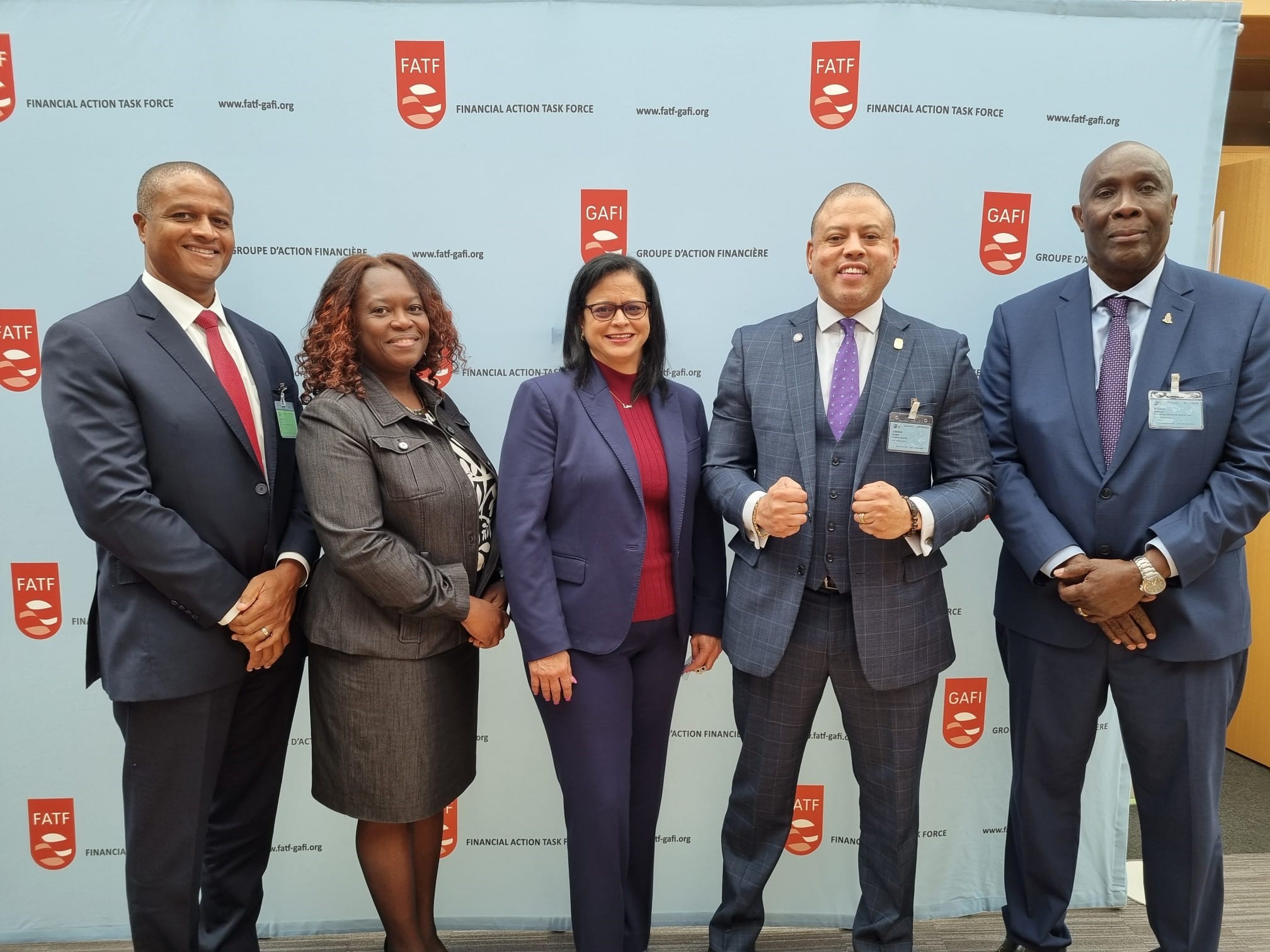
The minister, who made a side trip to Brussels to represent Cayman at the European Union tax symposium during last week’s visit to Paris for the FATF plenary, believes active engagement with global bodies is the best way for the islands to maintain and protect their reputation.
He said Cayman is well placed to anticipate future requirements and evolve its financial crime-fighting infrastructure to ensure continued compliance. He believes the global task force, which sent a team to Grand Cayman for an inspection in September, also now has a better understanding of the ‘breadth and sophistication’ of the sector here.
Protecting our slice of the fence
He accepts, however, that the FATF process identified genuine weaknesses in Cayman’s infrastructure and that their assessments of the risk in context for Cayman are broadly accurate.
As a leader in investment funds, structured finance products, insurance and, to some extent, reinsurance, he said Cayman entities are involved in major transactions which carry a level of responsibility to the rest of the world.
“It’s easy to, sort of, take a look back and say, ‘Are they picking on this country, are they picking on that country?’ but when you’re actually in the room, you walk away with the sense… that they’re trying to protect a global system and you have a responsibility to make sure your slice of the fence is strong.
“In our case, if you look at the value of financial services, and the amount and the size and the pedigree of the transactions that we are involved with, yes, we bear responsibility to ensure that our fences are strong.”
He believes political engagement with the global community, as well as serious engagement with the FATF recommendations, are slowly changing the global impression of the Cayman Islands.
“They see this is a serious jurisdiction, that we’ve taken this on the chin, we have stood up and said, ‘OK, we’ve got a few screws that we need to tighten, and we’ll get on with it.”
Pressure for convictions a challenge
One area that remains a challenge and a negotiating point is the pressure, as part of the FATF standards, to show evidence of trials and ‘dissuasive sanctions’ in complex money-laundering cases.
The Cayman Islands, in response to the task force recommendations, beefed up its investigatory powers, launching a new Bureau of Financial Investigations focusing on complex international cases, among other measures.
But the judiciary is necessarily independent and no politician can sincerely promise to deliver convictions and sentences for crimes yet to be identified.
Yet this is a specific requirement of the global task force and was the last requirement that Cayman was able to fill. The multi-week corruption trial of former Cayman Islands Football Association executives Canover Watson and Bruce Blake provided some evidence to inspectors of recent competence in taking such investigations through the process from charging to sentencing.
Ebanks is confident the work of the bureau will lead to more relevant charges and trials in future. But he cautions that many of the precedent crimes in money-laundering cases occur outside the jurisdiction, and it is difficult to guarantee trials will take place that fit the FATF profile.
Industry advocates have painted the Cayman Islands as a ‘middle man’ jurisdiction, arguing that despite the high volume of business that takes place here, it is unlikely that ‘bad actors’ in money-laundering cases would be actually present in the jurisdiction in many instances.
Ebanks acknowledges the argument. But he is not counting on the requirement being removed.
“I think it will continue to be a challenge. I would never wish for crime to happen here, under any circumstance. So I’m fine with it not happening. But it does still mean that it’s a box, it’s an item that has to be satisfied.”
Advocacy remains key
He believes the same problem exists for other jurisdictions – particularly smaller countries – and collective advocacy with the task force could be persuasive. In the interim, he believes doing the right kind of investigatory work is the best way to ensure Cayman can try to meet that obligation.
Continuing advocacy on the world stage, even with the grey list threat removed for the time being, is another priority.
“You’re never going to convince anybody, if you’re just going to sit back and say, ‘It’ll be alright’.
“Our approach in this administration is be proactive, speak when you don’t even have to speak, whether you’re on a list or not. The more that I see us taking that approach, the more I see people truly understanding the country, the composition of its financial services and, importantly, how it is not a threat to them.”
Related Videos