

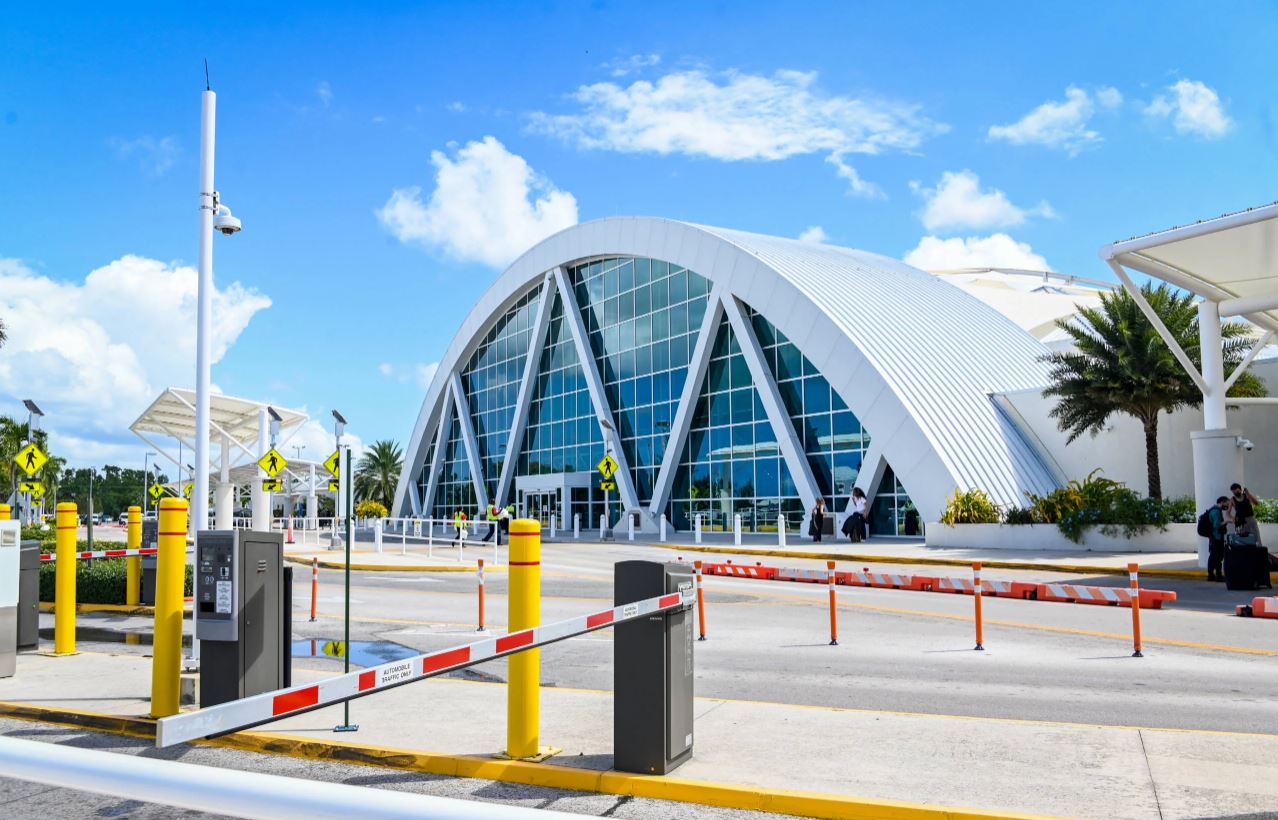
New regulations have been published which detail $19 in additional charges that airlines must pay for each of their passengers flying out of the Cayman Islands.
The rules say that the carriers must pay the Cayman Islands Airports Authority a new ‘airport development fee’ of $15 and an increased ‘terminal charge’ of $5 from $1.
These will be added to the current ‘passenger facilities charge’ of $13 – which has been legally required since 2009 – to make a total of $33 in fees.
These charges could be absorbed by the airline but are likely to be passed onto each passenger in the cost of their ticket.
Based on passenger numbers of 294,000 in 2022, the extra $19 per passenger would have provided $5.6 million to the authority that year.
If any carrier does not pay the charges, for passengers aged two or older, they are breaking the law and could be fined up to $5,000 or be jailed for six months.
The Airports Authority (Charges) Regulations, 2023 were gazetted on Wednesday, 1 Nov. They supplement the Airports Authority Act (2005 Revision).
Airport development fee
The temporary airport development fee, which must be paid from 1 Jan. 2024 until 31 Dec.2029, has been created to help fund a $660 million expansion of Cayman’s airports.
The new fee was revealed during a press conference in May on the newly published Airports Master Plan which outlines development in Cayman’s three airports over the next 20 years.
Four priority projects, at a total estimated cost of almost $76 million, were included in an outline business case that has already been signed off by Cabinet.
They feature a $28 million runway extension and a $4.7 million air traffic control surveillance system at Owen Roberts International Airport in Grand Cayman.
In addtion, $42 million will be spent on a new general aviation facility for private planes.
And at Charles Kirkconnell International Airport in Cayman Brac, $1.15 million was earmarked for runway end safety area works.
Terminal charge
Since October 1997, $1 had been collected as a terminal charge from airlines per departing passenger – but this was never legalised.
The Terminal Charges (Validation) Act, 2023, which was gazetted on the same day as the new regulations, aimed to rectify that.
The law validates past payments and collection of terminal charges, penalties for non-payment, court orders and collection methods.

The bill was debated in Parliament during the first meeting of the 2023-2024 session and passed on 20 Sept.
Tourism Minister Kenneth Bryan, on presenting the bill, said it was a “crucial step” in legalising and regulating Cayman’s terminal charges.
“This legislation ensures fairness, transparency and accountability in our efforts to maintain and enhance our aviation infrastructure,” Bryan said.
Opposition leader Roy McTaggart said it was an “oversight for many, many years” and added that he was glad the error had been identified.
Bryan revealed the terminal charge would be increased by $4 to help maintain and enhance Cayman’s airport facilities and services – with a focus on technology and safety.
Passenger facilities charge
The passenger facilities charge has been in place since 1 Jan. 2009, for passengers flying out of the Cayman Islands at any of the three airports.
It was last detailed in the Airports Authority (Charges) Regulations, 2008, as a $13 charge and has not changed in the new regulations.
According to the Cayman Islands Airports Authority on its website, Cayman was one of the last destinations to implement such a charge.
“In order for the main terminal at Owen Roberts International to cope with the increase in passenger and aircraft movements, it is critical that the CIAA develop funding,” it said.
The authority added this will enable ongoing and capital improvements of the facilities and services to maintain the competitiveness of the Cayman Islands as a top tourist destination.
Lack of consultation
In July, the world’s largest airline trade group representing 300 carriers criticised the airports authority for not consulting airlines on the increase in outgoing passenger fees.
A spokesperson for the International Air Transport Association said they understood the need for the redevelopment projects and the impact inflation has had on airport costs.
However, “stakeholders should be consulted before implementing such adjustments”, they stressed in a statement to the Compass.
“As an industry, we believe that financial information, including costs, capital expenditures and operating expenses, should be clearly presented to all stakeholders before decisions are made or legislation is passed,” they said.
The IATA also queried why passengers on commercial airlines should help foot the bill for a proposed $42 million general aviation facility for private planes that they will never use.
It said this amounts to “discrimination” and is contrary to the airport charges policies of UN agency the International Civil Aviation Organization, the spokesperson said.
However, in response, Airports Authority CEO Albert Anderson at the time said the IATA is not able to mandate how the authority increases or decreases its fees.
Related Videos








Why should every traveler coming to or leaving the Cayman Islands pay for a new terminal for private jets?
It is because the Minister of Tourism continues to advocate spending money for schemes to attract “high end tourists” who will be traveling in these jets, as though these multi-millionaires are going to significantly contribute millions of dollars to the economy to help balance the budget.
To quote today’s article:
“In July, the world’s largest airline trade group representing 300 carriers criticised the airports authority for not consulting airlines on the increase in outgoing passenger fees.
The IATA also queried why passengers on commercial airlines should help foot the bill for a proposed $42 million general aviation facility for private planes that they will never use.
It said this amounts to “discrimination” and is contrary to the airport charges policies of UN agency the International Civil Aviation Organization, the spokesperson said.”