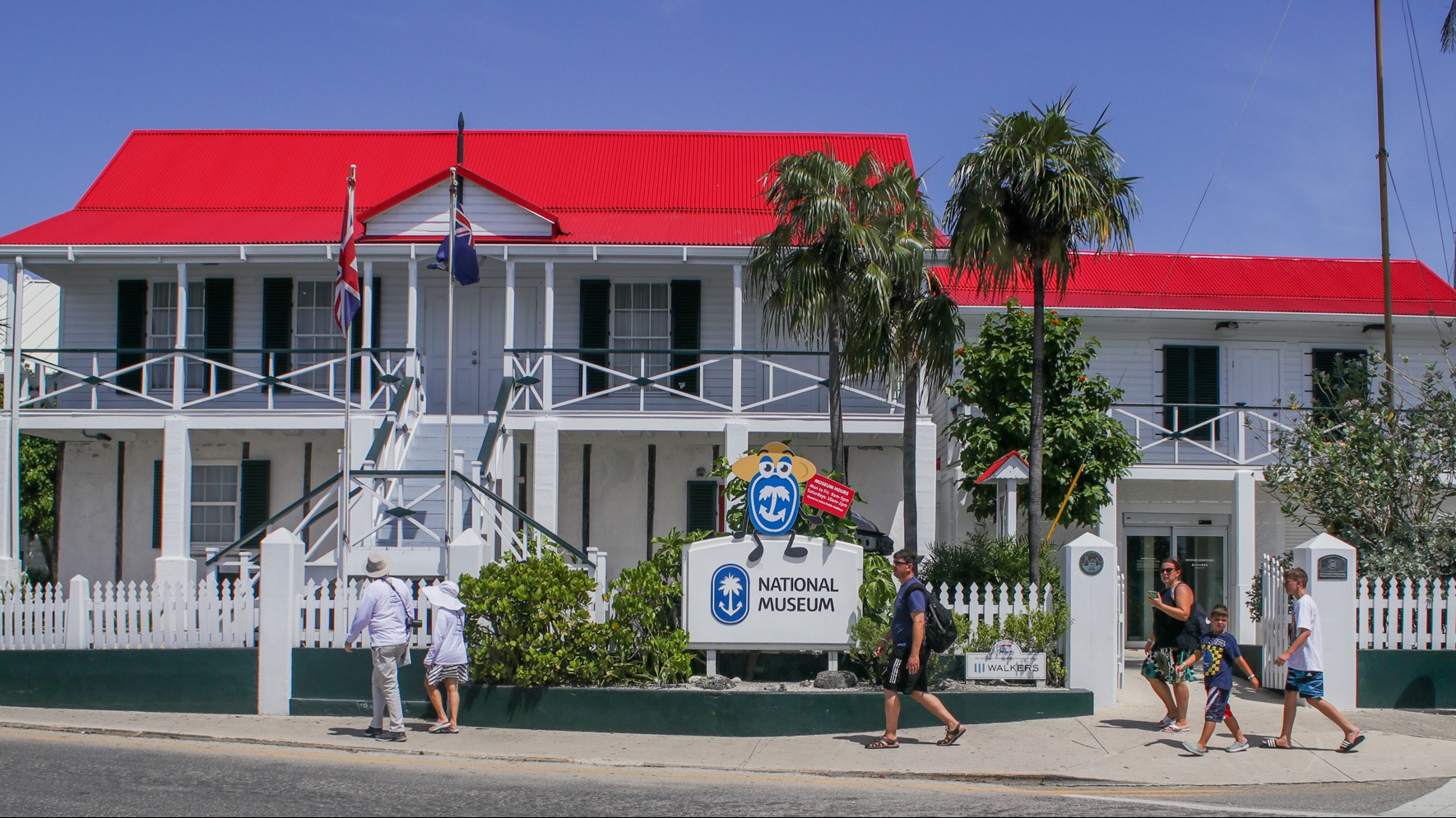
Cayman Islands National Museum plans to install a sprinkler system to protect its historical artefacts in case of fire, raised questions at a Central Planning Authority meeting last week on whether the proposed site for the required equipment was big enough to accommodate it.
The plans call for the installation of a fire pump room, cistern and diesel generator on the museum’s property.
According to the documentation in the meeting’s agenda, the drawings for the planned fire-suppression system have been approved by the Cayman Islands Fire Service.
The Department of Tourism, in its comments on the proposed work, said it was “necessary to protect the displays highlighting the important cultural heritage and history of the Cayman Islands as well as the staff of and visitors to the museum… We look forward to the completion of this important facility safety upgrade.”
The owner of the adjacent EE Holdings Limited property, Gerry Kirkconnell, has objected to the proposal.
He told the Central Planning Authority at its meeting on Wednesday, 3 Jan., that the last thing he wanted to do was oppose the museum’s efforts, but said he did not think the plan had been well thought out.
His lawyer, Bhavesh Patel of Travis Thorp Alberga, argued that, to access the pump room, its doors would have to open onto Kirkconnell’s property.
Adding diesel to the generator would also involve having to temporarily close a section of Shedden Road for the duration of the refilling of the generator’s tank, the planning board heard.
Patel said his client was concerned that the addition of a diesel generator to power the water pump would literally “add fuel to the fire” in the event of a blaze at the historic wooden building. “Diesel is flammable. Once a fire starts, it would make the fire worse,” he suggested.
Setback variances
The museum is seeking variances on setbacks in relation to its application. It is asking that the front setback for the cistern be 6 feet, 3 inches instead of 20 feet, and for the rear setback for the fire pump room and generator to be 2 feet, 1 inch versus 6 feet.
In its application, the museum noted, “The proposed location ensures the project does not pass the front building line facing Seafarers Way, partially integrates within an enclave, and maintains the museum as the backdrop, minimising structural prominence.
“The features are not considered to be materially detrimental to the occupants of the
neighbouring property, the neighbourhood or to the wider public.”
In response to objections raised by Kirkconnell, the museum stated that the generator would only be activated during testing, when acting as a backup power source in
power outages, or in fire emergencies, so the noise from it would not be constant, and it would be fitted with an industrial exhaust silencer and housed within sound-absorbing materials.
“Given its infrequent use and the effectiveness of the sound attenuation measures, the generator is anticipated to have minimal to negligible disturbance or impact on the surrounding properties’ amenities,” the application stated.
The plan also called for cutting down two trees at the site.
“Such removal is regrettable and not taken lightly as the trees offer green infrastructure within their urban setting,” the museum application noted. “However, they do not benefit from a Tree Preservation Order and as part of the development assessment for the museum the protection and preservation of this national historic asset is deemed of greater importance.”
The museum plans to relocate the trees to a nearby property.
The planning board’s decision on the application will be available in the coming weeks.
Editor’s note: This story has been amended from the original to reflect that the proposed equipment would be built within the boundaries of the museum property, and not within an alleyway beside the building.
Related Videos