

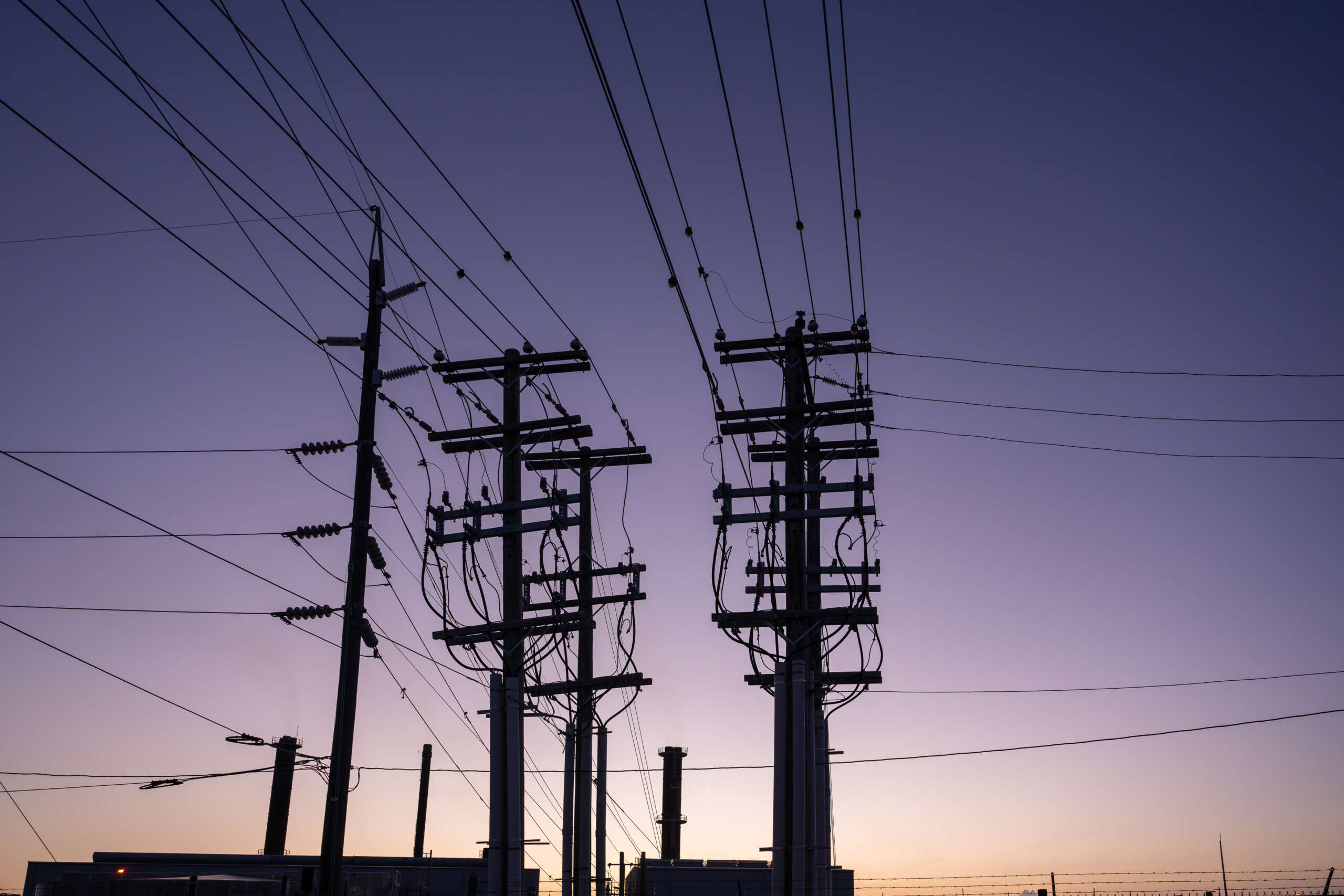
A behind-the-scenes power struggle is being waged over the future of Cayman’s energy supply.
As policymakers finalise the road map to transition from fossil fuels to renewable energy, stark divisions remain over how that switch takes place – and who gets to be involved.
Renewable-energy businesses have raised fears that the Caribbean Utilities Company is
exerting too much influence over the debate and seeking to create a new monopoly on green energy.
The Cayman Renewable Energy Association (CREA) has called for safeguards to ensure that small business can play a part in the solar revolution and to ensure public participation, maximum job creation, and protection of green spaces.
It also argues that tougher, more independent regulation is needed to ensure the plan – to go from 3% to 100% clean energy by 2050 – is more than just a pipe dream.
CUC, meanwhile, is planning a massive investment in large solar farms that it says will drive down prices and make huge inroads into that target. It claims its views have been
misrepresented and that it has the formula to achieve a rapid switch to renewables while
slashing electricity prices.
With the final draft of the National Energy Plan about to be released, the Compass examines some of the fault lines in the debate over Cayman’s energy future.
Getting by on your own supply
CREA wants ‘the right to renewable energy’ – a concept that drew large public support in recent consultations – to be enshrined in the national plan.
That means every consumer would be able to power their own home through solar and
battery installations – like power walls – and rely less on CUC’s grid supply.
Currently, the only way to get solar on your roof is to sign up for CUC’s Consumer Owned Renewable Energy programme and sell the energy you create back to the grid for a discount on your power bill. You are not actually using the energy you create.
The utility company has raised objections to businesses selling solar panel and power wall installations, citing safety concerns and grid stability issues. But CREA points to similar programmes in Barbados and Hawaii as evidence that such projects do work.

James Whittaker, president of the association, argues that CUC’s objections are a smokescreen.
“CUC doesn’t want you to cut your bill by 60%; it is bad for their business and that is
why they are against it.”
Asked about the concept, a CUC spokesperson said it believed the options it facilitates through the Consumer Owned Renewable Energy programme for rooftop solar are sufficient, adding that further options are being discussed with utilities regulator OfReg.
The company maintains, however, that customers who want to ‘selfsupply’ their own power can do so but they would need to apply for a ‘backup electricity supply’, which is charged at a significantly higher rate.
‘As long as you have a roof, you should be able to get solar panels’
The term ‘on-bill financing’ sounds like a niche point, but could be the key to ensuring
widespread access to solar – particularly for people from poorer backgrounds, according to CREA.
The idea is that any homeowner can get financing to install solar panels and repay it through the savings in their electricity bill.
It would require CUC to facilitate a billing mechanism for lenders so that the consumer
would be charged for both the electricity and the repayment of the loan for solar panels on
the same bill.
Models like this, also used in Hawaii where one-third of homes have solar panels, remove
the risk for banks in making loans because the payments are charged directly on the power bill and are linked to the continued supply of electricity to the home.
“It totally removes the credit risk of the consumer,” says Whittaker.
“So long as you have a rooftop you can get solar panels. This is the single best way to
ensure access to solar for all demographics.”
CUC has not come out against this directly.
The utility says it is an option that could be considered and that more research is needed.
It highlights a number of potential pitfalls, including a layer of complexity that emerges
if the property is sold.
“Given that the local banks offer this service at this time, the service of financing for green initiatives does exist,” it adds.
Whittaker noted that bank financing is very limited and based on collateral and creditworthiness of the customer which vastly reduces the demographic that can attain financing.
Programmes needed to allow community solar
One of the best ways to go solar without eating up masses of land for utility-scale farms is to take advantage of the large acreage of existing rooftop space for solar
panels.
Why, questions Whittaker, can’t the airport or large businesses like A. L. Thompson’s cover their roofs and parking lots with solar panels and slash their electricity bills in half?
The answers, he suggests, are bureaucratic rather than technical, and the motive, he
claims, is to protect CUC’s profits at the expense of consumer choice.
CUC has programmes for small-scale residential and business rooftop solar, and OfReg has a tender process for large utility scale projects – but there is no bespoke programme for those medium-sized installations, currently treated as ‘utility scale’ projects that legally must go out to public bid or be initiated by CUC.
CREA wants to see the energy policy set 5 megawatts – the size of the Bodden Town solar farm – as the minimum amount for projects classified as utility scale and for regulators to create programmes for ‘community microgrids’.
That would help facilitate innovative projects like the large container farm planned by Primitive Greens, which has sought – so far unsuccessfully – to include a large floating
solar installation as part of the project to provide its own energy and subsidise its costs
by selling excess back to the grid.
It could equally allow stratas, for example, to create collective solar arrays that could cut
their electricity costs.
CUC argues that ‘utility scale’ is rightly defined as any energy project that sells power to
the grid. Anyone that creates electricity for sale is a commercial generator and subject to stricter guidelines, including the requirements to win a competitive bid process or to privately negotiate a power purchase agreement with CUC.
It stated, “CUC is not of the opinion that there is‘no way’ to do community solar projects or solar for businesses. CUC remains open to detailed proposals, appropriate for our jurisdiction and system configuration, that will benefit consumers.”
Whittaker argues the only way to facilitate these projects is to ask CUC for permission to do so – something he believes should be in the hands of government or regulators, not the
utility company.
Should fossil fuel investment be banned?
CUC wants to invest in new infrastructure to use liquid natural gas, or LNG, as a transitional fossil fuel. It suggests this would reduce costs and carbon footprint compared with diesel power generation in the interim period as Cayman brings new renewable projects online.
The Cayman Renewable Energy Association argues that the investment costs would make this prohibitive and that LNG is already more expensive than rooftop solar or
waste to energy.
It argues that a transitional fuel is not needed until Cayman has significantly more
renewable energy on the grid.
“The real hypocrisy here is that CUC uses the future hypothetical cost of power from large solar farms when assessing the value of renewable projects but compares the cost of liquid natural gas to the current price of diesel to make arguments for allowing it to
invest in fossil fuels,” said Whittaker.
CUC, in its responses to the Compass, said Cayman’s growing population means it is likely to need to add to its power-generation sources in multiple ways over the next decade. It argues that without further investment in fossil fuels, it may not be able to meet consumer demand, leading to “rolling blackouts”.
It also claims that investing in LNG will provide $15 million in savings to customers every year (compared with current prices from diesel-generated electricity) even after the cost of the infrastructure is considered.
“Flexibility is crucial in managing the transition to 100% renewable energy,” CUC stated.
“The proposal by CREA to disallow new fossil fuel investments from any consideration could lead to severely increased energy costs for consumers in the short-to-medium term.”
Could CUC’s profits be ‘decoupled’ from power usage?
The renewable energy association argues for a fundamental shift in how CUC operates
– following the ‘Hawaii model’, which ties utility company profits to performance indicators rather than usage.
‘Decoupling’ changes the dynamic where CUC profits are linked to selling the maximum amount of electricity possible.
In a column for the Compass, Henk Rogers, a Hawaii-based entrepreneur who founded the non-profit Blue Planet Alliance, says Hawaiian Electric turned from opponents to partners via this method, “We helped them devise a business model that was a win-win-win-win: an energy source that was healthier for the planet, more affordable for consumers, better
economically for Hawaii, and allowed the utility to make more money.”
CUC argues that this is not necessary and that it is already facilitating rooftop solar through the CORE programme, which it doesn’t derive any profit from, and is preparing to participate in the bid process for large solar and wind projects.
“The success of the customer programs fostered by CUC’s efforts and the lack of CUC’s monetary gain in these processes indicate that decoupling is not necessarily the mechanism to speed the transition to renewable energy in the Cayman Islands,” the
electricity provider said. “What is necessary, is a collaborative approach to progressing
projects along.”
CUC also argues that while Hawaii has been successful in integrating plenty of renewable energy, it hasn’t cut prices to consumers to the same degree as Cayman seeks to through its renewables transition.
Hawaii renewable-energy advocates argue they have reduced costs in their energy transition.
CREA disputes that CUC’s consumer solar programmes have been a success, saying they have been stop-start in nature and have added only 2% rooftop solar to the islands’
power mix over a decade.
Price vs progress
A lot of the debate about how to proceed comes down to an argument about price versus the perceived wider benefits.
CUC argues that through large solar farms – whether operated by itself or others – it will be able to buy power at around 10 cents per kilowatt hour – less than half of what it
currently pays for fuel.
“As we are all broadly aware, the cost of living in the Cayman Islands is top of most
people’s minds, and energy affordability and equity should be considered a critical
factor in planning the energy transition and measuring success for the same.
“With the approach that CUC proposes to take to have an abundance of utility scale and
rooftop solar we expect to see a reduction in energy prices over time,” it states.
CREA acknowledges that some of its recommendations would not deliver the same savings as utility-scale solar farms, but it states they would still be significantly cheaper than fossil fuels and would deliver much more for Cayman in terms of jobs and business opportunities.
“Rooftop solar, along with all forms of renewable energy, will lower the costs to consumers; different types of renewable energy simply lowers it by varying degrees and each has its benefits in doing so. We support solar farms but the more we ignore existing developed spaces to build large solar farms, the more land we will cut down and not be able to use for housing, farming or conservation.”
It also suggests that CUC’s cost estimates are misleading because they don’t reflect the ‘total costs’ of what consumers and the environment would pay – which would also factor in the cost and scale of the infrastructure.
What happens next?
All these questions and suggestions are in the mix as government finalises its draft of the National Energy Plan which will guide policy through 2050.
The new draft is expected to be released to the public later this month.
* James Whittaker of Cayman Renewable Energy Association and James Whittaker, the writer of this article, are not related
Related Videos












Agree with the concept every roof needs solar. But only if you use cash. Solar should not be financed by the people by the suppliers of panels/contractors because they should be taking the risk if it is so economic. People do not need to go in debt for utility savings.
Having a mix of solar roof tops, micro grids and large scale is a good portfolio. But with this you will always need firming generation from the CUC in order for grid reliability. Batteries are not the answer due the unknown life, salt issues, and lack of environmental components to produce them. Build as much solar and use LNG gas from CUC when the solar is not available.
CUC should convert the engines/turbines to LNG to reduce emissions and generate savings asap.
@ Dan H. No developed country in the world advancing rooftop solar (of all sizes) does so simply on the basis of “cash”. Not the USA, Not Europe, not anyone.
Financing creates greater access for those who don’t have “cash” to build power plants at their home, which ensures solar and its benefits are not only ‘for the rich’. Financing can take many forms (term finance, rooftop leasing, shared savings, etc).
The ironic part is the utilities themselves “go into debt” to fund their own energy assets, so why would consumers be any different? The issue is whether the financing and the savings provides them with a net benefit, which it CAN if done correctly. “No financing ” is an argument for limiting who can most benefit, the rich, plain and simple. That shouldn’t be Cayman’s goal, we should be seeking access for all.
As for spending on LNG, this is fools gold for places like Cayman that have no such infrastructure. Every $ spent on LNG today is money diverted away from renewables, which are cheaper, cleaner and simply better.
Until we fully exhaust what can technologically and economically be done with renewables Cayman should not divert a single dollar to ‘cleaning up’ baseload power with new fossil fuel infrastructure, over that which already exists.
Yes, we will get to that point of needing to clean up baseload power a decade or so from now when we go from 3% today to 60-80% renewables in several years. But at that point cleaning up baseload is going to be via clean fuels like hydrogen (which are not yet commercialized but will be in a decade or so); skipping LNG entirely and not diverting our 100’s of millions towards that pointless LNG effort at all.
Regards,
James Whittaker
Outstanding response Mr. Whittaker. With limited resources, it makes sense to focus those resources on the NEXT generation of power supply like hydrogen and advanced solar.
I am extremely disgusted that CUC/OffReg charges a fuel charge of the solar power a customers creates with their own equipment!