

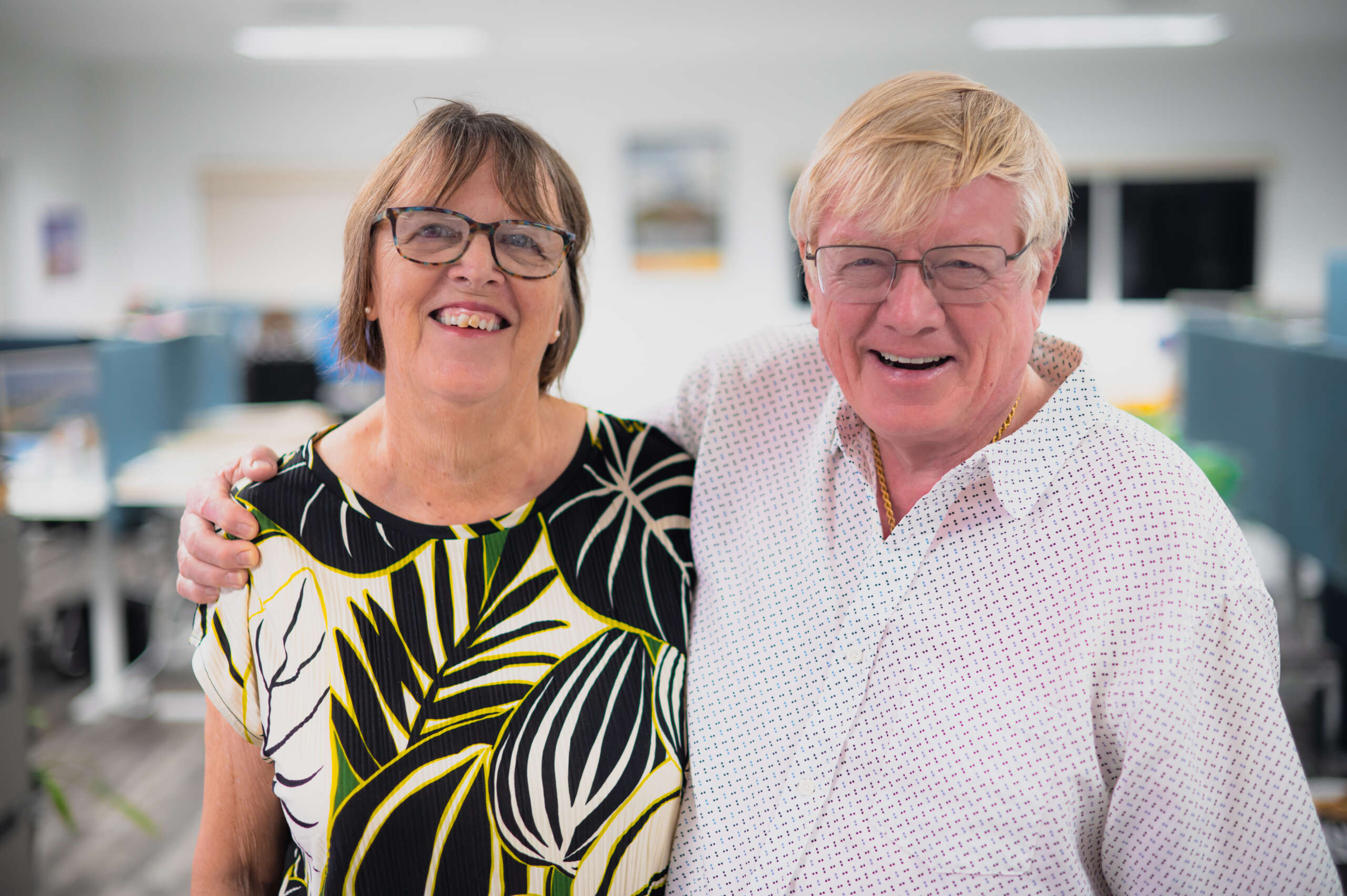
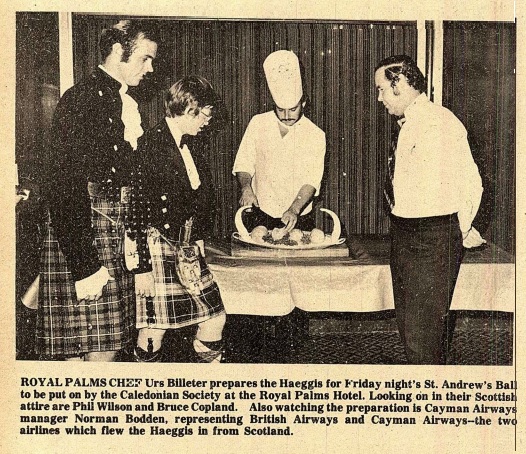
Bruce and Frances Copland, who managed the Royal Palms Hotel in the ‘70s and ‘80s, returned to Grand Cayman this month to meet old friends and colleagues, and reminisce about when the hotel was one of the most popular spots on island.
The Scottish couple, who now live in Australia, held a reunion on 16 May with former staff of the hotel, which, back in the days they managed it, was one of only a handful of hotels on Grand Cayman.
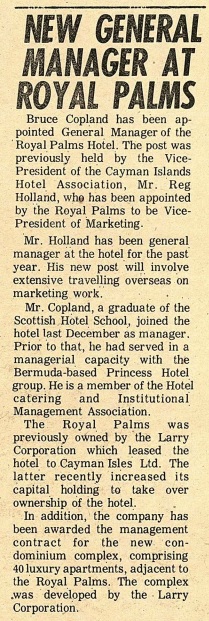
In an interview with the Cayman Compass, the Coplands recalled how they came to manage the Seven Mile Beach hotel in 1974.
It started when Bruce was sent on a fact-finding mission to Cayman earlier that year, when he worked for an international hotel chain in Bermuda, to determine if the Royal Palms would be a good acquisition.
“I came down, spent two or three days here, just finding out what was going on, and went back and reported that the hotel should be closed down, that it was a basket case, that its average occupancy at the time was 13%, and that the place was largely falling down,” he said.
About six months later, he said, he got a call from Keith Shantz in Canada, who asked if he was the person who’d written the report on the hotel.
“I said I was, and he said ‘I’m the silly idiot who bought it.’ He’d been on holiday with his wife and fallen in love with the island and got talked into first getting involved in the restaurant run by Reg and Hilda Holland at Royal Palms, and then extended their involvement to ultimately… buying the whole building,” he said.
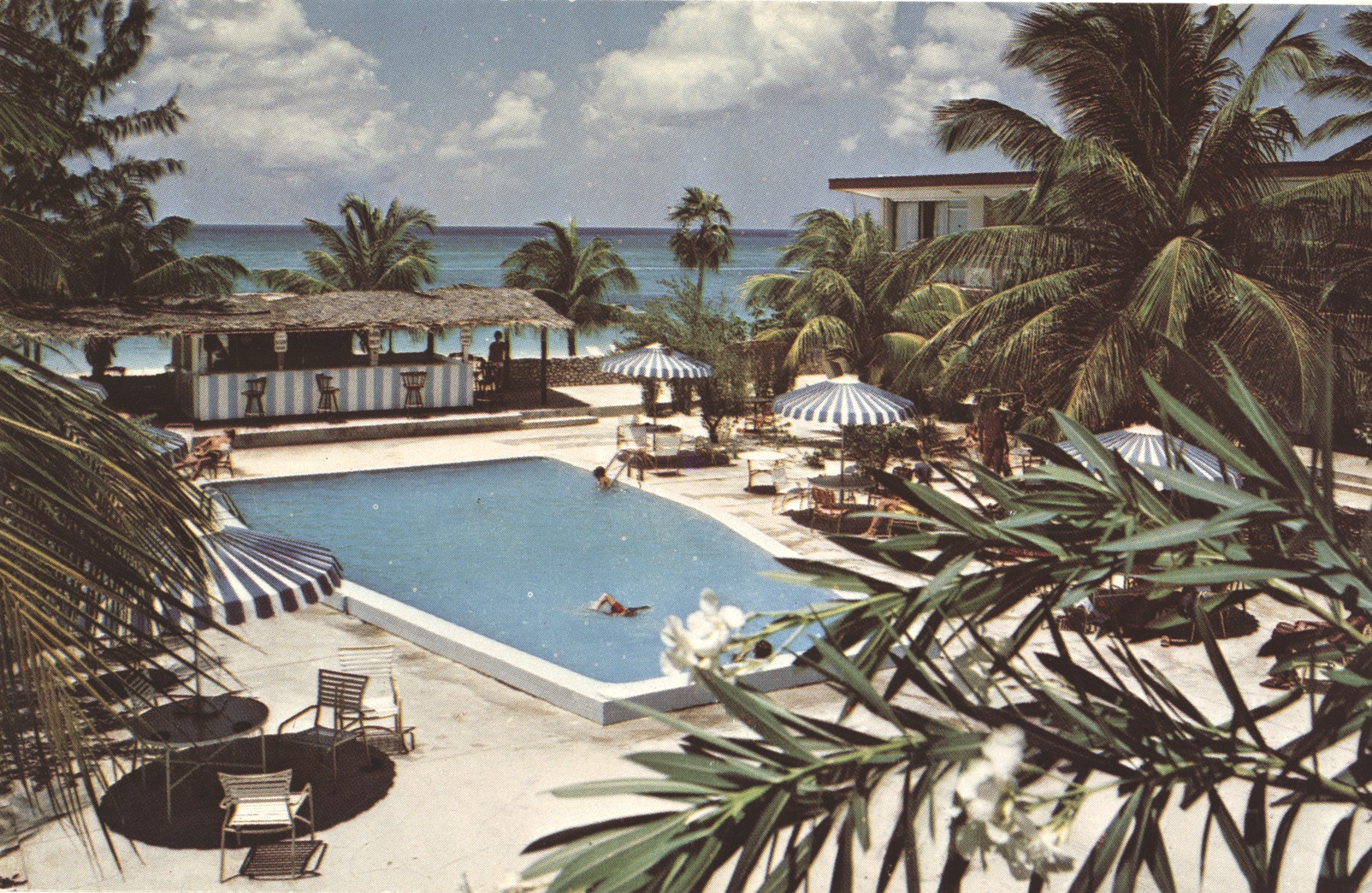
He asked Bruce what it would take to fix the place up and offered the Coplands the job of managing it.
When they got here, at the tail end of the off season, and had a proper look at the hotel’s accounting books, they found that some suppliers hadn’t been paid in three years.
“We knew we had to do something to get the business moving quickly,” Bruce said.
With armfuls of flyers printed in the hotel’s back office, Frances flew to Miami and put a flyer under the windscreen wipers of every vehicle in the staff car park at the Miami International Airport. Those flyers advertised a deal for airline staff of $15 rooms at the beach hotel.
Even with the flyers carrying the proviso that guests would have to make their own beds, the next weekend the hotel had 90% occupancy.
“For Delta and other airlines, it just became a thing. They’d come down in crowds – 10 or 12 of them, take three or four rooms. They thought it was funny, we’d hand them their sheets at the front desk to make their own bed,” Bruce said.
He added, “Let me tell you, for the $15 we’d gotten for the room, we’d probably get $100 at the bar. It was wonderful, it was reactivating for the property.”
Royal Palms was also a hotel that attracted divers, with a dive operation on site.
It teamed with a company called TeachTours in the US, which at one point was bringing veterinarians to the island, for continuing professional development classes, “but it was really a diving holiday”, Bruce said.
“They’d do an hour of lectures at breakfast, then go diving for the day, and have an hour of lectures over cocktails in the evening.”
Later, this evolved into sessions with medical doctors and dive medicine, which he said, led to the hotel’s involvement with the British Sub Aqua Club (BSAC) and in the island’s first decompression chamber.
He worked with Dr. Jim Poulson and Jerry Wilcox on setting up and managing Cayman’s first hyperbaric chamber – used to treat divers who have gotten the bends.
Eventually, the hotel was sold to the Kirkconnells, who owned the Coral Caymanian Hotel next door.
The Coplands stayed on for about a year, during the handover period, during which Bruce was invited to take on the 1983 Pirates Week festival. “I was going to work with a sword in my belt and a feather in my hat,” he recalled.
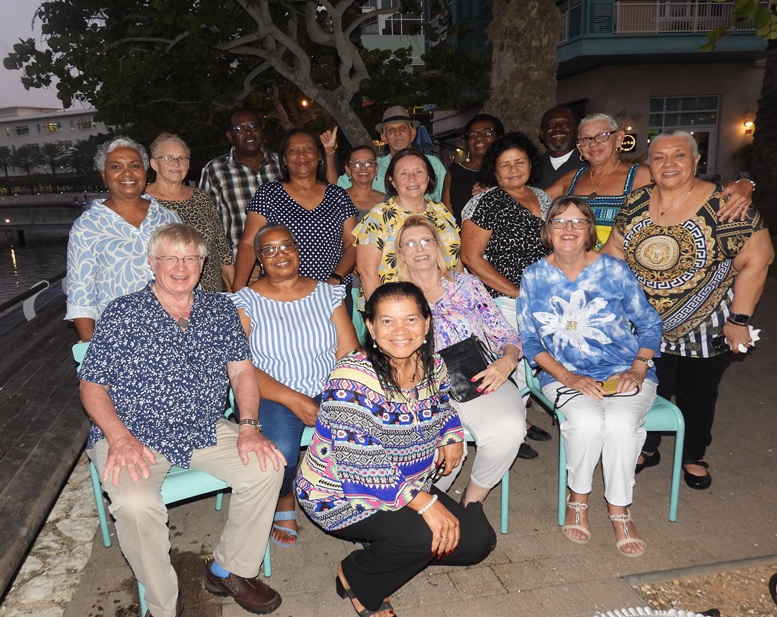
Royal Palms alumni
Being able to meet up with several of the staff members who worked with them at Royal Palms was one of the highlights of their trip, the couple said.
Many of those people, whose first jobs in the hospitality field were at Royal Palms, have stayed in the industry.
“It pleased us to see that out of probably 15 or 16 of them who were there, most had stayed through their working lives in hospitality… We were, sort of, playing bingo with all the condominiums and hotels up and down Seven Mile Beach because we think we can tick them all off – they’ve had a staff member or manager from the Royal Palms alumni over the years,” Bruce said.
The Royal Palms Hotel also played a role in the development of theatre in the Cayman Islands, offering a free location at its nightclub site in 1978 for the nascent Inn Theatre group to put on its shows. The Inn Theatre ultimately found a new home in the specially built Harquail Theatre, and led to the creation of the Cayman National Cultural Foundation.
Sailing trip leads to being held by Cuba
One experience that sticks in his head from his time in Cayman was while sailing a yacht from the Florida Keys in 1977, his boat was intercepted by Cuban gun boats off the north coast of Cuba.
On board were also an engineer from Royal Palms and two American visitors. “We waved the Cayman Islands red ensign at the Cubans, and they waved their machine guns at us,” Bruce said.
He recalled the Cubans tying their gunboat to the stern of the yacht so they couldn’t escape.
“They spent 48 hours trying to work out why we were there,” he said. “We were just passing by and should have been entitled to just sail along, no problem. The US Coast Guard… dispatched a cutter which was standing just off Cuban waters, because there were two Americans on board.”
He said, even though they were actually well provisioned, he’d told the Cuban authorities that there wasn’t much food on board the boat, hoping this would pressure them into letting the sailors go soon.
“What really dismayed us was, the next gunboat that came out carried half a pig that had just been slaughtered, a bag of saltine crackers and 24 cans of Russian corned beef. We thought ‘we’re gonna be here for a while’.”
Bruce said the authorities told them they were facing potential charges of attempting to corrupt the local populace. “How we were going to do that, I don’t know, but ultimately they decided that if I rub out all the pencil marks and positions that I had on the chart, and agreed that I didn’t know where I was, they’d let me go.”
They set sail, only to be informed by the US Coast Guard that a hurricane was on the way. “I said to the Cubans, if we have to take refuge here again, what will happen. They said, ‘Don’t. You’ll be locked up’.”
So, they headed for Cayman, but about halfway there, as the waves got rougher, they turned towards Cozumel instead and made landfall there. “Anything that wasn’t bolted to the deck of the boat was swept away, the dinghy, the life raft, anything other than the lifelines themselves.
They eventually made it back to Grand Cayman a week later.
Meantime, Frances was trying to run the hotel and batten down the hatches as the storm lashed the island. “I remember that weekend well, because we had the nightclub at the hotel and the weather was so bad, we ended up with all sorts of problems with flooding in the car park.”
A changed landscape – above and below water
In the four decades since they were last here, many things have changed, both on land and underwater, they acknowledged.
“The reefs have changed, there’s no question about that, and the recent storms have played havoc, but it’s still warm, clear water and it should be on every diver’s list to come here and dive,” said Bruce. The couple continue to dive at locations around the world.
The Coplands say they have enjoyed “seeing the bits that are the same and the bits that have changed” on island.
“I think though, if we have a single disappointment, it was on a drive around the island,” Bruce said. “It was so hard to see the sea. Once upon a time, you know, you could stop almost anywhere and see the shoreline and the outer reef, but now it’s all garden walls and buildings.”
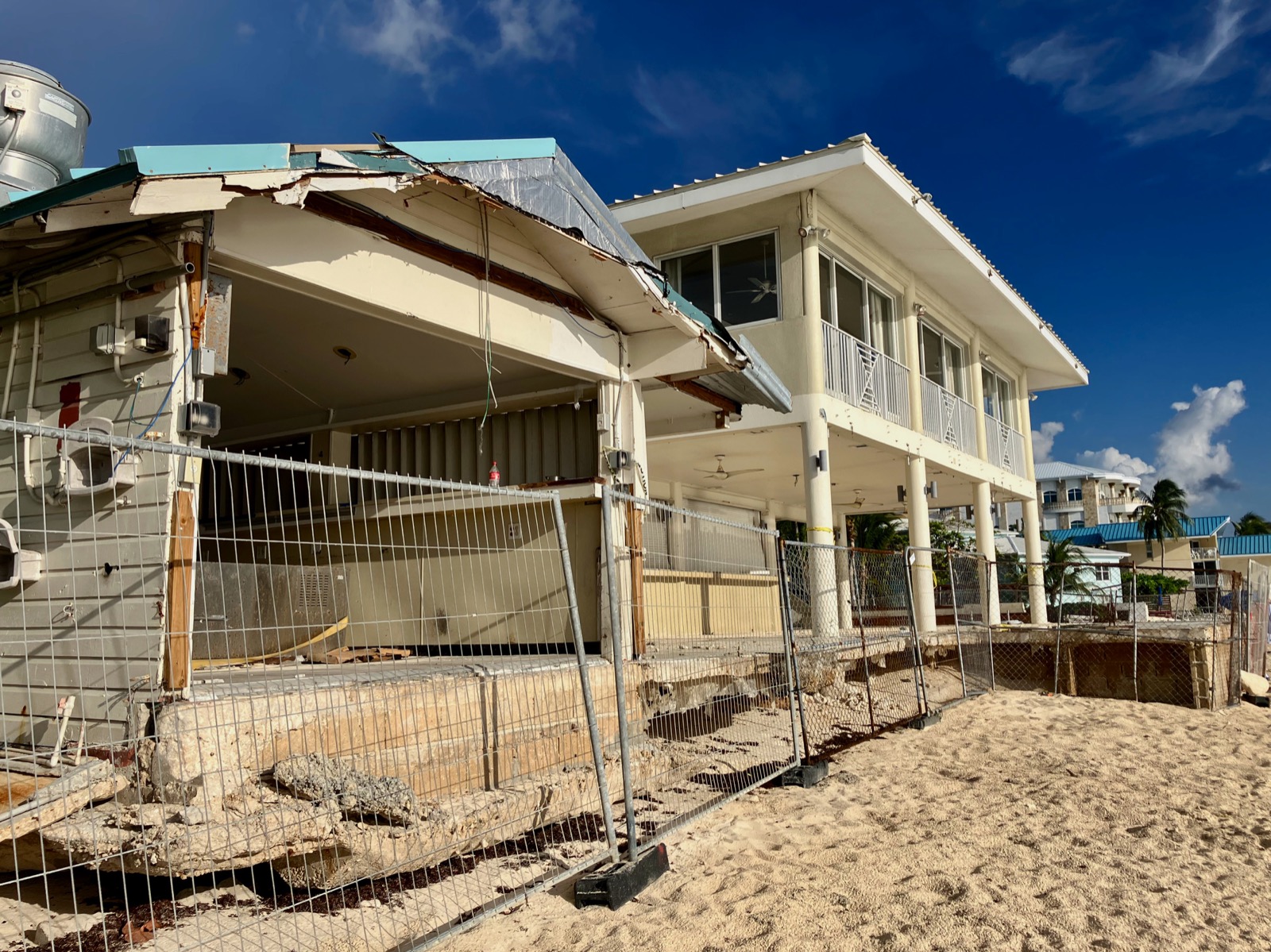
Royal Palms itself has gone through a number of iterations since it was a hotel, and is currently closed after shutting down in the early days of the COVID pandemic in 2020. Recently, Handel Whittaker, the former owner of Calico Jack’s bar, announced plans to reopen it as a new beach bar and restaurant.
The Coplands said they have been to the site, having tried to walk to it along the beach on their first morning back on island.
“And, of course, the beach isn’t there. I waded past the brick wall,” he said.
Erosion has badly impacted that area of Seven Mile Beach, removing the sandy white beach that has drawn people to Royal Palms for decades.
“Over 40 years, it’s gone through some metamorphoses anyway, but it’s very sad that the geology of the place has been altered to lose so much of the beach,” Bruce said.
Five years after the Coplands left Cayman, in 1988, the then 20-year-old Royal Palms Hotel burned down on what the fire chief at the time, Kirkland Nixon, described as “one of the worst fires I’ve seen in Cayman”.
Related Videos







Royal Palms may have had problems in the early days, but they certainly had a good chef, in the early seventies, my wife and I used to have dinner there regularly and it was excellent.