

By Aleigha General

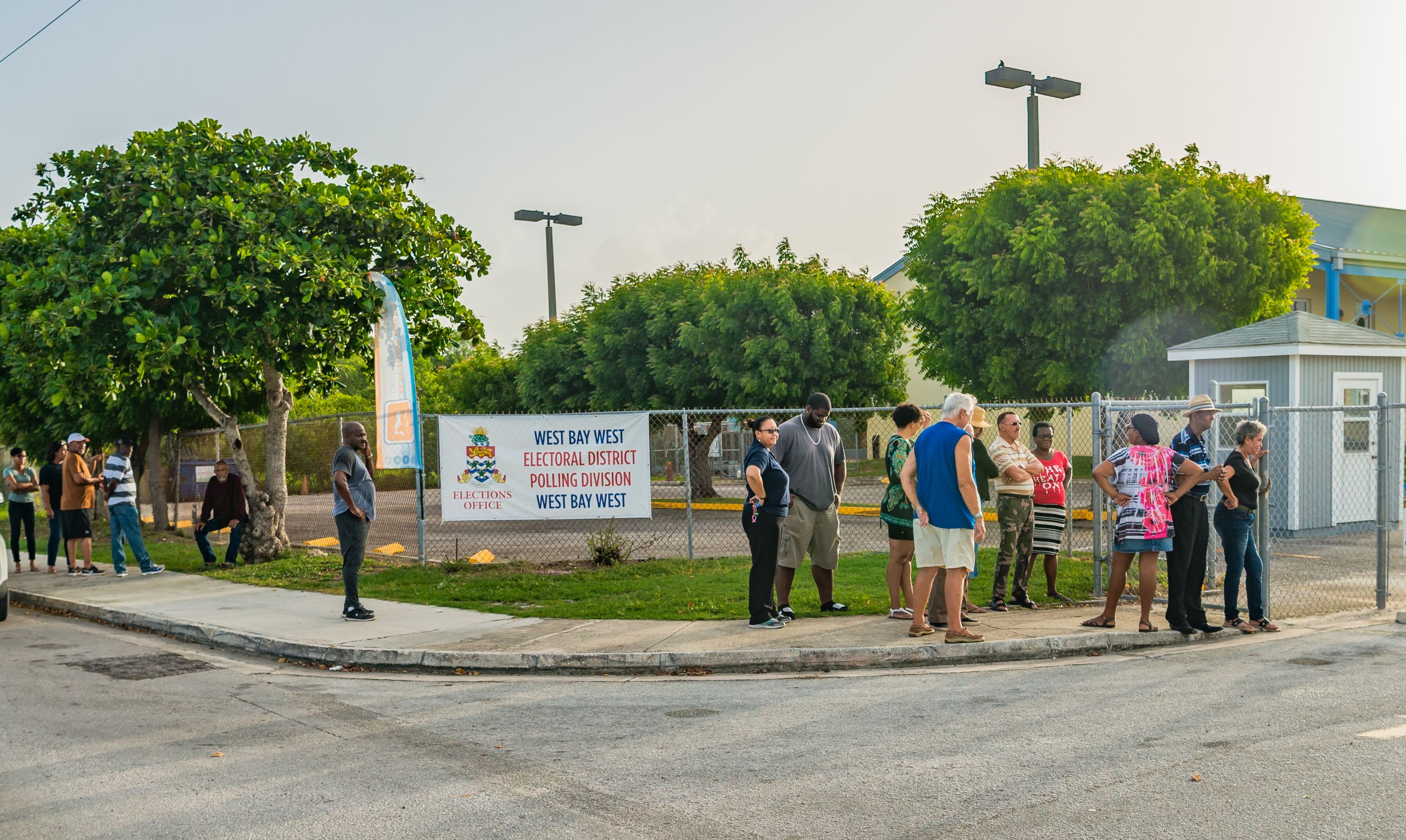
In April 2021, the Cayman Islands selected its next round of political representatives. Since then, Cayman has experienced the aftermath of a global pandemic, heightened economic stress, several natural disasters and, most recently, fundamental changes to the original structure of its government.
With less than a year until the Cayman Islands will vote again, Cayman’s youth hold a diverse set of perspectives on the efficacy and meaningfulness of being politically active, making them and their peers a key demographic for aspiring politicians and public figures who wish to change the status quo.
Politics is often perceived as a corrupt and dramatic field that does little to actually further social development or change. This is due, in part, to the legacies of corrupt political leaders who used their countries’ connections to transnational corporations and other large entities to ensure their own needs were met before considering that of the population they were meant to be serving.
While these types of overtly corrupt leaders may be less likely to parade their corruption to constituents, there is still significant debate surrounding the current global economic state and global leaders’ seeming inability to provide long-lasting, positive change.
In Cayman, this frustration can be seen when comparing the unyielding cost-of-living crisis with the plethora of multi-million-dollar apartment complexes and hotels which spring up across the island nearly every month. Developers of these high-rise buildings claim to be contributors to Cayman’s economy, despite the fact that a large percentage of Cayman’s working population are minimum-wage earners who have no access to these luxury accommodations other than perhaps working on them during the construction process.
This is a particularly significant topic for Cayman’s youth and school-leavers who are already preparing to enter the workforce.
The harsh reality of Cayman’s housing market is that if young adults are not fortunate enough to have a safe, available home where they can save money before needing to move out, they are very often left with little-to-no option, pushing them to the brink of homelessness.
All of these factors considered, it’s no wonder Cayman’s youth are less active in political discourse.
When a young person’s (or any person’s) primary concern is simply finding a place to live that won’t claim their entire $6-per-hour paycheque or finding a one-bedroom apartment for less than $1,500 a month, there’s no desire to take part in town hall meetings, especially when there only seems to be an effort to reach out to constituents when the polls are about to open.
Honest discussion
Recognising the need for an open and honest discussion about Cayman’s political system and how it can better serve the youth, this writer collected data from a small 24-person study which sought to understand young Caymanians’ views on their politicians, the political system as a whole, and their role in it.
To build a strong foundation of understanding, participants were first asked questions regarding their general knowledge about Cayman’s political figures and the sentiments about them in their households. 75% of respondents stated that their parents are registered voters and in a follow-up question, 79% said they knew their parents had voted before.
Additionally, 54% confirmed knowing their constituency representative, whilst 37% said they did not; however, this only represents a difference of four people.
If politicians want young people to vote for them and support their time in office, an effort should be made to be public faces within the community regularly and to all age groups, not just to one demographic right before elections are set to begin.
Negative views
Further questioning revealed that 58% of the young people who took part in the survey have not voted before, with varying justifications, such as a general disdain for politics in Cayman, not having their voter ID or not knowing how to acquire it, and not seeing political involvement as beneficial to them or their lives.
All of these reasons can serve as a road map to Cayman’s political community if they are looking to be wholly representative of Cayman and its youth.
The negative perspectives on politics serve as a check-engine light for politicians to reevaluate the way they listen to the youth and how (if at all) they actively work to represent the views of young people in caucus.
Those who do not know how to acquire their voter ID represent a demographic of people who require education and encouragement on an interpersonal level, from political figures who seek to empower every voting-aged or near voting-aged person, not just those in their own constituency.
Young people who feel their involvement in politics is inconsequential should serve as a reminder to aspiring and current politicians that their work of educating and working alongside the youth is never done. As global leaders, showing people that their voice matters to you and your work is one of the cornerstones of being a successful politician who is more than just a figurehead.
Easy to bypass
Cayman’s youth are constantly told that they are the future of these three islands and yet, when it comes to the implementation of legislation that will actually change the fabric of said islands, the youth are easier to bypass and leave to the responsibility of teachers and school counsellors.
This is a particularly poignant to note when considering that 67% of respondents stated they do not feel included in Cayman’s political process, which goes hand in hand with the 43.5% of respondents who do not see their views represented in Cayman’s politics.
While some may argue that a person’s views cannot be represented if they don’t attempt to involve themselves, it also cannot be ignored that people who feel routinely disregarded and unsupported by a system of leadership are typically not inclined to insert themselves where they are not wanted.
The rehabilitation of Caymanian politics requires that those who uphold the system need to use that power to change it into a more equitable and fair exchange. The majority of Cayman’s youth see the importance of politics to their lives, but it seems that political members do not see the importance of those young people’s lives to politics.
Perhaps the most valuable lesson which can be garnered from this snapshot survey is the way young Caymanians speak about their role in Cayman’s politics.
Several responses to the survey repeat the same sentiments of being disregarded for the needs of those with more money, not having faith in a system which has never worked in their favour, and feeling helpless against the influence of the millionaires and billionaires who have made a home on Cayman’s shores.
The crux of the issue seems to be that, despite wanting to be involved to some degree and knowing the importance of political activity in essence, young Caymanians do not feel they have the power to actually effect change and, on the other end of this double-edged sword, do not feel they have the time or means to take that power for themselves.
A government’s sole purpose is to empower and protect its citizens, and a populace who does not believe it can be empowered or protected is a staggering hallmark of a failed system of governance.
Perhaps our next representatives will take this into account the next time they go door to door.
Aleigha General was the recipient of the Cayman Compass 2023 Journalism Scholarship.
Related Videos












Fueling envy politics can only lead to division and unhappiness, surely there are more constructive and factual, reality-based opinions, which can be relied upon for future policy making instead.
Sad state of affairs. On the flip side maybe this is what the career politician would want? Just the same politician gene pool. The wheel on the bus goes round and round. Nowhere else in the world this is happening.
“In Cayman, this frustration can be seen when comparing the unyielding cost-of-living crisis with the plethora of multi-million-dollar apartment complexes and hotels which spring up across the island nearly every month. Developers of these high-rise buildings claim to be contributors to Cayman’s economy,”
Which of course they are:
A purchaser of a $10 million condo pays some $750,000 in Stamp Duty. That should be enough to employ 10 teachers for a year.
Then they pay some 40% of the purchase price of a car to drive while here and import duty on furniture. And of course everything else they buy here.
Should they resell that condo then another set of stamp duty is paid. Providing yet more revenue for the government.
If they want to remain permanently here then they pay more fees.
And they still don’t have a right to vote until they have been a permanent resident for 15 years and can apply for status.