


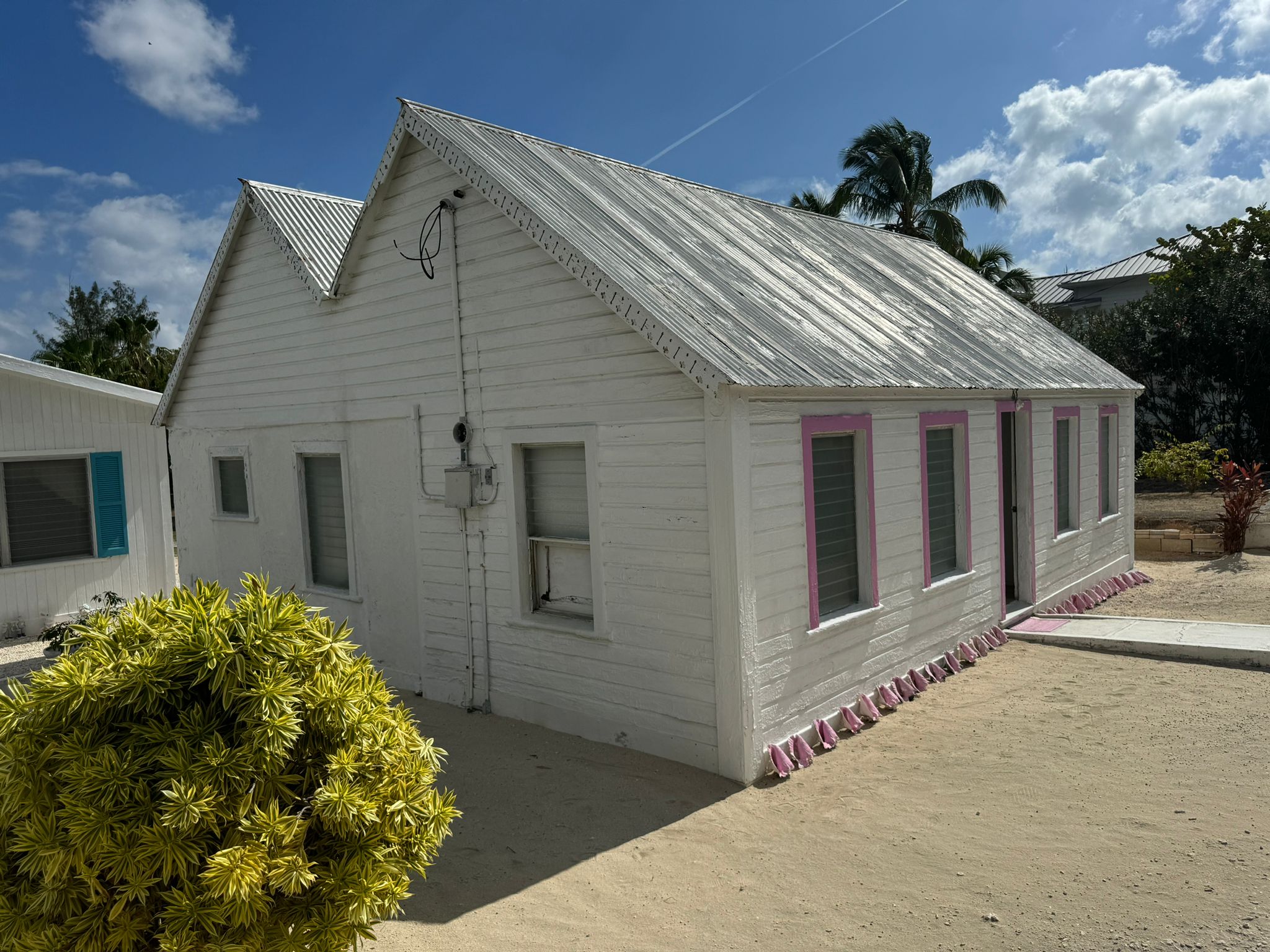
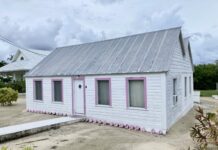
A historic West Bay cottage, constructed from traditional wattle and daub and endemic ironwood and mahogany, will move Sunday to a new home on Prospect Point Road, where it will be renovated as a guest house by new owners.
‘Herbert Parsons’ House’, as the home appears on the National Trust Historic Register, captured headlines and provoked indignation last year over reports that the home, located in a Historic Overlay Zone, would be demolished to make way for a modern, two-storey duplex.
The demolition story spurred calls to action and helped secure a new site for the house, but the former owner and the National Trust of the Cayman Islands say relocation was always the goal, even before the public outrage.
“We never wanted to demolish the heritage house,” said former owner Adrian Ebanks, who purchased the Boggy Sand Road property in 1999 with his wife Orlee.
“When we decided to develop the land, we just wanted to give [the house] to the National Trust for them to take it to a new home and preserve it. That was the plan from day one. It’s always been the plan.”
During their 25 years of ownership, Ebanks says they spent nearly $200,000 on repairs and pest control to maintain the house, owned by Orlee’s family since 1946.
“We were trying to do the right thing, when everybody else around Cayman, including the Cayman Islands government is demolishing these homes. The government just demolished three up in Cayman Brac,” Ebanks said over the phone.
Stuart Wilson, historic programmes manager at the National Trust, has been working closely with Ebanks to relocate the structure, one of about 300 historic buildings that still stand in the Cayman Islands. Wilson says Ebanks came to his office last year to discuss the future of Herbert Parsons’ House, but that the details of his plans got twisted in the public discourse.
“Someone must have jumped to that conclusion [about demolition],” Wilson said. “That was never something that Adrian wanted to do. He always wanted to protect that little house.”
No cover letter at planning meetings
Part of the confusion starts with the Central Planning Authority meeting minutes from its 30 Aug. and 8 Nov. meetings, the first two of three hearings that year about the Ebanks’ application.
Department of Environment comments to the CPA point out that no mention of the existing house was made in the duplex planning application and no cover letter was provided.
“There is no reference to this existing house on the planning submission drawings, but it is clear from the application drawings that the existing buildings are incompatible with the proposed development and that it would be required to be demolished to accommodate the proposed duplex,” the DoE says in the 30 Aug. CPA meeting minutes.
Planning Department comments, in the same meeting minutes, also refer to demolition.
“The proposal will cause the existing homes to be demolished, bearing in mind that some structures on the site [exist] as far back as the 1958 aerial maps,” the department wrote.
In a brief statement to the Compass on the issue, the DoE said, “Typically, if a structure is to be retained or moved, the architect will submit a cover letter or indicate this on the plans.”
In a way, the Ebanks’ plans included both demolition and preservation, Ebanks says. That’s because the property included multiple structures, and Herbert Parsons’ House itself was built in two different eras, as noted on the National Trust register.
The historic home, Ebanks said, included a non-historic addition constructed from shiplap timber or pine, and not the Caymanian wattle and daub of the older construction. That non-historic addition, he said, was the subject of his demolition application to the Building Control Unit and has since been removed from the wattle-and-daub structure in preparation for its move east.
Cayman Compass requested clarification on the demolition application from the Planning Department but has not received a response.
When Ebanks, accompanied by Wilson, first appeared before the CPA in December, he said, according to meeting minutes, that he was concerned about what he was reading in the papers alleging demolition plans, and said he was never contacted by the media or DoE regarding their concerns over the house.
An effort to preserve history
Long-time Cayman resident Greg Swart said he first heard about the demolition threat from his friend James Bergstrom, the former owner of Compass Media and someone who had previously restored another Cayman cottage.
“Earlier this year, Jimmy called me and said, ‘Hey, there’s another cottage that’s about to be torn down. Are you interested in taking a look at it and seeing if you can save it?’,” Swart recalled.
“I was excited about the opportunity to do the same thing and the National Trust got involved and we were able to fast track it through Planning reasonably quickly. The current owner was pretty anxious to get it done.”
To take on and relocate one of these cottages requires careful planning and expertise. Few builders still possess the know-how of old Caymanian architecture. Miguel Brown of Green Iguana Construction, who restores properties for the National Trust, is one of those people.
Brown, a Caymanian-Honduran with roots in Bodden Town, learned how to create wattle-and-daub structures from his uncle, Irvin Brown, who picked up the skill set in Honduras.
“I practically stopped other types of construction. Anytime this comes up, I leave everything else and get dedicated to this. Because I just enjoy seeing these houses being restored, coming back to life,” he said.
Brown said this is his fifth time working on a wattle-and-daub structure, including the National Museum and the Savannah Schoolhouse.
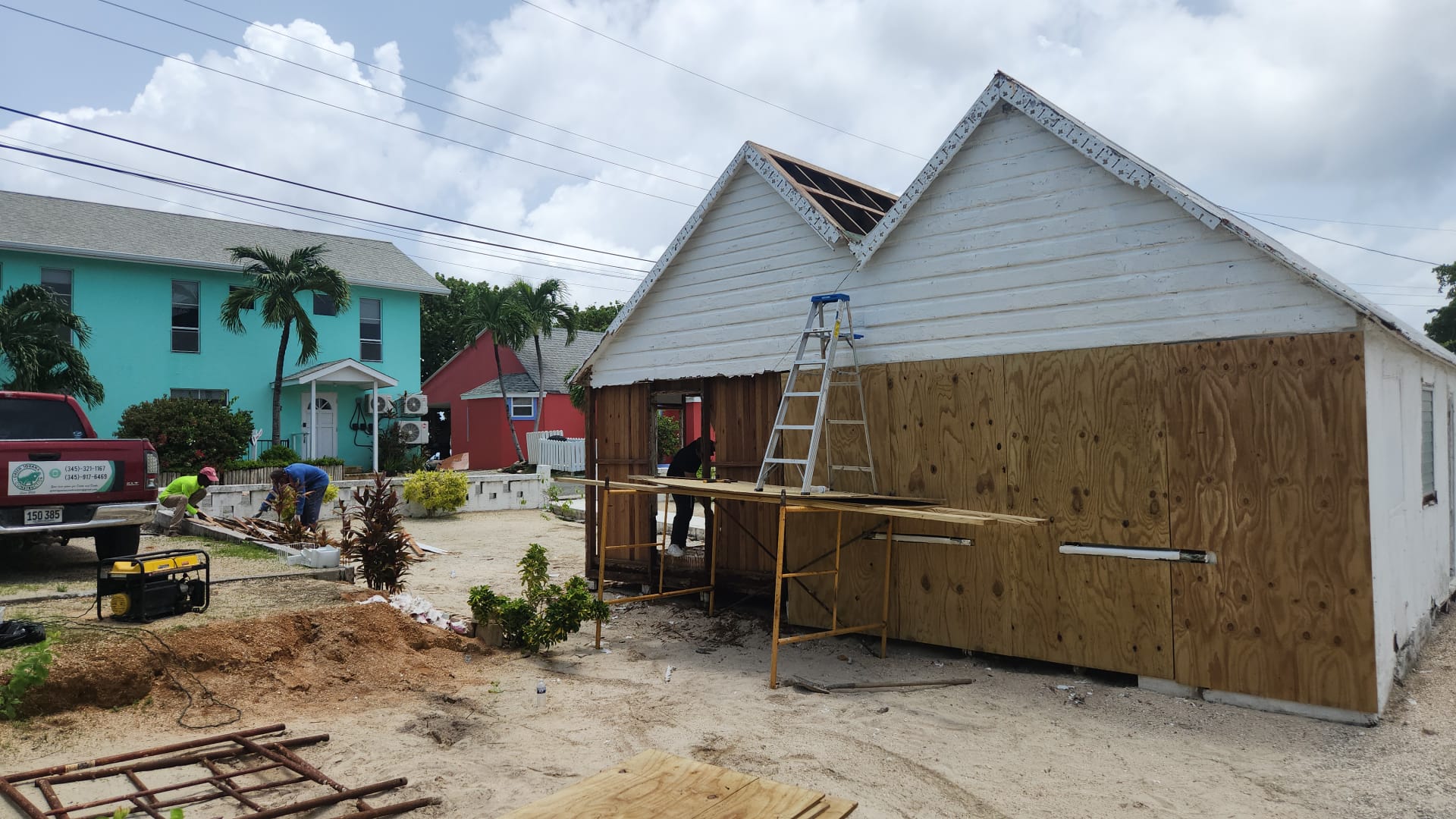
For the Herbert Parsons’ House project, he first had to separate the non-historic building addition from the original wattle and daub. That has left the home open on one side and requiring restoration of its fourth wall, where the shiplap addition formerly stood.
Sourcing materials, like daub, for old Caymanian homes isn’t easy, however. Cayman’s wattle-and-daub construction method traditionally used reef rocks, burned to ash and transformed into plastered.
In modern day, it’s prohibited to harvest coral in the Cayman Islands, which means locally produced daub isn’t an option.
So, Brown is sourcing lime from a quarry in Honduras to create the same material.
“The wall is not poured like a concrete wall,” Brown said. “The wall is made by stages … you put more and you put more till you get the full fill.”
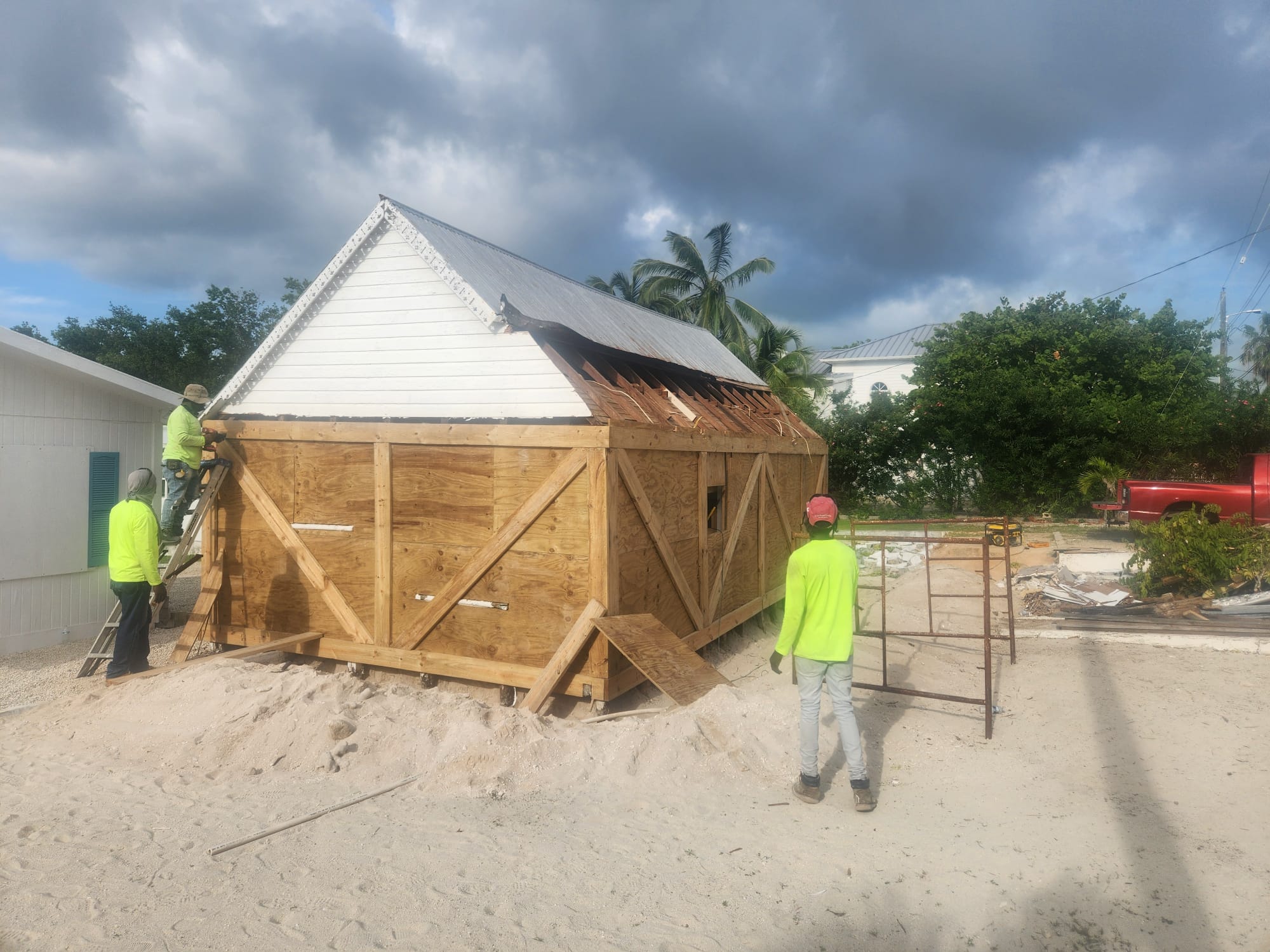
In preparation for its big move, the house has been enclosed in a sort of crate constructed of plywood. That will prevent the building from moving as it’s lifted by crane onto a 40-foot-long lowboy trailer and transported from West Bay to Prospect Point Road.
To fit under the West Bay tunnel, the house will be moved in two parts, first the mahogany-lined roof and then the wattle-and-daub walls. The moving operation, requiring a police escort for safety, is scheduled to take place in the early hours of Sunday to avoid traffic.
During restoration, the ironwood beams, which Brown says can last 200 years, will be exposed to create a natural and aesthetic visual effect. The home will also be elevated 7 feet and set into a concrete slab to protect the structure from storm surge.
The final product, still many months down the road, will include a kitchenette, a bathroom and a porch. Swart says it may be used as an office or yoga studio to complement the main house on the property, also under construction.
Endangered heritage
Wilson says the work Brown is doing with the historic home is akin to protecting an endangered species.
The trust’s national historic register lists 353 of these heritage properties across the Cayman Islands. While there are best practices for preserving them, there are no legal requirements. Over the years, many have been moved or bulldozed to make way for new development.
“These traditional houses are just as endangered as a species, whether it be the blue iguana or the brown bat,” Wilson said. “It’s by virtue that a lot of the materials can’t be sourced anymore, like the ironwood, only found in the Cayman Islands.”
While keeping these properties in their original sites is typically the ideal solution, Wilson said relocation is an option that can avoid total loss of the structures.
“Oftentimes the owners rush to demolish them because there’s no law to protect them,” Wilson said. “If people are willing to be patient, we can save these homes, but the property owners need to work with us. If you have one of these houses, please don’t just tear it down. Get in contact with the National Trust and we will try to broker a deal.”
Regarding Herbert Parsons’ House, an initial plan by the National Trust identified Pedro St. James as a new site, with assistance from the Uglands, Woody Foster and Gordon McLaughlin.
But taking on preservation of a historic property is costly, Wilson explained. The trust currently manages 12 historic properties, he said, and each comes with a price.
“In order to keep these homes in pristine condition, it can be quite expensive,” Wilson said. “The ones that are houses cost a phenomenal amount of money to protect and preserve.”
That’s where finding someone like Swart, a landowner willing to take on the moving and restoration costs, played a vital role.
“Greg was great to work with. He’s a get-to kind of guy. He don’t play around. He’s on it,” Wilson said.
While Swart didn’t have to pay for the house, he’ll have to pay for the responsibility that comes with it.
“On a per-square-foot basis, it’s probably not terribly economical. It’d be cheaper just to build from scratch, but, you know, the history is important to preserve,” Swart said.
“I think Cayman’s been very good to me, it’s been very good to my family, and this is a way to kind of give a little bit back in a way, to preserve some of the character and the history of the island.”
A changing Boggy Sand Road
As for the former site on Boggy Sand Road, Ebanks plans to move forward with construction of a duplex for his children.
His design, however, has garnered pushback from the DoE, which says it doesn’t reflect the style of the Historic Overlay Zone.
Herbert Parsons’ House had been one of nine historic properties listed on Boggy Sand Road by the National Trust Historic Register.
“The proposed development has no characteristics that would be in keeping with the established historical, architectural or cultural character of the area,” the DoE said, encouraging the applicant to reconsider the design.
Ebanks says that won’t be happening, and that architectural changes to the area are part of a larger trend.
“Take a drive down Boggy Sand Road yourself and see if we don’t fit in,” he said. “There’s a brand-new, four-storey building with a rooftop pool going in there. Everything up there’s modern buildings. About two or three Cayman-style left. But everything else on Boggy Sand Road is modern, just like what we’re doing, so we fit in a lot more.”
Related Videos







Dear Kayla,
Loved your article. Would be interested to see a follow up of when the house is put in place etc.
The Article mentions the removal of the roof to take it under the Dart tunnel, part of the CPA approval for the said tunnel was that Dart needs to leave a clear accessible route through Camana Bay for items like this that need to move on the NRA road. This is how cranes and all are transported to NW Point.