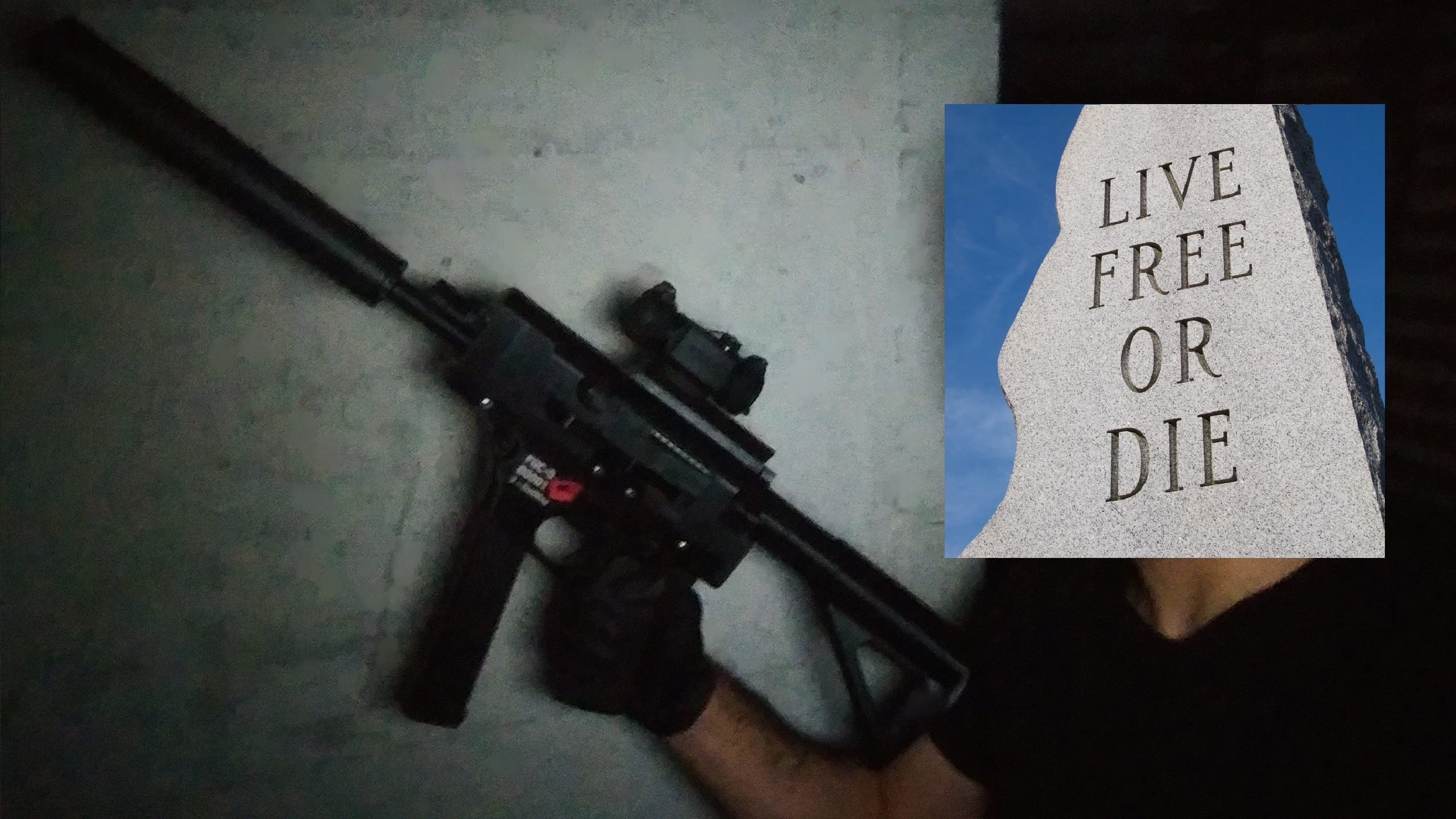
Sweeping changes to Cayman’s anti-firearms laws, bringing tougher jail times for offenders and zeroing in on a creeping threat from ‘ghost guns’, were passed by legislators this week.
The most significant change increases the mandatory minimum sentence for possession of an unlicensed firearm to 15 years on conviction, and 10 years with a guilty plea.

A provision that would have effectively removed the ability of judges to be flexible in cases with “exceptional circumstance” was removed from the bill at the 11th hour.
The Compass outlined concerns around this clause in our reporting last week, highlighting how unwitting offenders – without criminal intent – could be unintentionally swept up in the zero tolerance approach.
Speaking in Parliament on Monday and Tuesday, Attorney General Samuel Bulgin insisted the only people who needed to fear the ‘harsh’ penalties were those who “plan to break the law”.
He said the amendments – the first changes to Cayman’s firearms legislation since 2008 – were designed to deal with present and emerging threats, including those posed by new technology.
The shooting of seven people by a gunman who fired into the crowd during a football match at Ed Bush Stadium in February was referenced by Bulgin and several others during the debate as the catalyst for a tougher approach on crime.
“This government can’t think of anything more frightening, more callous, more heinous, more dangerous, than having persons out in our society enjoying a football match and having someone who feels it necessary to open fire in a crowd,” Bulgin said.
Since the Ed Bush shooting, the Compass Issues section has reported extensively on the issue of firearms trafficking, gangs and gun ownership in the Caribbean, as well as the socio-economic causes of violent crime within the Cayman Islands.
The Firearms Amendment Bill, and the debate around it, covered some of the same territory.
Today, we look at the points raised during the debate and in our previous reporting and how government intends to fight back against gun and gang crime.
1. Tougher penalties for firearms possession
The headline change passed this week is the increase in mandatory minimum sentences for unlawful possession of a firearm from 10 to 15 years after trial (or from 7 to 10 years in cases where the offender pleads guilty).
The Attorney General highlighted the need for a deterrent message to be sent through strict sentencing and indicated he was comfortable the law complied with international human rights treaties, even though the upper end of the new sentencing spectrum is now three times higher than for comparable offences in the UK.
He said Cayman was dealing with an escalation in gun crime and government had to deal harshly with those who impacted the “peace and tranquillity” of the islands.
“Times have changed and there are those in our society who are bad actors,” he said.
“This legislation targets anti social behaviour that threatens public safety on these islands.”
Legislators broadly supported this increase during the debate.
2. Ability to have ‘exceptional circumstances’ consideration retained
One issue highlighted in the Compass reporting on the bill was the plan to include a minimum sentence of 8 years in cases where ‘exceptional circumstances’ were found to exist.
We highlighted cases – including a couple who had a gun forced on them by a gang member attempting to evade responsibility and an American private pilot who unwittingly carried ammunition with him in a bag from the US – where offenders had been able to avoid custodial sentences because of the specific circumstances of their crime.
West Bay West MP McKeeva Bush also highlighted this as a concern during the debate, warning, “One gun shell in your car could have been there for months, someone put it there and you don’t know nothing about it, you could end up getting years for it.”
Bush also highlighted the risk of people being ‘set up’, alluding to his own recent experience with the justice system.
“You think we can’t be set up? I hope you are not fool fool to believe that. You’ve seen what I just went through,” he said.

The clause was ultimately dropped from the bill meaning that judges will have the discretion to decide sentences outside the mandatory minimum regime in cases where they decide there are exceptional circumstances.
There are still no clear public guidelines for what should constitute exceptional circumstances, however, and some advocates fear lower category offenders being hit with punitive sentences.
3. ’Reassurance’ amid a climate of fear
Several legislators highlighted the seismic impact of the Ed Bush stadium shooting on the community.
Deputy Opposition leader Joey Hew said elderly constituents were too concerned to attend community events.
Both Wayne Panton and McKeeva Bush also referenced the impact of the shooting on their communities.
“You are in your bed or in your yard and you hear shots. Some people seem to do that at will,” warned Bush.
Bulgin indicated that part of the point of the legislation was to show people that government had their safety and security as a top priority.
4. Sentences of up to 35 years for ‘endangering life’
The legacy of the Ed Bush shooting was most clearly illustrated in the legislation through a clause which adds the possibility of a sentence of up to 35 years behind bars for the most dangerous firearms offences.
The penalty – higher than the tariff for murder – is designed for possession of a firearm with intent to endanger life, cause serious injury, damage to property or to resist arrest.
The Ed Bush shooter or shooters – had they been caught – would already likely have been liable to be charged with attempted murder, given that three of the victims suffered serious injuries.
No-one has been charged in connection with the stadium shooting, however.
5. Dealing with ghost guns and R.I.P bullets
The law has been crafted to deal with the threats of tomorrow as well as the threats of today, Bulgin indicated.
In a series earlier this year, the Compass highlighted the growing impact of ghost guns throughout the Caribbean. These are difficult-to-trace weapons, without serial numbers. In some cases they are self-made using 3D printers, others are known as ’80 percenters’ – kit weapons that can be broken into pieces and rebuilt.

International crime fighters told us it is almost impossible to stop the trafficking of these types of guns.
The new firearms law updates definitions of prohibited weapons to account for these changes in technology and to deal with silencers and other modifications used to make weapons more lethal.
It also takes a harder line on certain types of ammunition, said Bulgin, highlighting concerns around so-called R.I.P ammunition – radically invasive projectiles which are legal in the US and are advertised as being able to penetrate sheet metal.
“They are designed to splinter and cause maximum injury,” Bulgin indicated, adding that Cayman’s laws needed to catch up with the evolution of weapons technology elsewhere.
6. Stopping the flow of guns
Previous Compass reporting highlighted the steady drip of guns from the US, through Haiti and Jamaica, into Cayman.
While the methods of import vary, one common avenue is for weapons to be trafficked along with ganja shipments in low-slung canoes with high powered engines that dash from Jamaica to Cayman in clandestine overnight voyages.

Bulgin indicated that tougher possession penalties may also have an impact on importers running guns into the islands.
McKeeva Bush said more investment was needed in high-tech radar to track illicit vessels in Cayman’s waters. He said the technology was expensive but necessary given the rise in crime and the islands’ proximity to countries where guns are traded with near impunity.
“Let us not fool ourselves,” he said.
“Haiti is very close. We get traffic from Jamaica, traffic from Honduras and god knows where else.”
7. Farmers told: ‘You can still shoot agoutis’
The attorney general sought to provide some assurance to farmers and sports shooters who had apparently raised concerns about the bill.
“We are not trying to stop people shooting agoutis,” he said.

He added that significant consultation had taken place with those two groups with a view to making the legislation acceptable to responsible, licensed, gun owners who he insisted have “no reason to fear”.
8. Licensed gun owners safe to travel
One last minute change to the legislation removed a clause that Speaker Alden McLaughlin – himself a licensed gun owner for two decades – described as “absolute madness”.
The law, as written, required licensed gun owners, who are already compelled to keep their weapons in a licensed and inspected safe protected by an alarm, to hand them over to the police when they travel.
McLaughlin, who is also a farmer, said it made no sense to require people like himself to take their weapons out of a safe and hand it over to a police officer “who may leave it in the police car when he stops to get coffee”.
He said many people in Cayman travel all the time and suggested the provision was impractical both for the police and licensed gun owners. After an hour adjournment that clause was removed from the bill.
9. Is it just a band-aid solution?
While supporting the legislative changes, former Premier Wayne Panton, warned that, without a broader brush approach to the issue of gun crime, tougher penalties risked being a “band-aid solution”.
He added, “I wish we could guarantee that (with the legislation changes) these issues will go away and society will be safer, but this is only part of the solution.
“We have got to find a way to reach those elements of society and in particular young people engaged in this activity. We have got to have a reckoning with this issue.”

He said more needed to be done to alter the path for troubled young people and to engage them constructively, rather than “having to find ways to put people in prison for longer”.
Bulgin, in his response, indicated that government accepted this and was, in combination with the National Security Council, examining a “more holistic approach” with young offenders.
He said “early intervention” was needed to “prevent them from drifting in the wrong direction”.
10. Questions remain around impact
As Panton’s comments illustrate, this legislation does nothing to deal with the causes of crime.
Defence lawyers – who were not widely consulted on the legislation – have also questioned if tougher sentences will really make an impact.
“People still have guns and they still commit firearms offences. The mandatory minimum for murder is life and that doesn’t act as a deterrent. It just doesn’t work that way,” Amelia Fosuhene, of Brady Law, told the Compass on Monday.
Other lawyers have questioned why a 10 year minimum sentence would be significantly more effective as a deterrent than a 7 year sentence. Most criminals who go into the community with a firearm, they suggest, believe they will not get caught.
Legislators indicated during the debate that police were being given more resources to help change that.
MP Chris Saunders also called for police clearance rates to be published as part of the reporting on crime stats.
Police Commissioner Kurt Walton, previously told the Compass he stood by the record of his officers on gun crime, highlighting a 75% detection rate in murder cases and the fact that a quarter of the Northward Prison population is serving time for firearms offences. In the same interview he indicated that police needed, and intended, to do more to target the ‘merchants of evil’ trafficking weapons into the country.
Related Videos