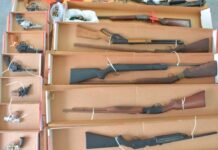
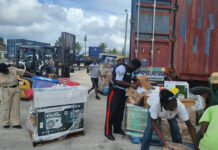
The weapons arrive in twos and threes, a slow trickle of firearms that feed into a ‘river of steel’ flowing from the liberal gun markets of the United States to all points south.
They are broken into pieces and hidden amid machine parts in shipping containers.
They are stuffed amid shoes and clothing in blue plastic cargo barrels.
They are sent in the post and carried in luggage on commercial aircraft.
The Caribbean is awash with American guns. And law enforcement officials, politicians and academics are swimming against the tide in their efforts to disrupt the supply line.
“There is so much trade going south it is almost impossible to stop it,” Bill Kullman, a former senior official in the US Bureau of Alcohol, Tobacco, Firearms and Explosives, told the Compass.
“We don’t really know how many traffickers there are because it is really only the very stupid ones that get caught.”
The region boasts the dubious honour of having eight of the 10 countries with the highest murder rates in the world, despite widespread anti-gun ownership laws.
Even Cayman, noted as a haven of law and order amid the tumult of violent crime engulfing many comparable islands, has a homicide rate similar to that of the United States.
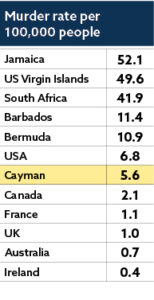
Yet it is the US that is providing the ammunition for the gang wars raging across the Caribbean.
As the Compass reported last week, in the vast majority of cases – both here and in the wider region – weapons bought legally in America are responsible for violent crimes on our shores.
Gun control? ‘Not a chance in hell’
Despite efforts by the Biden administration to tighten the thriving underground export market, there is scepticism across the Caribbean that the political will exists within the US to stop the problem at the source.
“Not a chance in hell,” one academic told us.
The challenge is compounded by resource issues for small island police forces, a lack of radar technology throughout the region and the sheer logistics of getting 33 countries – some of them blighted by corruption – to collectively monitor thousands of miles of open sea.
Then there is Haiti – a failed state partially controlled by gangsters that is ‘exporting instability’ throughout the region. The sheer amount of weaponry flooding into the former French colony threatens to have a destabilising effect that could spin beyond its borders.
The challenges are only expected to increase.
The Caribbean is starting to see evidence of ‘ghost guns’ – including kit weapons that can be easily stripped to unidentifiable parts for import – and reassembled. The next evolution of that phenomenon is 3D printing.
The FGC 9 (the letters stand for F*** Gun Control) is a semi-automatic carbine that can be 3D printed without the use of any regulated firearm parts.
Self-made weapons are an evolving trend globally but they have yet to be documented in a meaningful way in the Caribbean.
In some ways that is surprising, says Matt Schroeder, a senior researcher at the non-profit Small Arms Survey and the co-author of a Caribbean firearms study published last year. But it is also a symptom of just how cheap and easy it is to go the traditional route.
Straw men and rusty guns
The sources of Caribbean weapons are diverse, says Anthony Clayton, of the University of West Indies and the lead author of Jamaica’s national security strategy.
There are the ex-Soviet ‘rusty guns’ from South and Central America – military and police weapons diverted from failed states like Venezuela – and organised crime routes that have been traced back to Europe, via Paraguay and Brazil.
But by far the most common point of origin is the US.
“The best thing to fight Caribbean firearms crime is to address the source of the problem, which is the United States,” says Kullman, an attorney and former senior advisor on international affairs with the ATF.
“The US really needs to be held accountable and responsible for a lot of the crime and violence that takes place in the Caribbean. We’re adding to the gun population by millions each year, and they don’t really go away – they last at least a century. It is a horrible system right now.”
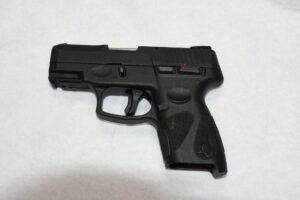
By the time a gun is involved in a crime in Cayman it may have changed hands dozens of times.
In the majority of cases, the journey starts with a ‘straw man’ – a regular citizen without a criminal record who walks into a gun store and makes a legal purchase.
Sometimes they give a fake name, sometimes not.
The weapon is then sold on to a broker, or traded at a gun show – where there are fewer restrictions or background checks – and it disappears from the legal record.
“The mechanics of it are pretty simple,” says Schroeder.
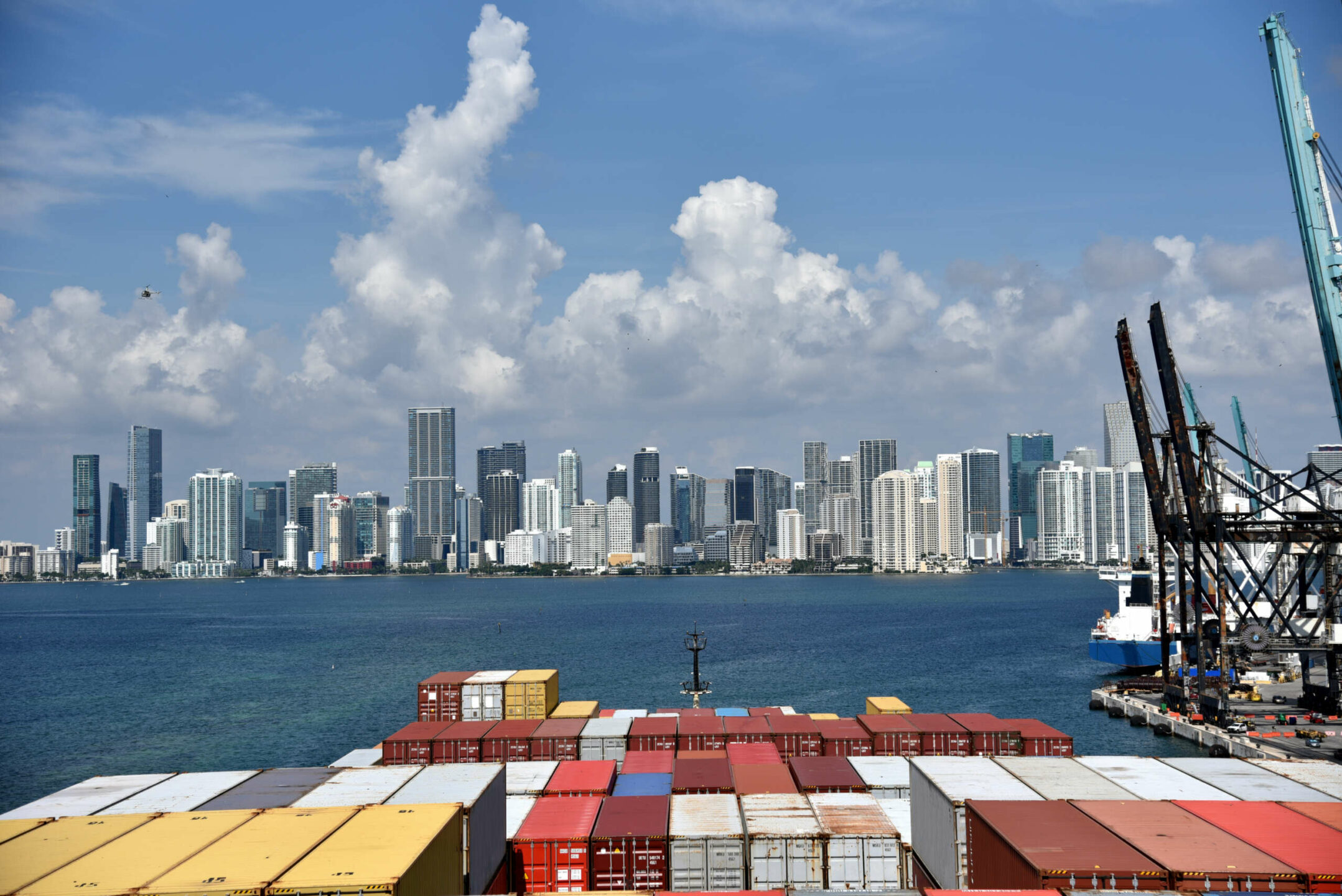
From there it can be as simple as dropping the weapon in the post. More often it is buried in cargo.
“I have seen guns stuffed inside chickens, inside toy shipments, disguised amid machine parts, placed in cargo containers and labelled as household goods,” said Kullman.
“If it is shipped from a US distributor, it is not going to get checked 99% of the time.”
In the majority of cases, it is unlikely that guns are coming into Cayman directly through this route. The first port of call is usually Jamaica.
Diaspora dealers
The cache of weapons laid out on the wharf on a February morning in Kingston was enough to power a small army. Counter-terrorism officers had intercepted 64 guns and 965 rounds of ammunition from a shipment originating in Miami, Florida.
It was the largest in a number of recent weapons seizures and Deputy Commissioner of Police Fitz Bailey had a good idea of the source, sending a pointed message to Jamaicans living in the US to help stop the violence.

“They are the ones who are sending the firearms,” he told reporters.
Weapons trafficking into the Caribbean is largely facilitated by gang associates from the various islands operating in the United States, according to Clayton.
“It is most often individuals from the diaspora with connections to the destination country,” he said.
Part of the challenge is that firearms are not often traded in bulk. The seizure at Kingston wharf in February was, in that sense, a rarity.
“In most cases it is what we call ant trading – small quantities of weapons that add up over time,” said Schroder.
“They often put the weapons in these 55-gallon blue cargo barrels, fill it with other items and ship it off. There is nothing sophisticated about it.”
Guns for ganja
While the majority of Jamaican guns come direct from the US, a thriving barter trade with Haiti provides another avenue for weapons to enter the country.
The bustling village of Old Harbour Bay, west of Kingston, is a centre for the well-established ‘guns for ganja’ racket in which fishermen are used as couriers to trade Jamaican weed for Haitian weapons.
The link to Old Harbour is intriguing for Cayman. A fugitive gunman linked to three murders in Jamaica and said to be a leader of Old Harbour’s Wildlife Gang, was arrested in Cayman in 2022 after entering the jurisdiction illegally.
The link suggests a plausible maritime route between Old Harbour and Cayman.
It is not a substantial leap, says Clayton, to imagine that Cayman is a downstream market for the same traffickers trading with Haitian gangsters on the high seas.
“Old Harbour has been very much connected to the guns-for-ganja trade with Haiti and it wouldn’t surprise me if some of the same people were involved in moving some of those guns on into Cayman.”
Pigs for pistols
Journalists in Jamaica have reported in-depth on the trade with Haiti.
The Star in Jamaica carried an interview with a former gangster in 2018 who claimed the trade extended to livestock and that two pigs would trade for 10 pistols.
He told the newspaper that criminals in Jamaica were raiding farms to swap meat for weapons with impoverished Haitians.
“The Haitian dem hungry bad, cause more time the man dem give dem all some stale meat and them don’t even realise. Them glad for it,” he told the paper in a 2018.
More recently, a fisherman in Old Harbour village told the Gleaner he had brought more than 100 guns into the country on 12 overnight missions to the Haitian coast on behalf of local gangs.
“When we reach Haiti, we anchor and stay pon the boat till the connection come to us. Thirty pounds of weed usually swaps for one rifle and 10 pounds for a handgun. A kilo of coke normally swap for three rifles,” he said.
Exporter of instability
The unstable situation in Haiti is a significant regional challenge that could have repercussions for years to come.
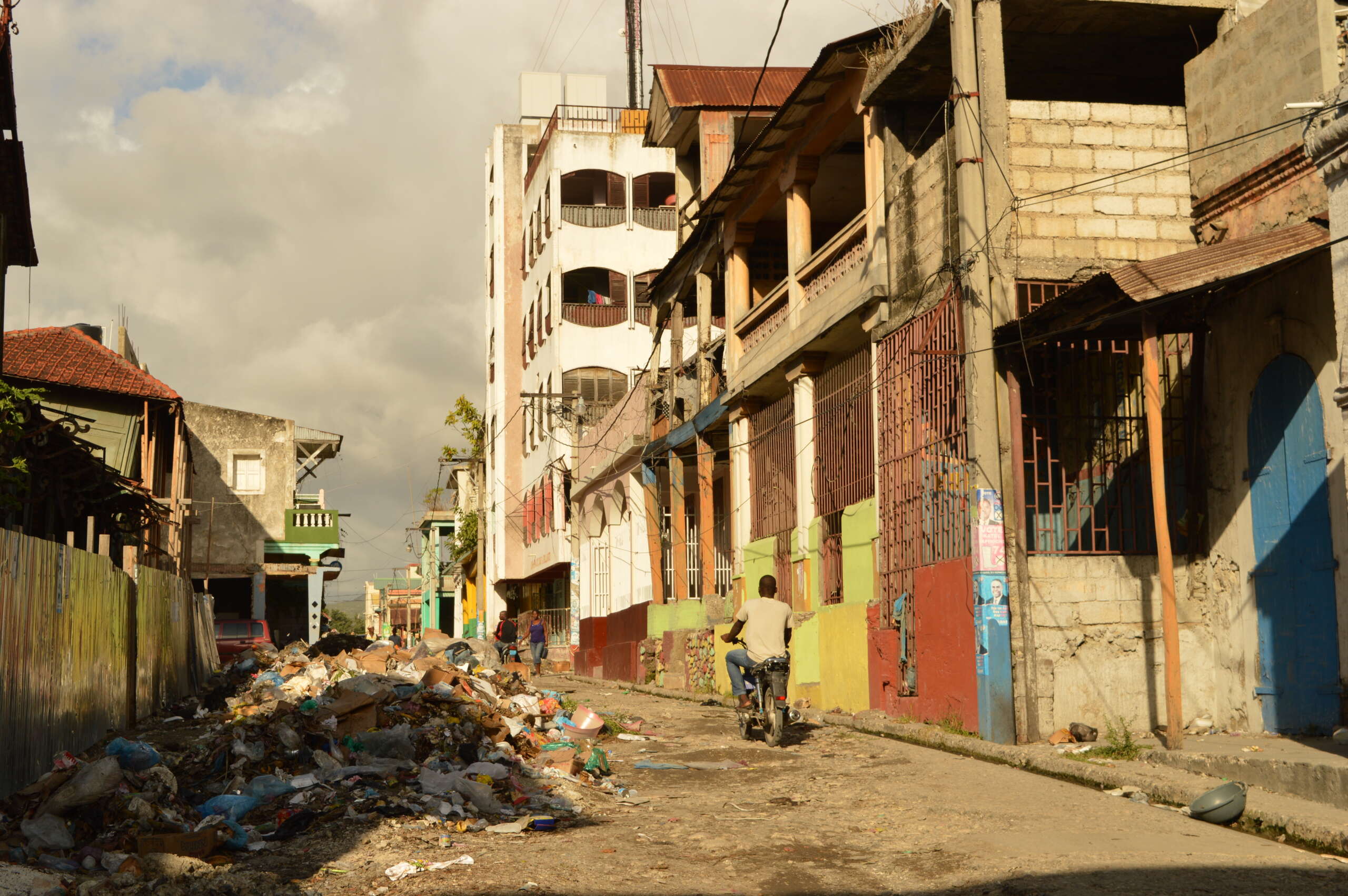
A United Nations report, published in March last year, warned that increasingly high-powered weapons are being shipped from Florida to Haiti with relative impunity. Last month the UN stated that gangs in the country have more firepower than the police.
Amid lawlessness on the streets of Haiti, the weapons – including high-calibre sniper rifles and belt-fed machine guns – are in high demand.
But the possibility for these firearms to leak out into the wider Caribbean is a source of concern.
“It is very easy to get them into Haiti right now and beyond that there is a fairly well-established ganja-for-guns trade between Haiti and Jamaica,” said Clayton.
He cautioned that the catastrophe in Haiti was spreading instability through the region that could ripple out further in the years to come.
The third-hand trade to Cayman
Cayman is far enough downstream from the original source of the weapons to be a few steps removed from this risk.
Commissioner of Police Kurt Walton has warned of increasing use of extended clips to give imported firearms rapid-fire capability. But the main weapon of choice in Cayman is still the handgun.
The commissioner confirmed more than 75% of weapons confiscated in Cayman last year had a connection to the United States. And ballistics evidence shows that at least some have come through Jamaica.
One gun, found in Cayman, was linked to five murders in Westmoreland.
That’s no surprise to Mark Shields, former deputy commissioner of police in Jamaica, who believes Cayman criminals are most likely purchasing ex-rental weapons.
“It is a fairly common sideline for gangs to rent out firearms for other criminal activity,” said Shields, who now runs a security consulting business.
Jamaican police have innovated in an effort to track down these guns, assigning names and even putting out wanted posters for weapons that have been linked to multiple crimes.
But Shields believes those that are sold on to Cayman are traded because the price was right rather than any fears of law enforcement.
“I don’t think the guns are going into Cayman because they have become too hot in Jamaica,” he said.
The connection again most likely links back to the diaspora.
“Wherever there is a Jamaican diaspora the majority are working hard to send money back to their families but there is always a small percentage involved in gangs. If there’s a gang in west Kingston they will have links into the US and probably into Cayman as well. It is no surprise that the majority of firearms in Cayman would be coming in via Jamaica.”
The arms race
Even as law enforcement innovates to combat trafficking, the challenge continues to evolve.
Schroeder, of the Small Arms Survey, warns that the next significant issue for the region could be 3D-printed weapons – homemade firearms that can be self-manufactured from nondescript parts and are harder for law enforcement to trace.
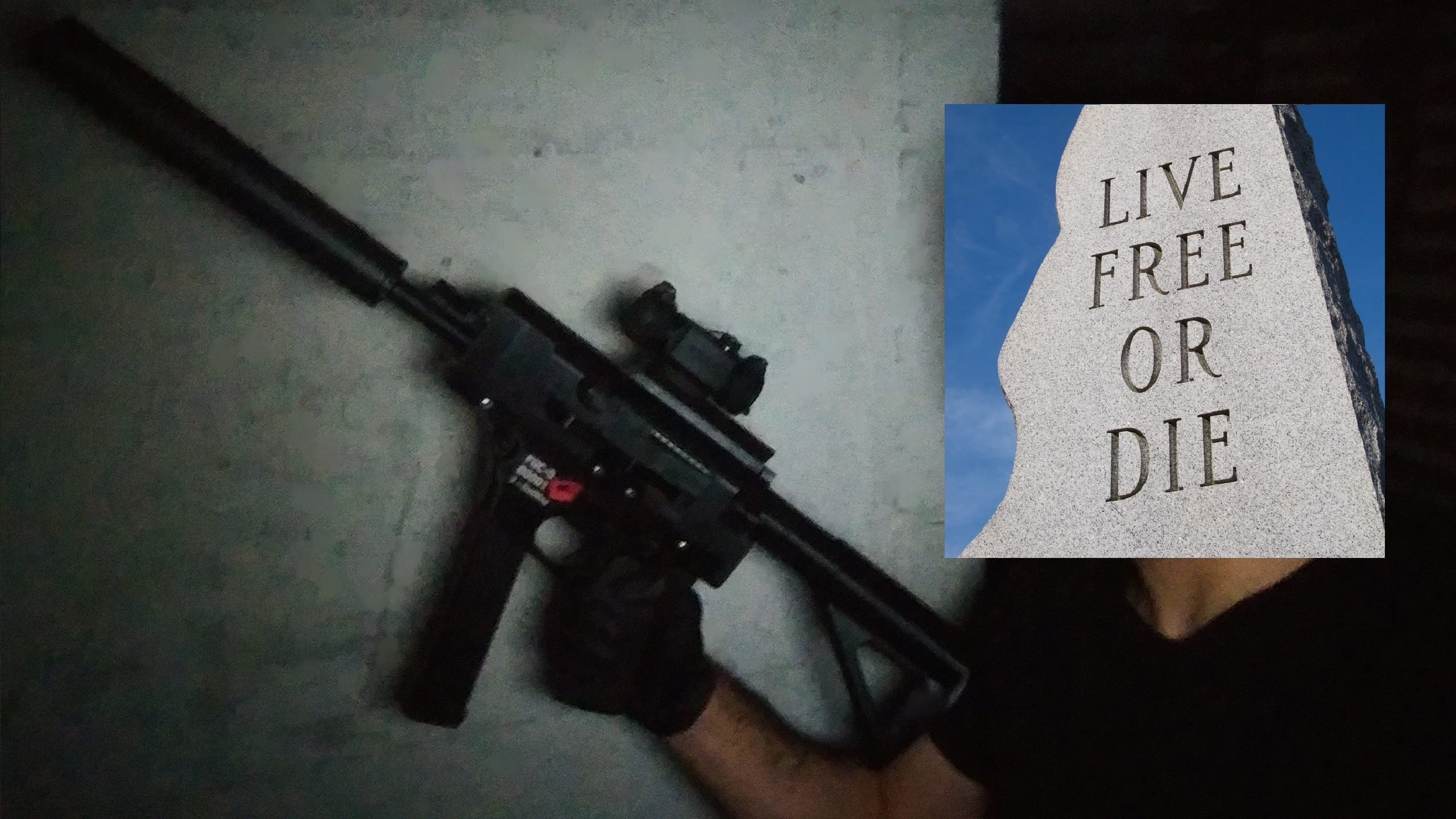
“If that takes hold it is a whole different ballgame. Then it becomes even more difficult to address this problem.”
Right now, he sees little evidence of uptake in the Caribbean.
But it is a future trend that he is watching closely.
‘Follow the money’
The experts interviewed in this story paint a relatively bleak picture.
“I kept hope alive for my 25-year career but I actually think we’ve gone backwards,” said Kullman.
For drugs and guns, Cayman is a cash-rich consumer.
And where there is a profit margin to be made, says Clayton, there will always be people willing to take a risk.
He’s pessimistic about the prospect of rooting out gun smuggling completely but says more can be done to make the risk outweigh the reward.
Measures like requiring transponders on boats, establishing integrated radar systems and communication between police forces are among his proposed solutions (to be explored in a further article in the series).
Beyond that, he suggests going after the funds.
“You can at least disrupt their operations and the best way to do that is to go after the guns and go after the money.”
Related Videos