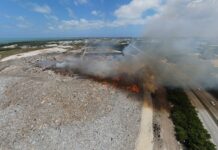
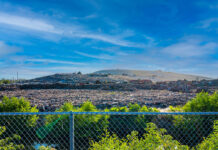
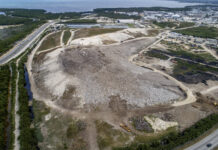
Growing piles of scrap metal and old vehicles on the Sister Islands have hit a combined total of weight of 1,980 tonnes, or almost 4.4 million pounds, increasing potential fire risks at both the Cayman Brac and Little Cayman landfills.

With no available method of disposal available for the waste, Department of Environmental Health Director Richard Simms and his team issued a tender last week seeking private sector help to rid the islands of the piles of waste.
“The risks identified with the storage of the scrap metal are typical with all landfilled wastes and stockpiled materials; with the primary risk being that from fire,” Simms said in an emailed comment to the Cayman Compass.
Though the amount is significant, he said capacity remains at both landfills, but that may not last much longer.
“The removal of scrap metal from both islands will facilitate the recycling of this material and the tender is designed to address this requirement by the middle of next year. However, reducing the volume of the materials allows more efficient use of the space,” he said.
Similar works will be planned periodically in the future, he added.
Risk of fire
At present, the Department of Environmental Health estimates that there are 1,700 metric tonnes of scrap metal and end-of-life vehicles at the Cayman Brac landfill and 280 metric tonnes on Little Cayman. However, it stated in the tender that the “estimates are not definitive and are provided for informational purposes only”.
The tender document states that the department has neither the means of disposal nor the recycling equipment to process the waste, which means the only option at this time is to continue to stockpile at the landfill.
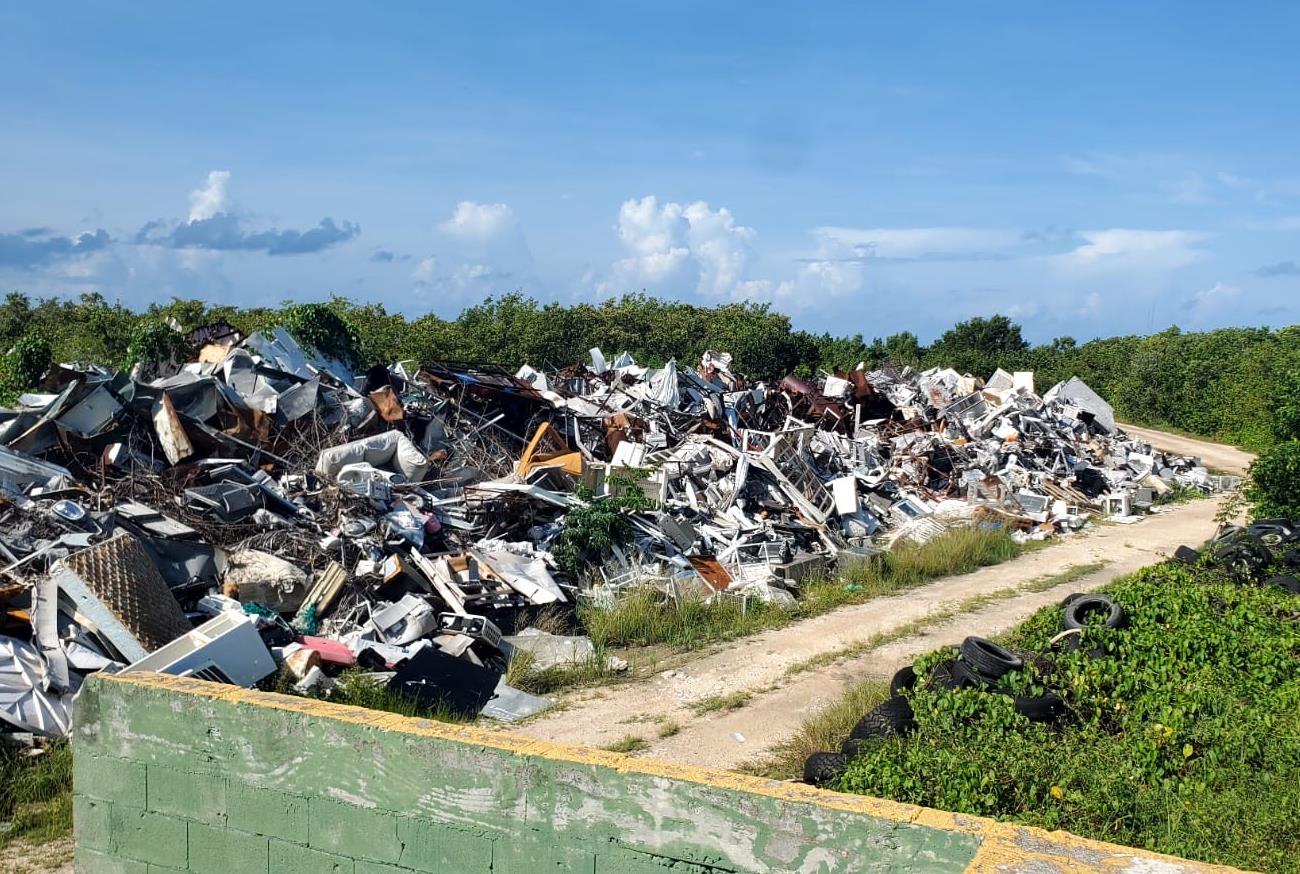
“There are no local industries to receive processed scrap metals for on-island reuse. The metals do have value but require processing if they are to be re-used. The scrap metal and End of Life Vehicles cannot be landfilled in any form, as they present challenges in burial and can generate subsurface voids leading to sinkholes. At all times, these materials pose a risk to fire,” the tender said.
Earlier this month, the Compass reported on the more than 10 million pounds of discarded tyres sitting in landfills on all three islands, posing significant fire risks.
The number of tyres at the George Town landfill, based on the latest assessments, was estimated to be around 4,800 US short tons; at Cayman Brac, 190 US short tons; and at Little Cayman, 40 US short tons. A US short ton is equivalent to 2,000 pounds.
Simms said at the time that those volumes of discarded tyres were “among the highest amounts we have recorded”.
A tender has been issued for the removal of the tyres, similar to the tender for the scrap metal.
From April 2019 to February 2022, more than 12,000 tons of scrap metal were shipped from Cayman to the US.
That was done through a Dart-led consortium of companies that was contracted to begin clearing the backlog of waste at the George Town landfill, shipping out the scrap metal to recyclers in the US and across the Caribbean.

The tender documents state that the available stockpiling space at the landfills on the Sister Islands “is nearing capacity and materials need to be removed for the efficiency of operations.
It added that to access further stockpile space and to recycle these materials into re-usable raw materials and/or products, the existing scrap metals and vehicles need to be removed.
There had previously been efforts to crush and bale scrap metal and cars on Cayman Brac, which produced around 50 bales of scrap, the tender stated.
Those bales remain at the Brac landfill, along with 1,400 metric tonnes of scrap metal and 250 end-of-life vehicles, and 300 tonnes of “other waste and deleterious materials”.
Over on Little Cayman, according to the tender document, there are 200 metric tonnes of scrap metal and 20 end-of-life vehicles, as well as other waste materials amounting to 80 tonnes.
The Department of Environmental Health said the stockpiles of scrap metal and vehicles also contain other waste materials, like glass, ceramics, plastic, cardboard, batteries, food, paint, tyres, TVs, electrical items, furniture, pressurised gas cylinders, mattresses and other bulky household items.
The deadline for tender submissions is 15 Nov.
Editor’s Note: The Cayman Compass is a subsidiary of Dart Media and Entertainment.
Related Videos