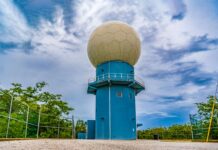
Starting Wednesday, the Kearney Gomez Doppler Weather Radar will be down for scheduled maintenance which is expected to last three days.
The Cayman Islands National Weather Service, in a statement Monday morning, said during the repair process “the radar will periodically be taken offline rendering radar images unavailable to the public”.
The repairs are expected to be completed on Friday, 17 Jan., according to the statement.
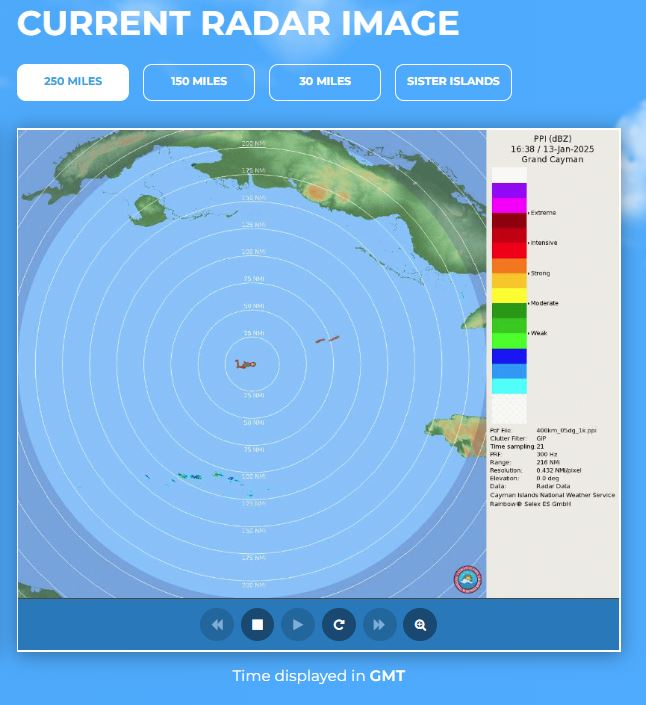
It explained that the “repairs are based on recommendations from the recently completed maintenance checks conducted last month”.
The exact nature of the repairs have not been made public.
“During the scheduled outage, the community can be assured that the team of highly trained forecasters at the [National Weather Service] is equipped with other tools that will ensure reliable weather forecasting,” the statement said.
The radar was also down for scheduled annual maintenance in December, and that offline period was relatively short as well.
Last month, Leonardo Germany was awarded a $622,260 contract to upgrade the Kearney Gomez Doppler Radar, with work scheduled to start immediately.
That contract forms part of an overall effort from the Cayman Islands National Weather Service to upgrade its forecasting capabilities.
The German-based firm, which manufactured and installed the original radar at High Rock, East End, previously worked with the weather service on the Doppler’s repairs last year which had become necessary following repeated breakdowns.
The Doppler radar, which has a lifespan of 15 years, first became operational in 2013.
The system was built by Leonardo and funded through a grant provided by the European Union in 2012.
John Tibbetts, National Weather Service director general, speaking to the upgrade in a previous statement, said it will address the “aging infrastructure and obsolescence of critical components” which pose risks during severe weather events, particularly during hurricane season.
“The comprehensive upgrade is designed to extend the radar’s service life by an additional 12 years, enhancing its reliability and performance,” he added.
The radar has been a critical part of the island’s weather forecasting capabilities and was also used by the US National Hurricane Center for tracking of Hurricane Rafael which was a direct hit in early November on Little Cayman.
The eye wall of Hurricane Rafael impacted the western end of Little Cayman, with the centre of the storm passing a few miles away from the western tip of the island.
Related Videos