


By Simon Cawdery

I want to be brutally honest at the start of this article. Friends suggested many months ago that I write an article about the benefits of a Cayman sovereign wealth fund. For those unfamiliar, a sovereign wealth fund is similar to a long-term savings pot established by a country for strategic plans, generally free of political interference.
I declined to write this article then because intuitively I didn’t like the idea. Cayman doesn’t have a huge, unexpected budget surplus and Cayman doesn’t have unique natural resources that deplete (in the same way as, say, Norway’s oil reserves do).
Typically, the best run sovereign wealth funds have taken a natural ‘windfall’ and ‘put some aside for a rainy day’, but such a scenario didn’t appear, to me, to obviously exist in Cayman.
I was also wary of the additional bureaucracy required to manage a new wealth fund, especially given the known inefficiencies of Cayman’s civil service.
My scepticism stemmed from doubts about whether it could be established and operated with genuine integrity, given the government’s track record of parochial decision-making and a tendency toward excessive spending.
In addition, I was distrustful of creating a new bureaucracy that would be required to oversee the new wealth fund; the efficiency of Cayman’s civil service being a known problem. I was, in essence, distrustful of whether it could be set up with pure motives and run with pure intentions, given the spendthrift and inefficient nature of Cayman’s government’s spending.
Two months ago, I finished my research on government waste and misallocation of resources which showed how badly Cayman was misusing its citizens’ money, published in the Compass in November 2024.
I had thought this would reinforce my prejudice against establishing a sovereign wealth fund, but oddly it didn’t. In fact, it convinced me of the benefits.
“When the facts change, I change my mind. What do you do, sir?”
– John Maynard Keynes, economist
Let me try and explain my thinking.
In the research for the overspending article, it became very clear how fortunate Cayman was to be able to spend wildly without burdening its citizens. It has had a free source of taxation. International companies willingly pay tax to the Cayman government because suffering tax in Cayman is less bad than the alternatives.
The parallel to an oil discovery therefore begins: Oil is a free revenue source for governments. So too is the financial services sector for Cayman. Cayman clearly doesn’t make best use of the revenue it achieves from the tax it imposes on the financial services sector and there is undoubtedly a risk that this revenue comes under pressure in coming decades (geopolitical stress about taxation rates is nothing new but hardly likely to ease).
Therefore, perhaps Cayman should, in the current good years, run a surplus of cash from financial services taxation, invest this surplus wisely and use the accumulated wealth to support itself if or when the geopolitical winds change.
The second reason is perhaps even more potent. Whilst Cayman boasts undeniable beauty, charm and attractions, it lacks one critical feature – elevation.
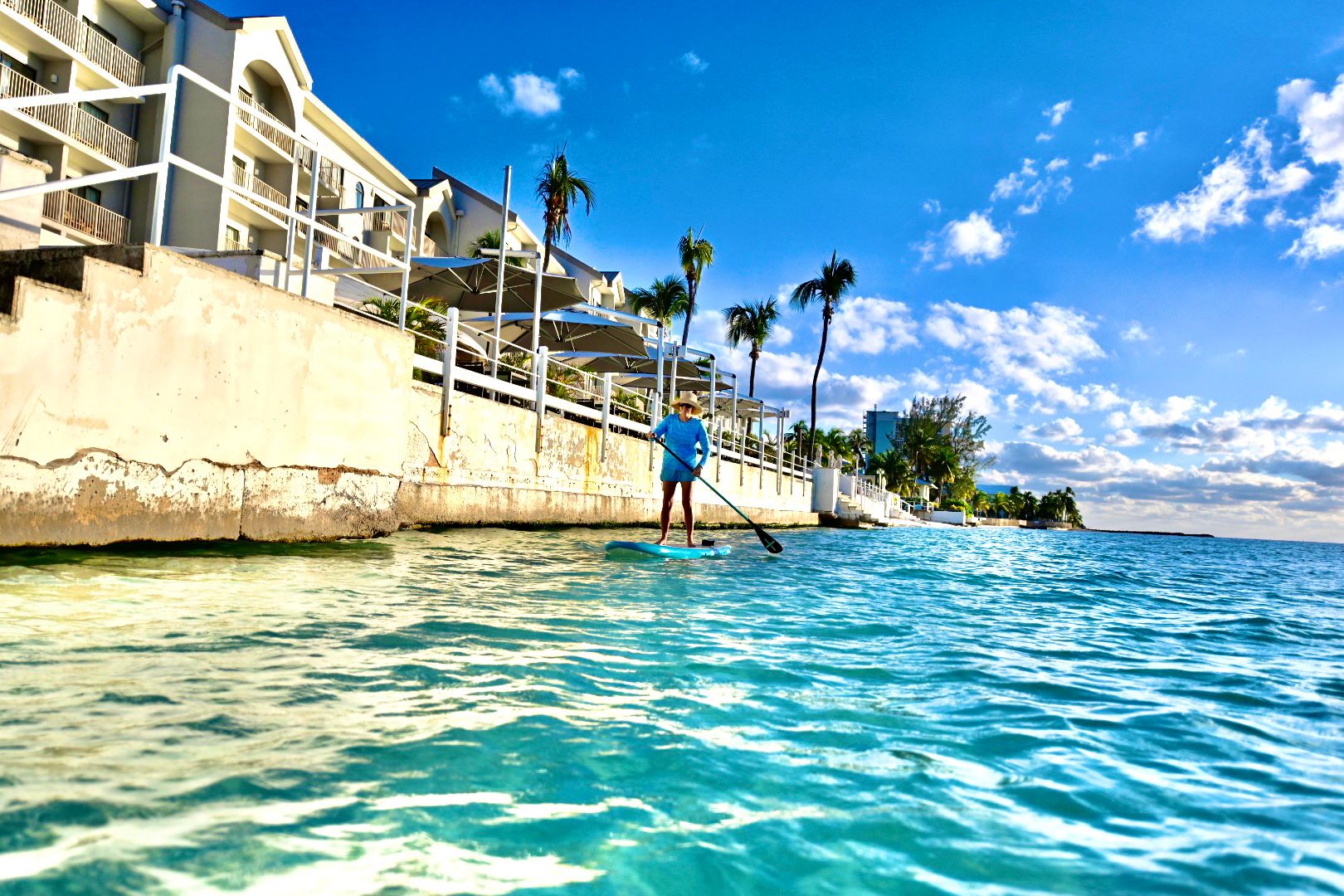
In a world increasingly impacted by climate change, melting glaciers and permafrost, and rising sea levels, this poses a potentially existential threat. Cayman has an obligation to think strategically about how to navigate these challenges and mitigate their impacts.
One option, albeit drastic, might be to rely on the British government’s current relationship with Cayman and consider relocating its population to the UK, should rising seas make the islands uninhabitable.
Another might be to build up reserves for resiliency purposes. Such reserves would undeniably need to be colossal; building sea defences is not an undertaking for the timid or the poor. A sovereign wealth fund could very well be the building blocks of that resiliency programme.
Cayman currently benefits from a free natural resource – its beaches and oceans – and tourists flock to Cayman to experience those resources. Cayman should therefore be wisely saving funds from the money it collects, to help prepare for times that are more tumultuous and worrisome.
“Fool me once, shame on you. Fool me twice, shame on me. Fool me three times, shame on both of us.”
– Stephen King, author
Successive governments have told us that they are abiding by the required spending and borrowing constraints, as though this is a virtue to be proud of.
Leaving aside the irony of the UK setting rules for fiscal responsibility, the rules simply exist to prevent Cayman embarrassing the UK government and requiring a future bailout. The rules don’t mean Cayman is well run, and don’t mean that Cayman is being prudent or sensible or wise in its spending.
Successive Cayman governments have been notoriously complacent and feeble when it comes to long-term planning. There is no real social security safety net. There’s an inadequate retirement system for all. There is no proper accounting for long-term health care costs or pension liabilities and, to cap it all, Cayman has an expanding and aging population, which will worsen all these things.
Caymanians are being deceived into thinking all is well with government finances, when the opposite is true.
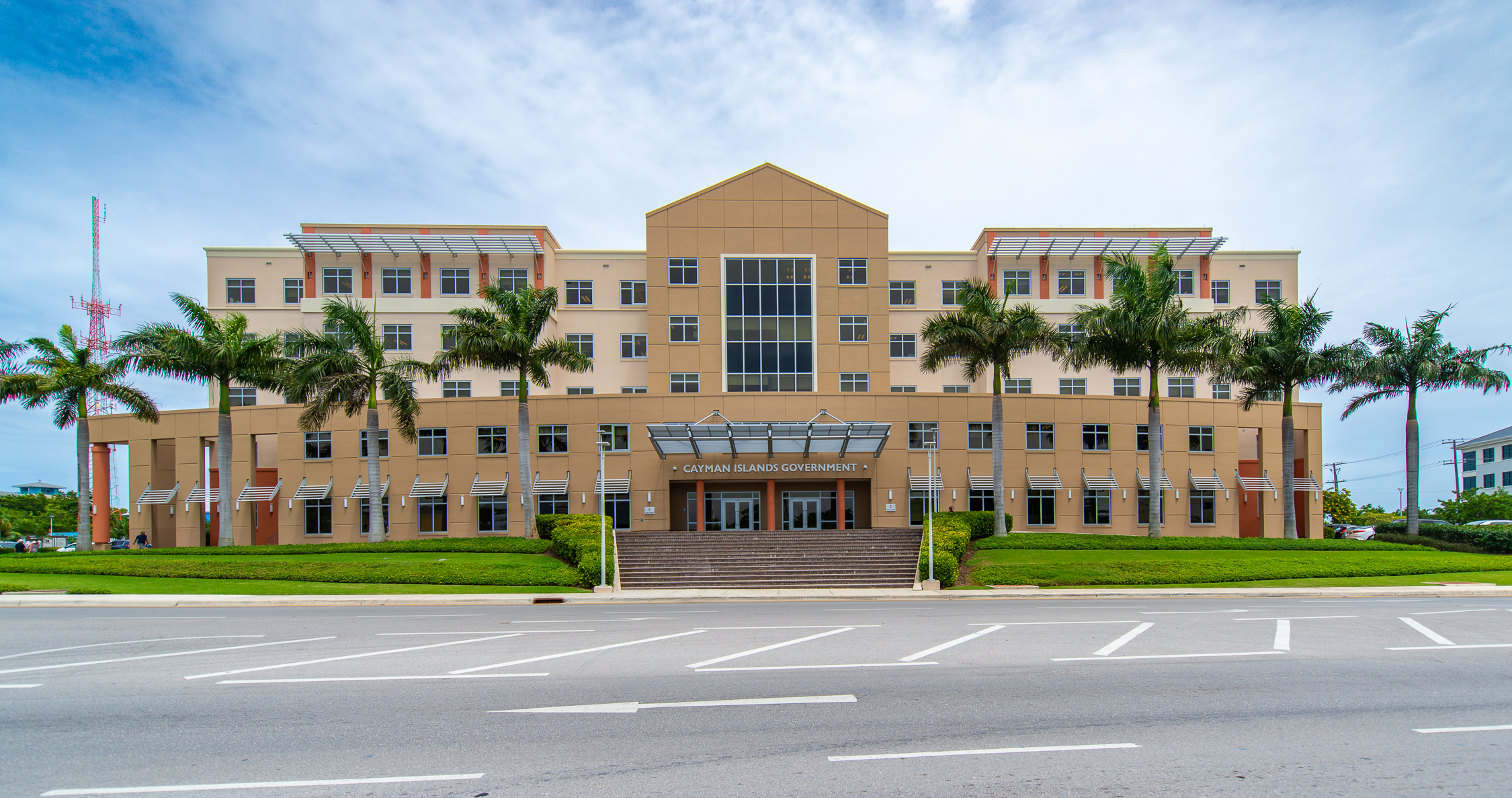
Successive governments have failed to hold themselves accountable to two simple policies every household has to adopt: (1) Spending within one’s means and (2) saving for a rainy day.
There is no ‘rainy-day fund’ in Cayman. Cayman spends because foreign visitors and foreign companies indulge us and pay our government’s taxes. That could change in a heartbeat and signal the end to the Cayman experiment.
It really shouldn’t be difficult, with a budget of over US$1 billion per year for a population of just 80,000 people, to save more than a few dollars each year for the future, and yet, we have catastrophically failed to do so.
If multiple successive governments can’t be trusted to properly provision and save through the ordinary course of government business, then perhaps it’s time and necessary to take that out of their hands and use an independent sovereign wealth fund to undertake that saving.
The essential funding basics
Before discussing what a sovereign wealth fund might be used for, first, some thoughts on how to fund it, since without funding, planning on how to use it seems a little optimistic.
No one who reads this article should be under any illusions that simply saying the words ‘sovereign wealth fund’ or indeed establishing one is a magic cure to all of Cayman’s ills. It isn’t and won’t ever be.
Indeed, establishing one and funding one will require economies, savings, and planning, as well as patience. One thing that must not be assumed is that we can simply levy more fees on foreigners to pay for such a fund.
The government currently collects around US$1 billion a year in taxation and, amazingly, manages to spend almost exactly that amount. It’s almost as though there is no boundary to what can be spent by governments – bring them more revenue and they will spend more. And yet how can money not budgeted for years in advance somehow be wisely spent?
Simply put, it cannot.
Governments waste money in prodigious quantities for all sorts of reasons, not least because the approvers of budgets are motivated by periodic re-elections. Free the purse strings from such motivations and perhaps sensible, longer-term, strategic planning can happen.
Assume for a moment that I persuaded you of the merits of establishing a sovereign wealth fund. You might be thinking that funding it could be done simply by imposing additional levies on foreign investors and foreign visitors. It could, but it shouldn’t.
Cayman’s population and government need to be intrinsically motivated and attentive to what this fund would do, as well as on delivering efficiencies to their existing operations. Levying new taxes on foreigners would fail hopelessly to raise attention, as well as fail even more hopelessly to improve efficiency.
This plan would therefore involve a combination of domestic belt-tightening and raising funds from foreigners; that way, the burden is shared and accountability substantially improved.
The first step would be to require that 5% of today’s spending be allocated into the sovereign wealth fund. This percentage should then increase over five years to 10%. That would force a long, hard look at the centre of government on what are core tasks and what could be done better, cheaper or more efficiently by others. In aggregate, that’s going to raise approximately US$100 million per year in a steady state system.
Roll the clock forward 15 years and the sovereign wealth fund would already have US$1.35 billion without accounting for any investment gains.
Any new government tax should, at a minimum, follow this same rubric – 10% to the sovereign wealth fund. There’s a strong and compelling argument to say that any new tax, or any increase in a tax should be allocated 25% or higher to the sovereign wealth fund – this would disincentivise government from further raising taxation without due care, attention and reason. Compelling but complex and not strictly necessary for the point of this article, at this stage.
The second step would be to impose a modest levy on those very sources of windfall revenue that currently support Cayman’s economy – tourists and foreign businesses.
How to fund the Cayman resiliency fund
Let’s start with the financial services sector:
- There are approximately 30,000 investment funds registered in Cayman. Imagine if each of those were charged an annual national resiliency fee of US$1,000. That’s US$30 million per year.
- There are 121,404 companies registered in Cayman. Charge each of those a national resiliency fee of US$100. That’s US$12 million per year.
- There are 39,222 partnerships registered in Cayman. Charge each of those a national resiliency fee of US$100. That’s US$4 million per year.
From three clear, precise and repeatable sources, imposing a modest levy set at a level that shouldn’t scare away investors, approximately US$46 million per year can be raised. Over 15 years, that’s almost US$700 million. Add that to the allocation from government spending, and the fund is already at US$2 billion.
Now let’s look at the tourism industry, using data from government and www.ourcayman.ky:
- There were (pre-COVID) approximately 500,000 flight arrivals each year into Cayman. Let’s assume that is a reasonable steady state for Cayman’s near future. Charge each passenger a US$30 resiliency levy (on top, admittedly, of all the other taxes and levies air travel is subject to). That’s US$15 million per year. There’s an argument to supplement that with an overnight levy on those who are tourists (since the 500,000 number clearly also includes Caymanians, residents as well as foreigners).
- Cruise shippers also visit Cayman and should also be a source of revenue. Pre-COVID, the number of tourists was almost 1.8 million per year from cruise ships. This year looks on track to hit close to 1 million. Leaving aside the emotive points connected to cruise tourism and assuming, for prudence purposes, that Cayman has a steady state of about 750,000 cruise ship visitors a year. Levy a US$15 resiliency fee on them. That would raise US$11 million per year.
Over 15 years, the revenue raised from tourists, through these two modest and transparent levies, could raise almost US$400 million.
The maths
Cumulatively, over 15 years, these proposals could generate a sovereign wealth fund with assets totalling US$2.4 billion. If one adds very modest investment returns into the mix (5% net of expenses per annum, just for caution), then the sovereign wealth fund, in 15 years, could be as large as US$3.4 billion.
These are huge numbers. Indeed, they are numbers that could genuinely transform the future health, wealth and resiliency of Cayman.
Imagine a scenario where the fund, after 15 years, is paying out 4% of its assets to certain projects. That would be a grant of almost US$140 million per year without depleting the fund at all. If investment returns are better, the numbers could be much higher.
Spending the money
First and foremost, Cayman needs to conduct a robust and honest accounting of its future pension and healthcare liabilities. The sovereign wealth fund needs to be at least that amount before any money is spent. The purpose, after all, of such a fund is to protect the future wealth and health of Cayman and Caymanians.
Once that’s accounted for, projects and plans could be undertaken that could even mitigate some of those future costs.
There should be vigorous and spirited discussion as to the priorities of spending of any such fund. It is, after all, an investment in the future of Cayman, and rushing into ill-thought-out ideas could be worse than the status quo.
However, to get the creative juices flowing, allow me to make some suggestions.
It would be intriguing to see what ideas readers may have, so please do comment with your own, as well as critique mine – after all, these are just ideas for discussion and honest informed debate improves outcomes and ideas.
- Subsidised health care for any Caymanian earning less than USD 50,000 per year.
- First partial-loss catastrophic insurance fund for all ‘eligible’ residential properties in Cayman (the devil will be in defining what is reasonable to be ‘eligible’).
- Educational fund for Caymanian children to enable them to attend any school in Cayman.
- Climate change mitigation projects.
These are just four ideas, and the point of these is to illustrate that the spending of the wealth fund should be on strategic, long-term investments in the sustainability of the Cayman Islands, not short-term pet projects that may help win votes, but, frankly speaking, are more-often-than-not simply wasteful.
Setting the guardrails of governance
Establishing a fund that might have potentially US$3 billion in assets creates, in itself, some risks.
There will need to be extremely careful attention paid to the supervision, governance, management and allocation of those assets to ensure they remain the property of the people, managed for the people, and in the interests of the people.
Norway’s model is likely a good starting point, but some considerations might be:
- Determine the permitted categories to which the resiliency fund’s assets can be spent, codify those into the statutes of the fund.
- Require a 66% referendum vote, along with a minimum participation rate in such a vote, in favour to change the statutes of the fund; thereby ensuring that a super-majority of the voting population is required to effect change over such an important matter.
- Appoint an independent board of trustees who would have authority over the investing of this fund, with fixed term limits and remuneration set by statute.
- Appoint a separate board of, say, retired senior industry leaders who would (in the future) have authority to recommend or approve spending decisions. Their approval would be required to ensure that a political request for funds meets the tests set out in the foundation document of the sovereign wealth fund.
The vision
In conclusion, it seems to me that establishing a Cayman sovereign wealth fund makes a lot of sense.
The nature of Cayman’s economy and our extraordinary reliance on non-controllable sources of revenue means we are hyper-dependent on the generosity of foreigners.
A common refrain in the United States is ‘no taxation without representation’, and, ironically, in Cayman those who pay the most taxes have absolutely no representation. This leaves us exposed.
The uses and governance of such a fund might well be complicated to negotiate and organise, but complexity shouldn’t be a hindrance to good ideas; indeed, Cayman’s very success in many areas of business is driven by innovation and solutions to complexity.
Furthermore, there are role models that could be studied and copied.
The benefits seem substantial and the downsides extremely limited. So why not?
Simon Cawdery, CFA, is an investment manager and governance professional who lives and works in the Cayman Islands. He writes regularly for the Compass.
Related Videos











Even the poorest countries around the globe have these sovereign funds in place to meet the demands of very hard times.
Hard times coming around the corner and sooner than you care to think or know.
During the 1970s and 1980s to even 1990s when Cayman boasted having over 500 banks (a far cry from today below 80 active banks) we had a golden opportunity to create a wealth fund and depositers would have paid the surcharges without even thinking twice about doing so. Sad and missed opportunity as the road to dystopia widens.
Shalom!
Dr. McDonald
Source: https://africa.businessinsider.com/local/markets/top-10-african-countries-with-the-highest-sovereign-wealth-funds/qdbv31y?fbclid=IwY2xjawIINpRleHRuA2FlbQIxMQABHdP-hzq6yZAozO5cijQQn6wJdIDSxasc1GaXD2hkiGTGjuNVSzweABQtmA_aem_WoEQZ-ly3Rr1FHLQ_mVWSA.
We have had one for many years – it supports the Civil Service!.
Simon. Confused why you say at the start we cant raise taxes – followed by we will fund this by raising taxes? See below?
SwF is never going to work here unfortunatly due to budget as you mentioned in your article. It would require a radially different approach to budget which simply is not feasable – à la – we are spending how much on a new school in the brac?
“Levying new taxes on foreigners would fail hopelessly to raise attention, as well as fail even more hopelessly to improve efficiency.”
“Let’s start with the financial services sector:
There are approximately 30,000 investment funds registered in Cayman. Imagine if each of those were charged an annual national resiliency fee of US$1,000. That’s US$30 million per year.
There are 121,404 companies registered in Cayman. Charge each of those a national resiliency fee of US$100. That’s US$12 million per year.
There are 39,222 partnerships registered in Cayman. Charge each of those a national resiliency fee of US$100. That’s US$4 million per year.”
Grateful for this contribution, Simon. Indeed, a SWF can benefit Cayman in many ways. It just has to be designed specifically for Cayman’s conditions and needs, like any good SWF. It is not necessarily the case that new taxes / revenue generating mechanisms will have to be implemented to fund a SWF. I think we have to start however, with a vision for what Caymanians want for their country in 10, 15, 50 years, and work backwards into what would that cost, how best to find it, and what policies are needed to get there.
Sovereign Fund only works when a government does not over spend its incoming revenue stream!