

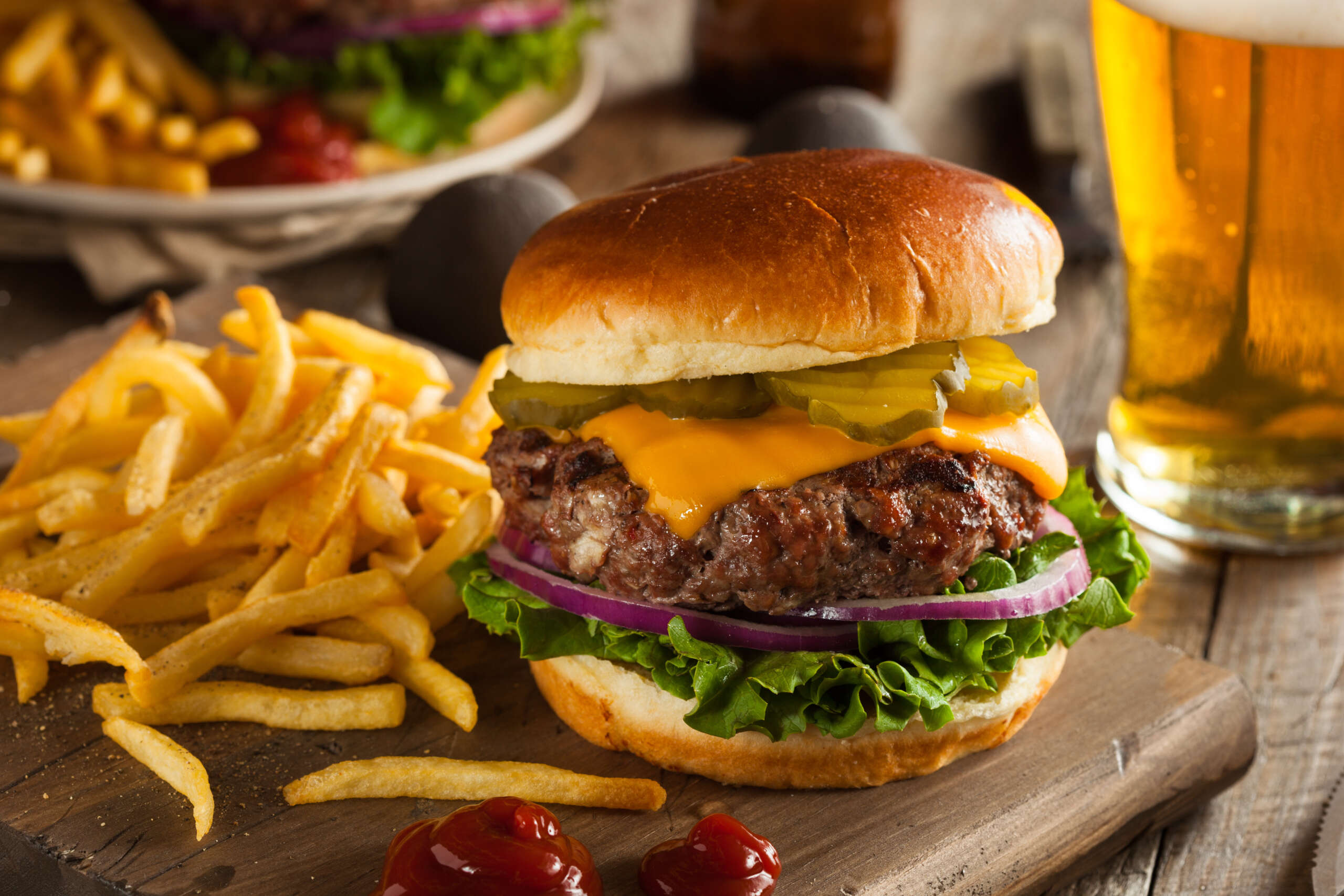
Cayman is a hot spot in a pandemic of obesity. Seven out of 10 of us are overweight and almost a third are obese.
Those were the staggering findings from the STEPS public health survey.
The consequences are manifold. Most significantly, the islands suffer a higher prevalence of diabetes, heart disease and stroke than much of the western world, and a costly healthcare tab to treat these chronic ailments.
In a mini-series on obesity, the Compass highlighted the growing use of drugs like Ozempic to fight weight loss. But beyond pharmaceutical intervention, our contributors point to a variety of possible solutions to move the needle on obesity in Cayman.
Here, we take a closer look at some of those ideas.
A rethink of school menus
Government has made school meals free to all, hugely increasing take-up. But are children getting healthy food and learning the right eating habits to set them up for life?
The STEPS survey, carried out in 2023, highlighted an issue with childhood obesity in Cayman with a staggering 13% of children already classified as obese by the time they entered reception classes.
School menus have become more diverse and more sophisticated, with everything from sushi to pizza on offer.

Jerrin Reynolds-Velasquez, a 17-year-old CIFEC student, enjoys his school meals, particularly barbecue chicken or oxtail. He says the variety is wide and he believes largely healthy, although Gatorade and canned juices are the norm. The teenager, who is also Speaker of Cayman’s Youth Parliament, said education about healthy choices was relatively limited and he believes there is scope to do more.
In the UK, celebrity chef Jamie Oliver has led a campaign to reform school menus, sometimes facing resistance from students themselves. He has been credited with raising awareness and driving moves towards healthier food in schools.
A response to a freedom of information request from the Cayman Islands Ministry of Education indicates that the public school meal programme is not overseen by a nutritionist, though workshops are held for meal providers with a Health Services Authority dietitian.
Catering company Mise en Place – the biggest provider of school lunches in Cayman – acknowledges the challenge of balancing “student demands for comfort foods with nutritious offerings” in a policy statement on its website. It says its menus limit fried food, sodium and sugar, and also try to provide meals that students will enjoy and can “fuel their learning”.
Chef Maureen Cubbon accepts there has to be a balancing act in catering to a large and diverse school community. But she sees potential in a growing partnership with the YMCA to teach healthy cooking and eating to families in after-school programmes.
Craig Robinson, programme director for the YMCA, said the aim of the partnership with Cubbon was to help promote healthy living and teach families to “get hands on with tasty and nutritious food” – developing ideas they could use at home and spreading healthier lifestyles that way.
Community-focused approach
Innovative, community-focused action is needed to ensure maximum participation in preventative health screenings, says Dr. Edward Fitzgerald, head of healthcare and life sciences for KPMG Islands Group, which has launched a new Global Centre of Excellence for Island Healthcare to focus on the unique needs of island-based healthcare systems.
Fitzgerald was involved in a study in Bermuda that found that 50 individuals were collectively responsible for 1,000 hospital bed nights over the course of a year. The island territory, with a system similar to Cayman, was suffering from the misuse of the emergency room by patients seeking to avoid the ‘co-pay’ at a doctor’s office.
They were largely suffering from chronic conditions or mental health problems that had not been properly managed.
A pivot in thinking is needed to create health systems and infrastructure that support wellness rather than just treating ill-health, says Fitzgerald. Part of that is making it easier and cheaper for people in high-risk communities or with financial difficulties to access preventative care. Mobile screenings is one way to make that happen.
He said the biggest killers in Cayman and similar islands are diabetes, stroke and heart disease.
“All those things are linked to risk factors like poor diet, lack of exercise and smoking, all of which are amenable to outpatient management in the community rather than a bed in the hospital,” he said.
Could duty-free fruit and veg make healthy eating cheaper?
The stamp duty for imports into the Cayman Islands is a curious mix. Binoculars, leather bags, gold bullion and musical instruments are among the items that are entirely duty free.
The majority of fresh fruit and vegetables attract a 17% stamp duty charge, though exceptions are made for oranges and onions, which are charged at 22%.
Less healthy food – from sausages to sweets – also attracts a 22% duty.
There’s an opportunity here, says economist Simon Cawdery, to leverage the customs tariffs to make healthy food cheaper while charging ‘sin taxes’ for high-sugar foods that contribute to obesity and chronic illnesses.

“Fruit and vegetables should then be zero-rated. Why disincentivise people to live healthy lives by taxing these items at all? The loss of revenue will be trivial, but the benefits meaningful,” he wrote in a recent column for the Compass.
Woody Foster, managing director of Foster’s supermarket chain, said a revision of the tax code was likely overdue. But, he said, it was not necessarily as simple as adding tax to chips and taking it off fruit.
He said convenience was likely just as big a driver of consumption for unhealthy foods, and an investigation into the impact and unintended consequences of manipulating the tax code was needed.
“We need an actual investigation and have a look at what the consequences might be,” he said. “The duty on cigarettes is extremely high, but people still smoke, and what are they giving up to be able to afford to smoke?”
Calories on restaurant menus
A Burger King Whopper meal with fries and a Coke might be the most affordable dinner on island, at less than $10 for the platter. The calorie count is just over 1,050. Go large and you can add a 20% premium to that total. Indulging at Starbucks can also involve a significant calorific intake – more than 400 for a mocha or a hot chocolate.
While that data is available online for those who look, Chief Medical Officer Dr. Nick Gent would like it to be front and centre on menus in fast food restaurants around the island. He said similar initiatives in the UK and Europe had helped shape customer demand for healthier choices.
“My door is open to the fast food industry,” he said. “They can put the calorie values up on the board alongside the prices.”
Broadening that to all restaurant menus is another option, required in the UK for businesses over a certain size.
Gent points out that even seemingly healthy choices could have more calories than people think.
“The chicken might be 400 calories and the sauce could be 800,” he added.
Luciano De Riso, operations manager at the Wharf and Grand Old House, says high-quality restaurants are not the drivers of weight issues in Cayman.
“We use fresh products cooked simply and moderation on portions. Obesity does not come from our food, it comes from all the processed and sugary things that is found in pretty much everything nowadays. Our foods is the lesser evil,” he said.
Labelling standards needed in supermarkets
Picking up on that point, Gent advocates for better labelling – in line with Caribbean standards – in Cayman’s stores and supermarkets.
High-risk foods should come with a “big warning label” on the front, he says.
Consumer habits – driven, in part, by the American influence – have added a health cost to basic staples like bread, which are often packed with sugar.
“The big problem is the high proportion of the population that is now already overweight or obese,” said Gent. “That has distorted portion sizes and it has distorted the kinds of foods that shops will stock.”
He is advocating for the adoption, in Cayman, of CARICOM food labelling standards. A key element of that is a black octagonal warning sticker that indicates when food and drink products are high in sodium, sugar, sodium or salt, fats, saturated fats, and trans fats.

Citing unhealthy diets as the single biggest risk factor for obesity and related diseases, the Pan American Health Organization and a handful of partner agencies helped introduce the labelling system as part of a regional awareness campaign to motivate people to make healthier choices based on factual labelling.
Do we need more PE in schools?
For exercise, as well as for food, good habits start at school.
The amount of time given over to exercise in the timetable in both public and private schools has dwindled over the years amid pressure to achieve high grades in academic subjects, says Brendan Touhey, who teaches physical education at Cayman Prep.
“Just giving students time to play sports, whether it is competitive or organised simply for fun, brings huge physical, mental and social benefits,” he said.
He believes more time could be dedicated to non-competitive sports – from yoga to jogging – with an emphasis on participating just for fun.

Finding time for exercise in the school day, four or five times each week, would have an enormous impact on wellbeing, he said.
Gent agrees that an inclusive approach to sports is needed – providing enough range of opportunities so that children aren’t put off exercise by the experience. He argues that, particularly for boys, there are huge academic and attention benefits to adding daily exercise to the timetable.
Could insurers help fund gym memberships?
Insurers can make a wider range of benefits available to incentivise healthier habits and prevent obesity from becoming a costly chronic illness.
Taryn Stein, a dietitian and nutrition coach who runs Cayman-based Mind Shift Me, highlights programmes in Europe and South Africa that reward good behaviours, such as going to the gym or buying healthy food from partner supermarkets.
Jeanette Verhoeven, of Cayman-based Bogle Insurance Brokers, says insurers can and are starting to fund more wellness options – including access to nutritionists. But she warns that take-up so far has been limited.
Others, like Donna Mitchell, a health, wellness and success coach, argue that more could be done by insurers or by government to subsidise and incentivise involvement in healthy activities.
Gent points to a disparity between the number of niche gyms and wellness studios in Cayman and the obesity rates in the population.

“Who is going through the doors?” asked Gent. “Is it the people we uncovered in the STEPS survey [as being obese]? Probably not. There are people who can afford a fit and healthy lifestyle and these are the people that are probably going to these gyms and everything else.”
Insurance coverage and doctor consultations that consider lifestyle are part of the response, he says, but the community can also do better at providing cheap and accessible opportunities to exercise, particularly in the outer districts.
Would footpaths and cycle lanes help make commuting healthy?
The South Sound boardwalk might be the most used stretch of pavement in Cayman. The small walkway along the coastline is packed with mums pushing strollers, joggers seeking safe haven from heavily trafficked roads, and families out for a sunset walk.
It’s the exception that proves the rule that Grand Cayman is built around the motor car.
Most places across the island lack even a sidewalk, and cyclists and runners take to the highways at their own risk. Absence of shade and safe routes means people rarely walk to school, work or the supermarket, even when they are close by.
The eastern districts – where the majority of Grand Cayman residents live – is the most poorly supplied in terms of walkable spaces. The Compass has done extensive reporting on this, in relation to traffic management, but the same deficiencies that contribute to clogged roads apply here.
A post-COVID ‘green recovery’ plan produced by the Department of Environment highlighted how much the community had enjoyed the opportunity to walk and bike on traffic-free roads in allocated exercise times during the pandemic. Investing in bikes and footpaths would enable that to happen more often, it said.
“What we are suggesting is a really deliberate plan for these interconnected pathways for walking and cycling,” said Tim Austin, deputy director of the DOE, at that time.
Related Videos













Calory counts on menus at all restaurants would help, but regular exercise is the key. It’s all too tempting to tuck into your favourite foods as I do, but a regular jog and/or swim can counteract excess calories, but it needs discipline. For sure you will need willpower but the effort is worth it.