


The Planning Appeals Tribunal is considering a challenge to a decision by the Sister Islands’ Development Control Board to grant permission for a 47-lot subdivision on Little Cayman.
Lawyers representing the Cayman Development Group, the Development Control Board and objector Greg Locher appeared before tribunal members at a hearing at the Aston Rutty Centre in Cayman Brac on Wednesday, 29 Jan.
The planning board had given the development company the green light to move ahead with the subdivision following a 27 Feb. 2024 meeting.
The Department of Environment had recommended in that meeting that the board not approve the application, due to concerns over land clearances that would impact local wildlife, like the endangered Sister Islands rock iguana, and the abundance of undeveloped subdivisions already on the tiny 10-mile-square island.
The board, outlining its reasons for granting permission in the minutes of the 27 Feb. 2024 meeting, had stated that the Department of Environment had not presented “empirical evidence” that the infrastructure required for the subdivision would hinder the migration of species.
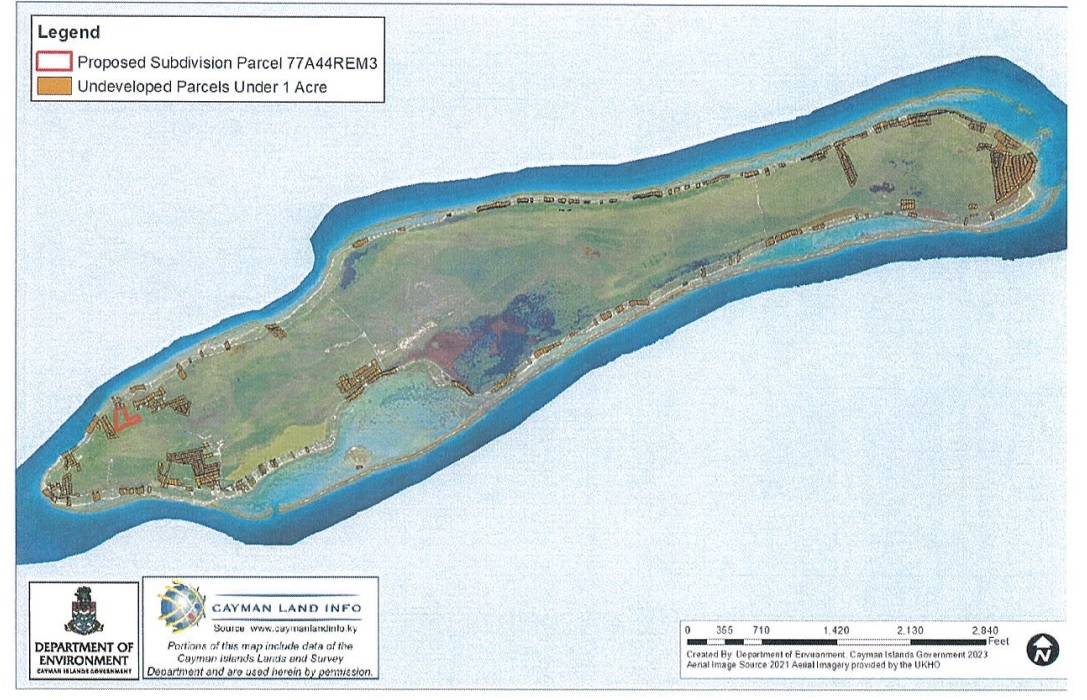
In its submission to the Development Control Board last February, the DoE had pointed out that, as of November 2021, there were already 1,064 undeveloped subdivision lots of under one acre in size, and that number had likely increased since then, as the planning board had approved several more in the interim period.
The DoE has estimated that, if every lot on the island were developed for housing, it could add at least 2,257 people to the population, which is currently believed to be around 300 residents. This would effectively double the population across both Sisters Islands and increase the population of Little Cayman eight-fold, the tribunal heard.
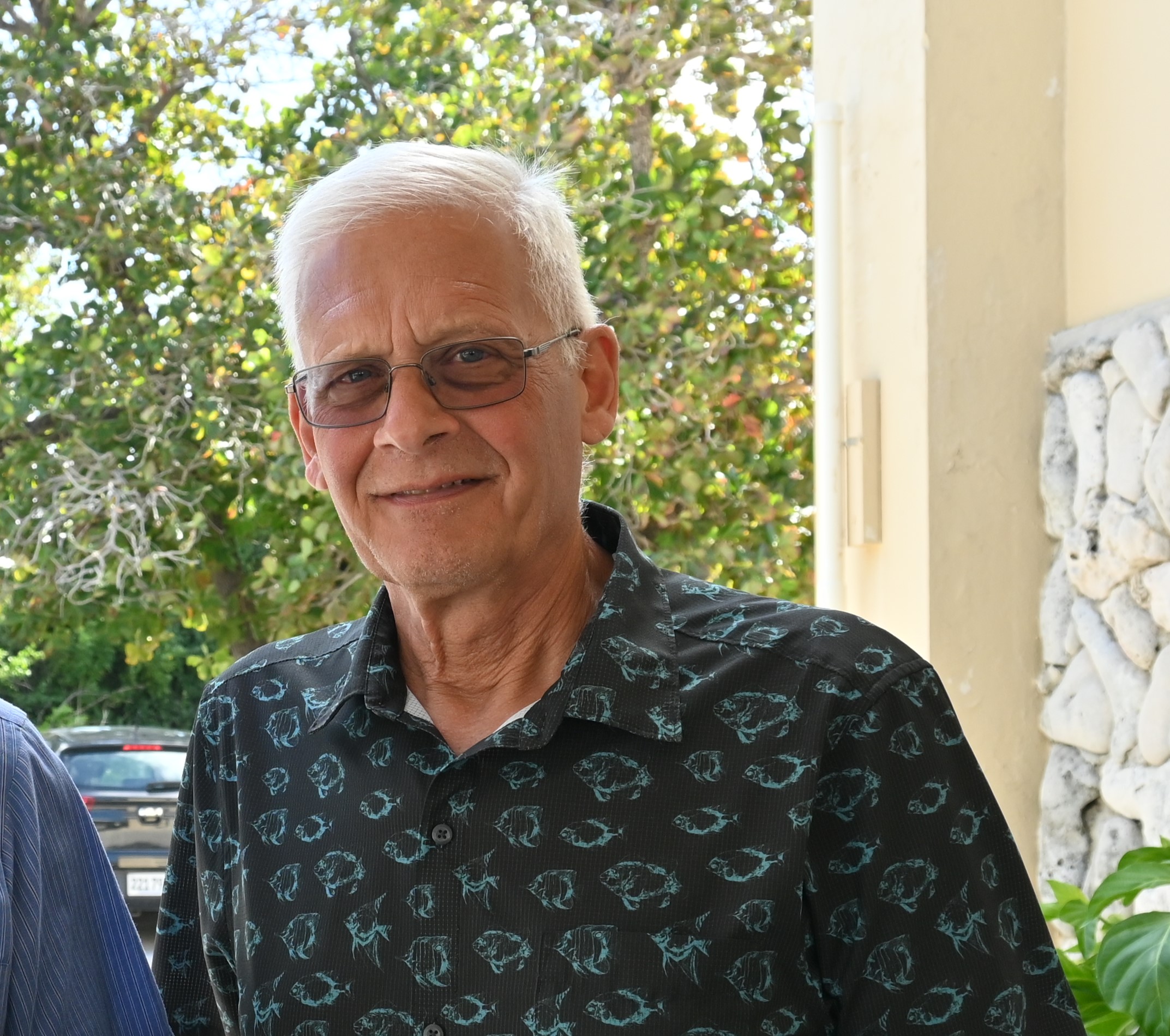
Locher, who built a home next door to the planned subdivision in 2003, said in his objection to the plan that he had calculated that there are currently at least 1,500 undeveloped subdivision lots on the island, and noted that there is insufficient infrastructure in terms of roads and sewage systems to support such a population expansion.
Cayman Development Group had originally applied to create a 54-lot subdivision along Sam McCoy’s Drive, but that has since been revised down to 47 lots.
Separate development guidelines for Sister Islands
Lawyer Kyle Broadhurst, representing Locher, told the appeals tribunal on Wednesday that the only development rules for Little Cayman currently in existence are brief guidelines, which are included in the appendices to the 1997 Development Plan for Grand Cayman.
Broadhurst argued that the considerations taken into account by the DCB when granting the planning permission for the subdivision went outside the remit of what the board is allowed to consider, based on those guidelines.
He cited those guidelines, which state, in part, “It is recognised that Little Cayman is considered a unique island. Every effort should therefore be made to retain its unspoiled character and to make it an attraction for persons interested in natural life. Selected development should encourage such persons to visit Little Cayman. Development should be in harmony with the unspoiled character of the island.”
Broadhurst argued that the planning board had made no mention of the guidelines when giving its reasons for its decision, but had noted that the application complied with the typical planning parameters outlined in the Development and Planning Regulations. This, he said, was an error as those regulations do not apply to Little Cayman, other than to refer the board to the guidelines.
“Had the guidelines been considered, it would have been immediately apparent that the application was in variance from them. The proposed development will destroy the primary habitat of protected endangered species and damage the natural environment. It does so for the purpose of creating a subdivision for which there is no need. It directly contradicts the primary purpose of the guidelines,” he said.
Broadhurst argued that the board had failed to show in detail that it had taken the DoE’s input into consideration when it gave its reasons for granting the application.
He referred to a previous ruling by the Planning Appeals Tribunal in which it overturned Peppercorn Investments’ permission to build a resort on Little Cayman because there had been a lack of detail regarding how the DCB had come to its decision, so the tribunal members could not determine if the board had properly considered all the issues involved.
Broadhurst noted that Cayman Development Group, in its application, had told the DCB that it was offering people an opportunity to own land on Little Cayman and was offering financing of $350 a month.
He added that no evidence had been presented to the board to explain why such a large subdivision was necessary, as there is no need for additional housing for the island’s current population.
‘Crossroads case’
The DCB stated in its reasons for giving the developer planning permission that the application was for a subdivision and “not actual construction”. Therefore, concerns over a lack of infrastructure “were not significant enough” to turn down the application.
The board had also pointed out that no evidence had been submitted to show that the “existing and new subdivision lots will develop at such a rapid pace that reasonable improvements could not be made to infrastructure”.
Addressing the contention that the application was merely to subdivide the land rather than for construction of homes, Broadhurst argued that there is an inherent understanding that the intention is to build structures on it at some point.
“If one is to have any sensible development review, before giving permission, one has to consider what comes next. So, one can’t simply say, ‘Well, at the moment, it’s just a subdivision. Who knows what’ll happen in 50 years?’ That isn’t a reasonable approach,” he told the tribunal.
“The board’s failure to address the existence of undeveloped subdivisions and whether there is a need for further lots is a failure” of considering material considerations, he added.
“It is completely unreasonable to grant planning permission for major residential subdivisions on Little Cayman, resulting in the creation of yet more vacant, undeveloped parcels than could ever be conceivably required on Little Cayman, and create more roads that lead nowhere.”
Broadhurst described this matter as a “crossroads case”, saying it was an opportunity for the tribunal to consider “something that is long overdue”.
Flexibility and discretion
Anna Russell-Knee, the lawyer representing the Development Control Board, and Selina Tibbetts, representing the Cayman Development Group, told the tribunal that the guidelines for the Sister Islands outlined in the 1997 Development Plan had specifically noted that the people of Cayman Brac and Little Cayman believed that a system of free enterprise was best suited to their needs at that time, as neither island was anticipating the type of development that was being considered on Grand Cayman.
They pointed out that the document states, “A flexible set of guidelines is required which permits the people of the islands discretion in their planning, until the final pattern of development is determined, through their representative on the Development Control Board”.
Russell-Knee said this means that the planning board was within its rights and power to use its discretion in coming to decisions on planning applications and could take into account existing planning regulations, previous planning decisions and other material planning considerations.
The board does not currently have a dedicated member for Little Cayman — something residents of the island called for during a public consultation on a revised National Development Plan last year.
Russell-Knee disputed that the planning board had not taken the DoE’s input into account, noting that the conditions under which planning permission was granted included the department’s recommendation that no land be cleared without planning permission first being granted.
She also argued that it would have been unlawful and outside the powers of the board to take into consideration the possible future construction and development on the subdivision lots as there was no application for construction or development before them.
The land where the subdivision is located is not a protected area or a critical habitat for endangered species, she noted, so protections under the National Conservation Act do not apply here.
She accused the objector of launching a “full frontal” attack on the merits of the application itself, rather than on the legality of the planning board’s decision – as was the purpose of the tribunal hearing.
The Planning Appeals Tribunal will deliver its ruling at a future date.
Related Videos











Shocking that it has come to this. Can anyone imagine what would happen if every one of those sub developments were built on. The beauty and uniqueness of Little Cayman would be destroyed! Once again the DoE isn’t listened to. Once again I can only assume that the Development Control Board has its own agenda. The 1997 legislation is a joke and the Little Cayman residents want it changed to preserve the uniqueness and beauty of Little Cayman. We don’t need sub divisions. We don’t need parking lots, we don’t need big developments…. We want to keep our paradise.
When will you all accept that Cayman will only rest when all three islands are completely covered in concrete, roads and buildings. Bring on the rising sea-levels and more storms.