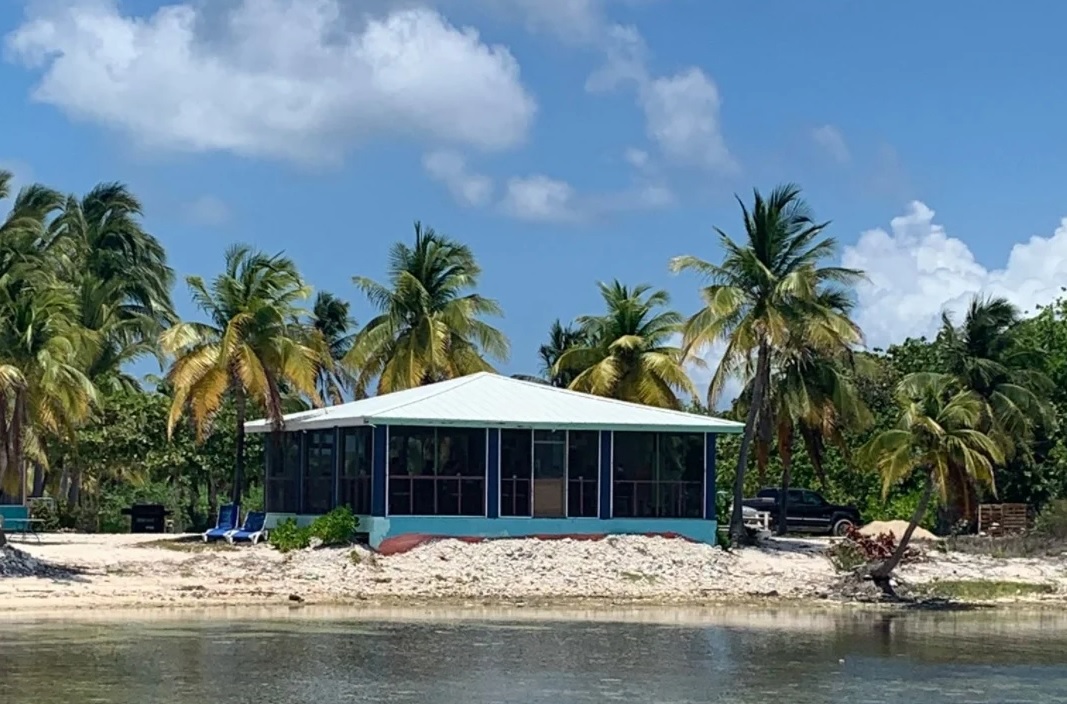
The Planning Appeals Tribunal has quashed a decision by the Sister Islands Development Control Board to grant permission for a resort on Little Cayman that had originally included plans for overwater bungalows in a protected marine reserve.
The tribunal, on 19 Oct., ruled that the application should be returned to the planning board for consideration.
The Development Control Board approved an application by Peppercorn Investments Ltd in February this year to build the land-based part of the resort, which was considered separately from the overwater element of the project. Later in February, Cabinet refused a coastal works licence application for the controversial overwater bungalows.
The DCB members, in their decision, said they approved the proposed land-based resort – which would include 12 two-bedroom and six three-bedroom houses, a reception building and wellness spa, restaurant, beach bar, seven pools, a kitchen, and thatched pavilions and huts – because it complied with planning parameters, and that objections submitted could be reasonably mitigated by imposing certain conditions.
However, the Planning Appeals Tribunal, in its recent judgment, stated that there was a lack of details regarding how the DCB had come to its decision, so the tribunal members could not determine if the board had properly considered all the issues involved.
The proposal to build overwater bungalows at Kingston Bight was strongly opposed by the Little Cayman District Committee of the National Trust, which launched a petition against it, and by the Little Cayman-based Central Caribbean Marine Institute and local residents.
Neighbours file appeal
The appeal against permission for the land-based part of the resort was filed by the Johnson family, who own a neighbouring property on Wonder Lane. They were represented by Kate McClymont of Nelson & Co. law firm.
The Department of Environment and National Conservation Council had argued in their response to the original application that the overwater element of the project should have been determined before the land-based part was considered.
Director of the Department of Environment Gina Ebanks-Petrie, acting on authority delegated to her by the National Conservation Council, had made five recommendations to the planning board regarding efforts to be made to help protect Sister Islands rock iguanas, which nest at the site of the proposed development.
Three of those five recommendations were included in the DCB’s decision, but two were omitted. These included a requirement that there would be no mechanical clearing, heavy equipment, construction work or stockpiling of construction materials outside of the parcel boundaries; and that any cats, dogs or pets on the property would be contained or leashed at all times to avoid causing inadvertent harm to the iguanas.
No reason was given for the omission of those two recommendations, the tribunal noted.
While the tribunal accepted the submissions of lawyer Celia Middleton, representing the planning board, that the DCB were not bound to follow director’s recommendations, it also agreed with McClymont’s contention that the board’s reasons for granting permission were “wholly inadequate given the particular subject matter”.
McClymont argued that the DCB erred in not adopting those two recommendations and that, even if it had discretion to adopt or reject any recommendations from the director or the National Conservation Council, it had failed to give adequate reasons for rejecting them.
Not an expert
The tribunal members agreed, stating, “The DCB is not an expert in matters of the environment and in particular conservation of protected habitat or species. The DoE on the other hand has considerable expert knowledge in this field. We expect the DCB to have carefully considered the recommendations of the Director and give clear analysis and reasons for not following the advice of the experts.
“They did not do so and have left uncertainty as to whether they addressed their mind properly to the important question of the preservation of the [iguanas’] habitat and so whether they acted reasonably when they decided to grant approval for the development.”
On the basis of those omissions, the tribunal ruled that the planning board’s decision was “erroneous in law”.
In its judgment, it stated that the DCB’s reasons “lack in details to such an extent that we cannot say with certainty that the DCB properly considered material issues. Consequently, the DCB decision to grant the planning approval is quashed and the matter is referred back to the DCB for reconsideration.”
It added, “We impress upon the DCB that their reasons for decision must demonstrate
their reasons with sufficient clarity that the reader knows what their thought process was and the reasons for coming to their final conclusions.”
The Compass has reached out to Peppercorn for comment and is awaiting a response.
Related Videos