In a country with more than 37,000 expatriate work-permit holders, as well as growing numbers of permanent residents and Caymanian status holders, politicians have placed immigration reform high on their agendas.
This isn’t surprising, considering immigration is not exactly a standalone issue – it touches on numerous elements, including management of population growth, infrastructure to meet that growth, workforce development, shortages of affordable housing, education and social assistance needs, minimum wage considerations, and a host of others.
By Spring of 2024 – the latest estimated figure available from the government’s Economics and Statistics Office – the population of Cayman was 87,886, and growing, with Caymanians now in the minority. At that time, there were 39,897 Caymanians and status holders combined, with 47,969 work-permit holders and permanent residents. According to the Ministry of Labour, as of 31 March this year, there were 37,095 work-permit holders on island.
The UPM government issued a white paper on immigration in February, which outlined a plethora of reforms, including calling the legislation its original name of the Caymanian Protection Act and forcing work-permit holders who leave their job to depart Cayman for a year before returning to work here. Some candidates have described that document as an electioneering tool in the run-up to polling day.
All three of the political parties running in the 30 April election say they intend to create national strategies for workforce development on island, as well as introduce changes to immigration legislation relating to permanent residency.
Here we look at what the political parties’ manifestos say on the immigration issue.
PPM vows to ‘break the cycle’ of work-permit infringements
In its manifesto, the People’s Progressive Movement says it will create a new National Workforce and Skills Development Strategy, to upskill and reskill Cayman’s workforce, which companies seeking work permits would need to adhere to.
It also says it will create a new ‘First Job Plus’ programme to ensure every Caymanian school leaver goes into higher education, further training or a job.
The party also says it plans to extend the seasonal National Community Enhancement, or NiCE, programme to operate year round to help address long-term unemployment for Caymanians.
It advocates increasing the current minimum wage of $6 an hour to $9 an hour, effective from 1 Nov. 2025, and tying future increases to inflation.
The party plans to amend the Immigration Act to raise the bar for obtaining permanent residence.
The party says three ‘key issues’ need to be addressed – too many work permits, workers employed in roles outside the terms of their work permits, and workers remaining in Cayman after their permits expire.
To tackle employers that “game” the system, the PPM intends to set up a taskforce, made up of police, border control, labour, pensions and others.
“For too long, some companies have seen fines for work permit regulation infringements as just another cost of doing business,” the Progressives said in the manifesto, adding that it intends to “break the cycle” by revoking trade and business licences from employers that persistently break the rules, as well as crack down on companies “fronting work permit applications”.
The PPM says it also plans to work with Deputy Governor Franz Manderson, who heads the civil service, to reduce the number of expats being appointed to new government roles.
Apart from taking steps to address work-permit issues, the PPM says it recognises that a major concern among Caymanians and expatriates is the “out-of-date process for granting permanent residence and the subsequent pathway to Caymanian status”, saying the bar is currently set too low. The party says it will reform the PR and status system “to ensure they both protect Caymanians and are fair to those who legitimately wish to make Cayman their home”.
TCCP: Reforms needed to put Caymanians ‘first for jobs’
In its manifesto, The Caymanian Community Party stated that the islands’ immigration system “needs to ensure Caymanians are put first for jobs and career opportunities, while still enabling our business community to thrive”.
It plans to develop a National Workforce Development Strategy and Human Capital Plan, and reform Cayman’s work permit-system to make it “stronger and fairer”.
TCCP says it intends to reform eligibility requirements for temporary work permits, accelerate the decision-making process for regular work permits, and make certain categories of work permits more difficult to obtain. It wants to strengthen and expand Workforce Opportunities and Residency Cayman’s enforcement function in relation to work permits, and “review and correct loopholes” in the Immigration Act and regulations.
The party plans to implement a term limit, or rollover, arrangement for expat workers within the civil service, with exemptions for eligible individuals.
The party says it will revamp the permanent residency points system, and remove the requirements to invest in property as a means of earning PR points to help address housing shortages.
To help develop Cayman’s local workforce, TCCP says it intends to introduce employer incentives, and conduct national skills surveys to align workforce development with job market needs. It would also mandate employers to register all jobs as part of the national workforce register, including those based overseas.
The party says it plans to reintroduce a minimum two-year national public service requirement for all scholarship recipients “which is accompanied by a structured professional development plan”, and introduce a non-profit to provide year-round employment for marginalised Caymanians entering or re-entering the workforce to help them obtain gainful employment.
CINP: Immigration strategies will help end ‘reckless population growth’
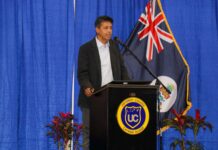
Cayman Islands National Party leader Dan Scott says his party intends to reform immigration “to protect Caymanians’ opportunities and end the reckless population growth that threatens our way of life”.
The party says it plans to implement a National Workforce Development Plan to help prepare Caymanians with necessary skills and qualifications to meet labour market needs.
It says it also plans to encourage businesses to hire and invest in local talent instead of relying on imported labour by introducing a Foreign Worker ‘Opportunity Fee’ System, with a tiered foreign worker levy to prevent over-reliance on low-cost foreign labour while managing costs without causing inflation. Employers would pay a mandatory annual ‘Opportunity Fee’ per foreign worker, in addition to the work-permit fee, thereby “discouraging excessive hiring of low-cost foreign labour”.
Like the other parties, CINP says it plans to review the requirements and legislation for permanent residency and Caymanian status.
It says it will introduce “a higher level of accountability for organisations” hiring and training Caymanians, for example, by adding more apprenticeship requirements to Business Staffing Plans.
It also plans to amend legislation so that government is held to the same requirements as private sector employers, thereby preventing “a large number of people being able to develop rights to remain in the Cayman Islands forever without any formal independent vetting”.
The party says it will also better enforce rules pertaining to foreign employees working outside of their work-permit restrictions.
Who said what on the campaign trail
Dwayne Seymour, PPM, Bodden Town East
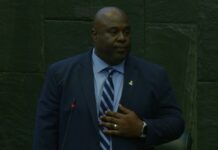
 Dwayne Seymour, who as labour minister, tabled the immigration white paper in February, said of the document: “It’s not perfect. If an employee is forced to change jobs because of a bad employer, they shouldn’t be penalised with a one-year gap. That needs review.”
Gary ‘Peanut’ Rutty, CINP, George Town South
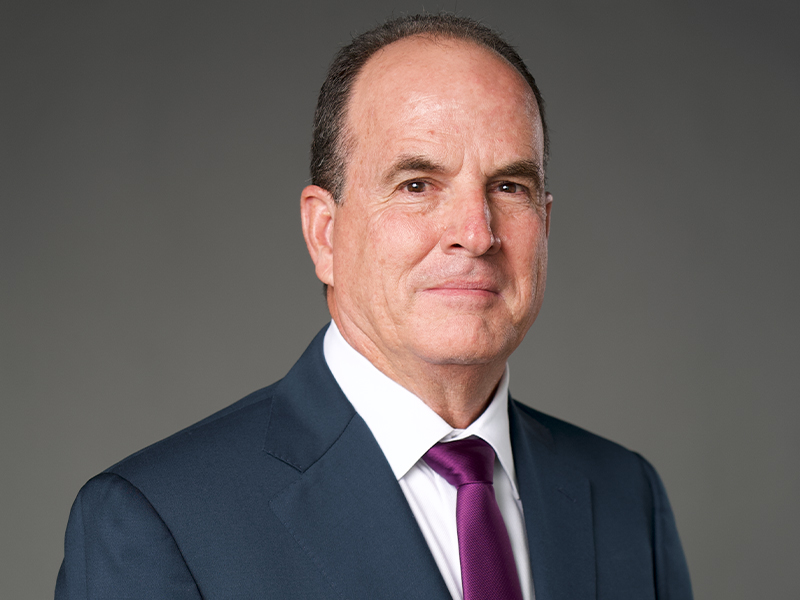
“If we’re going to send our children off on scholarships to get education, we need to give them the opportunities when they come home, especially in government.”
Anthony Ramoon, TCCP, George Town Central
 “When we look at large companies here that have a significant number of work permits, how do we then align Caymanians to those positions over a period of time? We have to look at that holistically. And again, it goes back to immigration.”
Johany ‘Jay’ Ebanks, independent, North Side
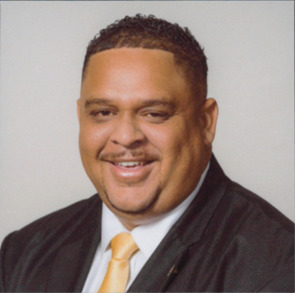 “We need to limit the granting of status and if you are going to get status, it has to be either by marriage or descent only.”
Related Videos