

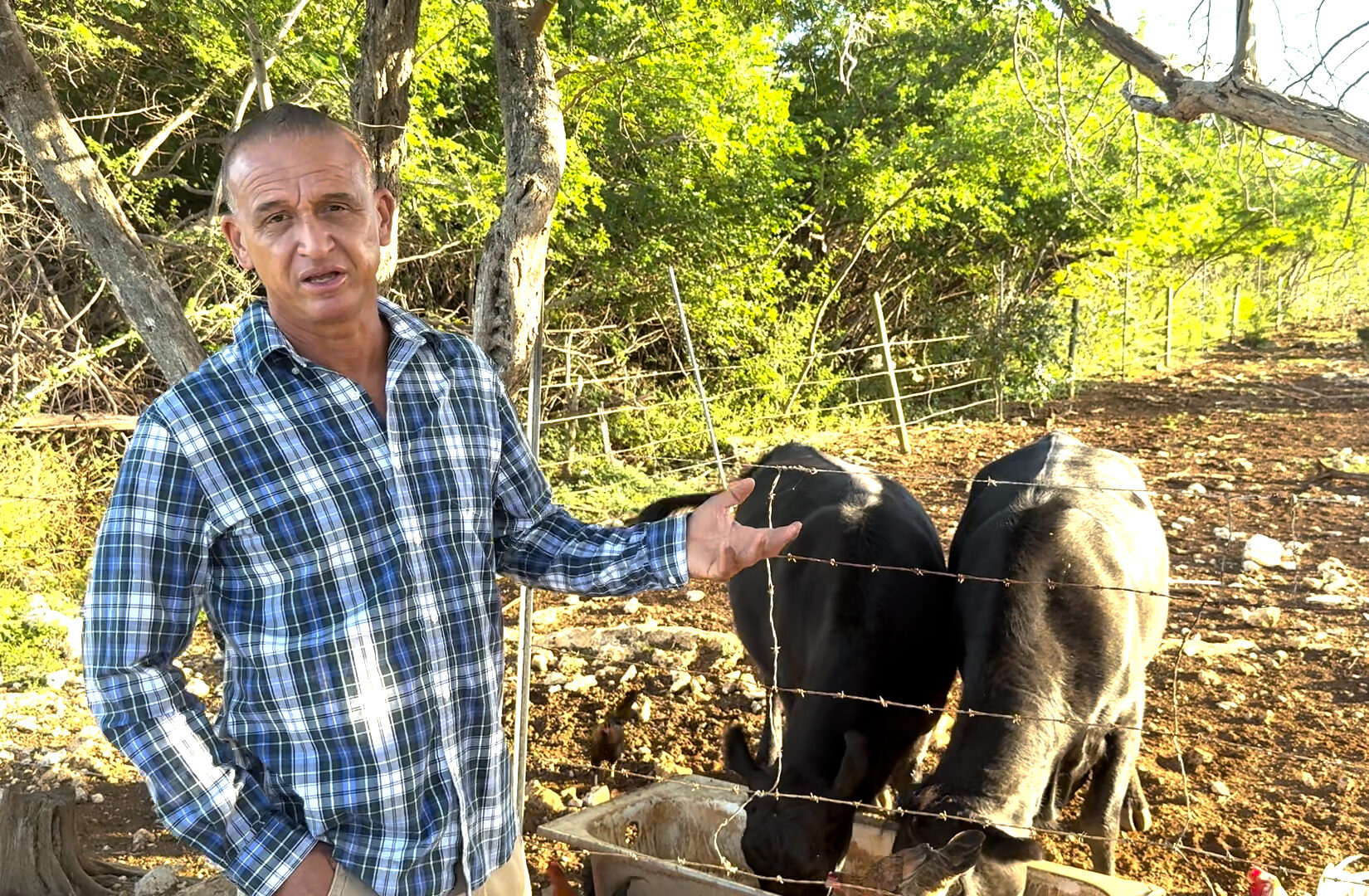
Christmas is coming and the cow is getting fat.
At Gillard McLaughlin’s butcher shop on Hell Road in West Bay, huge sides of beef hang from stainless steel meat hooks. A group of men watch as he calmly carves off prime cuts with a bone saw.
Arden Rivers, who brought the cow that he and his business partners raised to the butcher shop via the Department of Agriculture abattoir, notes down sales in neat handwriting in a lined exercise book. It’s the first cow he has had butchered and he admits the payday comes with a cost.
“You fall in love with the animal,” he says. “You take care of it every morning, give it water, give it feed, so when it’s time to part ways, it is a bittersweet moment.”
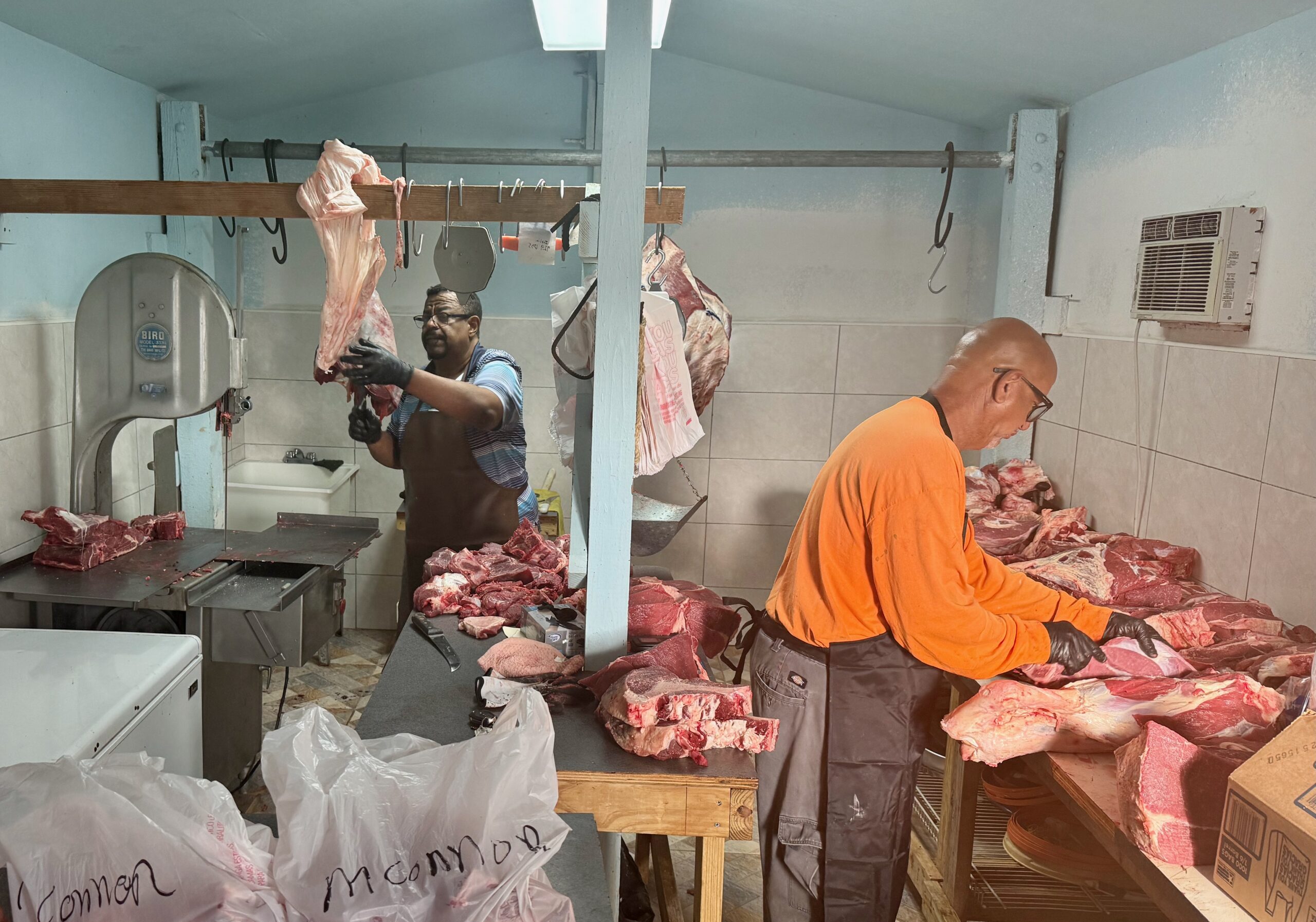
Customers come and go throughout the morning, leaving laden with bags of meat for the family table. Some have been lured in by roadside signs. Others know exactly where and when to come for their Christmas cuts.
McLaughlin relishes this time of year. The mornings are early and the days are long. He nurses a polystyrene cup of hot coffee as he greets customers, gently reminding them to keep the door shut and maintain the cool temperature inside the shop.
“There’s a warmth that everybody brings,” he says. “It really starts to feel like Christmas in here.”
One decent-sized cow can feed dozens of families, and there is no shortage of takers.
It is not just Caymanians who partake. Many guest workers have embraced the tradition too, drawn by the prospect of fresh, affordable beef. A T-bone steak the size of a dinner plate sells for $9.
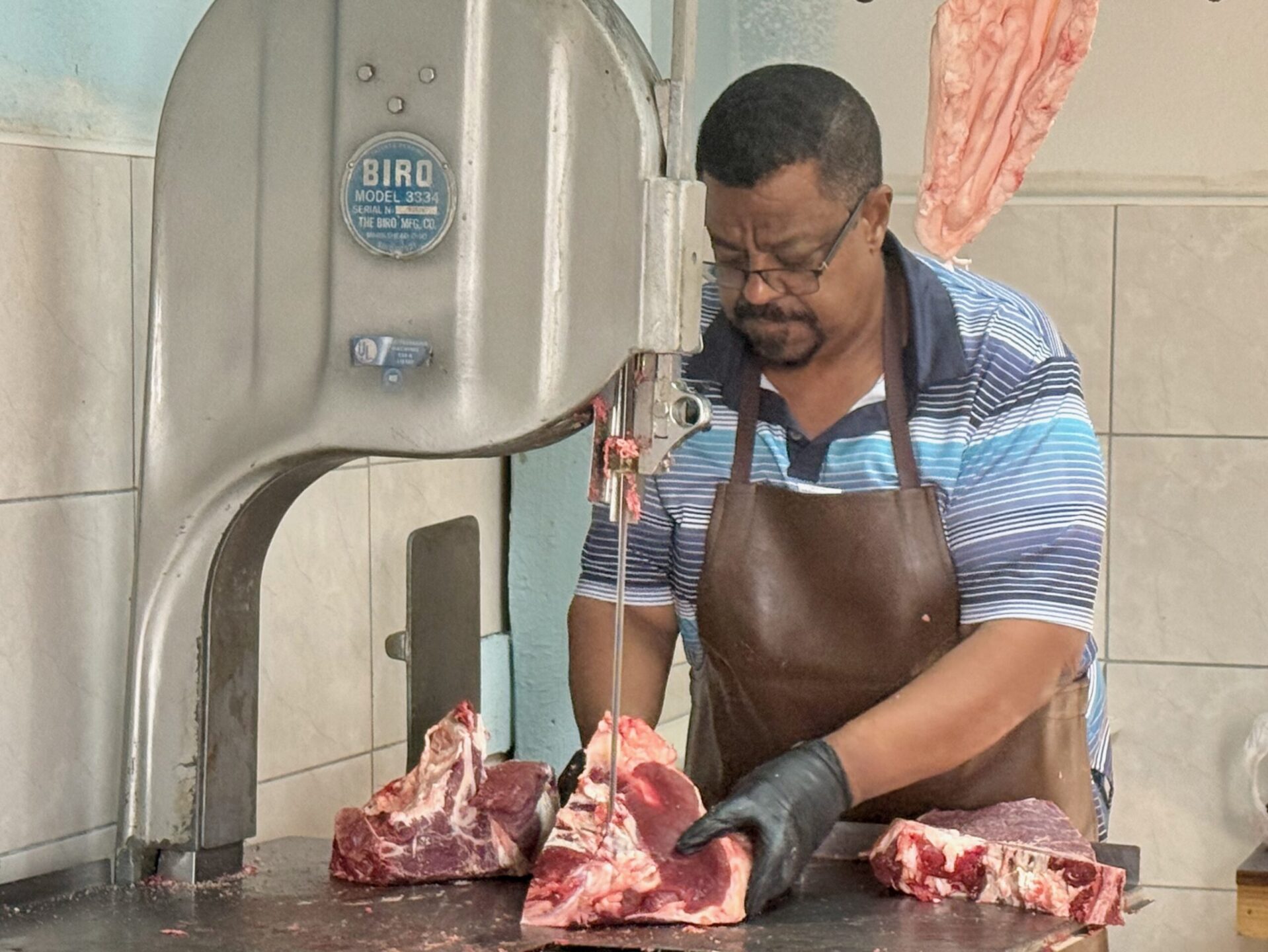
“When I was growing up, Christmas was really the time when beef was made readily available,” McLaughlin recalls. “We were on fish and chicken for the better part of the year, but beef and pork, that was Christmas.”
There has been brisk trade this year, but there is still plenty for the butcher to put aside for himself and his family. He likes his beef slow-cooked.
“We’ve got a pot on right now,” he says. “I took 10 or 12 pounds out of this one.”
For love, not profit
McLaughlin plans to stay open through Christmas Eve to meet demand. At a time when it can feel as though Cayman’s traditions are fading, he is pleased to see that this festive custom is thriving.
While imported beef is available year-round for those who want it and can afford it, the cycle of local production remains much the same.
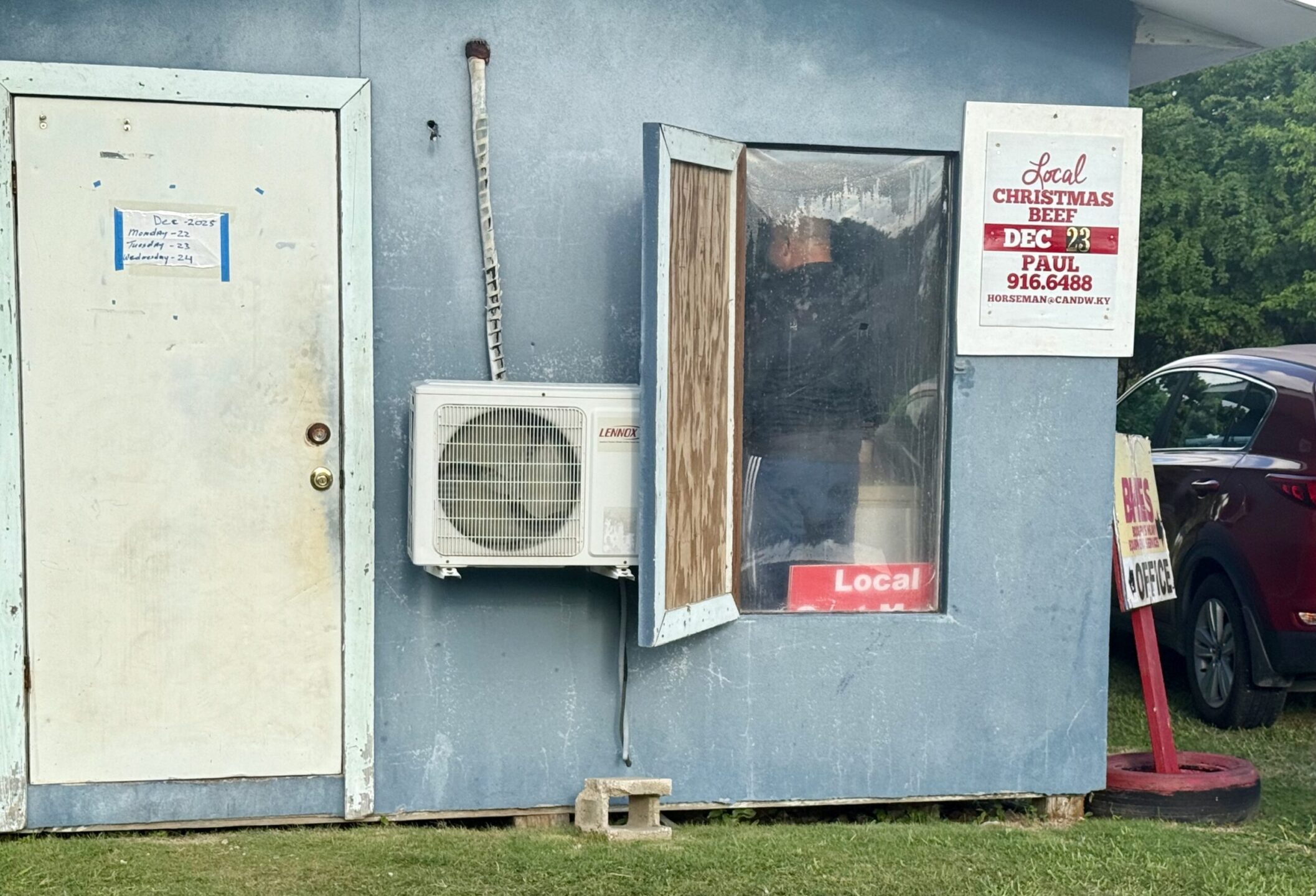
“Most farmers try to hold on to their animals until this time of year,” McLaughlin says. “You get a bigger animal, a bit more money, and that’s always been the way in Cayman.”
The proceeds from sales go to the farmer, with a cut for the butcher. But there is no real profit in rearing livestock in Cayman, says farmer Paul Rivers.
“I do it mainly for the love of it,” Rivers says, pouring livestock feed into metal troughs for his small herd. “True farmers don’t do it for the money, we do it because we love it.”
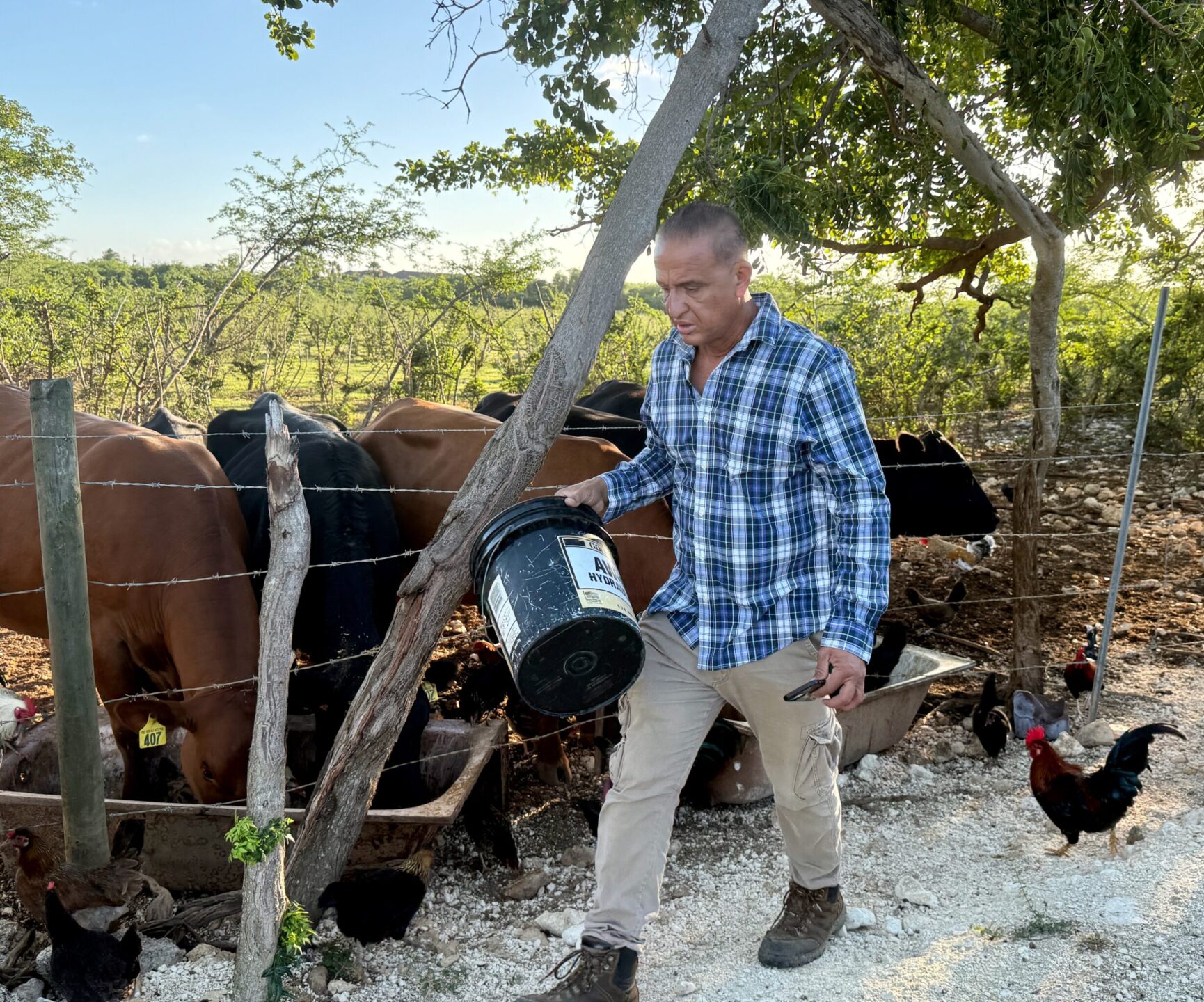
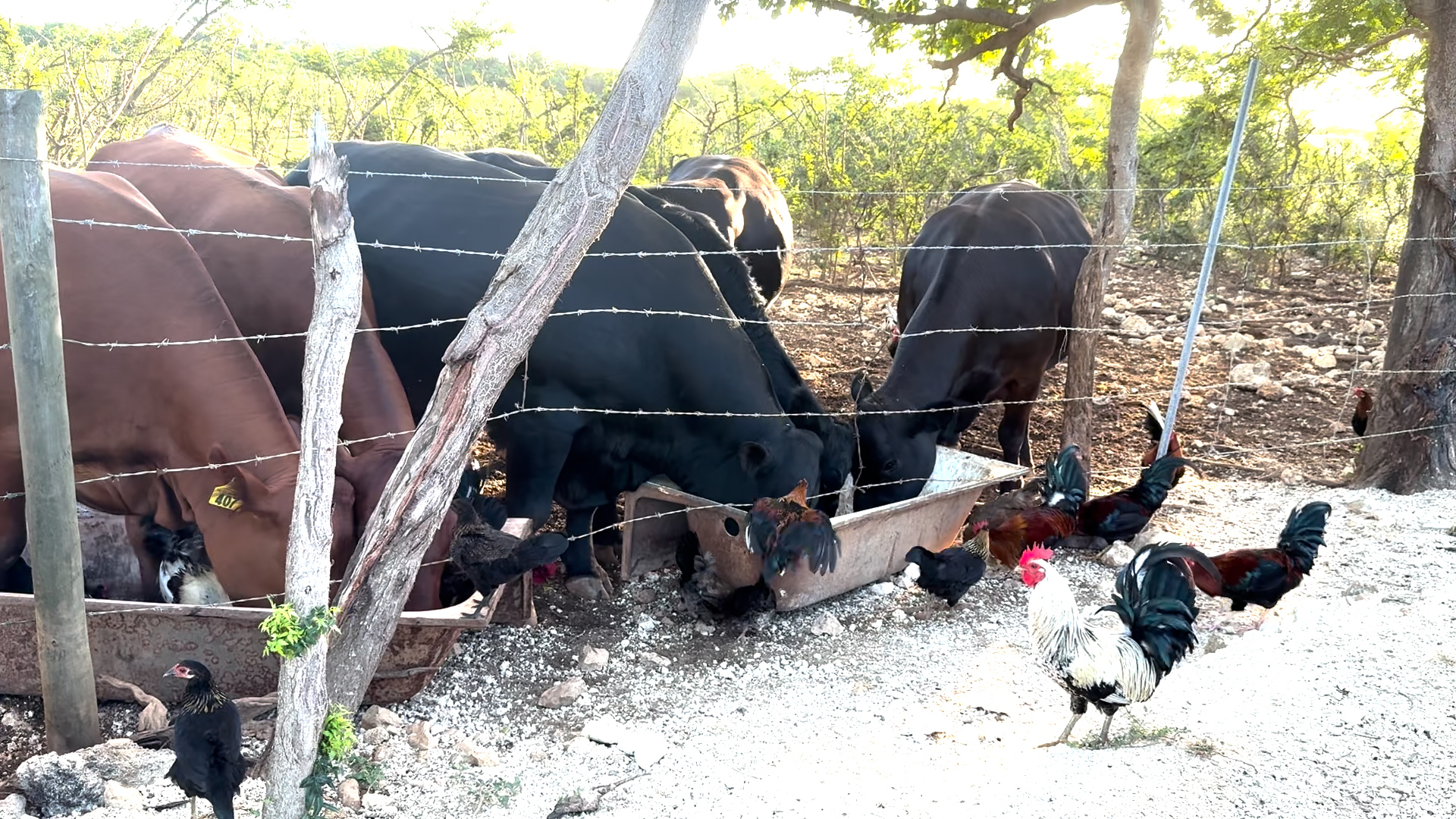
It is a peaceful scene on the 12-acre plot. The fading sun filters through the logwood trees as the cows jostle for space alongside feral chickens. Rivers enjoys the work and the connection it gives him to a lineage of Caymanians who once lived largely off the sea and raised cattle for a rare festive feast.
Both McLaughlin and Rivers believe there is a ready market for fresh, local beef beyond Christmas. Local meat, McLaughlin says, has sold itself in recent years, particularly as prices for imported beef from the United States have climbed. Prime cuts can cost about half as much as they do in supermarkets.
An estimated 150 to 200 cows will be slaughtered for Christmas dinner plates this year. Outside the festive season, however, the output of Cayman’s livestock industry is negligible.
“Right now, Christmas beef is basically one payday a year,” Rivers says. “We put in the work all year – the feed, the care, the time – and then you sell one animal and that’s it. If I add up the inputs and my time, I don’t even break even.”
Feeding Cayman at Christmas and beyond
It does not have to be that way, he says. Rivers believes officials have been too slow to embrace methods that could allow Cayman to produce significantly more beef year-round.
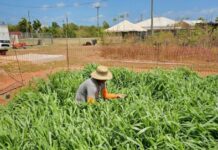
If farmers were allowed to grow fast-growing Napier grass, he argues, they could raise many more cows on much less land by feeding them cut forage rather than relying on open pasture.
“You’d be growing the inputs instead of importing them,” he says, “and that’s when livestock farming becomes economically sustainable.”
That matters, Rivers insists, not just personally, but nationally.
“Agriculture is food security. If we can’t eat, we can’t live,” he says. “If Cayman had even a quarter of the attention given to agriculture that we give to financial services, we would be eating fresher food, cheaper food, and with a more consistent supply. We wouldn’t be so dependent on shipping routes.
“We would be eating good, like they say, high on the hog.”
Keepers of the tradition
For now, though, those bigger questions can wait – at least until after Christmas.
Thanks to farmers like Rivers and butchers like McLaughlin, the spirit of Cayman’s past remains alive this time of year.
“I’m a very patriotic person,” Rivers says. “This has been a tradition before I was around.”
“It puts a smile on my face to see other people in the country really enjoy this time and enjoy good Christmas beef.”
Related Videos







Such beautiful animals. One look at them makes me want to be vegan. Then my stomach grumbles and tells me otherwise.
Glad to see a little exposure on this as we hear the common propaganda about Caymanian traditions. Much can be done and there are those of us who are involved and have the vision for local food production, however the under current of environmentalist and other extremely selfish individuals dont even want to hear a cow bawl or think some maybe next door. Come Christmas time however many of those same individuals are looking for a lot of local beef to enjoy. There are those of us who have the same mind as Paul Rivers, however it seems as if we are trying to push water up a hill. Why is it necessary to have an application referred to the NCC for their input when the zoning is Agriculture/Residential and part of a large subdivision that has already been seen by the NCC and approved by the CPA? Yes, rearing of cattle does need CPA approval and that’s why I have followed due process as we were raised to do. However, why does it take a delay in getting back to the board of approximately 8 months? The Buttonwood will go either way, by me being approved to clear it and farm it or sale of the lots to some willing and able buyers.