

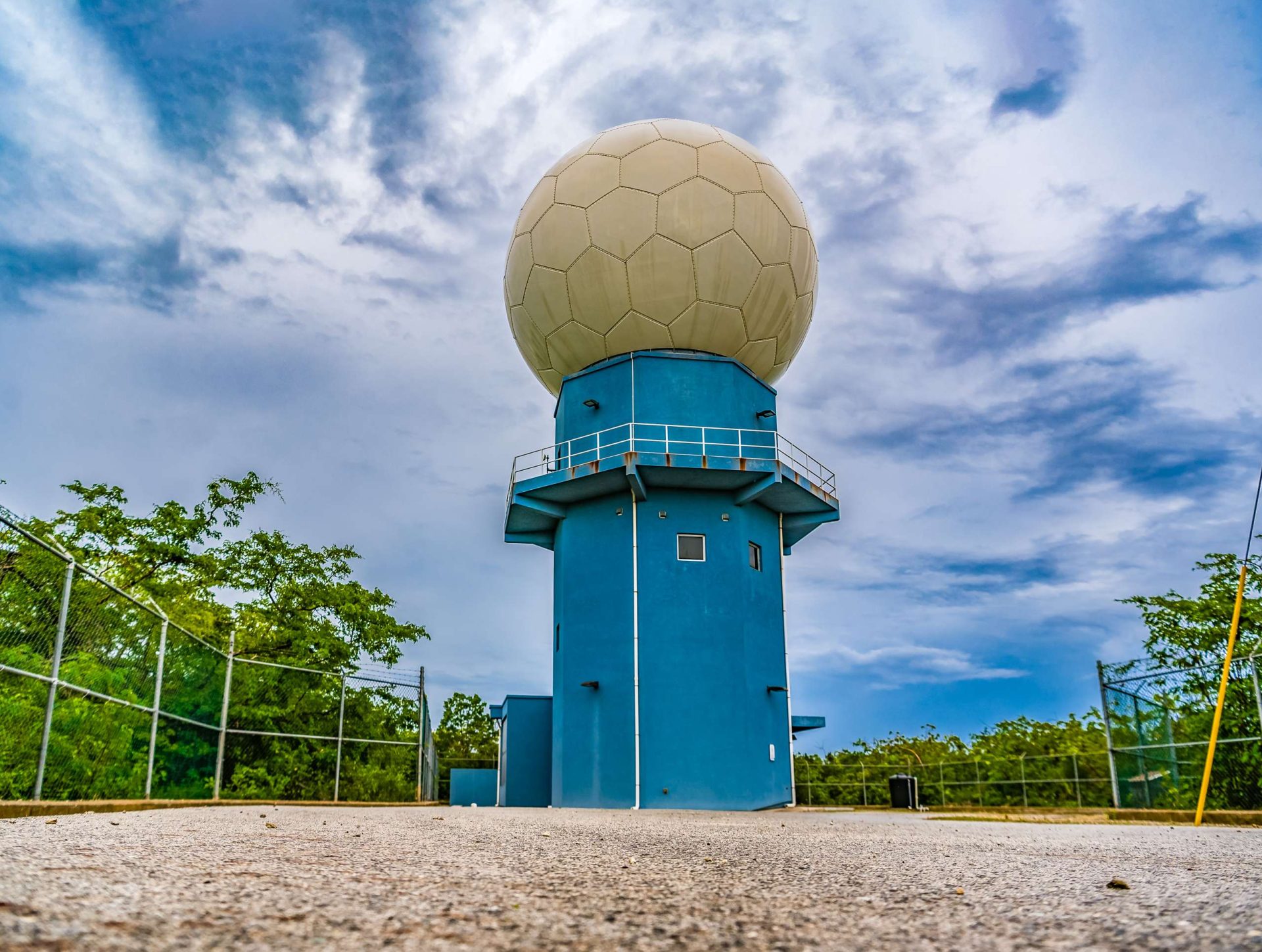
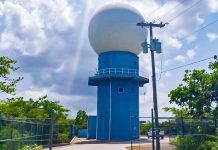
Work has begun to get the Kearney Gomez Doppler Radar back up and running again after it failed almost immediately after the completion of a $662,000-dollar major upgrade conducted by Leonardo, the original radar manufacturer.
The exact cause of the failure is not clear but the Cayman Islands National Weather Service’s acting director general, Kerry Powery, told the Compass that the radar upgrade was completed on time.
“It was tested and operational for about a week,” he said. “However, prior to it going down, the radar images were only publicly visible on the weather service website for a few hours on 24 December.”
Jason Webster, deputy chief officer at the Cabinet Office, confirmed there is a warranty in place on the recently performed work by Leonardo.
“We decided to wait for the Leonardo technicians to determine what is causing the problem and to make the repairs, because we don’t want to do anything to potentially void our contractual agreement and the warranty with the company.”
He added: “The repairs have also been delayed because the Leonardo technicians were off work over the holiday period and as a result, the work to bring the radar back online only commenced on 5 January 2026.”
Powery said, “The engineering team at Leonardo has remote access to the radar system, and they tried to identify and fix the issue on the 5 January, but unfortunately that didn’t work out.”
He added, “We hope they can make the repairs without having to fly the technicians back to Cayman, but, if necessary, they will do that.”
When the details of the major upgrade were announced, the public was told the radar would be taken offline between 14 Nov. and 31 Dec. 2025 and the upgrade would incorporate the latest technological advancements to improve detection capabilities, data accuracy and system efficiency, as well as delivering enhanced real-time coverage during all weather events, including new rainfall measurements.
Related Videos







It seems we should find another supplier and donate the existing tower to the public archives.