

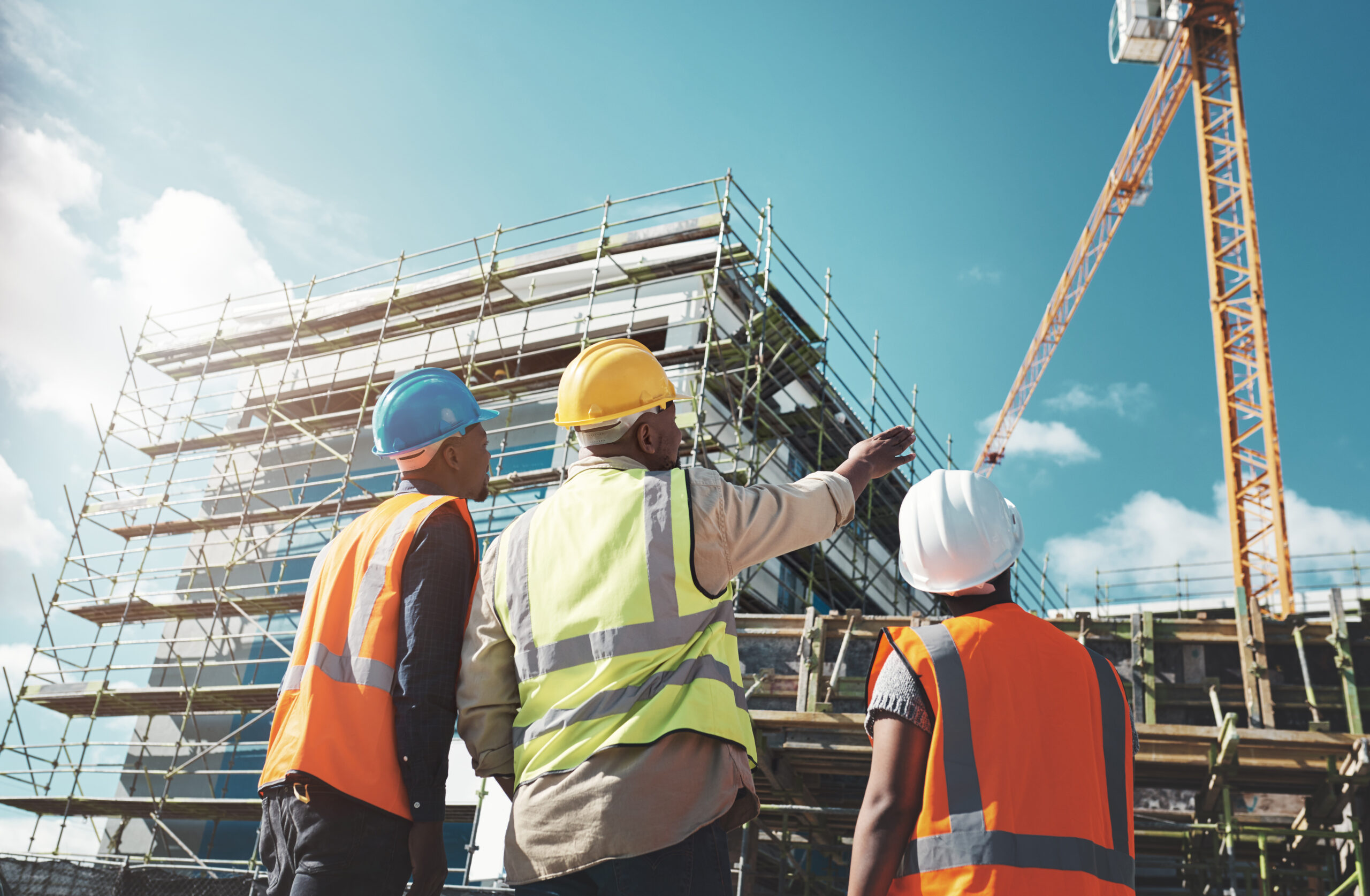
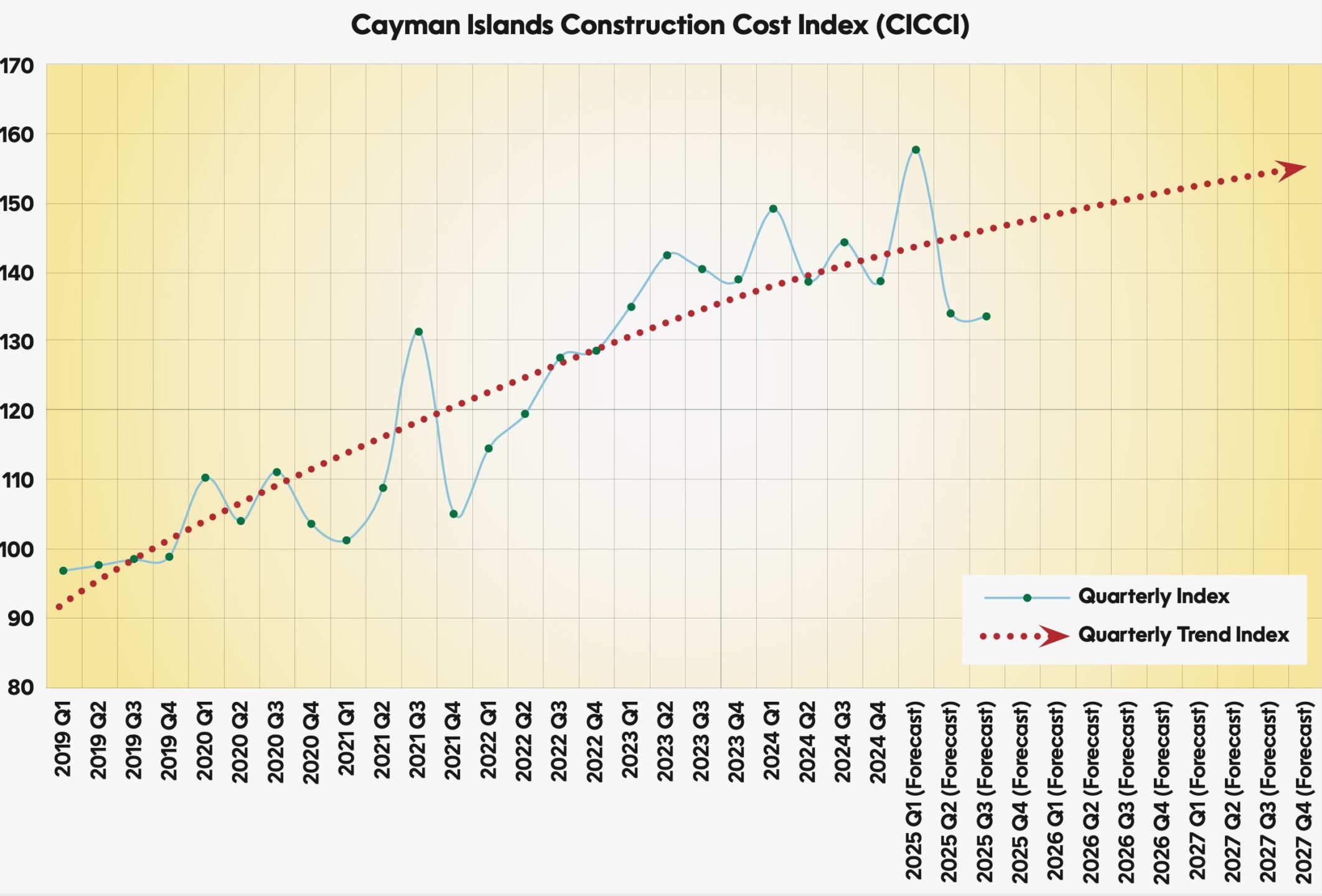
The cost of construction has risen 44% in the past five years, a rate of inflation that is making it much harder for Cayman to build its way out of a significant affordable housing shortage.
A new Cayman Islands Construction Costs Index, which tracks inflation in building costs, shows a sustained trend of escalating costs since the pandemic.
Kevin Drysdale, a chartered surveyor who runs construction and property consultants KastleCay, said he developed the index using 15 years of data from the Building Control Unit to provide a Cayman-specific industry guide to construction costs. The index shows a sharp spike in the aftermath of COVID-19 amid global supply chain disruptions.
Even as the immediate aftershocks of the pandemic eased, the data shows building costs in Cayman continued to rise.
Drysdale said the index, which he shared with the Cayman Compass ahead of a wider launch this year, will be updated quarterly as a dedicated benchmark tool for the local construction industry. He said the index would be an important tool because of the way construction costs ripple through the economy.
“They affect housing affordability, commercial rents, and even government budgets for infrastructure,” he said.
Building new homes is more expensive
The surge in costs is making it increasingly difficult for the Cayman Islands to address a growing affordable housing problem. Combined with the cost of land and a buoyant real estate market, barriers to home ownership appear to be increasing.
Larry Thompson of A. L. Thompson’s, Cayman’s largest building materials supplier, said US tariffs had added pressure to commodity prices that were already inflated after COVID-19. He said some materials, such as lumber and rebar, had normalised from their pandemic peaks, but others remained stubbornly high.
The rising cost of land, which continues to climb across Cayman, is another limiting factor when it comes to building affordable homes.
“We are seeing a major shift away from single-family residences to more apartment and condominium projects,” Thompson said.
Realtor Kim Lund of RE/MAX agreed with that analysis, saying higher construction and land costs were reshaping what could realistically be delivered at lower price points.
“The only way to deliver more affordable housing now is through shared walls and shared roofs – apartments, condominiums and duplexes,” he said.
“Detached homes have become much harder to make work at the lower end once you factor in land, materials and labour,” Lund added.
Harder to deliver lower-cost properties
Ben Tonge, the developer behind Downtown Reach – one of the more affordable residential projects to be built in Grand Cayman in the past decade – said it had become significantly harder to deliver housing at an attainable price point over the past five years.

“Construction inflation has been a major driver of this,” Tonge said. “Material costs, labour shortages, higher financing costs and longer build times all compound one another, and those pressures ultimately feed directly into sale prices. Even where developers are working as efficiently as possible, the economics have shifted materially.”
He said the margin for delivering lower-priced homes had narrowed considerably.
While the headline figure of more than 40% may appear dramatic, contractors say it aligns with what they have experienced on the ground and, in some cases, understates the volatility in specific trades.
“If anything, the number feels conservative”, said Dave Johnston of Corporate Electric and a former chair of the Cayman Contractors Association.
“Some materials, particularly copper and electrical equipment, have nearly doubled since 2019,” he said. “When you average everything across all permits, you get a lower headline figure, but individual commodities have seen much sharper spikes.”
Johnston said some contractors were forced to renegotiate contracts or walk away from jobs in the immediate aftermath of the pandemic, as costs rose so sharply that completing projects on budget would have meant taking a loss. While many of those disputes were eventually resolved, he said cost escalation clauses had become a necessary feature of construction contracts.
“Cost escalation clauses have become a necessity”, he said. “Without them, contractors are taking on risks that simply can’t be absorbed in a volatile inflationary environment.”
Cayman property development and consultancy firm BCQS publishes its Market Trend Report annually, providing insights into construction cost trends and market dynamics across the Caribbean and selected Latin American markets. Data from the 10th edition published in May 2025 showed that regional construction cost escalation has slowed, averaging 4.4% over the past year, down from 7.3% in 2023–2024, following much higher, pandemic-related increases that averaged 9.6% annually in the two years after 2020.
Rick Riyat, head of valuations at BCQS, said recent changes to government work-permit arrangements may place upward pressure on labour costs going forward. Although the extent of the impact is not yet clear, feedback from contractors suggests emerging signs of labour-cost escalation, he said.
Access to finance
For developers targeting more affordable price points, access to finance has become another significant hurdle. Tonge said some lenders had grown more cautious about construction lending, particularly for projects outside the luxury segment.
“Higher equity requirements, more conservative assumptions and slower credit processes all add friction and cost,” he said. “That makes it harder to take on projects that don’t already sit at the upper end of the market.”
He said construction inflation was often overlooked in broader discussions about housing affordability.
“Demand, population growth and land availability all matter,” Tonge said, “but rising build costs significantly reduce what is feasible at any given price point.”
As Cayman continues to grapple with housing affordability, Drysdale said the index provides a clearer picture of one of the key pressures shaping what can and cannot be built.
“Construction inflation isn’t something you can ignore,” Drysdale said.
He hopes it will also be a useful tool for developers, homeowners and insurers, helping to address issues of under insurance.
Looking ahead, the index suggests construction costs are likely to continue rising, though at a slower pace than during the post-pandemic surge. Drysdale estimates annual increases of around 5-6 % over the next two years.
Related Videos











Affordable housing is an easy solve here. Completely political in nature. Go on instagram for 20 minutes and you’ll see you can buy a Japanese/Korean/Chinese portable or modular home for about $50,000 .. turn key, looks nice. $100,000 gets you something amazing.
Modular homes made elsewhere take stamp revenue and labor out of our economy so there is a political push against that and modular homes are tightly regulated here. It’s not allowed in because politically it is not a palatable thing to remove those tax and labor components from our economy.
I’m not talking about your grandma’s single-wide mobile home. A lot of the modular residential product from overseas is hurricane rated now. It can be anchored to concrete foundations. We need to be willing to allow these things to enter the country however, and to be placed on smaller land.
If we do that it will put downward market pressure on the builders, trades and suppliers who control the cost of construction. As that happens the traditional housing we enjoy now will come down in cost due to the competition cheaper imports force.
Everything is driven by market forces and politics regulate the market Let the imports in (or at least say you will) and watch our costs drop.
Cayman has become reliant on US lumber, rebar and cement. Last time I checked Canada has no shortage of any of those things. We also seem to be quite good at making windows and doors, roofing materials and drywall. With a dollar one third lower tn the US dollar and our labor costs commensurate that should take care of the tariff thing, no?
Actually rebar Canadian builders buy from Brazil. So maybe that’s an even cheaper source.
Having said all that, buying houses at least 20 feet higher than the present high watermark mightn’t be the craziest thing to do, given where sea levels are heading now we have given up on carbon tax and global warming restriction and have put all our efforts back into melting those pesky ice caps at the two poles which were interfering with our getting the carbons out of the ground and releasing them into the atmosphere.