

By Cayman Compass contributor Christopher Tobutt
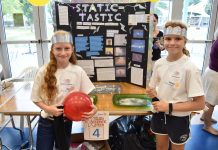
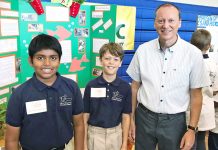
The Arts and Recreation Centre in Camana Bay felt more like a living laboratory than a hall on Saturday morning, as more than 65 student projects flickered, bubbled, glowed, filtered, measured and occasionally surprised even their creators.
It was the 20th Annual Rotary Central Science Fair, and from the moment the doors opened, the place hummed with the kind of excitement only young scientists can generate.
Co-chair Ally Speirs stood near the entrance, watching the crowds gather around the first exhibits. For her, the fair is personal. “It’s come a long way,” she said. “I remember being in the first ever Rotary Central Science Fair as a student. My project back then involved a live snake.”
Her pride was unmistakable. “We put this on every year so students have an outlet for their creativity, innovation and critical thinking,” Spiers said. “We really want them to explore problem solving.”
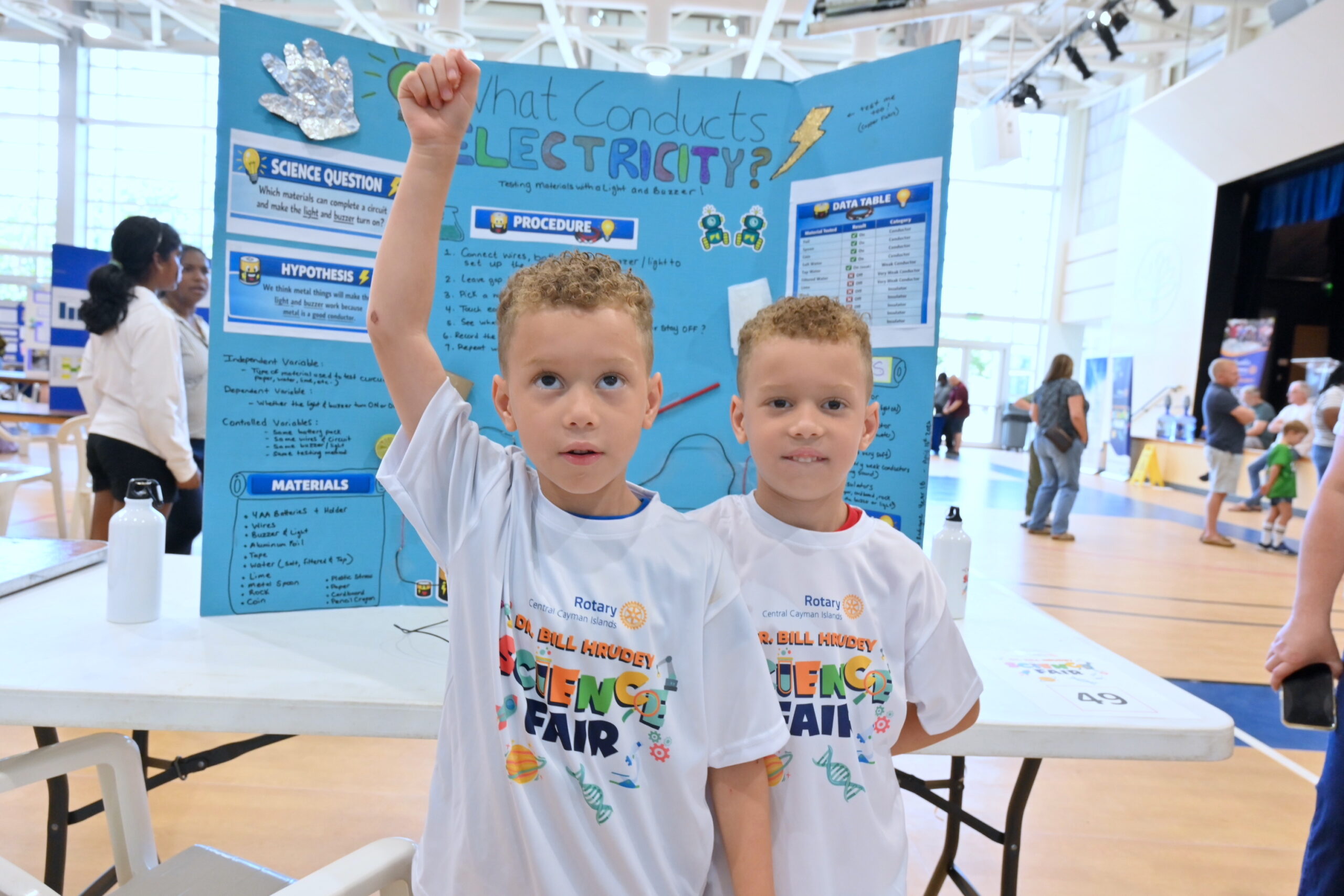
That spirit was on full display: Brothers Maynor and Rogelio Rodriguez of Bodden Town Primary School were absorbed in demonstrating their project, ‘What Conducts Electricity?’ which earned the ‘Outstanding Project Award for the Under 7’ division.
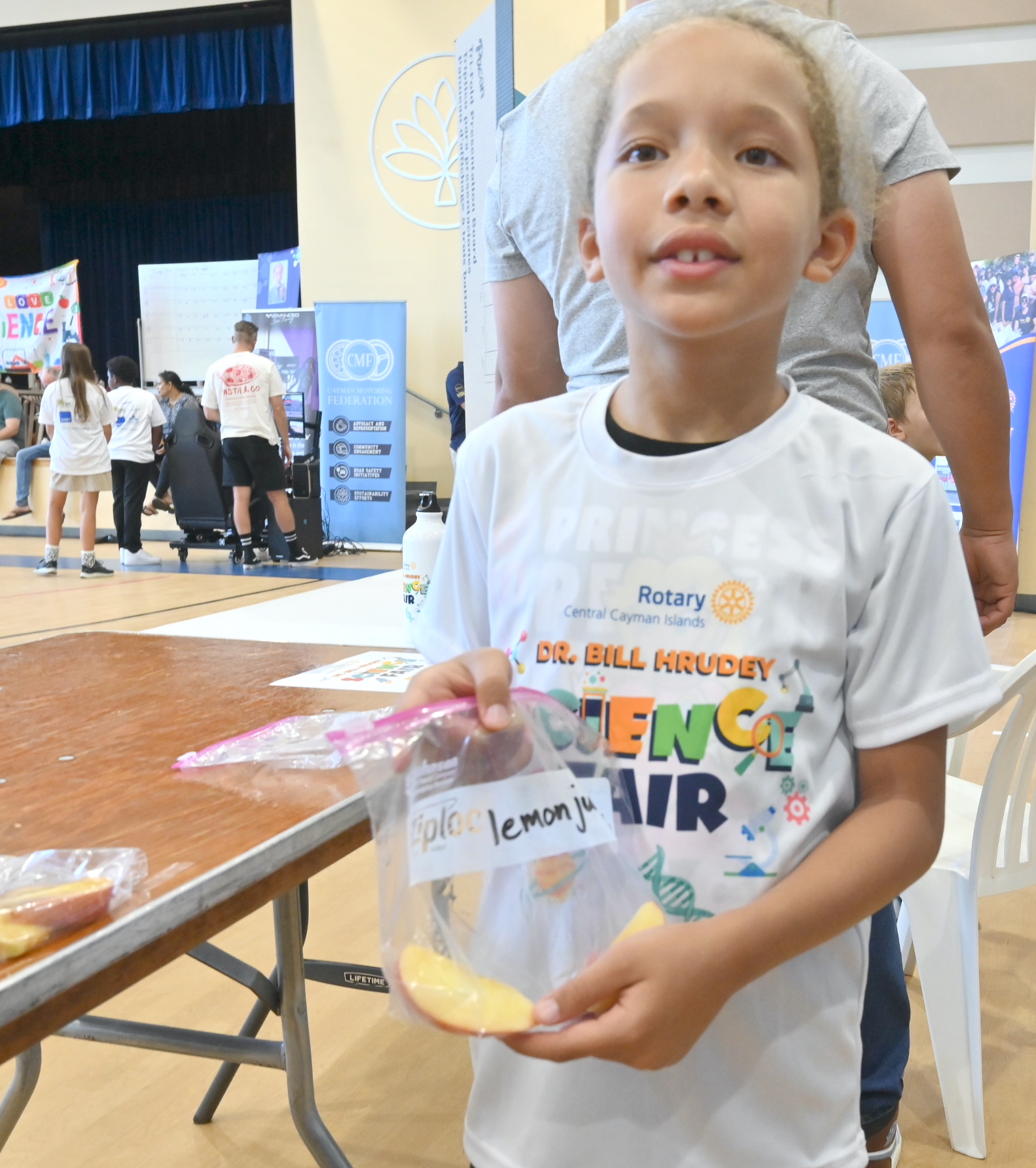
Just a few steps away, Mariella Wright from Spot Bay Primary School in Cayman Brac was explaining her discovery with the confidence of a seasoned food scientist. She wanted to know which liquid keeps cut apples from turning brown in a lunch bag. After a series of careful tests, she found the clear winner: lemon juice. Her project took the ‘Outstanding Project Award for Under 10s’, and her delight in the result was contagious.
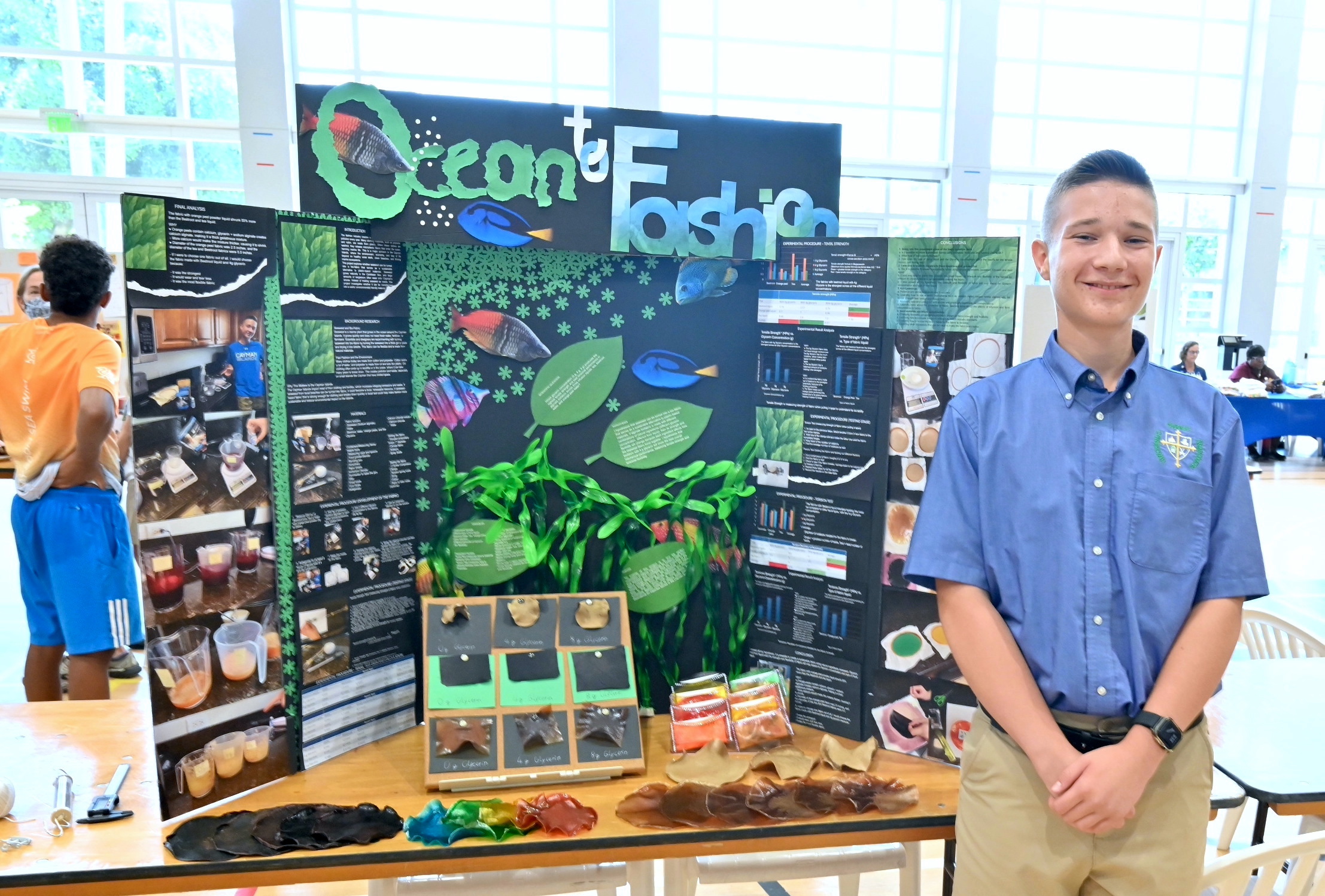
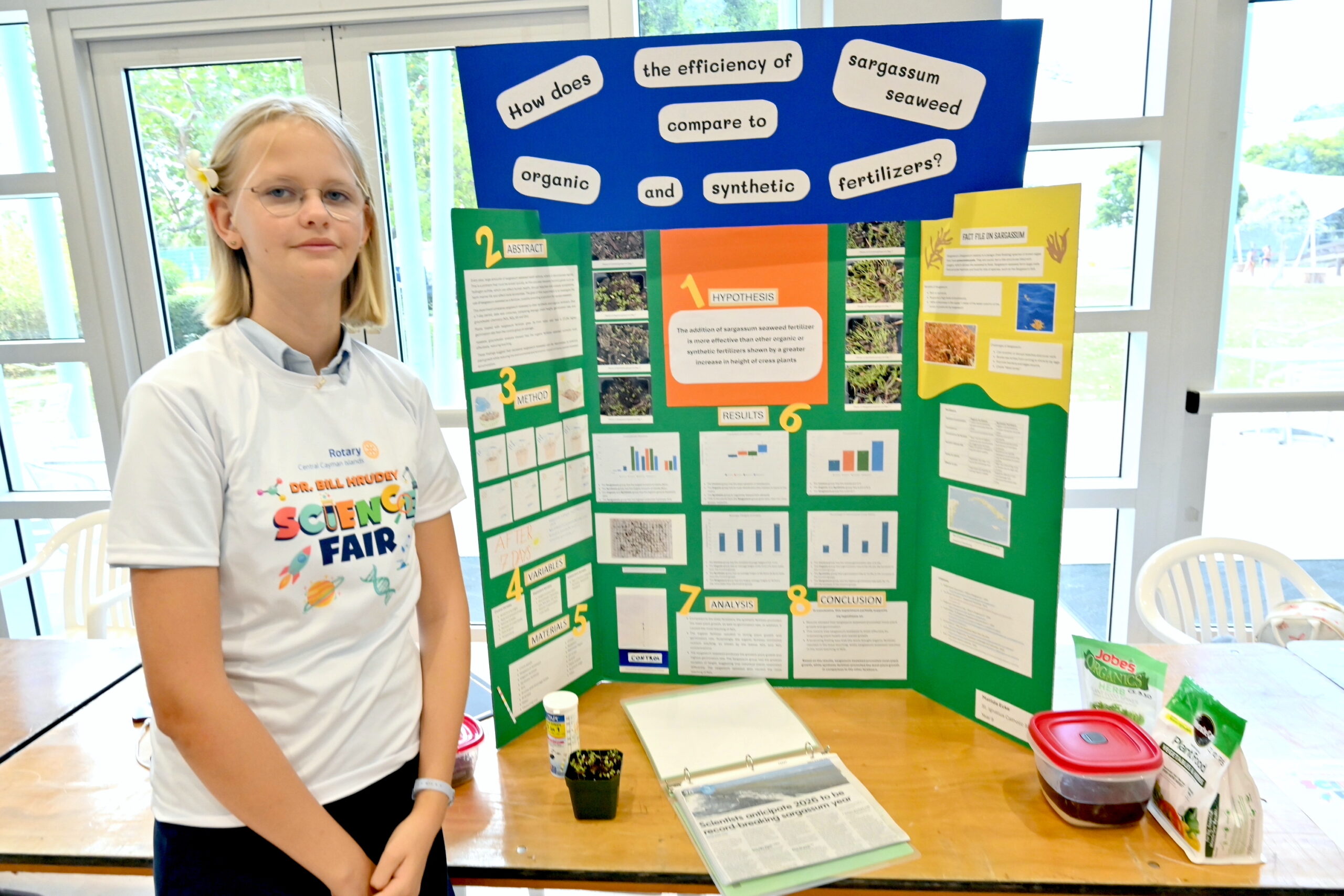
Milan Maraczi, 14, of Grace Christian Academy drew a steady crowd with his seaweed-based fabric – a surprisingly soft, wearable material that earned him first place in Earth Science. Matilda Ecke from St. Ignatius Catholic School compared the fertilising power of sargassum to organic and synthetic alternatives. Her cress plants grown with sargassum stood tallest.
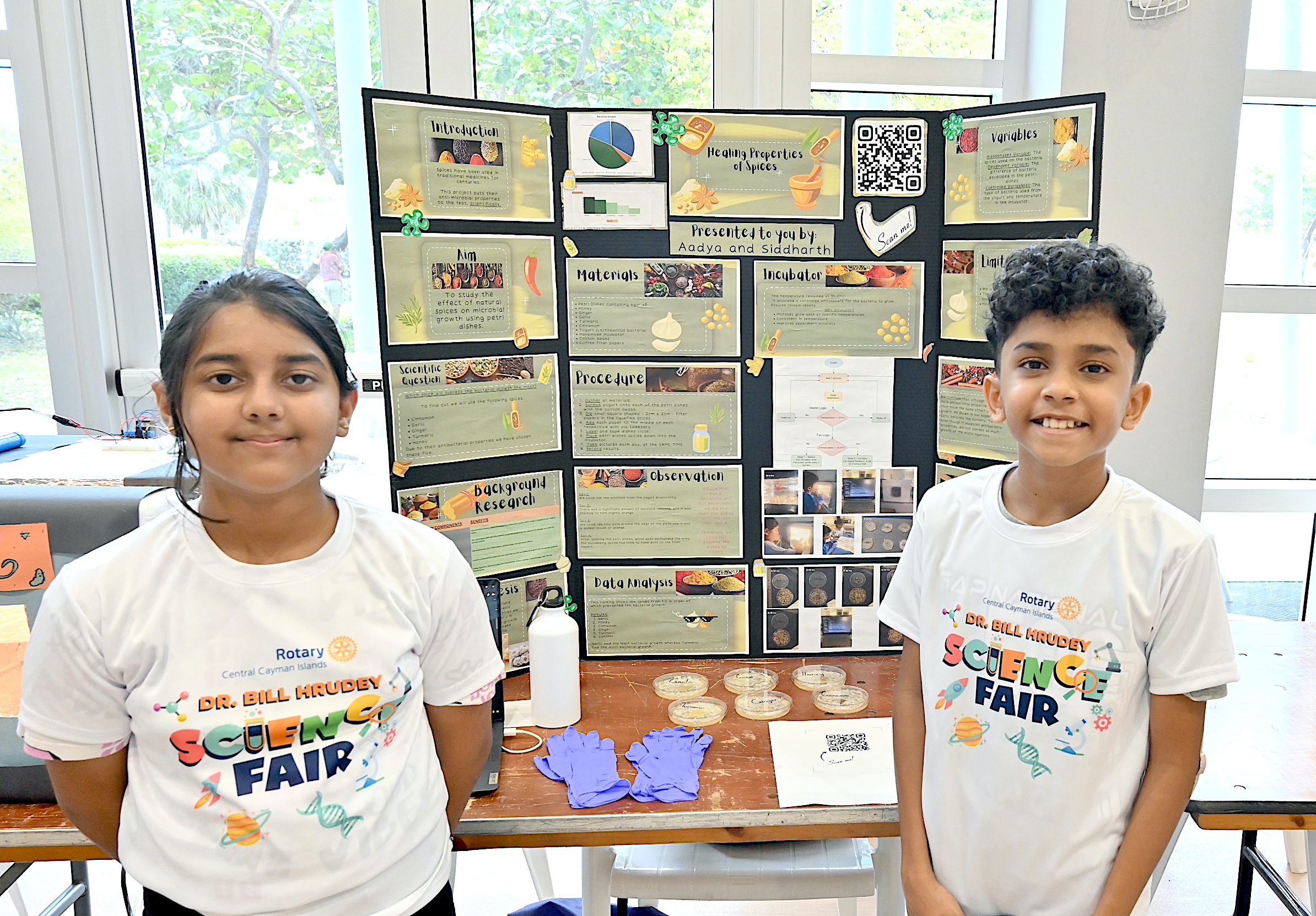
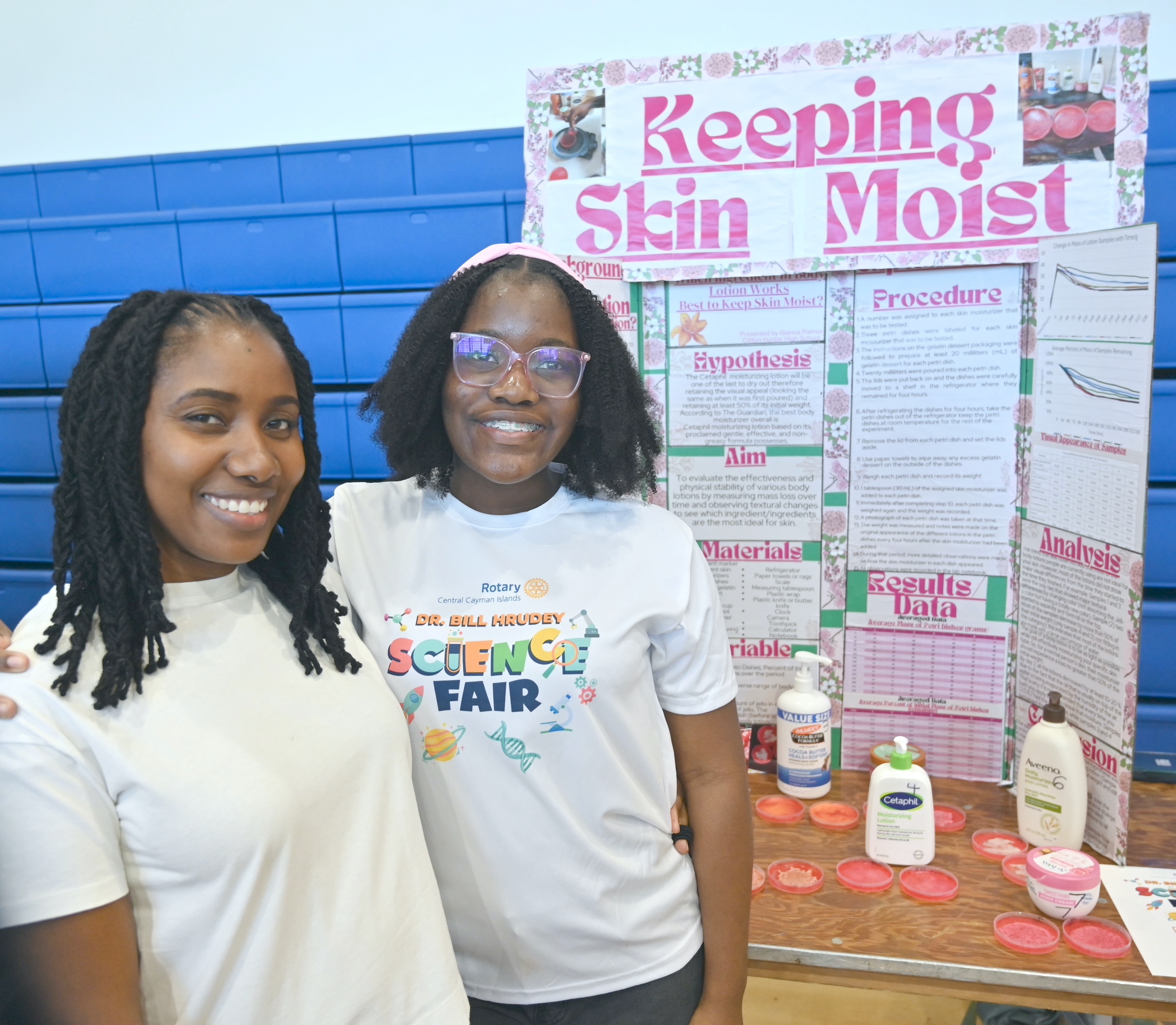
In ‘Food & Health’, Aadya Pathak and Siddharth Yedla of Cayman Prep and High School explained how they tested the antimicrobial properties of spices. Their project earned first place, while Gianna Palmer of Clifton Hunter High School took second for her meticulous investigation into which lotions best retain moisture.
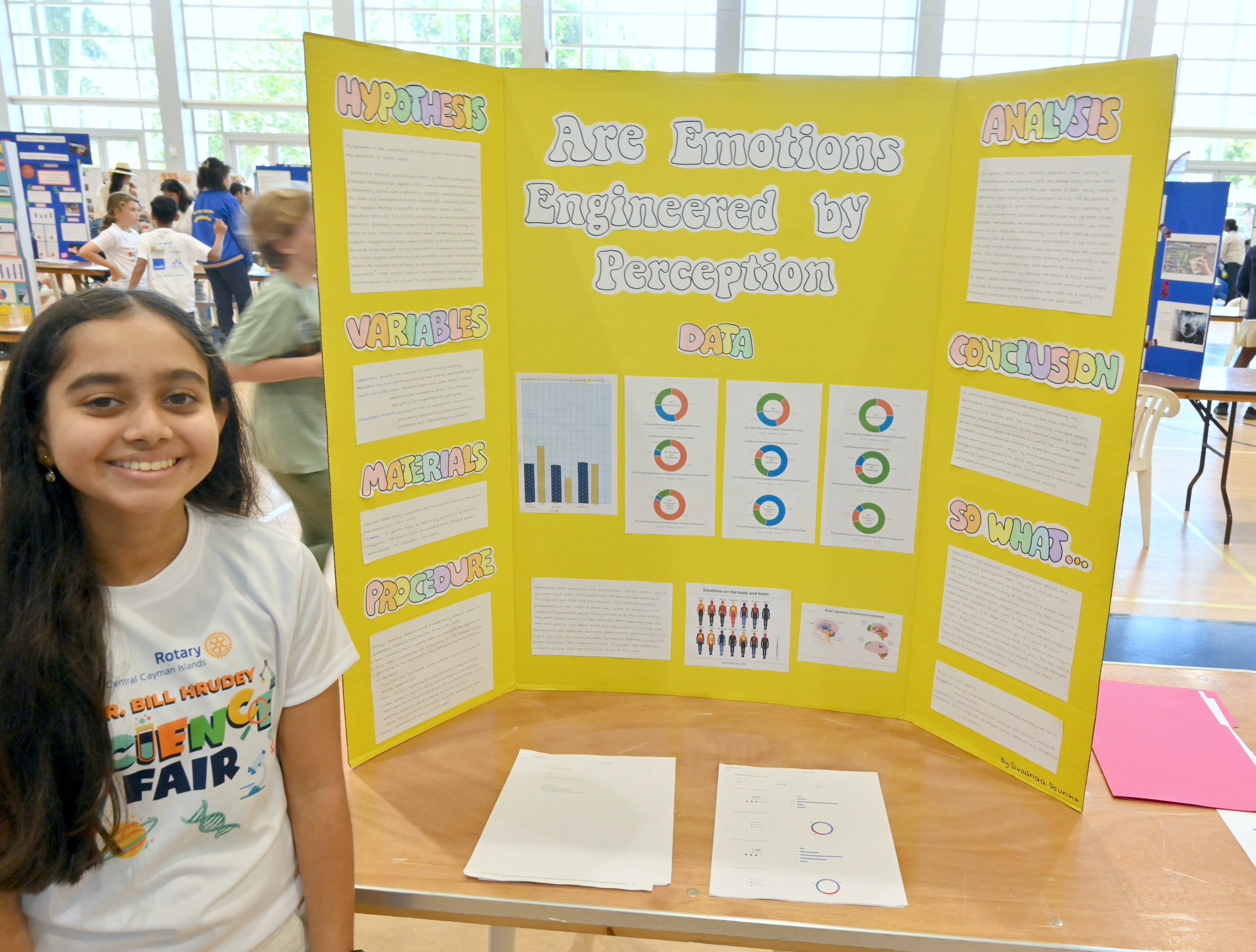
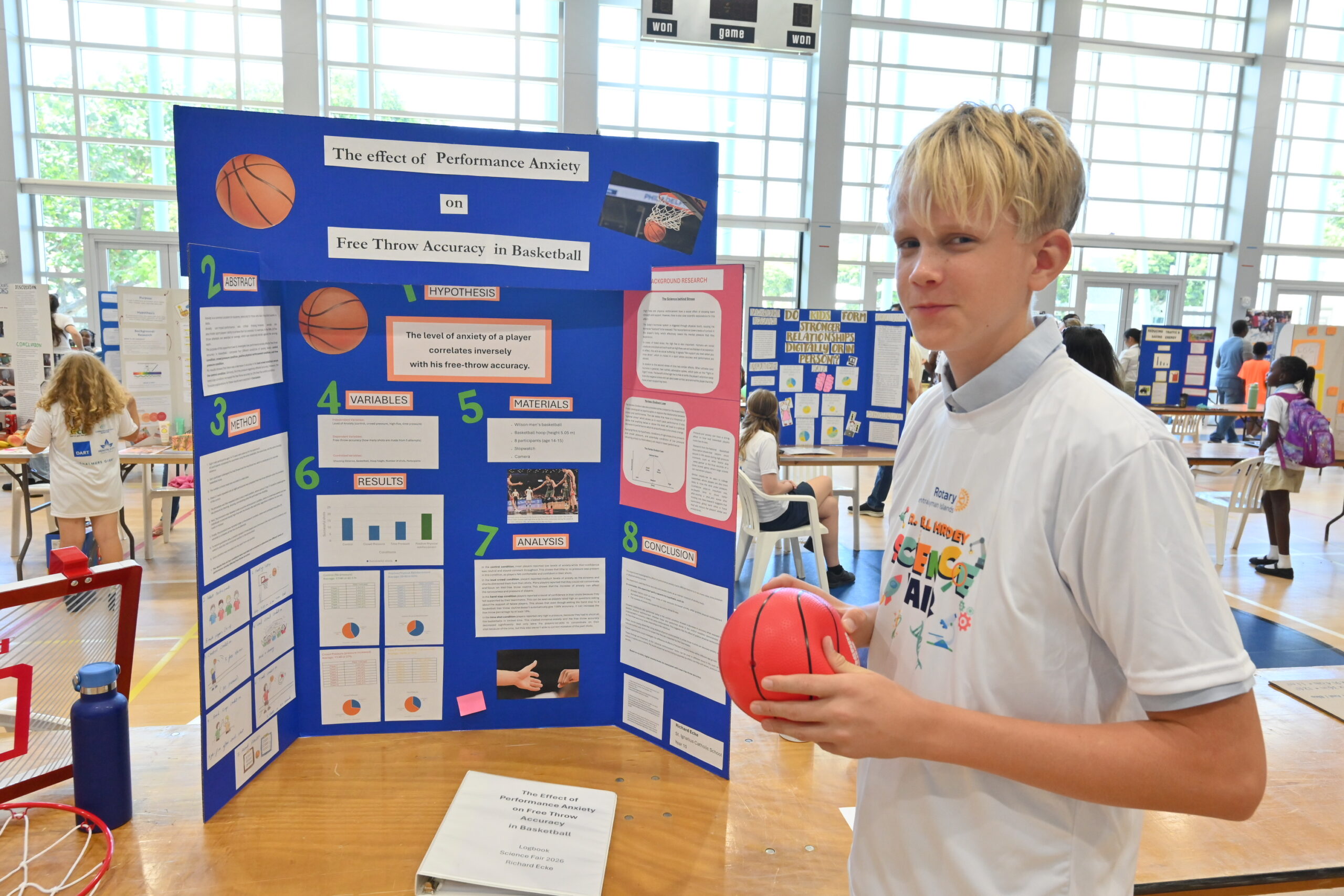
The ‘Life Science’ category brought its own surprises. Sivaanaa D’Cunha of St. Ignatius explored whether emotions can be influenced by shifting perception, while her schoolmate Richard Ecke examined how performance anxiety affects free throw accuracy in basketball – a question many athletes have quietly wondered about.
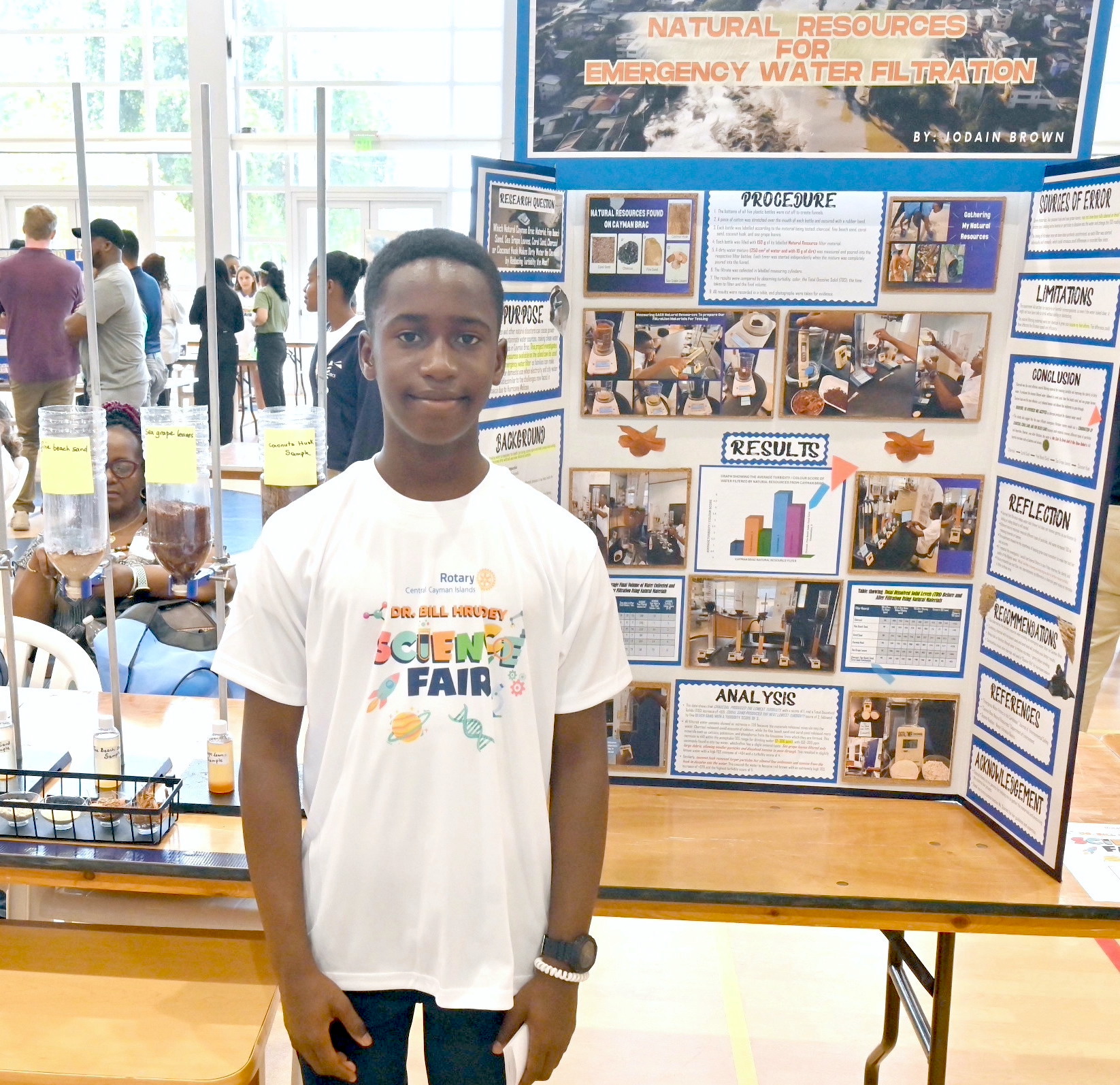
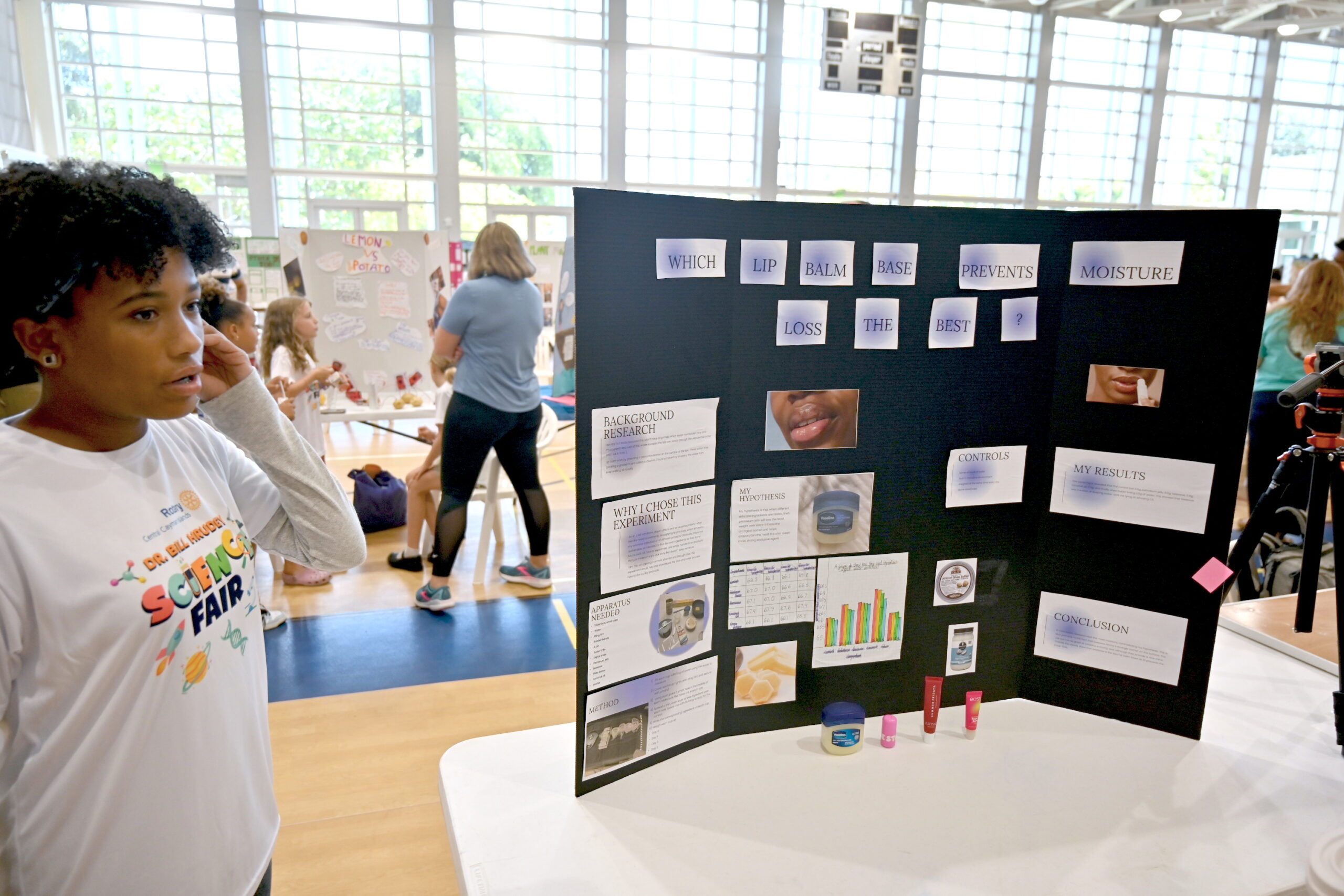
And then there was ‘Physics, Chemistry & Computer Science’, where Jodain Brown of Layman E. Scott High School demonstrated how everyday materials can filter dirty water in an emergency. Coconut husk, sea grape leaves, sand, charcoal – he tested them all. “The most effective filter is charcoal,” he said, with the certainty of someone who had measured every drop. His project won first place, with Monroe Barton of St. Ignatius taking second for a clever experiment comparing which lip balm ingredients best prevent moisture loss.
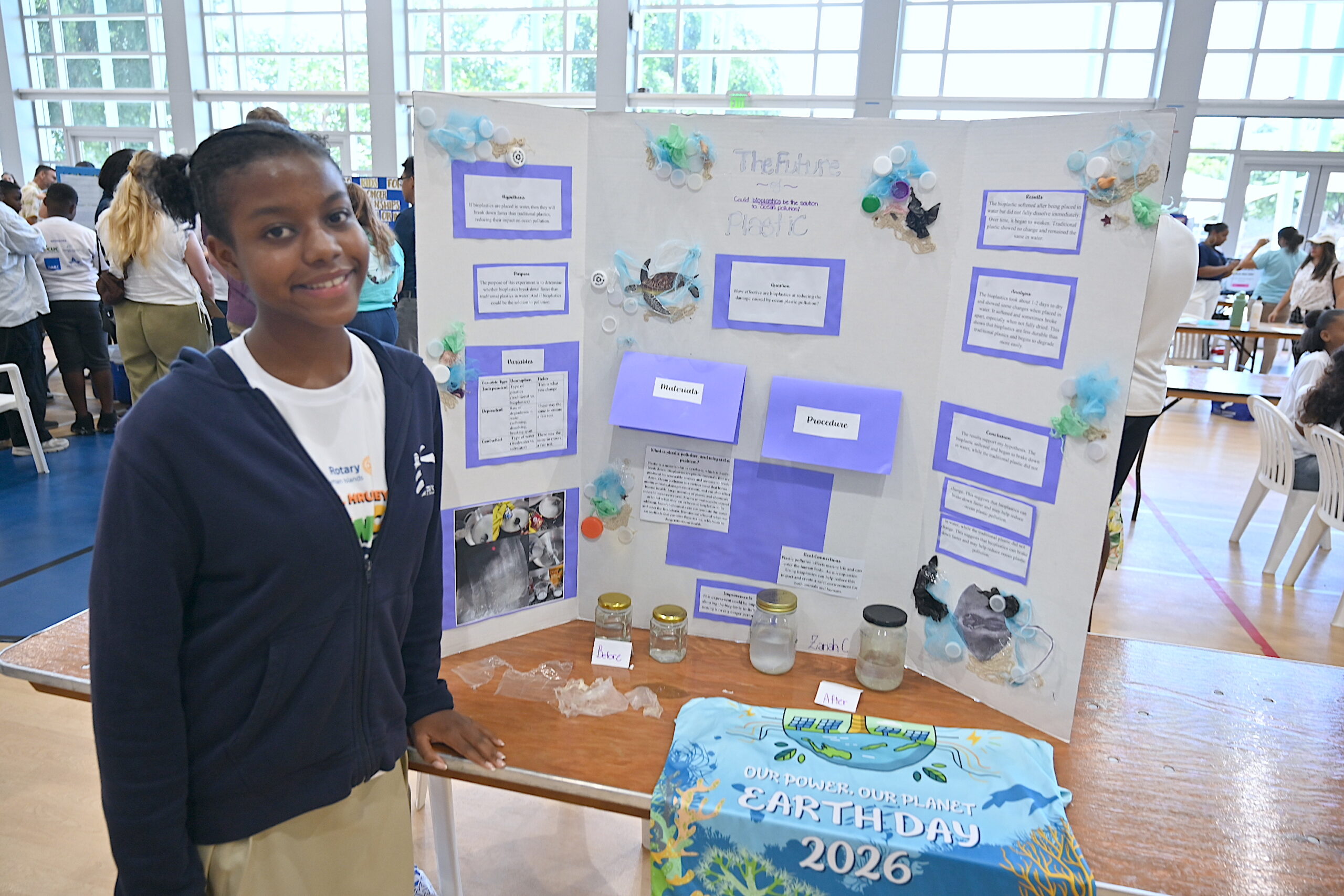
Cariah Campbell, 13, of First Baptist Christian School had a project testing whether bioplastics will breakdown in water faster than traditional plastics. She found that, yes, “Bioplastics break down faster.”
Cayman’s next generation of scientists is already asking bold questions, and the Rotary Central Science Fair continues to give them a place to explore the answers.
Christopher Tobutt is a freelance journalist who has written for various publications in the Cayman Islands since 2003.
Related Videos








I am very proud of all of these youngsters achived.