


At a glance
-
- Government aims to curb foreign business licences for property development
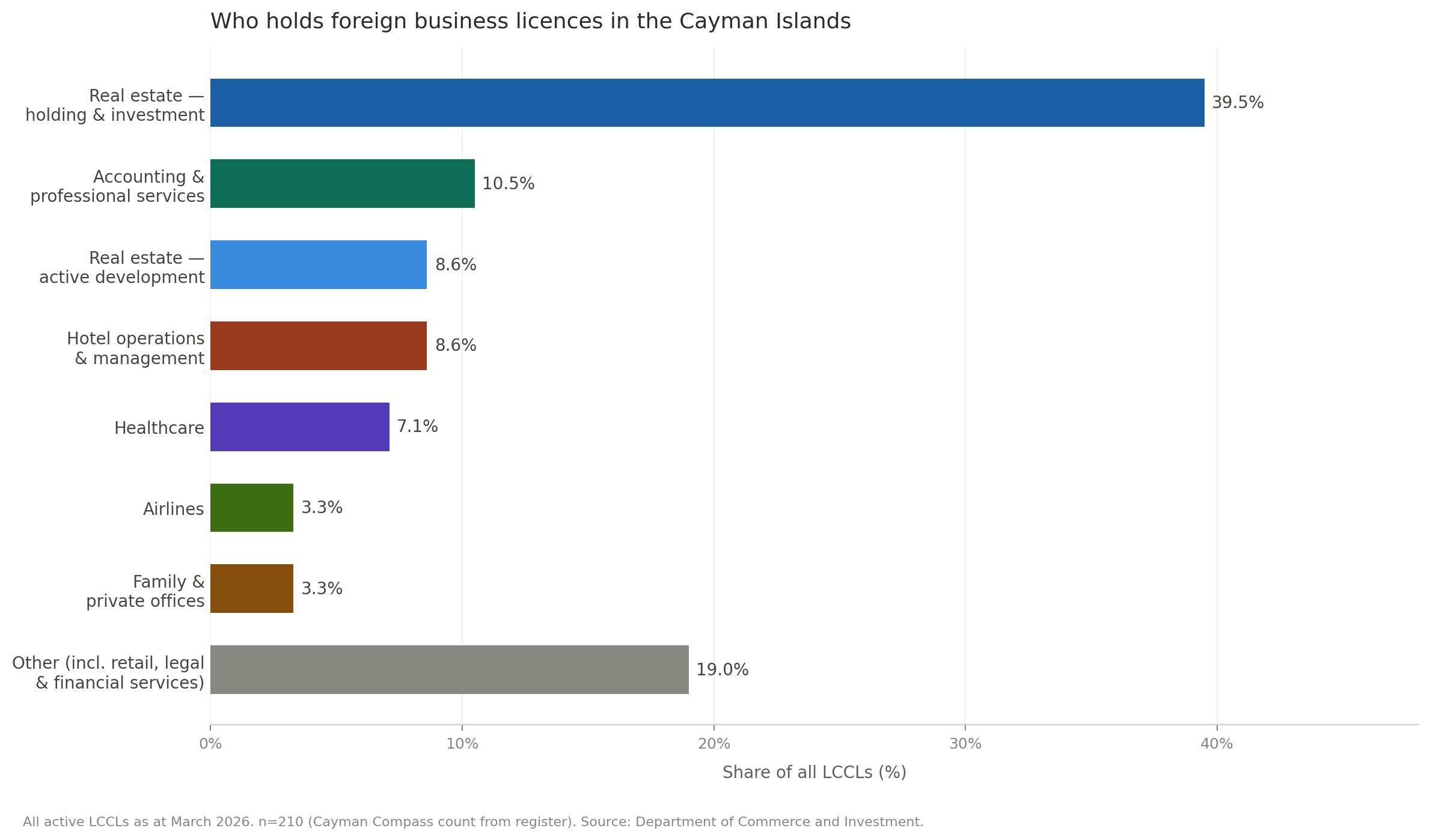
- Nearly half of Cayman’s 210 LCCLs are real estate related
- The licensing board says there are enough Caymanian developers to meet demand
- Existing LCCL holders will not be immediately affected
- Exceptions will still be considered for large or specialist developments
Government aims to restrict the grant of foreign business licences for most property development to protect local firms from international competition within Cayman.
Premier André Ebanks told the Compass Tuesday that government believes Cayman has enough local expertise that it does not need to approve more licences for foreign-owned businesses in that sector.
He said exceptions could be made for developments that involve cutting edge methods or where the scale of the project is beyond the capacity of the firms on island.
His comments came as government announced it is drafting legislation to allow Cabinet to place a moratorium on the granting of Local Companies Control Licenses in any sector. Ebanks said the aim in the first place is to target real estate development and property companies which currently account for around half of all LCCLs.
The LCCL regime is designed to allow exceptions to the rule that any business operating in Cayman must have at least 60% local ownership.
It will continue to be used in areas of the economy where specific expertise or global reach is required. International airlines, major branded hotels and advisory firms like EY and KPMG all operate under LCCLs. Healthcare providers like the Mayo Clinic referral office and Baptist Health operate under similar exemptions. Banks and law firms are licensed separately.

Most international brands operating in Cayman, including fast food chains such as Burger King and KFC, do so under standard trade and business licences held by Caymanian-owned franchise operators. Victoria’s Secret is a notable exception and one of only two retailers, along with Cost-U-Less, carrying LCCLs according to the list published by the Department of Commerce and Investment.
The majority of Cayman’s approximately 210 LCCLs, which account for less than 2% of all trade and business licences on the island, are currently connected with real estate holding and development.
A Cayman Compass analysis of the March 2026 LCCL register found that nearly 40% of the total are held by special purpose vehicles created to hold or manage existing property on behalf of foreign owners. A further 8% are held by active property developers currently building specific projects on the island.
The Trade and Business Licensing Board, which assesses LCCL applications, has already been pushing back on LCCL applications in the real estate development or property management category, chair Anne Storie told the Compass.
“This category is overrun. We’ve seen an excessive amount of applications come through and at this stage we don’t see the need for any foreign ownership of these real estate development companies.”
Storie said the moratorium would also spare applicants the cost and frustration of pursuing applications that were unlikely to succeed.
“There’s a lot of people that are probably wasting their time on legal fees …
“It will just save everybody a lot of time and frustration.”
Existing LCCL holders will not be immediately affected. Storie confirmed that renewals would not be caught by the moratorium, saying they “will be reviewed individually depending on the stage of the project.”
Longstanding concerns
A previous Compass investigation found that more than 70% of LCCL applications had been approved over a three-year period, prompting complaints from local developers that the exemption had become the rule rather than the exception.
Storie acknowledged the board had allowed licences to become “automatic” but said that was changing.
“When we grant an LCCL we think about, is this bringing a skill set or specialisation to the Caymanian community that doesn’t already exist, and are we introducing unfair competition to Caymanian business owners?”
Ebanks said LCCL had become a default route to full foreign ownership of a business rather than the exception the legislation intended.
Under the proposed change, a foreign landowner wanting to build a condominium project in Cayman could no longer create their own LCCL entity to do so. Instead, they would have to work with an existing Caymanian-owned development company. Private landowners building their own homes would not be affected.
Storie added, “If somebody is wanting to do any type of real estate development here, they would have to consider working with a Caymanian-owned real estate development company for the development of their property, rather than doing it themselves and being 100% owner and taking out that LCCL.”
Ebanks said the moratorium power was also a matter of administrative efficiency, flipping the dynamic so that the board would only come to Cabinet if it was considering approving an LCCL rather than refusing one.
He said it would not close the door entirely, with hotels of sufficient scale and clear community benefit still to be considered on their merits. Similarly with a recent report warning that Cayman needs to build 5,000 new housing units in the next 15 years, he said innovative firms that could build sustainable and affordable housing at scale could be considered if they brought expertise that does not exist on island.
A Private Members Motion passed unanimously in July 2024 called specifically for a moratorium on real estate and property development licences. The National Coalition for Caymanians Caucus directed last week that the power extend to any business category where Cabinet deems it necessary.
Ebanks said this provides the legislative flexibility to respond to trends and to the advice of the board.
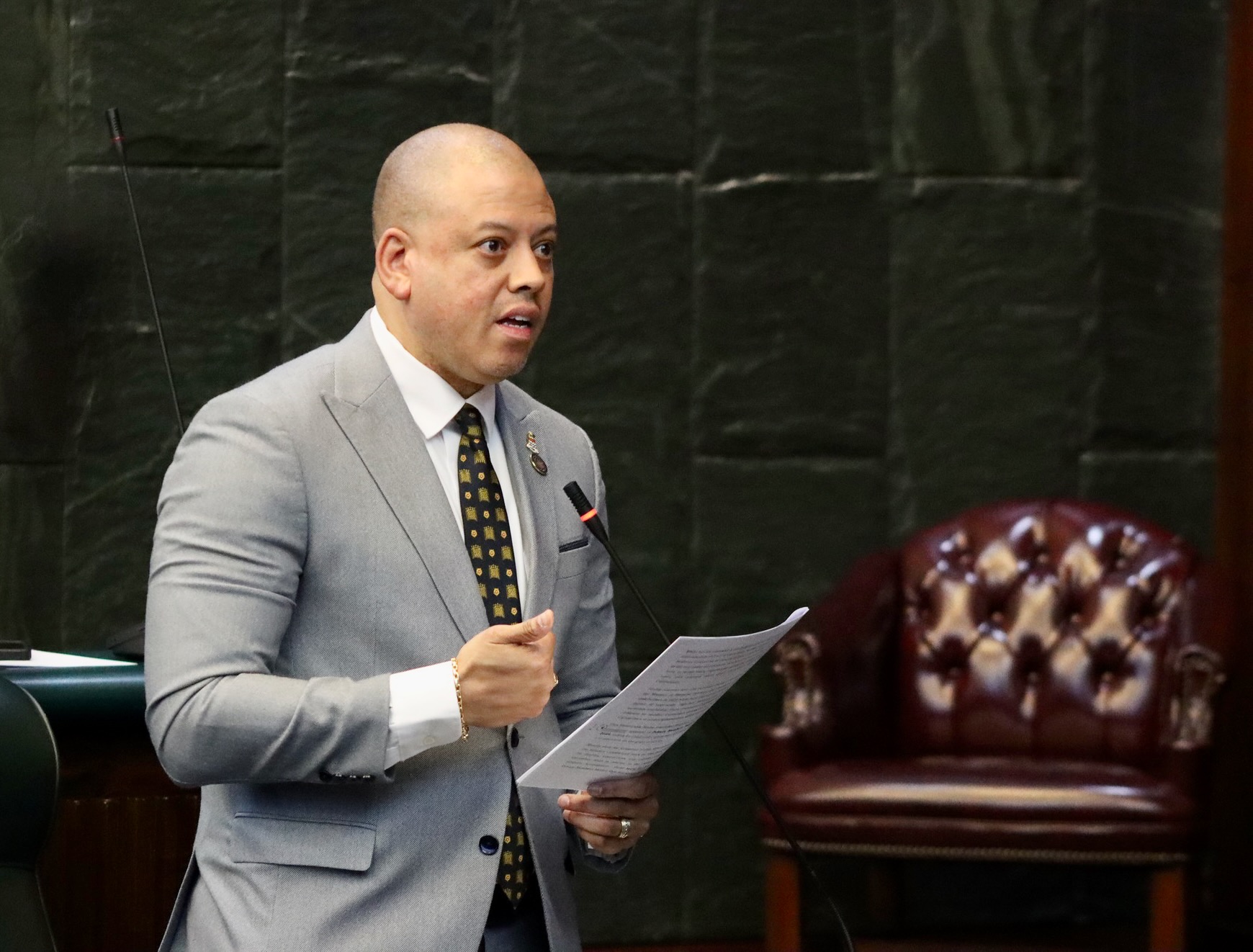
In a statement to Parliament last Friday, Ebanks said the changes were “sensible adjustments to reflect the remarkable reality that Caymanians have gained a wide range of experience and expertise” that did not exist at the time the LCCL regime was first introduced.
Developers react to change
The proposed change has been welcomed by Caymanian developers who have long complained that LCCLs were being granted too freely in the sector.
Stefan Baraud, owner of Baraud Development, said he had raised concerns for many years.
“The continued issuing of LCCLs for development has, in my view, contributed to increasing land prices, scarcity of developable land, rising construction costs, infrastructure strain, overdevelopment, and reduced opportunities for Caymanian developers and Caymanian families seeking to enter the property market.”
He said profits from developments exclusively owned by overseas investors rarely stayed on island.
“In many cases, substantial profits generated from these developments ultimately leave the Cayman Islands with very little meaningful reinvestment back into the local economy or community.”
Not everyone is convinced the moratorium is the right mechanism, however. One developer said LCCLs had been useful for Caymanian developers structuring joint ventures with overseas partners. They questioned what government was trying to fix with the amendment and said the word “moratorium” might spook investors unnecessarily, especially if exemptions were going to be granted regardless.
Cline Glidden, an attorney with Ogier, who occasionally handles LCCL applications, said he felt the changes were largely positive and allowed Cabinet to set broad policy guidance for the board in a transparent way.
“If we have enough real estate companies (government now has power) to put a moratorium on the grant of LCCLs for real estate licenses. That’s a positive move.”
Daniel Altneu, a partner at Bedell Cristin who handles LCCL applications, said the approach made sense so long as balance remained.
“In practice, meaningful local participation is not always forthcoming, particularly for capital-intensive or highly technical projects, which is one of the factors that historically led to LCCLs being granted in those areas,” he said.
“While LCCLs represent a relatively small proportion of overall licences, their concentration in certain sectors, particularly real estate and development, means they have a disproportionate impact on key policy areas such as land use, pricing and market access.
“The Government’s approach appears to be aimed at ensuring that those sectors evolve in a way which meaningfully benefits Caymanians.”
But he cautioned against overcorrection.
“A carefully calibrated LCCL regime still has a role to play in supporting specialist or high-value activity that enhances our Islands’ overall offering and sophistication, including for internationally mobile families and businesses,” he said.
Related Videos












This restriction and “reset” is a good move…and long overdue! This is a template for similar restricrions to be imposed on other sectors of our economy, pronto! LCCL’s have, and should, always been reserved for financial/capital and/or technology-intensive businesses.
Small businesses, Caymanian owned, should be similarly protected, by restricting T&BL’s for sectors that are already over subscribed. This must however be anchored in sound and consistent compelling rationale by Government legislation.
Great news for Caymanian developers!
Awful news for the average Caymanian homebuyer. Demand is high and will remain high, by restricting supply you are only going to push prices even higher.
“Local expertise” brings to mind the firm used to revamp the center of George Town along with the contractor that built the new Mental Health Center at East End.